Sizing that fits daily demand, not guesswork
Good system sizing starts with water use, not with a pump catalogue. A two-bathroom home in Hartbeespoort needs a different setup to a guesthouse, irrigation block or cattle camp near Brits. We look at how many people use the water, when they use it, what pressure is needed at the taps and whether the source is borehole water, rainwater or a mix of both. That gives us a practical starting point for storage, filtration and pumping.
Our team checks peak demand and day-to-day demand, because many problems only show up at busy times. If a property runs washing machines, pressure pumps, garden lines and filtration at the same time, the system needs enough flow and enough buffer storage. If the borehole yield is modest, the tank must carry the shortfall. If the water is sandy or iron-rich, the filtration train must be sized to handle the flow without choking the line.
- Domestic homes and smallholdings
- Farms, pack sheds and staff housing
- Rain-tank top-up and backup systems
- Multi-tap and multi-building supply
What we assess before recommending a kit
Every sizing job begins with a site assessment or a detailed information review if the site is far from our North West base. We ask for the number of users, the number of bathrooms or outlets, the type of irrigation, the tank size already on site and the borehole or municipal supply details where available. Where needed, we also consider elevation, pipe length, friction losses and the effect of municipal pressure drops during evening peak periods.
We then match the kit to real conditions on the ground. Coastal humidity in places like Somerset West and Paarl can affect electrical enclosures and fittings. In the dry interior, storage becomes more important during long periods without rain. If the property is exposed to power interruptions, we size with start-up load and recovery time in mind so the system can keep moving water when supply returns. Small things matter here, like a pump that starts too often or a filter that blocks too quickly.
- Source flow rate and expected draw-off
- Tank capacity and usable reserve
- Pressure requirements at the furthest point
- Water quality and filtration stages needed
How we size pumps, tanks and filtration together
We size as a complete system, not as separate parts. The pump must suit the borehole depth or transfer duty, the tank must hold enough water for the site, and the filtration must allow the required flow without causing pressure loss. On a rain-water system, for example, a 2 500 litre tank with a 20 to 40 micron pre-filter may suit light domestic use, while a larger farm application may need staged filtration, a higher flow pump and bigger storage to cover non-rain periods. There is no point installing a strong pump if the filter set is too small and keeps cutting the flow.
For borehole setups we look at static water level, recovery rate and drawdown where that information is available. For rain-tank systems we consider roof catchment area, first-flush diversion and the amount of usable rainfall over the year. In mixed systems, one source can back up the other, which helps during winter dry spells or when borehole water needs extra treatment before use. We also make sure the chosen parts are serviceable, because a system that cannot be maintained becomes expensive fast.
- Submersible or surface pump selection
- Tank sizing from 1 000 litres upward
- Pre-filtration, sediment and carbon options
- UV or fine filtration where water quality demands it
Step-by-step sizing process and turnaround
Sizing depends on having the right project details. A straightforward domestic job can often be scoped with the information on hand, while larger farm or multi-building systems may need site measurements or water testing. Projects in Pretoria, Rustenburg and Brits are simpler to coordinate from a logistics point of view. For Bloemfontein and the Western Cape, delivery and installation support are planned around route timing and stock availability.
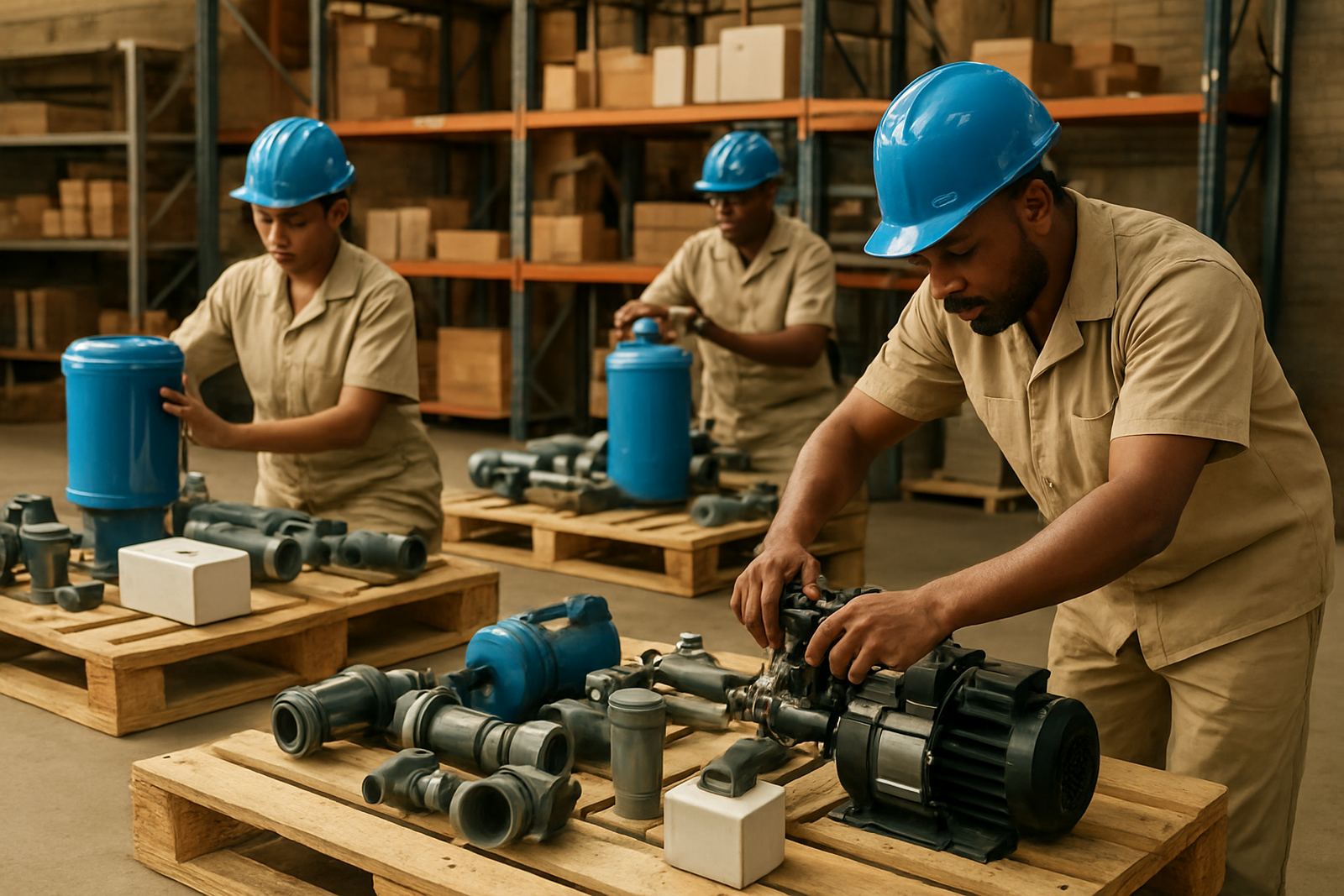
The process is simple. First we gather site information. Next we calculate usage and flow needs. Then we confirm the kit specification, including tank size, pump duty and filtration stages. After that we prepare the assembly list and delivery plan. If commissioning is requested, we also check pressure, leaks and filter performance once the equipment is on site. Customers do not have to interpret technical drawings on their own, because we explain the numbers in plain language and show what the system is expected to do.
- Submit an enquiry with your site details
- We review water use, source and storage needs
- We recommend a sized kit and confirm options
- We prepare delivery, installation support and checks
Pricing based on capacity, not guesswork
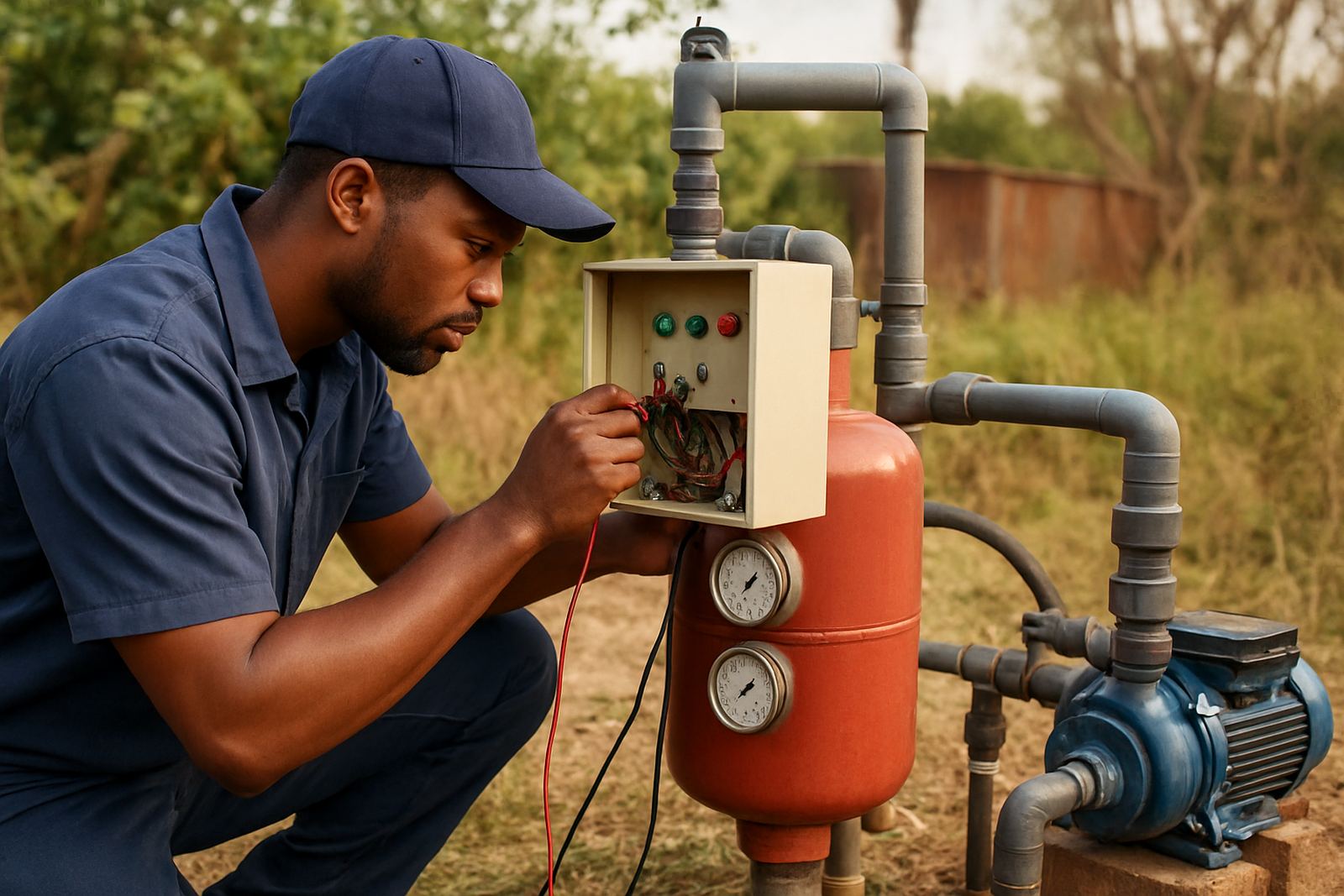
Our pricing approach depends on the scale of the system, the number of components, the amount of filtration required and whether installation support or commissioning checks are needed. A small domestic rain-tank kit costs less than a farm system with higher flow, extra filtration and longer cable runs. Where borehole work is involved, the final price also depends on pump type, pipe length, control gear and any fault-finding required on an existing setup.
We prefer to quote on real requirements rather than on broad ranges that later change. That saves time and avoids expensive over-sizing. In some homes, a smaller tank and a well-matched pressure pump is enough. In others, especially where water is shared between house, garden and livestock troughs, a larger reserve is the better choice. The aim is to spend once and get the right output, not to keep patching the system later with add-ons.
- Domestic kits sized for home use and back-up supply
- Commercial and agricultural kits sized for higher demand
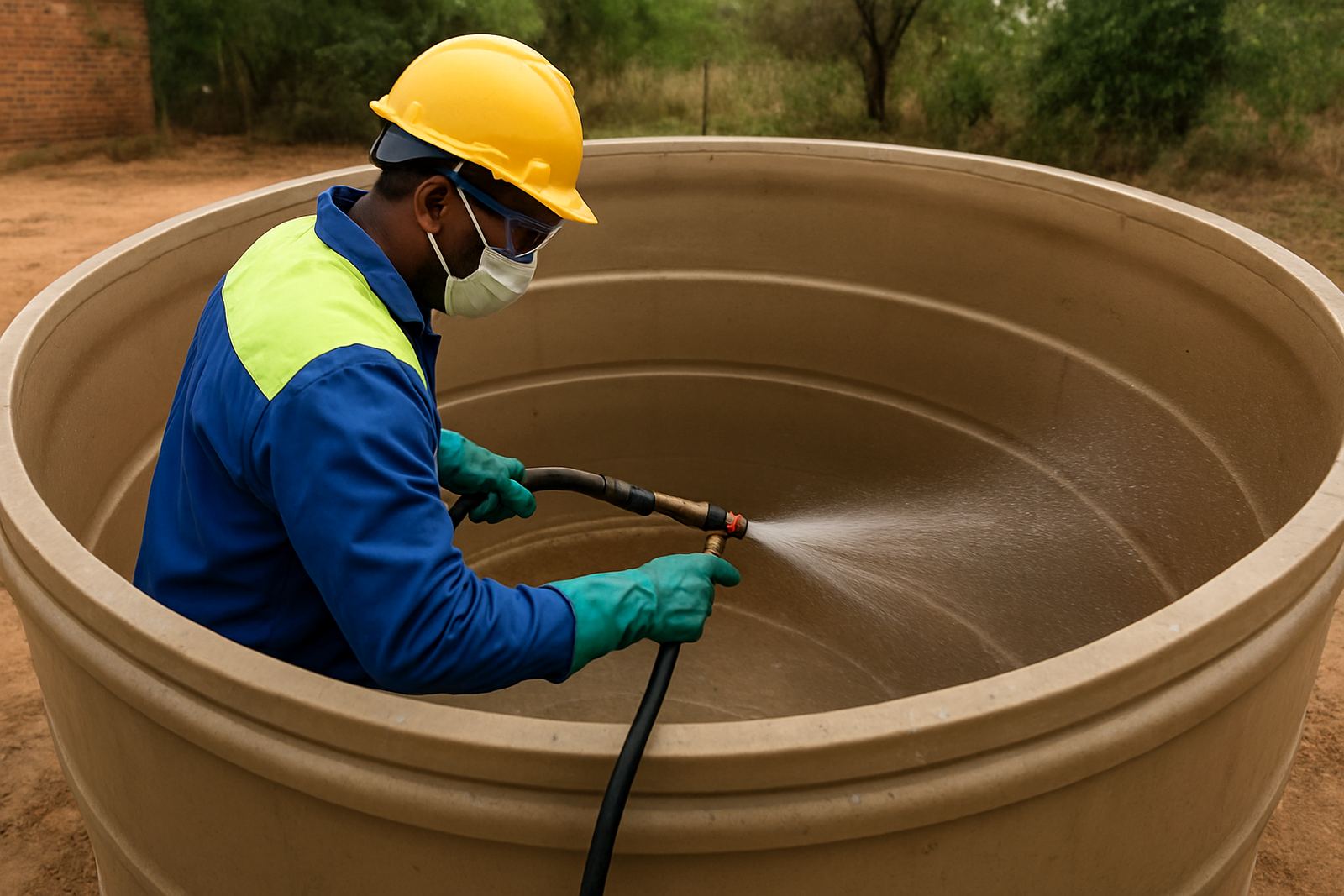
- Optional add-ons for filtration, tank cleaning and servicing
- Installation support quoted separately where needed
Maintenance intervals that protect the sizing you paid for
Even a correctly sized system needs regular attention. Filters that are left too long can cut flow and make a properly sized pump look underpowered. Tanks that are not cleaned can build up silt, algae or sediment, especially where roof runoff carries dust or leaves. On borehole systems, pump servicing and water testing help confirm that the original sizing still suits the water quality and usage pattern. If usage has changed since the first installation, we can review the system and adjust where necessary.
As a practical guide, pre-filters should be checked every few weeks on heavy-use sites and changed more often if the water carries grit. Tank cleaning is usually done annually, though dusty inland areas or sites with organic debris may need it sooner. Borehole pumps and controls should be inspected at least once a year, while filtration performance should be reviewed after any change in water quality or household demand. That keeps pressure steady and avoids avoidable downtime, which is important when the water supply is doing most of the work.
- Filter changes: monthly to quarterly, depending on use
- Tank cleaning: at least once a year
- Pump servicing: yearly or after fault signs
- Water testing: after installation and when quality changes
Sizing Water Systems Across South Africa
People contact Hydrated when they want a system that works the way it should from the start. That includes homes in Pretoria with pressure drops, farms outside Rustenburg needing larger reserve capacity, and Western Cape properties where seasonal supply and storage planning matter. Based in Brits, we understand the practical side of water systems in North West and beyond, including delivery planning, spare parts, and the way load-shedding can affect daily operation.
Our approach is straightforward: size the system to the source, the demand and the site conditions, then support it with the right assembly, delivery and aftercare. If the demand changes later, we can review the setup and advise on a revised pump, tank or filtration arrangement. It is better to size properly once than to keep forcing a small system to do a big job.
Key facts
| Typical domestic tank sizes | 1 000 L to 5 000 L |
|---|---|
| Higher demand storage options | 5 000 L to 20 000 L and above |
| Filtration stages | Sediment, carbon, fine filtration and UV where needed |
| Pump types | Surface pumps and submersible pumps |
| Turnaround on straightforward sizing | Usually a few working days after receiving full site details |
| Maintenance review interval | Annually, with filter checks more often on high-use systems |