
What Our Fault Finding Covers
Fault finding is a practical diagnostic service for water systems that are not performing as they should. We inspect borehole, rain-tank and filtration setups to find the cause of poor pressure, dry-run trips, air in the lines, slow refilling, leaks, noisy running and water that cuts in and out without warning.
Our technicians work with single-phase and three-phase systems, pressure switches, control panels, pressure tanks, submersible pumps, surface pumps, float valves, filters and pipework up to common domestic and farm sizes. If your system has been affected by load-shedding, silt build-up, power surges or borehole level changes, we check those too. The aim is to stop guesswork and get the fault traced properly, not just reset the system and hope for the best.
- Pressure loss checks on pumps, tanks and line restrictions
- Dry-run and low-water protection testing
- Leak tracing on visible pipework and fittings
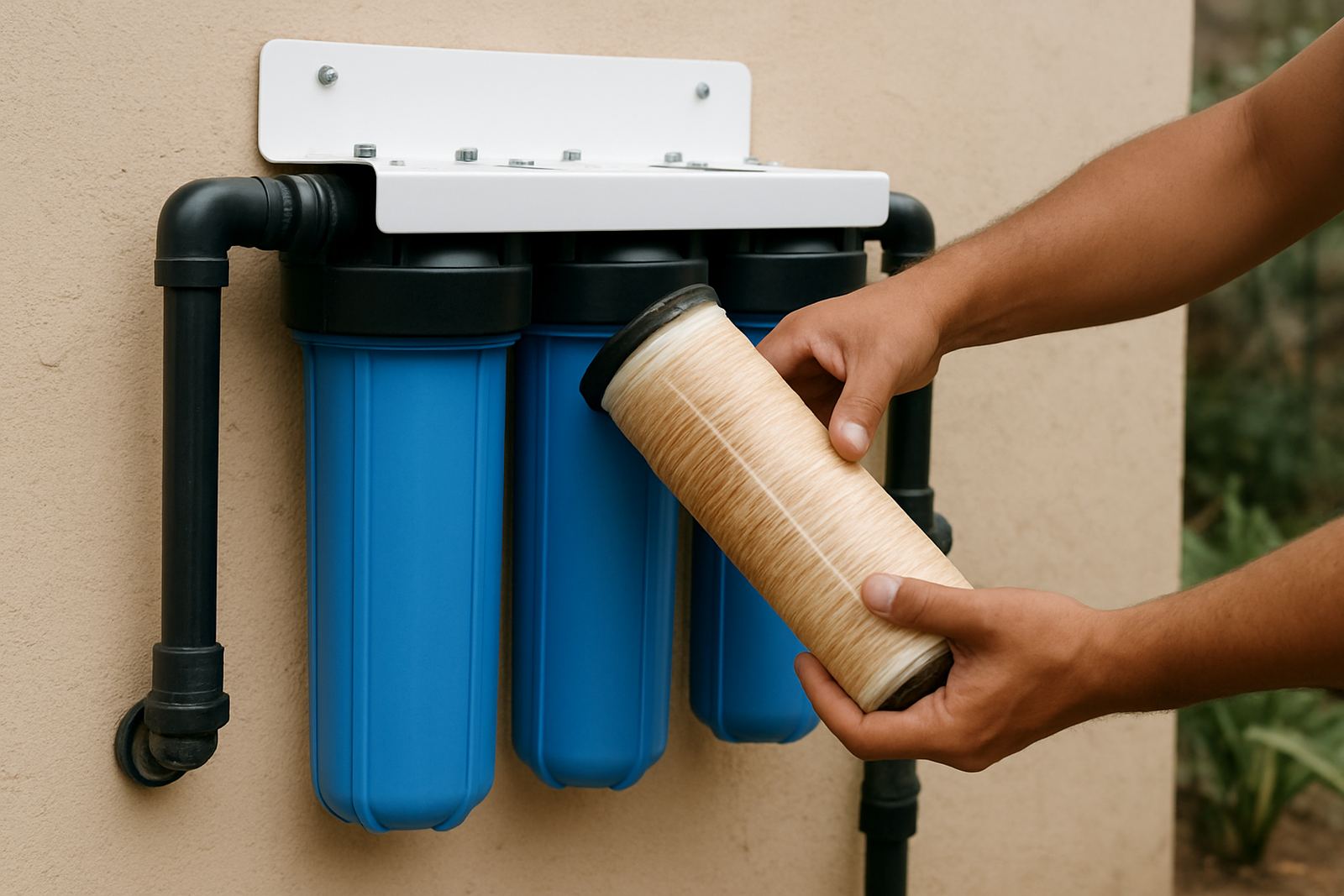
- Flow irregularity checks on filters, valves and controls
- Basic electrical and mechanical inspection of pump circuits
How We Diagnose The Problem
Every call starts with a short interview so we can understand what the system is doing, when the issue started and whether it happens all the time or only at certain times of day. From there we look at the installation, the water source, the age of the components and any recent changes such as new filters, tank cleaning or pump repairs. A careful first assessment often saves time and avoids unnecessary parts being replaced.
We then test the system under normal working conditions. That may include checking pump amp draw, cut-in and cut-out pressure, pressure tank charge, dry-run protection settings, valve operation and filtration restriction. Where needed, we will test water quality for obvious sediment or contamination issues that can cause blockage or poor flow. If the problem is intermittent, we note the conditions that trigger it so the repair can be targeted, not vague.
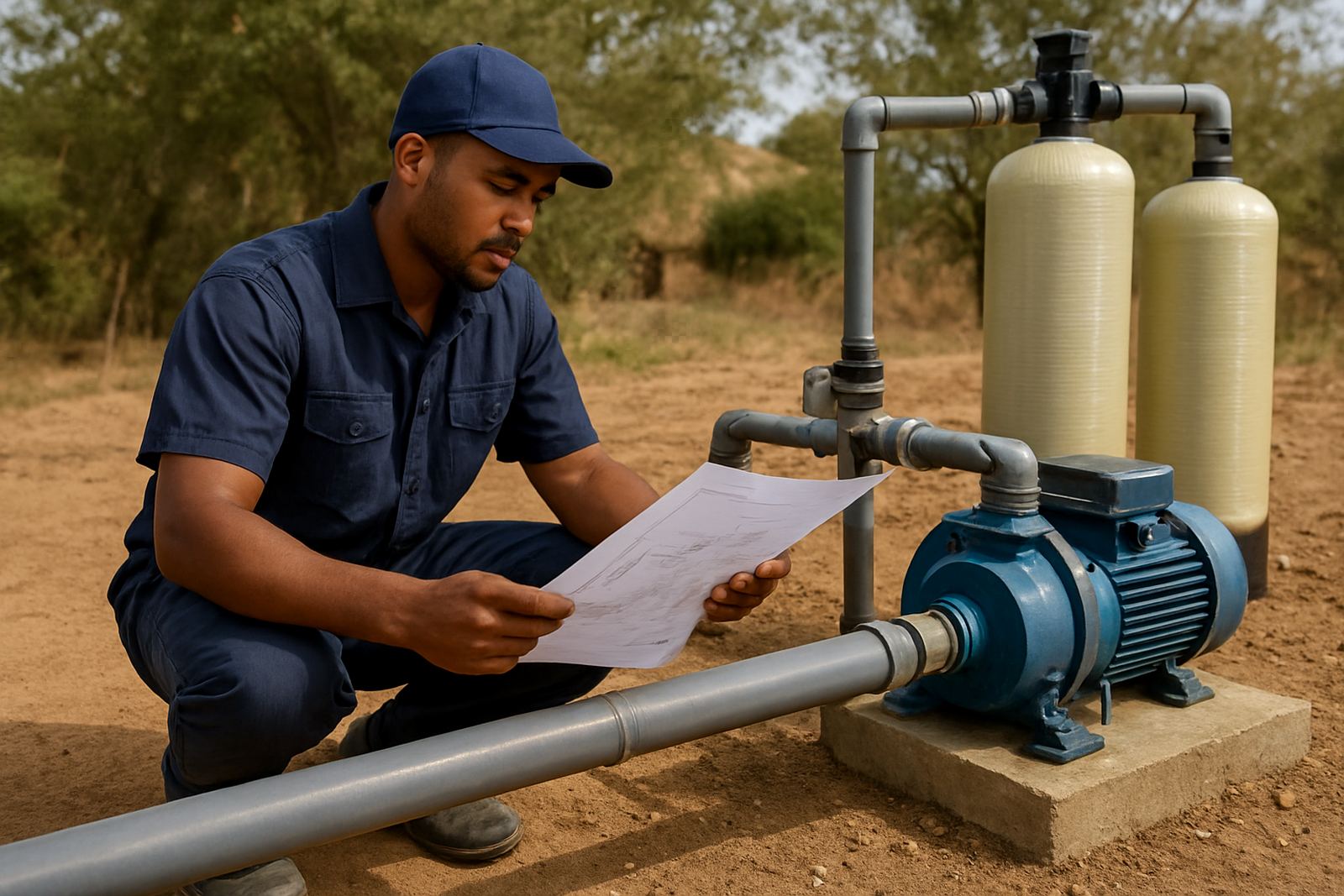
- Visual inspection of pump, tank, filter housings and pipe runs
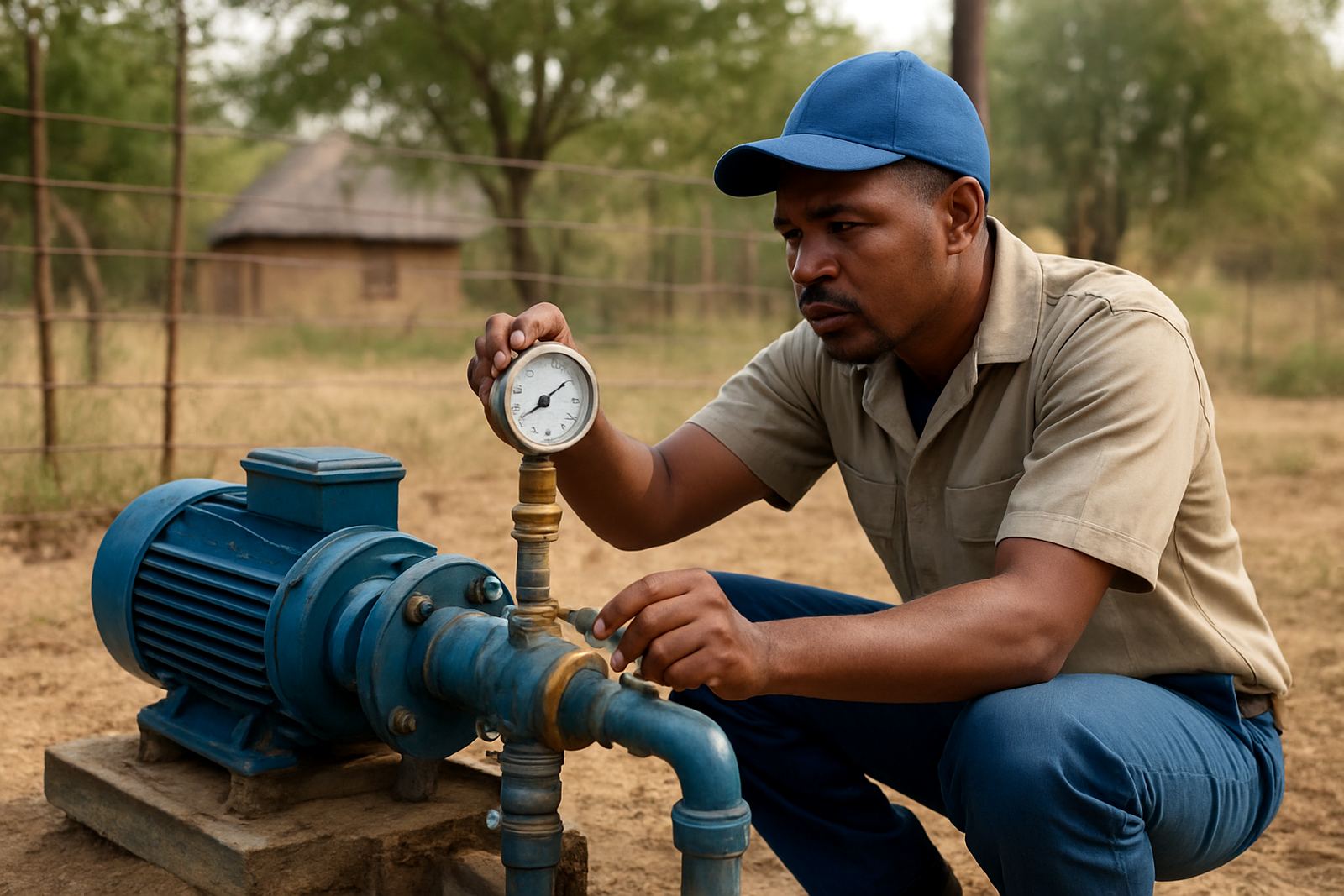
- Pressure readings taken at key points in the system
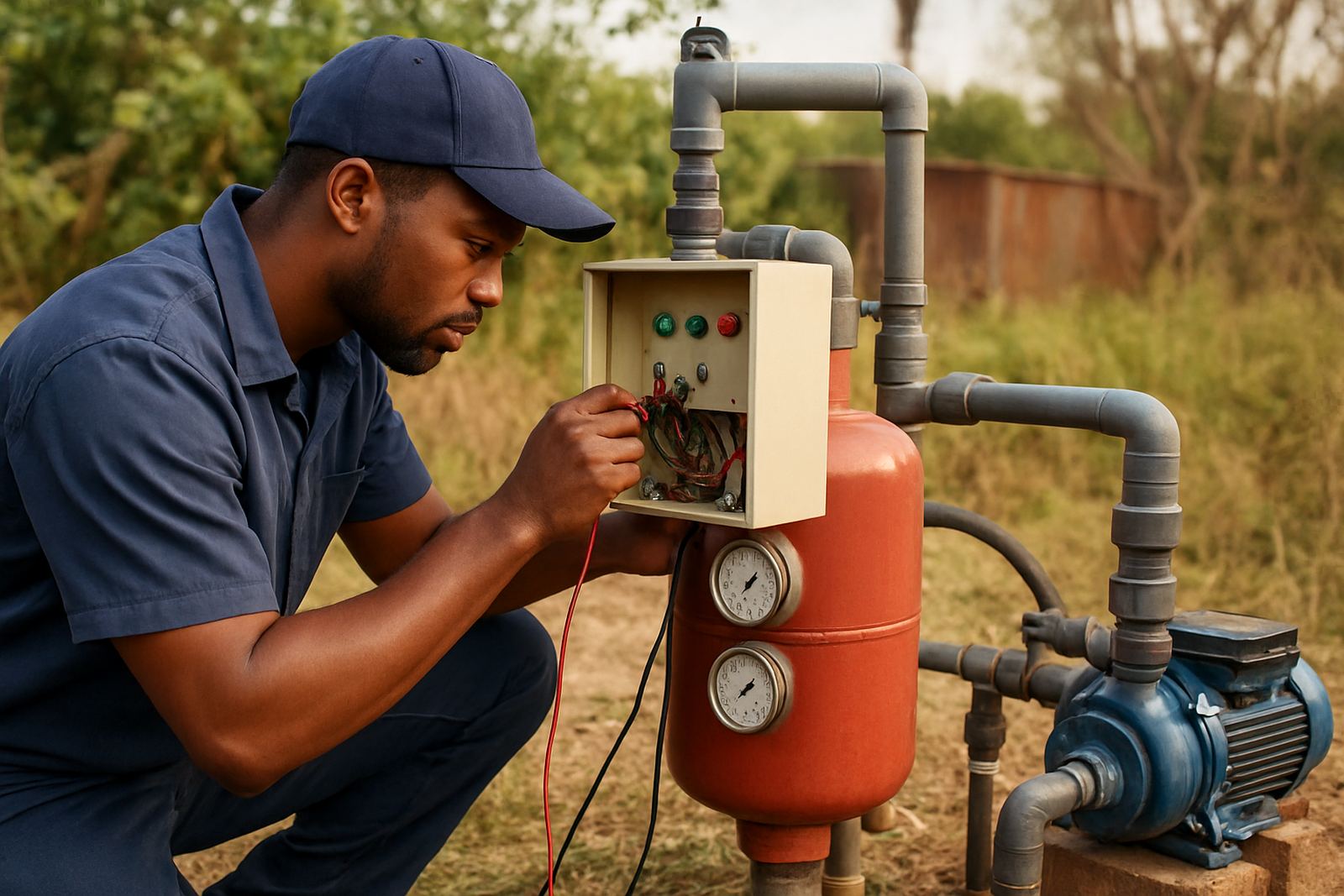
- Electrical checks for obvious faults, tripping and unstable supply
- Water quality checks for sediment, discolouration or odour issues
- Clear report on the likely cause and next step
What Is Included In The Service
Our fault finding service is set up to give you a clear answer, then the option to proceed with the right repair or adjustment. Depending on the system, that can mean cleaning strainers, resetting pressure settings, replacing worn fittings, correcting air leaks, replacing a faulty float switch or advising on a pump service if the unit is near the end of its working life.
On farms around Hartbeespoort and Brits we often see systems affected by long runs, dirty water or pressure drops after peak use. In coastal areas such as Paarl, Stellenbosch and Somerset West, corrosion and moisture can also play a part in control failures. The service is geared toward real site conditions, including heat, dust, high demand and municipal or borehole supply changes. It is not a one-size-fits-all check.
- On-site fault diagnosis and reporting
- Minor adjustments to restore normal operation where possible
- Recommendation for repairs, parts replacement or servicing
- Advice on keeping the system stable between visits
- Commissioning-style recheck after corrective work if required
Turnaround And Visit Scheduling
For nearby areas such as Brits, Pretoria, Hartbeespoort and Rustenburg, visits are scheduled according to urgency and route planning. Emergency response is not promised for every case, but low pressure, dry-run issues and complete water interruptions are treated as high priority where practical. Remote farms and longer-distance deliveries are handled through planned routes so we can keep the visit efficient.
Most straightforward faults can be diagnosed in a single visit. More complex issues may need a second visit if a pump has to be removed, a part must be matched to the installation, or the problem only appears after the system has run for longer. In our experience, getting the diagnosis right the first time is better than rushing and replacing parts unnecessarily.
- Single-visit diagnosis where access and conditions allow
- Follow-up visit scheduled for repairs or deeper testing
- Route-based planning for Pretoria, Bloemfontein and the Western Cape
- Urgent issues prioritised where water access is affected
Pricing And Site-Specific Costs
Fault finding is priced according to the type of system, site access, distance from our Brits base, the number of components to be checked and whether the fault is on the pump side, the filtration side or in the distribution lines. A simple domestic pressure issue is priced differently from a farm system with multiple tanks, long pipe runs and three-phase controls. That keeps the quote fair and tied to the work required.
We prefer to quote on the actual problem rather than guess from a description alone. If a repair is needed after the diagnosis, you will know what is wrong, what parts are needed and what can wait. For many clients this approach is easier to budget for, especially where a system has been running unevenly for months and several causes may overlap. We keep pricing practical, with no surprises on site.
- Pricing based on system size and fault complexity
- Distance and access factored into the call-out
- Repair costs quoted separately after diagnosis
- Maintenance advice included where it helps prevent repeat faults
Stopping Repeat Faults In Water Systems
Some faults are one-off, but many water system issues return because the underlying cause was never dealt with. Pressure tanks lose charge, filters clog, boreholes change yield over time and electrical parts wear out. For most homes, a check every 6 to 12 months is sensible. Farm systems, especially those running daily or handling sediment, may need inspection every 3 to 6 months.
If your system sits in a dusty yard, runs through load-shedding cycles or works in coastal humidity, it should be checked more often. We also recommend a review after tank cleaning, pump servicing or any change to the filtration setup. Regular checks help catch small issues before they become dry-run failures or pipe bursts. That saves water, protects equipment and keeps the system steadier through dry spells.
- Domestic systems: 6 to 12 month intervals
- Farm and high-use systems: 3 to 6 month intervals
- Extra checks after power issues or component replacement
- Recommended after any major drop in pressure or flow
Key facts
| Service area | Brits, Pretoria, Hartbeespoort, Rustenburg, Bloemfontein, Paarl, Stellenbosch and Somerset West |
|---|---|
| System types | Borehole, rain-tank and water-filtration systems |
| Common faults | Poor pressure, dry-run trips, leaks, erratic flow, air in lines, filter blockage |
| Typical equipment checked | Pumps, tanks, switches, valves, pipework, controls, filters |
| Turnaround | Same-day or next available visit where routing and urgency allow |
| Maintenance intervals | Every 6 to 12 months for homes, every 3 to 6 months for farms |