
What we check on site
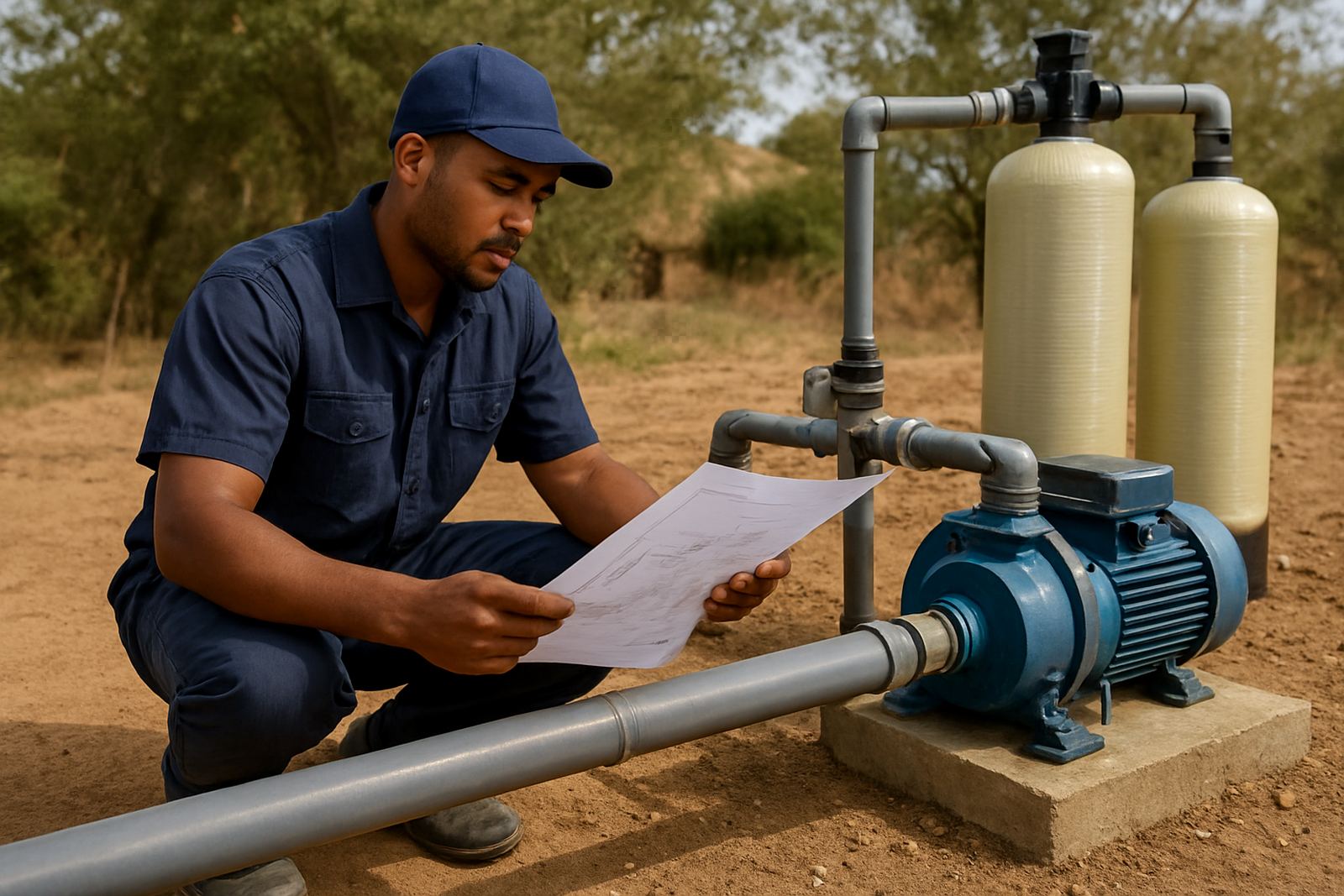
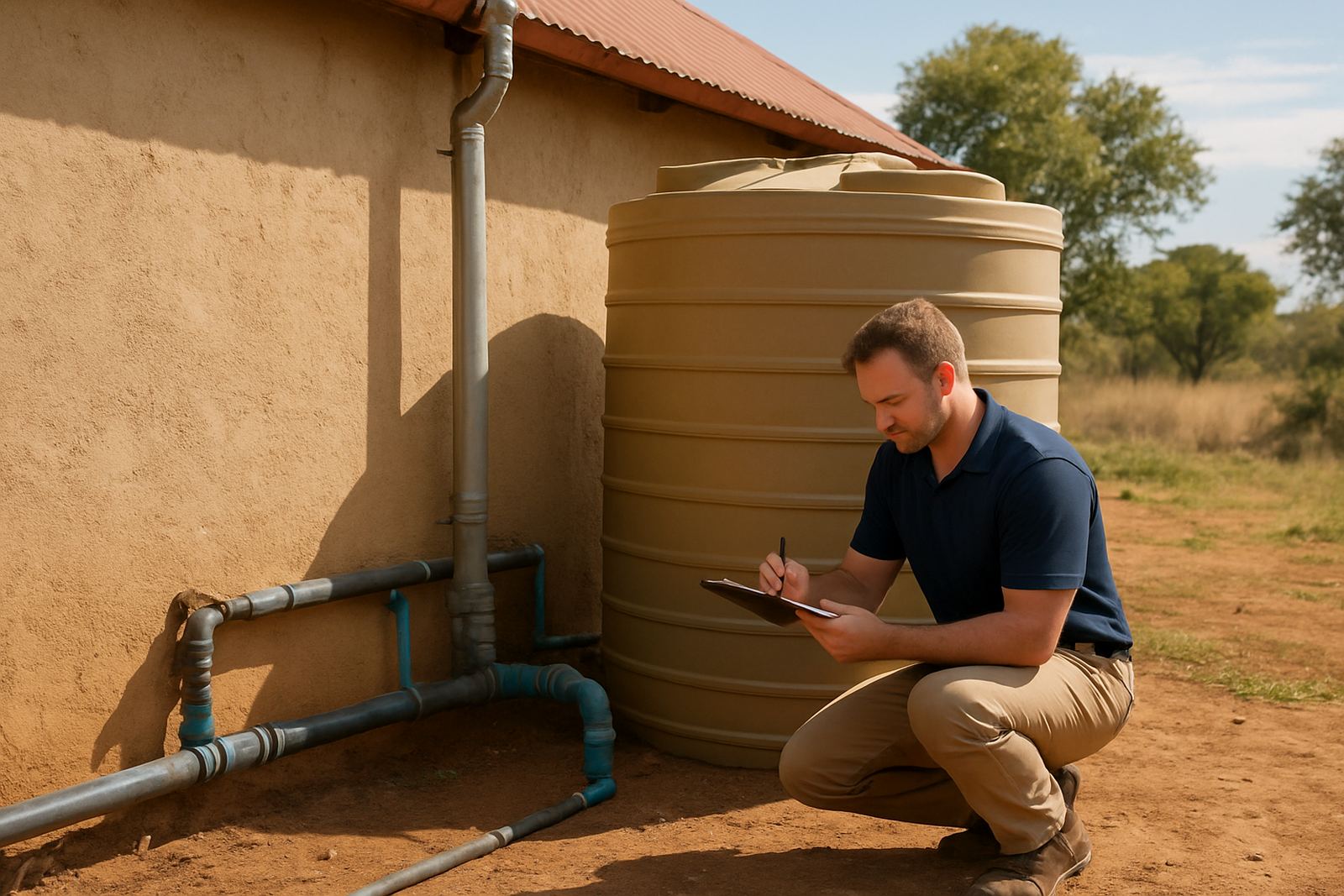
Every site check starts with your water use, source position, and space for tanks, pumps, filters and pipe runs: how much water you use, where the source sits, and what space is available for tanks, pumps, filters and pipe runs. We inspect the property layout, access for delivery, electrical points, the condition of the water source, and the practical route from storage to point of use. That includes looking at borehole position, rain catchment area, gutter condition, first flush needs, filtration space, and whether the site can handle a surface mounted or elevated setup.
For farms and rural homes, we also look at water pressure needs, livestock points, garden use, staff housing, washing areas and any dependence on water during load-shedding. In coastal areas such as the Western Cape, we pay close attention to corrosion risk, fittings, and tank placement where wind and salt air can shorten service life. On certain sites the water source and layouts change the whole system spec, so the assessment has to be practical and measured.
What is included in the assessment
The assessment is more than a quick look. We measure what is there, compare it to your daily demand, and note the items needed for a working setup. If the job is for a home in Pretoria, a smallholding near Hartbeespoort, or a farm outside Bloemfontein, the same principle applies: the site has to support the system before any kit is delivered.
- Water demand review for household or farm use
- Source inspection for borehole or rainwater capture
- Tank location, base and access checks
- Pump and filtration space check
- Pipe route and valve position review
- Power and backup planning for load-shedding periods
- Water quality risk notes where testing is required
We also flag anything that may affect installation, such as poor driveway access, uneven ground, low roof pitch, weak guttering, or existing plumbing that needs repair before the system can be connected.
How the assessment is carried out
Our process is straightforward. Once you send an enquiry through the contact page, we review the basics and confirm the type of system you need assessed. We then arrange a site visit in Brits or plan travel to nearby towns and delivery areas such as Rustenburg, Pretoria, Paarl, Stellenbosch or Somerset West. For larger projects we can coordinate with a farmer, caretaker or builder if the owner is not on site.
- Step 1: review the enquiry and property details
- Step 2: arrange a visit date and access plan
- Step 3: inspect the site and take measurements
- Step 4: confirm the system size and components
- Step 5: issue the recommended next steps and quotation basis
Where needed, we can check water quality, note sediment levels, and advise on pre-filtration, cartridge stages or storage tank cleaning before a new kit is fitted.
Turnaround times and when to book
Most assessments are scheduled within a practical working window once access is confirmed, and turnaround depends on location, job size and how much measuring is needed. A single home in Brits may be assessed quickly, while a farm with multiple tanks, pumps and lines may need more time on site. For out of town work, we group visits where possible to keep travel costs sensible.
If you are planning before summer rain, a renovation, or a new build, book early. In dry months and during municipal water interruptions, demand rises and installation windows fill fast. If the system is needed for a remote site or for backup during load-shedding, it is better to assess before the tank is bought or the borehole equipment is ordered.
Pricing approach and what affects cost
We price site assessments according to location, property size, complexity, and whether the visit is for one system or several points of use. A compact household visit in the North West will not be priced the same as a large agricultural site with multiple storage tanks, filtration stages and long pipe runs. Travel distance, access difficulty and any follow-up measurements can also affect the final amount.
We keep pricing clear and practical. If the site needs more than one visit, or if the assessment has to be linked to water testing, pump servicing or fault finding, we explain that upfront. There are no unnecessary extras. The aim is to give you the information needed to buy the right kit, not to add cost where it is not required.
After the visit: maintenance and next steps
Once the assessment is complete, we advise on the right maintenance intervals for the system type. Rain-tank systems usually need gutter checks after heavy storms, first flush cleaning at the start of the rainy season, and filter changes every few months depending on silt and leaf load. Borehole systems often need pump servicing, pressure checks and occasional fault finding if the drawdown or flow changes. In dusty inland areas and on farms, tank cleaning may be needed more often than in a suburban setting.
Where the water is used for drinking, washing or sensitive equipment, we may recommend regular testing and cartridge changes. Coastal humidity, mineral content and seasonal debris all affect service intervals. The point is to keep the system working without surprise failures, and to make sure the installation still suits the property as use changes over time.
Key facts
| Assessment scope | Demand, layout, source, access and installation requirements |
|---|---|
| System types covered | Borehole, rain-tank and water-filtration kits |
| Typical site inputs | Tank space, pump position, pipe route, power supply, water quality |
| Service areas | Brits, Pretoria, Hartbeespoort, Rustenburg, Bloemfontein, Paarl, Stellenbosch, Somerset West |
| Use cases | Homes, farms, smallholdings and remote properties |
| Follow-up options | System sizing, delivery coordination, installation support and maintenance planning |