What the UV purification kit does
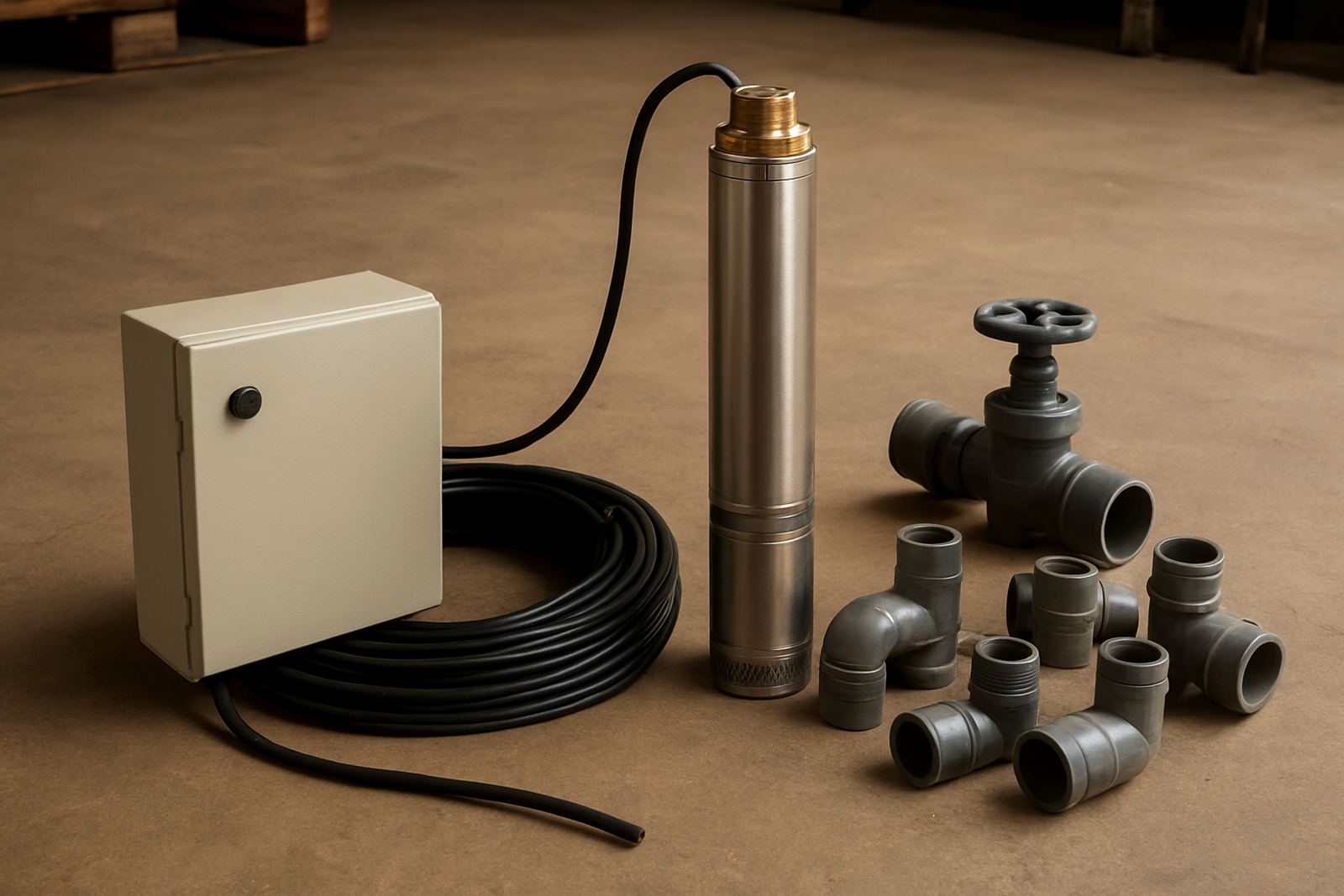
The UV purification kit uses ultraviolet light inside a sealed chamber to reduce the risk of bacteria, viruses and other microorganisms passing through treated water. It does not remove sand, rust, tannins, salts or chemical taste, so it must always be used after sediment and fine filtration. For many South African properties that rely on boreholes or harvested rainwater, that final disinfection step makes a real difference to day to day water quality.
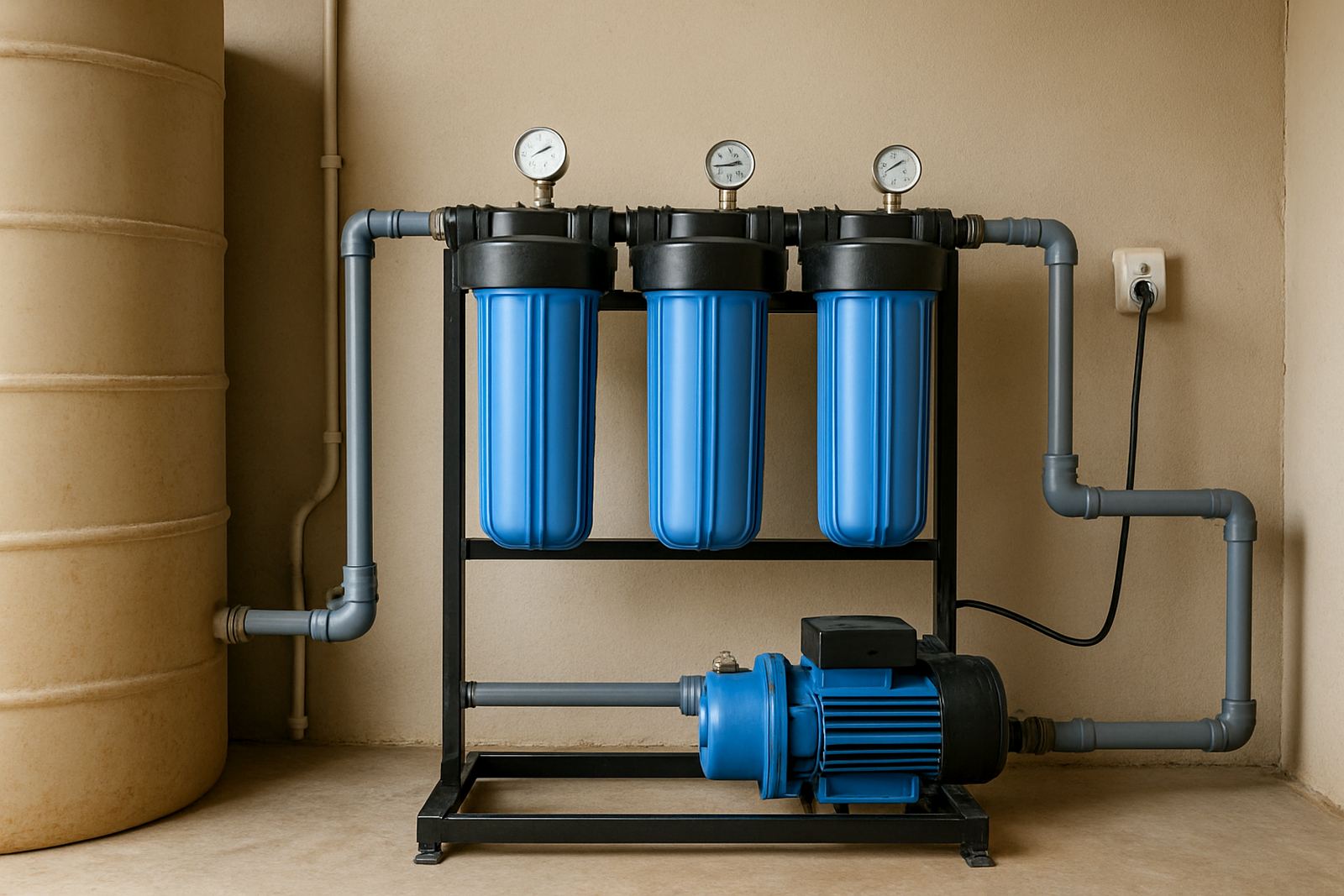
The kit is best used where water is already clear and stable. If the water carries silt after rain, has iron staining, or comes from an older borehole with variable quality, the filtration side needs to be sorted first. Once the water has been screened properly, the UV unit gives a clean, low maintenance disinfection stage for households, staff quarters, farm kitchens, and accommodation units.
- Improves microbiological safety after pre-filtration
- No taste or odour is added to the water
- Suitable for borehole and rain-tank systems
- Works well where chemical dosing is not preferred
Size options for different water demands
UV systems are sized to suit the flow rate and the amount of water used each day. A small home with one kitchen, a few bathrooms and light garden use needs a different unit from a farm house with guest rooms, multiple taps, or a property running irrigation off a treated line. The important point is to match the UV chamber to the actual flow, not just the pump size.
Common options are arranged by flow capacity and pipe size. In practice, we look at whether the system feeds only drinking points or the full house, whether it runs continuously, and whether the supply is a borehole with variable output or a tank with steady pressure. That helps avoid undersizing, which can reduce contact time and make the unit less effective.
- Compact kits for single homes and low demand systems
- Mid-range kits for family homes, guesthouses and smallholdings
- Higher flow kits for farms, labour accommodation and multi-use sites
- Single point or whole-system installation options
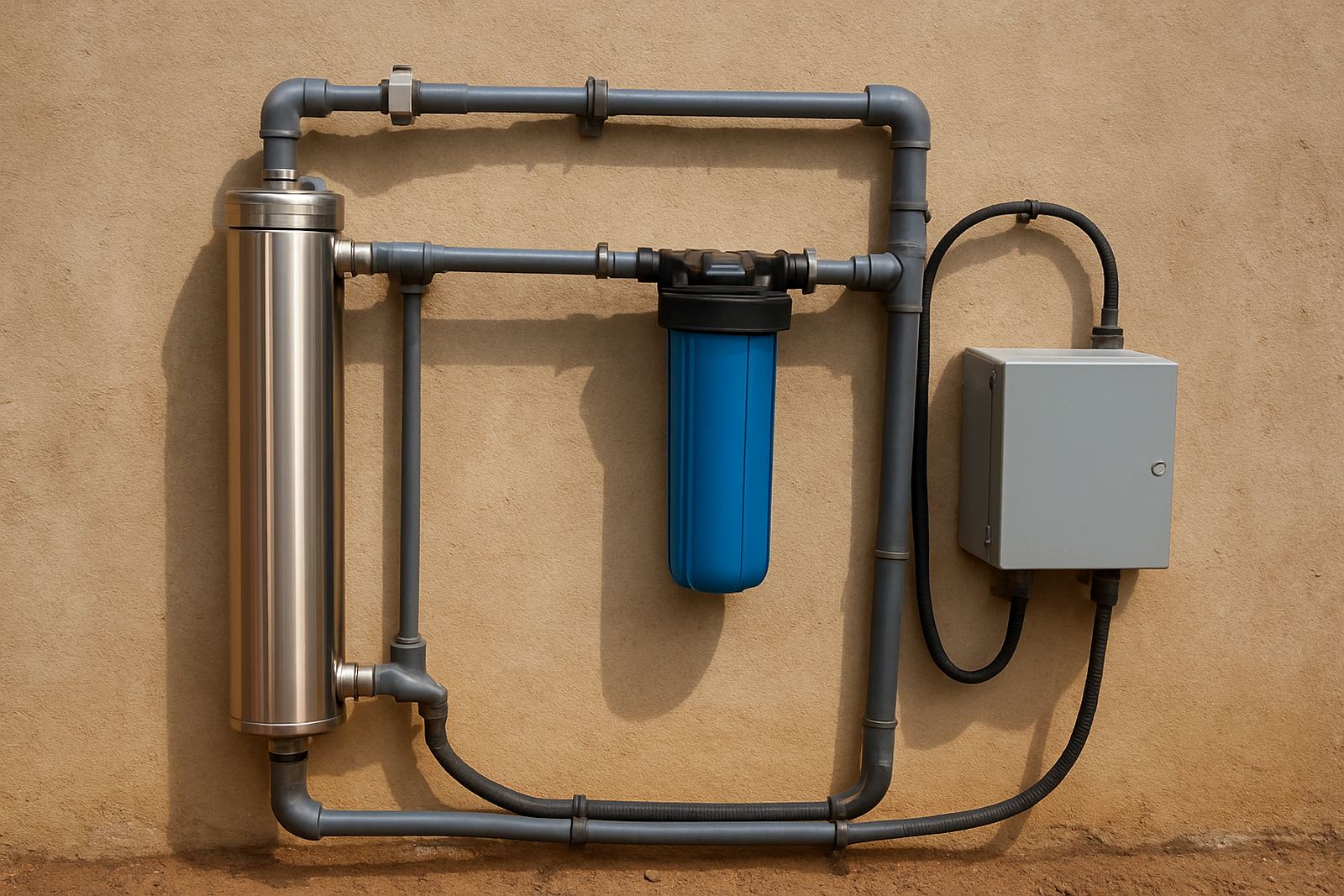
We also check the plumbing layout. A UV unit placed after the last filter and before the distribution line gives better results than one fitted too far from the main supply point. On some sites, an extra bypass line or isolation valve helps with servicing, especially where there is no backup water storage. That saves time when a bulb replacement is due or the quartz sleeve needs cleaning.
Where a UV unit suits South African properties
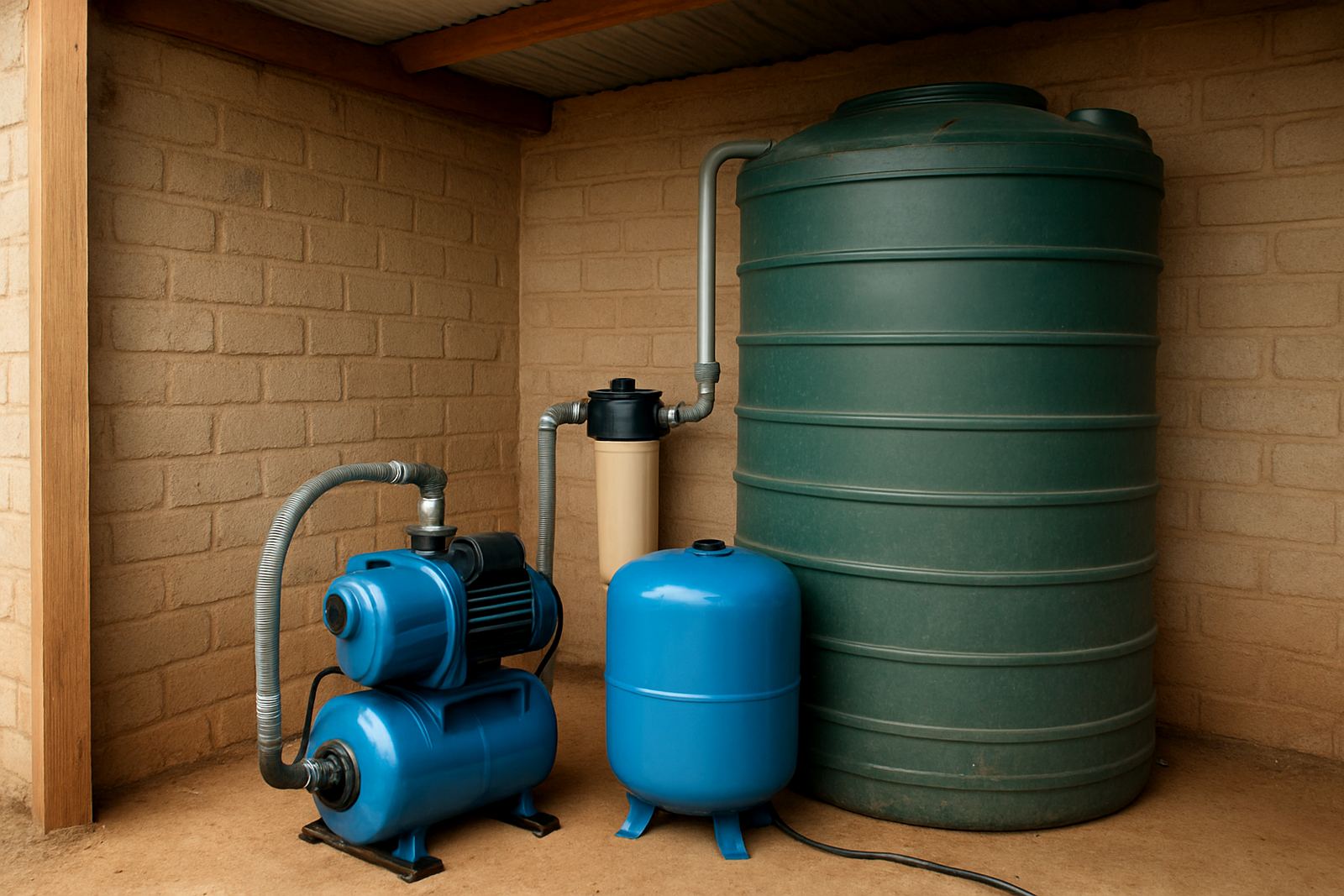
This kit suits properties where water quality can vary with rain, pump cycles or tank turnover. In Brits and Hartbeespoort, many homeowners use boreholes with sediment filters and then add UV protection at the point where the water enters the house. In Rustenburg and Pretoria, it is often used where municipal interruptions have pushed owners towards backup water from tanks or boreholes. On the coast, especially in the Western Cape, UV works well after tank storage where water may sit for longer periods and needs a final treatment step.
It is also useful for farms that have accommodation, packhouses, offices or kitchen areas drawing from one source. Where borehole water is used for human consumption, the system should be part of a larger treatment chain that includes sediment removal and sometimes carbon or iron treatment. UV is not a replacement for proper filtration, it is the last barrier. If the water is cloudy or full of particles the UV light cannot do its job properly, so clear pre-treatment matters a lot.
- Homes using borehole or rainwater for drinking and washing
- Guest houses, cottages and staff accommodation
- Small farms and agricultural properties
- Sites affected by load-shedding where storage tanks are used
Installation, power and system layout
Most UV purification kits are installed in a horizontal line after filtration and before the final tap, tank or distribution manifold. They need enough space for cartridge changes, lamp access and sleeve cleaning. The chamber should be fitted where it stays dry, sheltered and easy to reach, not in a cramped pump corner with poor lighting. On coastal sites, good ventilation matters because moisture can shorten the life of electrical parts over time.
These units usually run on standard mains electricity and should be connected through a protected circuit. Because load-shedding is a factor in many areas, it is sensible to pair the UV unit with a stable backup supply or a system design that prevents untreated water from being used when power is off. In some cases, the unit can be linked to the pump control so water does not continue flowing when disinfection is not active.
The plumbing side is straightforward, but the setup must be done neatly. Wrong pipe size, poor bypass arrangement or no isolation valves will make servicing harder and can lead to pressure loss. If the system is feeding a whole house or farm unit, pressure and flow need to be checked under normal use, not just at idle. A quiet mistake in sizing can leave the UV unit working outside its range, so the earlier the layout is checked the better.
Care, lamp changes and routine servicing
UV systems are simple to own if they are kept clean and checked on time. The lamp output drops gradually with age, even if it still lights, and the quartz sleeve can collect scale or film from the water. In areas with harder water, the sleeve may need more regular attention. Where borehole water carries fine sediment or iron, the pre-filters should be maintained properly or the UV chamber will never stay clean for long.
Routine servicing usually includes lamp replacement, sleeve cleaning, O-ring inspection, checking electrical connections and confirming that the flow rate still matches the unit rating. If the system is fitted to a tank, the tank itself should be cleaned as part of the maintenance cycle. A UV unit can only disinfect what passes through it, so the whole water line needs to be kept in good order. If someone skips filter changes for months, the UV unit will be carrying a bigger load than it should.
- Change the lamp on schedule, usually yearly
- Clean the quartz sleeve when scaling or clouding shows up
- Replace pre-filters before flow drops too far
- Check seals and electrical parts during annual maintenance
What to check before you order
Before ordering a UV purification kit, it helps to know the source water, the expected daily use and the pipe size where the unit will go. If the system is for a home in Paarl, Stellenbosch or Somerset West, the water may be coming from a borehole with storage, or from rain tanks topped up during dry spells. In Bloemfontein or Rustenburg, the source may be deeper borehole water with a different mineral load. Those details change the sizing and filter choice.
It also helps to know whether the unit will protect drinking water only or the full house supply. Ask what pre-filtration is already in place, whether there is a pressure pump, and whether backup power is available during outages. If there is no backup power, the layout should stop untreated water from being used by mistake. We also check if the customer wants installation support, commissioning checks, or just supply of the kit for a contractor to fit.
- Source water type and recent water test results
- Daily usage and number of users
- Pipe size, pump pressure and available installation space
- Existing sediment or carbon filtration before the UV unit
- Power supply and backup during load-shedding
- Whether the unit is for drinking water only or whole-property use
Key facts
| Treatment stage | UV disinfection after pre-filtration |
|---|---|
| Typical use | Homes, farms, guest units and smallholdings |
| Power requirement | Standard mains electricity, protected circuit recommended |
| Installation position | In-line after final filter and before distribution |
| Maintenance | Annual lamp change, sleeve cleaning and seal checks |
| Supply area | Brits, Pretoria, Hartbeespoort, Rustenburg, Bloemfontein and Western Cape deliveries |