A Practical Starter Setup For Small Homes
This kit is put together for homes that want a dependable borehole supply without overbuying on capacity. It suits day to day household use such as taps, toilets, a small garden and topping up a storage tank, with the pump and controls matched to modest flow and pressure needs. For a two to four person home, or a small household with careful water use, it gives a sensible starting point.
The setup is supplied as a kit rather than loose parts, which helps when you want the basics matched properly from the start. That means less guessing on pipe sizes, cable length, pressure control and fittings. In many areas around Brits, Hartbeespoort and Pretoria, boreholes are used alongside municipal supply so the system must be easy to live with when load-shedding or pressure drops affect the mains. This kit is built for that kind of use, not for heavy irrigation or large multi-point demand.
What Comes In The Kit And Typical Sizes
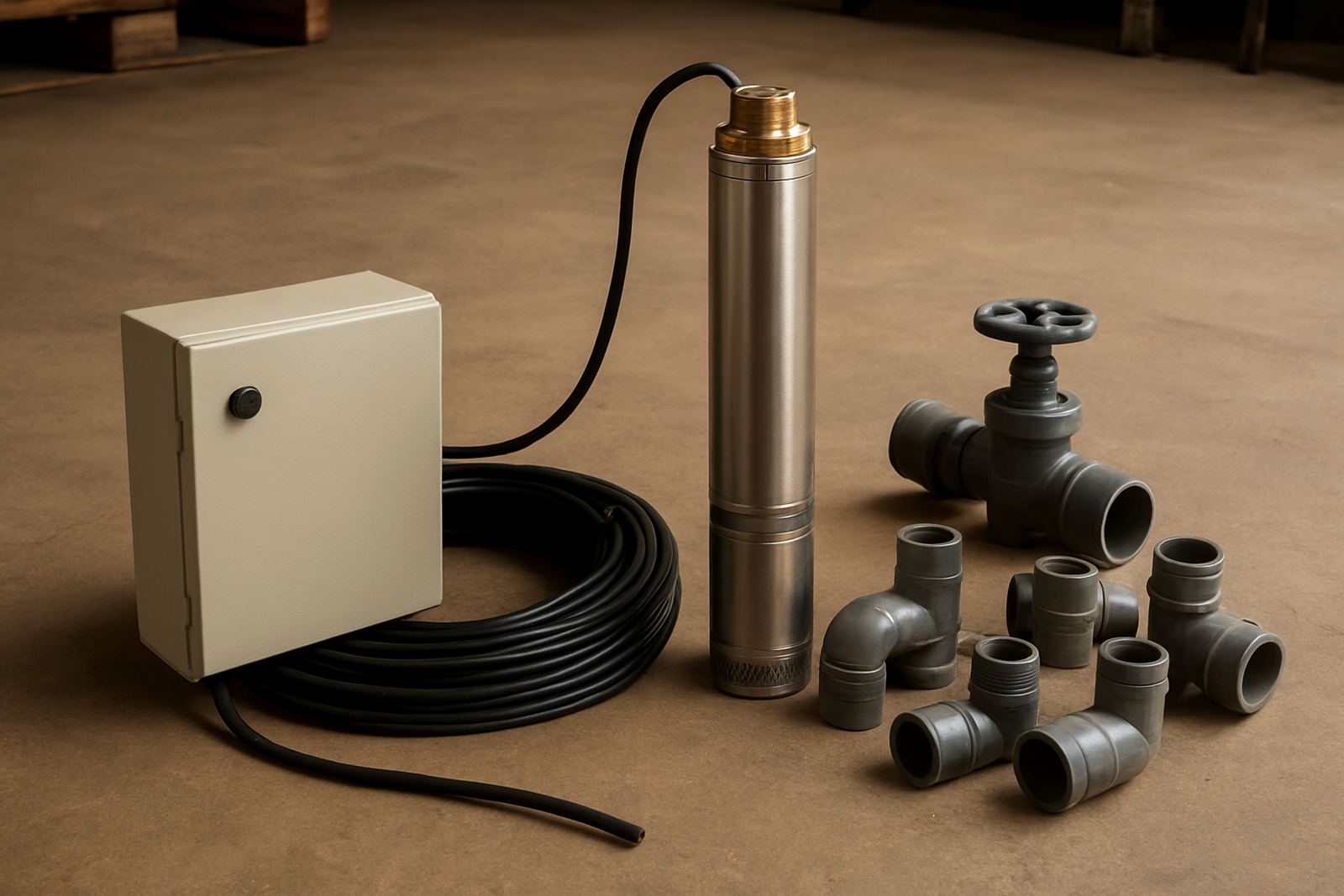
The exact contents can vary with borehole depth, yield and the type of storage you are feeding, but a starter kit generally includes the pump, cable, control gear, drop pipe, fittings and basic protection parts. Where needed we can also include a pressure vessel or float controls for tank filling. If the borehole is already drilled, the kit is sized around the water level, the drawdown and how far the water must travel to the tank or pressure line.
- Small submersible pump sized for light domestic use
- Electrical control box or controller for safe starting and stopping
- Drop pipe, cable and joining fittings
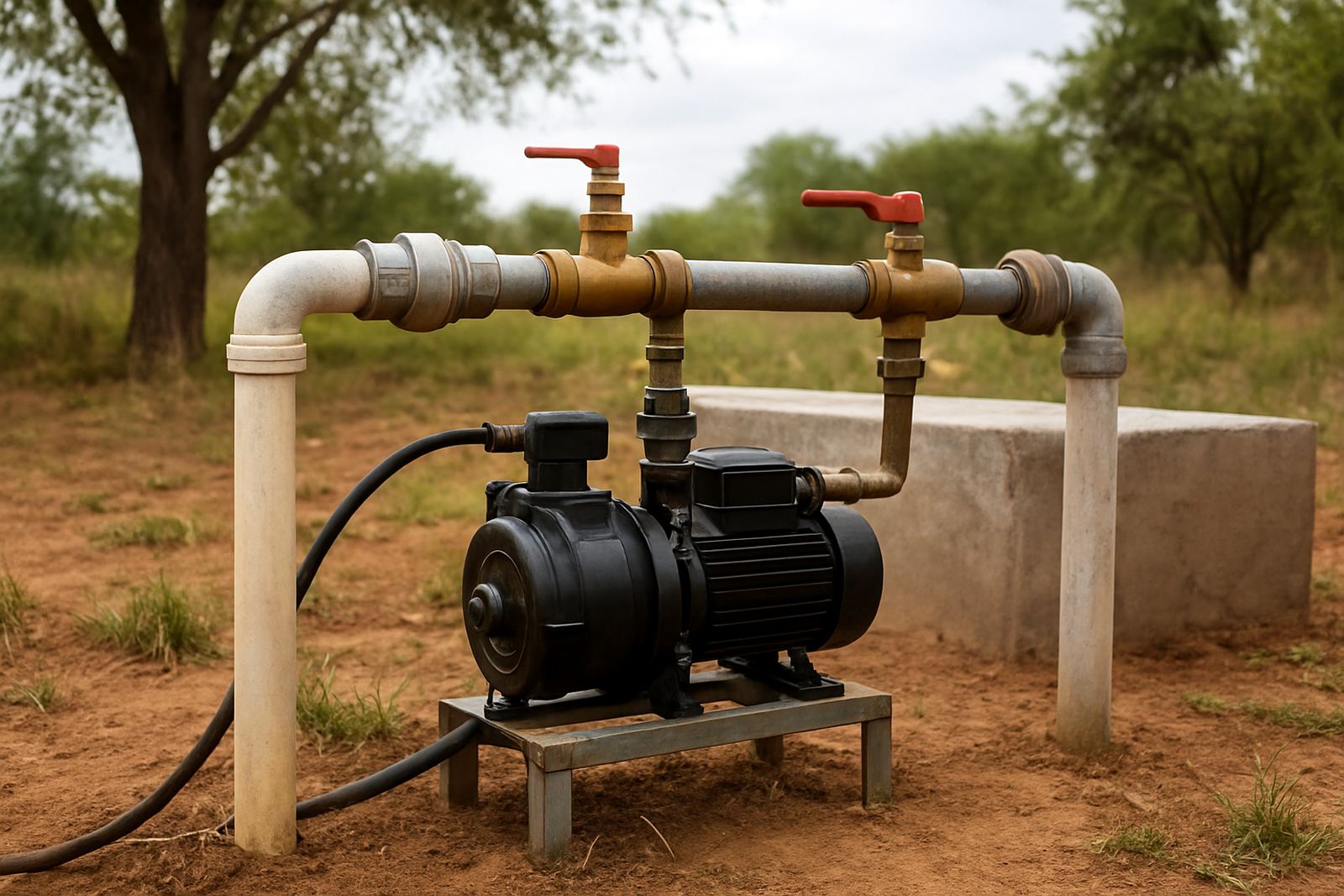
- Non-return valve and basic isolation fittings
- Float switch or pressure switch where the application calls for it
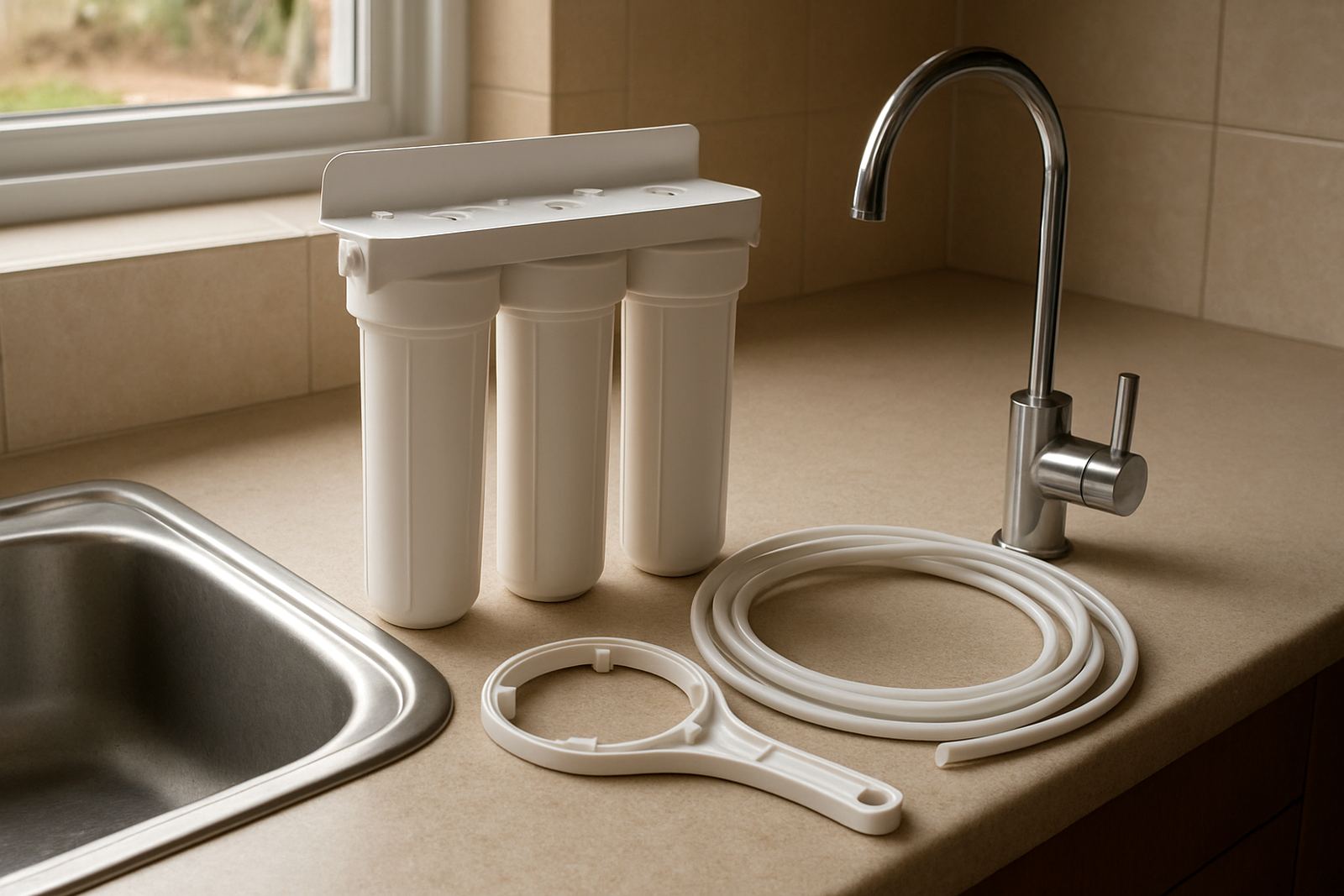
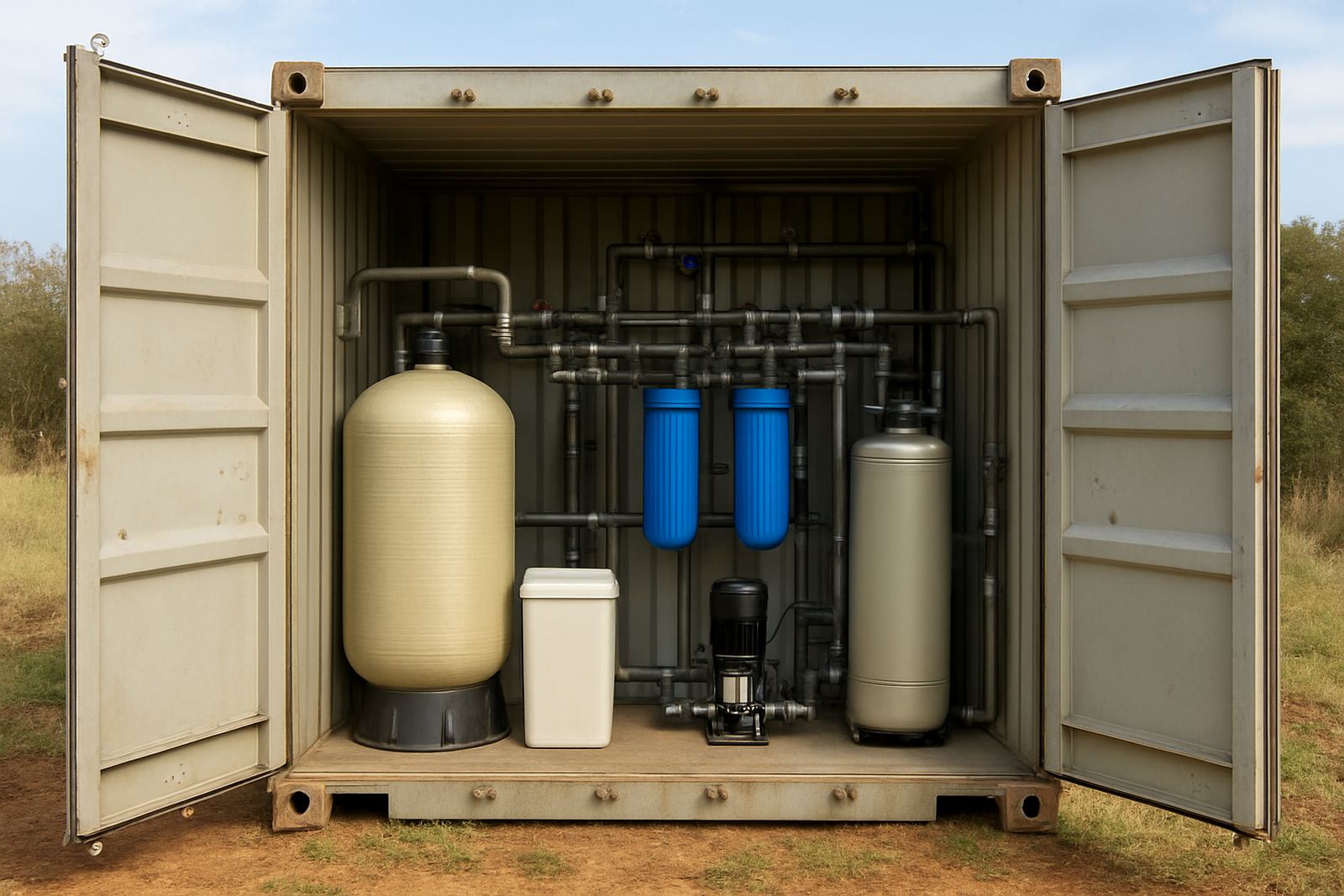
- Optional pre-filter for cleaner water into the house or tank
Common starter pump sizes are usually in the 0.37 kW to 0.75 kW range, with discharge points that suit narrow to medium boreholes. Pipe size is normally selected to match the pump and the required flow, often 20 mm to 32 mm depending on the duty point. We also look at cable length, because a shortage there can hold up installation and create extra costs. In some cases a higher head pump is needed if the borehole is deep or the tank is on a raised stand.
Where The Starter Kit Suits Best
This product suits small houses, garden cottages, staff housing, weekend homes and compact farms where the water need is steady but not high volume. It is also useful where a homeowner wants to protect the household from interruptions and reduce reliance on municipal pressure. In places like Rustenburg, Bloemfontein and the Western Cape, water conditions can differ quite a lot, so sizing and filtration should be checked before ordering.
For farms, the starter kit is only suitable for very light use such as a small homestead or an auxiliary point, not for stock watering or irrigation lines. If the borehole is producing sandy water or has a high iron content, we may recommend a filter stage before water enters the home. Coastal areas can also need better corrosion resistance and sealed electrical fittings because humidity and salt air shorten the life of poor-quality components.
- Small homes with one main tank or pressure system
- Properties with backup water needs during outages
- Sites with moderate borehole yield and stable static water level
- Households looking for a clean, simple entry-level setup
Power Needs, Controls And Installation Notes
The starter kit can usually run on single-phase power, which is common for homes and small plots. Where the site has frequent outages, a generator or inverter may be used if the pump current and starting load are suitable. That said, not every pump is a match for every backup power system, so it is important to check the starting amperage and total run load before buying. A small pump can still trip a weak inverter if the starting surge is too high.
Installation support normally covers pump lowering, cable routing, connection to the control gear and setup of the water line to the storage tank or pressure side. If the borehole is deep, we check drop pipe strength and cable protection carefully. On some properties a trench to the tank is needed, and the line must be installed with correct burial depth, proper valves and neat access for future maintenance. In municipal areas, owners should also check local by-laws if the borehole is connected in any way to the home reticulation system.
- Check borehole depth and static water level
- Confirm available power supply and backup option
- Measure distance to tank or pressure point
- Allow for safe access to the borehole cap and controls
Care, Servicing And Water Quality Checks
A borehole starter system works best when it is inspected now and then, not only when it fails. Basic care includes checking pressure, listening for unusual pump noise, watching for air in the line and keeping the borehole head clean and sealed. If the water turns cloudy after heavy rain, pumping can sometimes stir up fine sediment. That is worth checking before the filters are blamed.
We recommend filter changes, pump servicing and annual maintenance for households that rely on the system daily. In sandy conditions or where the water has iron, manganese or odour issues, testing is important before choosing the final filter stage. A quick water test can help avoid damage to taps, appliances and geysers. If the pump starts cycling too often, the tank level switch, pressure switch or check valve may need attention. Small faults caught early usually cost less to fix than a burnt-out pump. Even a simple starter kit benefits from planned checks, because a borehole that is left alone too long can become a nuisance when you need it most.
What To Check Before You Order
Before ordering the Borehole Starter Kit, make sure you have the borehole depth, the estimated water level, the desired daily use and where the water must go. If you are filling a tank, tell us the tank size and whether it sits on the ground or on a stand. If you want direct pressure to taps, the pressure requirement matters as well. The wrong pump size can either underperform or wear out early.
Also confirm whether the water has sand, silt or staining, and whether the site has single-phase power available. On farms outside Pretoria, Hartbeespoort, Brits and surrounding areas, access roads and delivery timing can affect logistics, so it helps to know whether the site is easy for a bakkie or if off-road delivery is needed. If you are in Paarl, Stellenbosch or Somerset West, coastal conditions may influence the choice of fittings and cable protection. Our team can assist with system sizing, kit assembly and delivery coordination from the North West base, with support for homes and farms across South Africa.
- Borehole depth and water level
- Household size and expected daily demand
- Tank size or pressure system details
- Power supply and backup plans
- Water quality concerns such as sand or iron
- Access for delivery and installation
Key facts
| Product type | Entry-level borehole pumping kit |
|---|---|
| Best suited for | Small homes, cottages and light homestead use |
| Typical pump range | 0.37 kW to 0.75 kW |
| Power requirement | Usually single-phase, subject to site check |
| Common pipe size | 20 mm to 32 mm depending on duty |
| Support available | Site assessments, sizing, installation support and servicing |