
Built For Larger Catchments On Farm Buildings
The Rain Tank Farm kit is suited to roofs that can collect a useful volume over a single rainfall event, especially where you want to hold water for later use instead of letting it run off into the yard. It is commonly used on sheds, machinery stores, feed rooms, pack houses, workshops and outbuildings on smallholdings and larger farms around Brits, Pretoria, Hartbeespoort, Rustenburg and farther afield.
It is a storage-focused rainwater solution, not a light domestic top-up kit. The parts are selected to move water from roof to tank with less fuss, while keeping debris out and making routine cleaning easier. On farms with summer storms and long dry spells, that extra storage can make a real difference when pumps are off due to load shedding or when municipal pressure is low.
Typical use includes collecting roof runoff for irrigation support, washdown, dust suppression, toilet supply, animal area cleaning, and backup water for gardens or courtyards. In coastal and high-rainfall areas such as Paarl, Stellenbosch and Somerset West, the same kit helps you capture water that would otherwise be wasted during heavy downpours.
Sizes, Tank Options And Typical Components
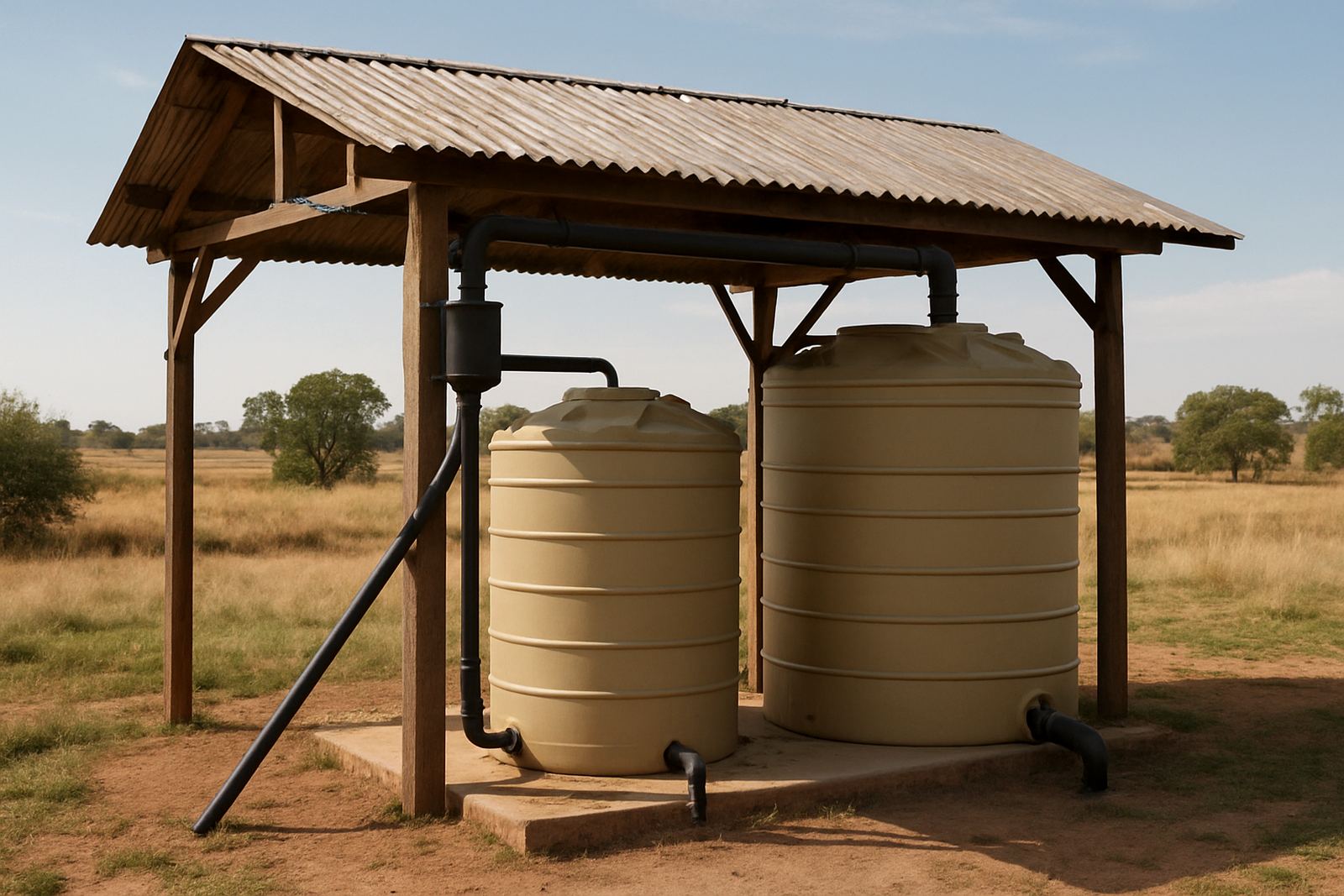
Rain Tank Farm kits are assembled around the roof size, available space and how much water you want to store. Small farms may start with 2 500 L to 5 000 L, while larger sheds and agricultural stores often justify 10 000 L to 20 000 L or more, depending on roof area and daily use. If the roof is large enough and the site can handle it, multiple tanks can be linked for greater capacity.
The kit can include a first-flush diverter, roof leaf screen, gutter outlet fittings, downpipe fittings, tank inlet parts, overflow control, isolation valves, basic filtration and a pump connection point where needed. We also look at whether the tank will sit on compacted ground, a concrete slab or a raised base. That matters for safe installation and for keeping the tank level once it fills.
- Tank sizes from 2 500 L upward, with larger linked options available
- Gravity feed or pump-assisted layouts, depending on the height difference
- Leaf screening and first-flush diversion to reduce sediment load
- Overflow routing for heavy rain and storm conditions
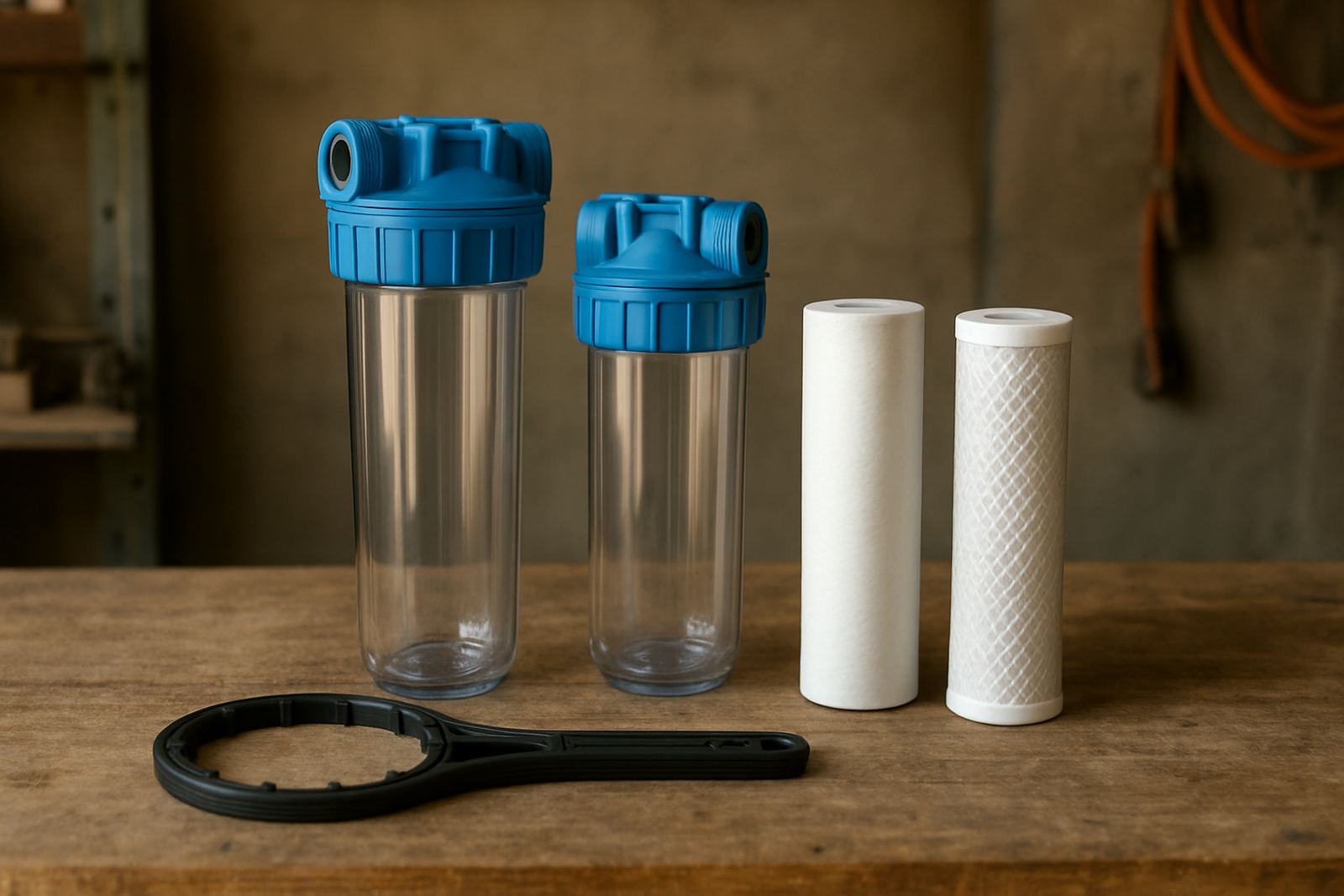
- Basic filtration options for non-potable use or further treatment
If the water will be used for drinking, washing produce or sensitive equipment, we recommend a proper filtration and testing plan rather than relying on capture alone. A rain tank can store good water, but it still needs the right handling.
Where It Suits Farms, Sheds And Seasonal Storage
This kit is a good fit where water demand is uneven through the year. That includes livestock handling areas, seasonal pack sheds, grain stores, nursery buildings, chicken houses, contractor yards and remote work sites where a permanent mains upgrade is not practical. It is also useful on properties outside towns where borehole yield changes through winter and summer.
In places like Rustenburg and Brits, many owners use rain capture as a backup to reduce pressure on boreholes during peak use. In Bloemfontein and inland areas, the value is often in storing water after the better rainfall months and carrying it through the dry stretch. In the Western Cape, the same setup helps to hold water for extended dry periods and to manage higher rainfall bursts in winter.
For farm use, we normally consider access for tank delivery, the slope of the ground, roof gutter condition and how far the stored water must travel to the point of use. It is no use putting a large tank in the wrong place if the pump has to fight a poor layout, or if the tank cannot be reached for cleaning later on.
- Sheds and outbuildings with usable roof area
- Seasonal stores that need backup water for dry periods
- Remote farm areas with limited municipal supply
- Sites needing washdown water, dust control or irrigation support
Installation Support, Power Needs And Pumping
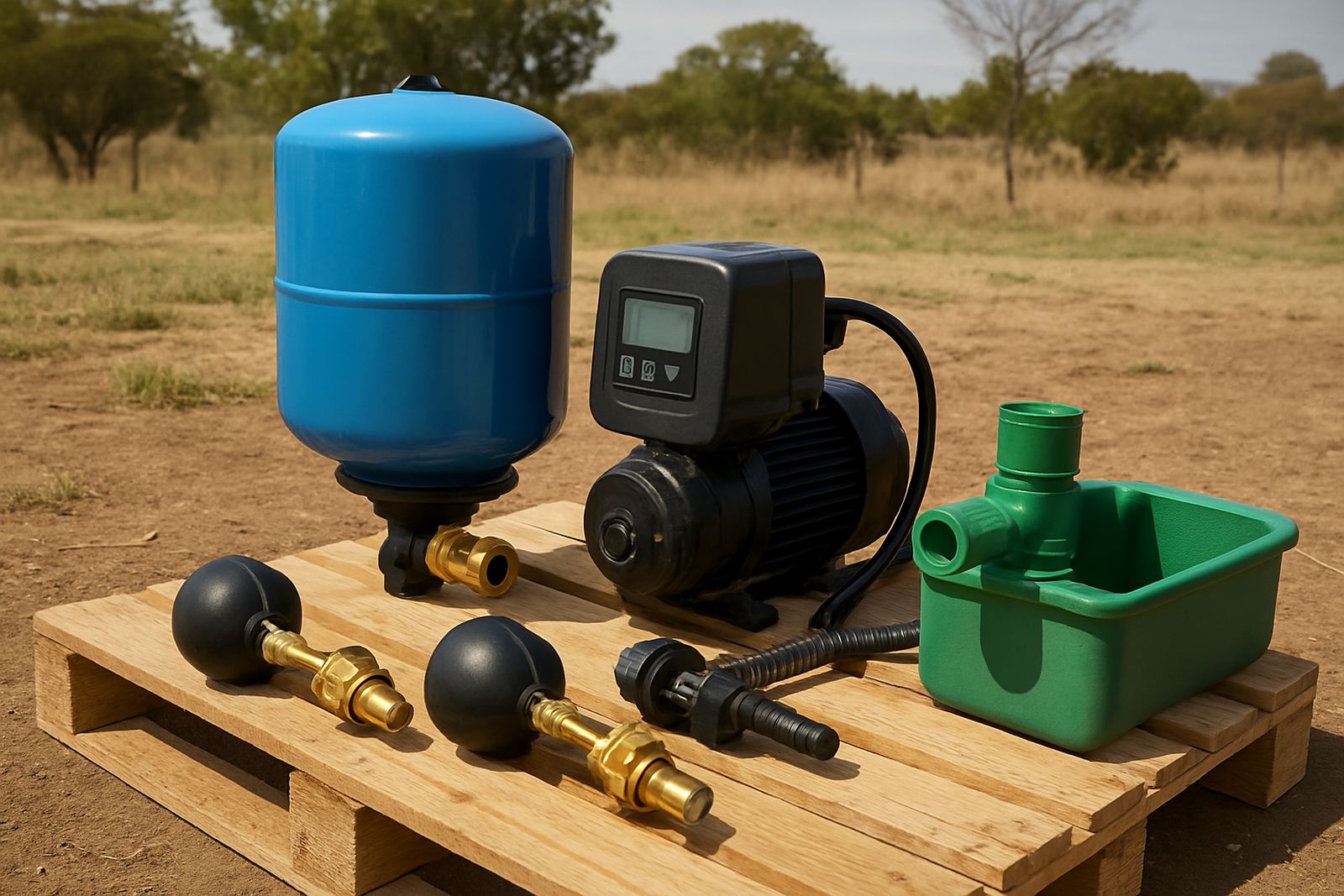
The kit can be installed as a gravity-fed system where the tank is raised and the outlet can supply a nearby tap or trough. In most farm situations though, a pump is used to move water where it is needed. We size that part according to the run length, height, flow rate and number of outlets. If the use is light, a small pressure pump may be enough. If the line is long or the site has several points of use, a larger pump set may be needed.
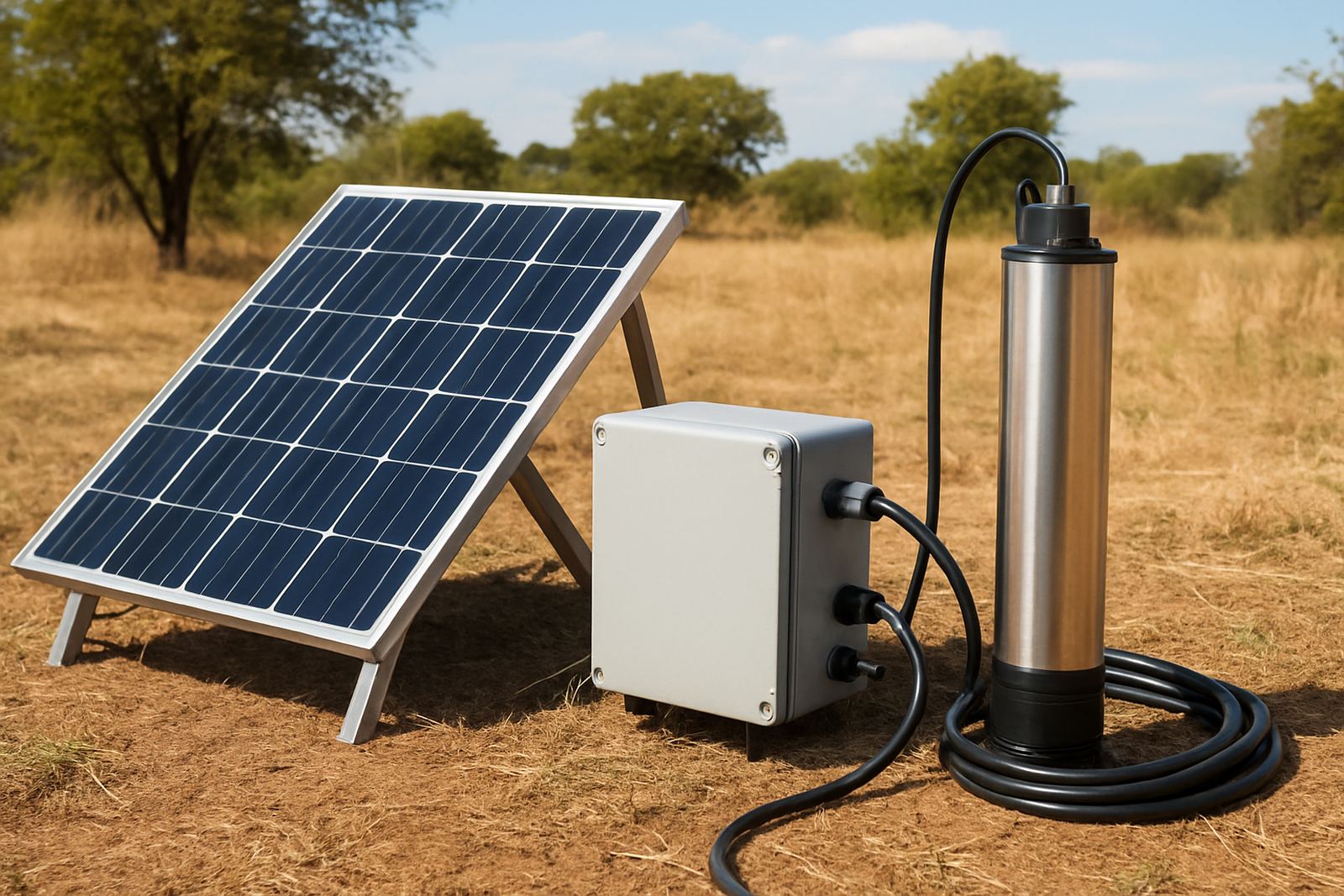
Power needs depend on the pump and controls selected. Where the site loses power often, a battery-backed or alternative power arrangement may be worth considering. The Rain Tank Farm kit itself does not require electricity to collect rain, but any pumped distribution system will need a proper power plan so the tank does not sit full and the water cannot be used. That is a common problem during load shedding, and it can be avoided with the right setup.
Our team can assist with site assessments, system sizing, kit assembly, delivery coordination and installation support. Morne du Toit oversees installation checks, while Zander Snyman handles technical sizing support. If the system will connect into existing plumbing or irrigation lines, we check compatibility before dispatch so the parts match the job, not after the truck has arrived.
- Gravity feed where height and distance allow it
- Pump-assisted supply for longer runs or multiple outlets
- Options for backup power planning on load-shedding prone sites
- Support for new builds and retrofit installations
Care, Cleaning And Ongoing Servicing
Rainwater storage works best when the tank stays clean and the catchment area is looked after. Leaves, dust, bird droppings and roof debris all end up in the water if they are not managed at the inlet. Over time, fine silt can settle in the tank too, especially where roofs are older or gutters are not cleared often enough.
We recommend routine maintenance at least twice a year, and more often in areas with heavy leaf fall or dust. That normally includes checking screens, flushing first-flush parts, inspecting valves, cleaning tank lids, and confirming that overflow lines are clear. If the water is used through a pump, the pump should also be checked for pressure, leaks and debris in the strainer.
Hydrated also assists with tank cleaning, fault finding, water testing and annual maintenance. If a system has been sitting unused for a while, it is worth checking it before the next rain season starts, not after the first storm has already filled it. Small issues are easier to sort early, and that keeps the water safer to use.
What To Check Before You Order
Before placing an order, it helps to know what roof area is available, how much water you want to store, and what the intended use will be. A tank that is perfect for garden backup may be too small for washdown or seasonal farm use. On the other hand, a very large tank may be more than the roof can supply in a dry month, so sizing matters.
Please have the following information ready when you enquire through the contact page:
- Roof type, approximate roof size and gutter condition
- Estimated daily or weekly water use
- Space available for one tank or multiple linked tanks
- Whether the system should be gravity-fed or pumped
- Intended water use, such as washdown, irrigation support or backup storage
- Your site location, especially if access is tight or delivery needs planning
For farms in places like Hartbeespoort, Bloemfontein, Paarl and Somerset West, access roads and ground conditions can affect delivery and install planning. A clear site picture upfront saves time, limits extra handling, and helps us make sure the right kit gets to the right place the first time.
Key facts
| Product type | Large rainwater capture kit for sheds, outbuildings and farm storage |
|---|---|
| Typical capacities | 2 500 L to 20 000 L+, with linked tank options |
| Primary use | Seasonal storage, washdown, irrigation support and backup supply |
| Collection method | Roof-fed from gutters and downpipes |
| Installation styles | Gravity-fed or pump-assisted |
| Service areas | Brits, Pretoria, Hartbeespoort, Rustenburg, Bloemfontein, Paarl, Stellenbosch, Somerset West and nationwide delivery |