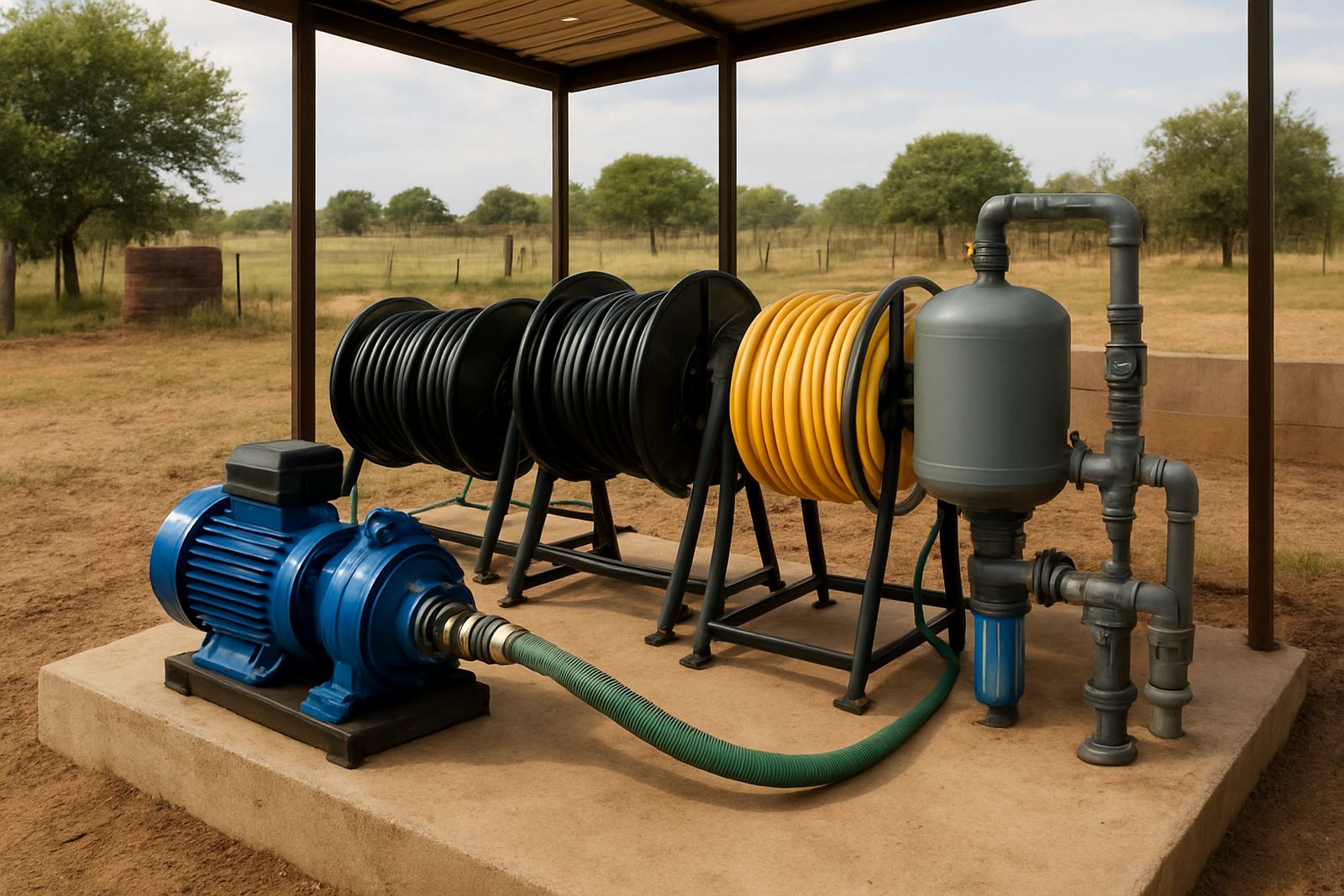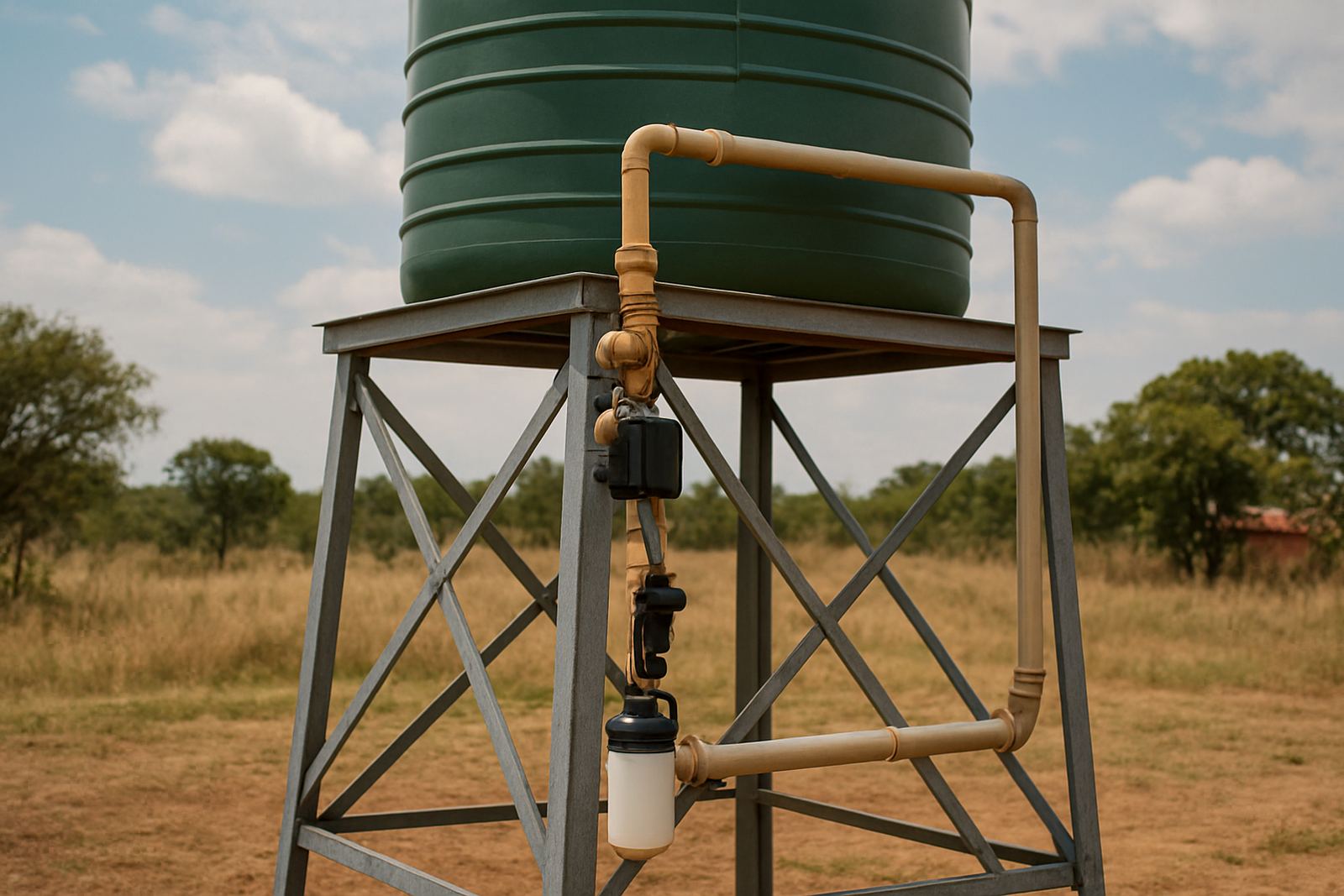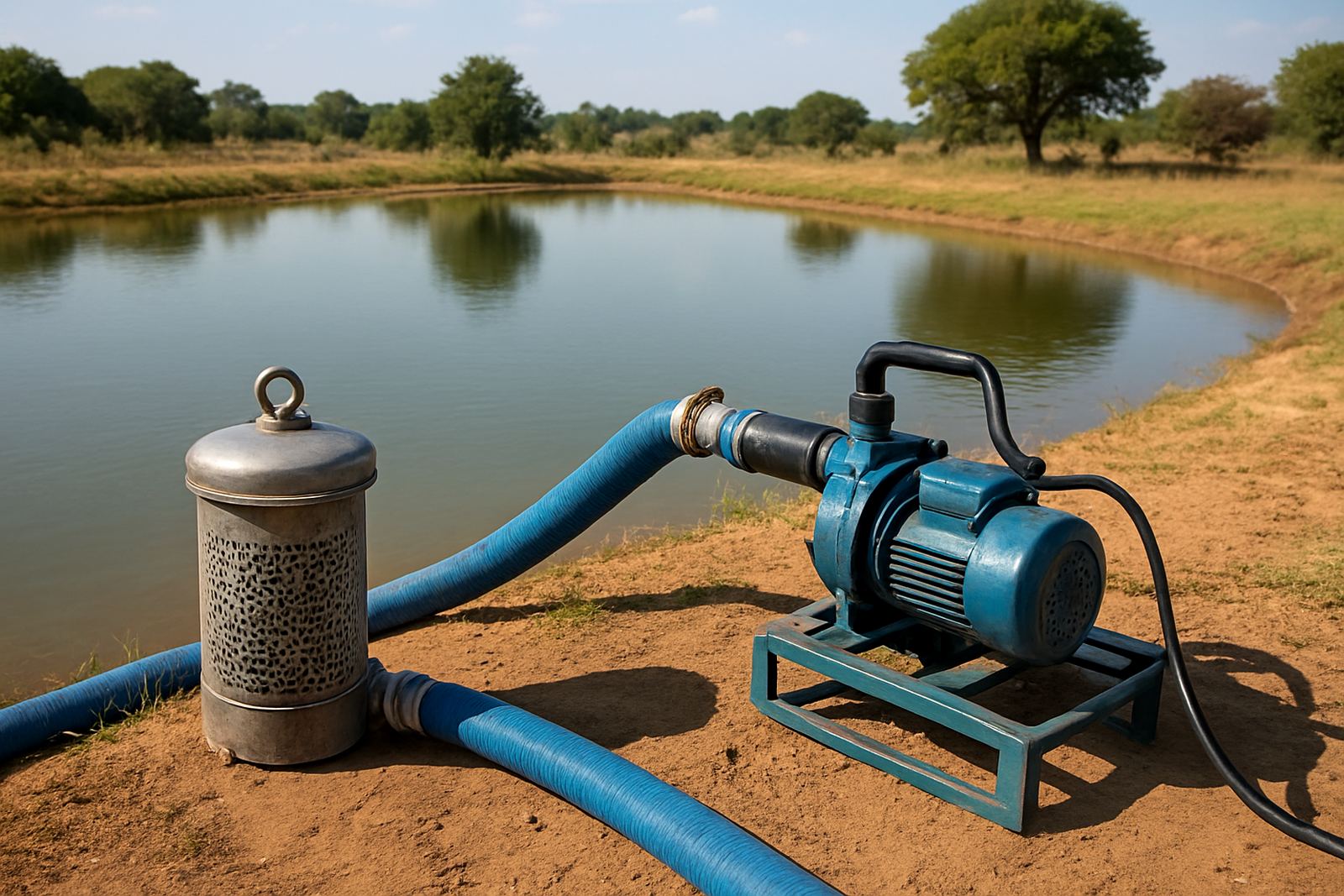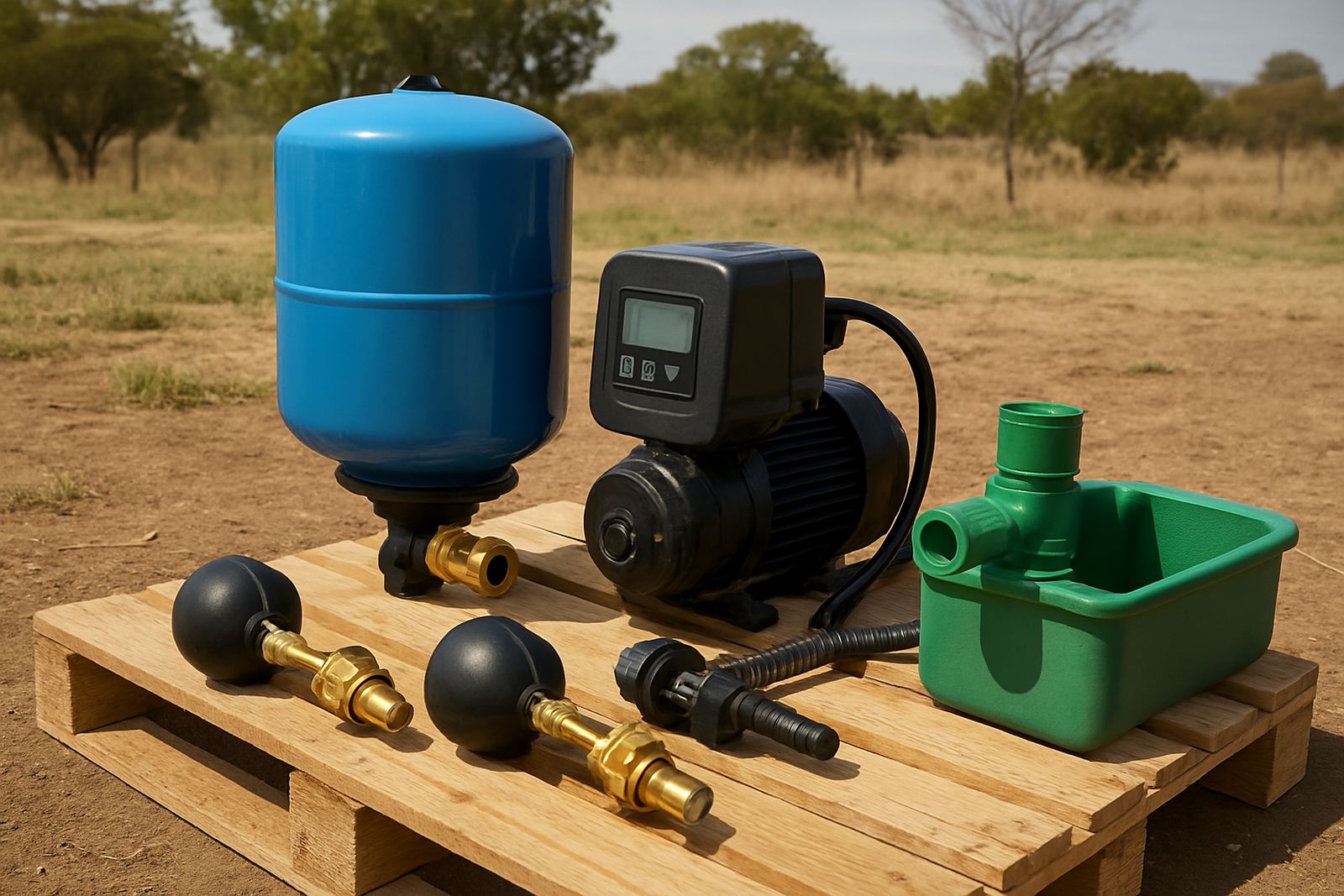
Built for trough filling and day to day animal water use
A livestock water kit is a packaged set of parts that helps move clean water from a borehole, rain tank or storage tank into troughs, header tanks and watering points. It is set up for the kind of use that comes with cattle, sheep, goats, horses and mixed farming, where water demand is steady and repairs need to be straightforward.
Our kits are put together for South African farm conditions, including dusty yards, long pipe runs, load-shedding and hot summers around Pretoria, Rustenburg, Bloemfontein and beyond. The aim is simple, keep water moving with as little fuss as possible, even when power is irregular or the nearest town is not close by.
Sizes and options for different herds and layouts
We size the kit around your daily draw, the distance to the watering points and the height difference between the source and the troughs. A smaller holding may only need a basic transfer setup, while a larger cattle unit may need a higher flow pump, larger pressure vessel and more than one delivery line.
- Small farm kit: suited to 1 to 3 trough points, short pipe runs and modest daily demand
- Medium farm kit: suited to multiple camps, holding pens and longer runs from a tank or borehole
- Large farm kit: suited to higher animal counts, multiple watering zones and heavier daily draw
- Filtered option: adds sediment and taste control where the source water is sandy, muddy or high in iron
- Float control option: helps keep trough levels steady and reduces overflow at busy watering points
If you are unsure, we can size the system from your site details and expected herd count. That avoids under-sizing, which is one of the most common reasons a farm water system struggles in summer, especially when evaporation and demand go up at the same time.
Where the kit suits best on South African farms
This kit suits livestock units that need a practical water supply without overcomplicating the setup. It works well on mixed farms, grazing camps, feed lots, equine yards and smallholdings where one or two water sources must cover several points. In coastal areas such as Paarl, Stellenbosch and Somerset West, we also consider corrosion resistance and sealed fittings where humidity is high.
It can be used with a borehole, a rain tank system or a pumped storage tank. If the source water contains sand, fine silt or organic matter, adding filtration before the trough line protects valves and nipples and cuts down on cleaning time. For farms using municipal top-up water, we can include the right controls so the system does not waste water or backflow, which is important where local rules are strict.
- Good for borehole-fed farms with variable water quality
- Suitable for rain harvesting systems that feed livestock in dry months
- Useful for properties with long distances between the source and camps
- Works on farms with load-shedding because backup options can be included
Installation needs, power and backup options
Most livestock kits need a pump, pipework, valves, fittings and a control setup. Depending on the layout, the pump may draw from 220V single-phase power, 380V three-phase power, or a backup power source. On farms where power cuts are common, we often recommend a pressure tank or a backup supply arrangement so watering does not stop just because the grid is off.
Solar support can also be added where the site gets strong sun and the demand is suitable. That is often useful for remote camps or smaller watering points, although the exact setup depends on the pump size, daily litres needed and storage available. If the system feeds an elevated trough, gravity assistance can reduce running time and wear on the pump, which saves money over the year.
During installation support, we check pipe sizing, suction height, water line length and any level changes on the property. A poor suction line or undersized pipe can cause cavitation, low flow and unnecessary faults. It is a small detail that makes a big difference.
Care, servicing and water quality checks
Livestock water needs regular attention because dirt, algae and scale build up over time. Filters should be checked and changed as needed, pumps need servicing, and troughs should be cleaned before sludge becomes a problem. In summer, warm water can grow algae quickly, especially in open tanks, so a routine cleaning schedule is worth keeping.
We support ongoing care with filter changes, fault finding, water testing, tank cleaning and annual maintenance. If a trough level drops too slowly, or a pump is cycling too often, we can trace the cause before it becomes a bigger repair bill. It is better to catch a small leak or worn valve early, rather than letting stock go short of water over a weekend.
- Check filters every month in dusty or sandy conditions
- Inspect float valves and seals for wear and sticking
- Flush lines after tank cleaning or heavy rain events
- Test water quality where livestock health or taste is a concern
What to confirm before you order
Before ordering, it helps to confirm the number of troughs, the daily animal count, the source water type and the distance from source to watering points. If you already have a borehole, include the borehole depth, pump details and whether the yield changes through the year. For rain tank systems, note the tank size and whether you need direct pumping or gravity feed.
Also tell us about the site conditions, such as sandy ground, steep access roads, coastal humidity or long cable runs. These details help us recommend the right fittings and materials, not just the cheapest parts. A kit that suits Hartbeespoort may need a different approach from one that must work on a windy farm outside the Western Cape, so the details matter.
- Number and size of troughs or watering points
- Herd or flock size and expected daily demand
- Water source, borehole, tank or municipal top-up
- Available power, backup power and space for equipment
- Any filtration needs, iron staining or sandy water issues
When the information is complete, we can assemble the kit and coordinate delivery from Brits to farms across South Africa. That keeps the process tidy and reduces the chance of missing parts on installation day.
Key facts
| Use | Trough filling and daily livestock hydration points |
|---|---|
| Typical supply | Borehole, rain tank, storage tank or top-up water |
| Power options | 220V single-phase, 380V three-phase, solar support or backup supply |
| Included components | Pump, pipework, valves, fittings, filtration and controls as required |
| Service support | Installation support, commissioning checks, pump servicing and maintenance |
| Delivery area | Brits, Pretoria, Hartbeespoort, Rustenburg, Bloemfontein and the Western Cape |