
What the drinking water kit does
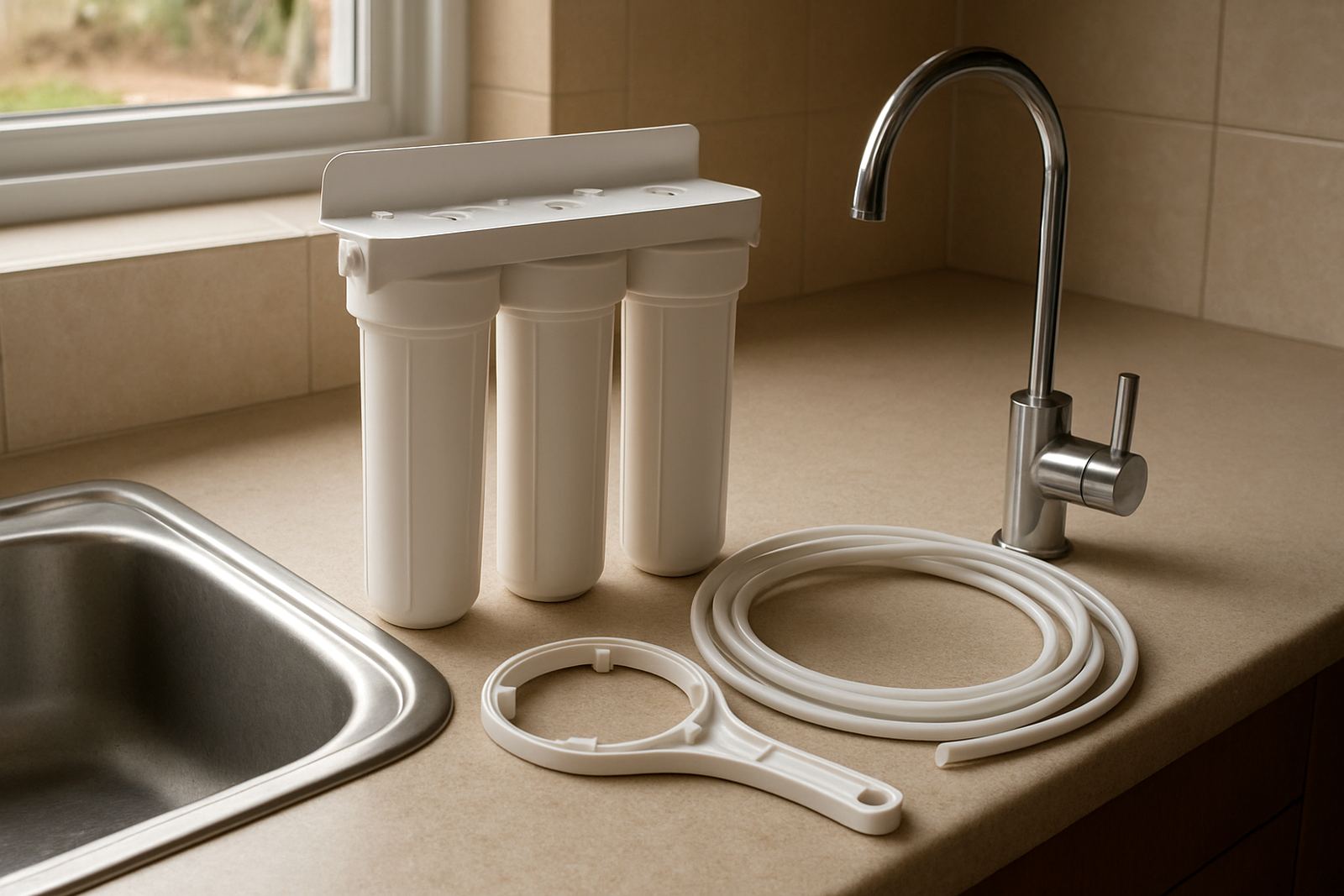
This kit is built for one thing: giving you cleaner water at the kitchen sink or a dedicated drinking point. It is a point-of-use setup, so it treats the water where you use it instead of trying to filter the whole house. That keeps the kit compact and easier to service, while still giving a good result for drinking, cooking and making tea or coffee.
On South African sites, the water source often changes from season to season. A borehole can carry fine sand or iron taste, rain tank water may pick up tannins and sediment, and municipal water can carry chlorine smell or occasional dirt after pipe work. This kit is used to reduce those issues at the tap, and it works well where you want better water without a large plant room or high running costs.
- Point-of-use filtration for kitchen drinking water
- Useful for borehole, rain tank and municipal feed water
- Helps with taste, smell, clarity and fine particles
- Compact enough for under-sink mounting
Sizes and cartridge options
The standard drinking water kit is supplied as a multi-stage under-sink unit with housing, cartridges, mounting hardware and basic connections. The exact cartridge mix depends on your water test and what you want to correct. For example, a sediment stage is common for borehole and tank water, while carbon stages are often used where chlorine smell or taste needs to be reduced. Where a site has more demanding water, a finer final stage can be added.
Most homes and small farm kitchens use a 10 inch cartridge format because it is easy to replace and fits neatly under a sink. Larger housing options can be supplied where water use is higher or where you want longer service intervals. If the supply pressure is low or unstable, the kit can be paired with a small booster arrangement, though many sites do not need this. We size it to the actual usage, not guesswork.
- Single, dual or triple stage configurations
- 10 inch standard cartridge size for easy change-outs
- Optional finer final filtration for improved drinking water quality
- Can be matched to low, medium or higher daily draw-off
Where it suits best
This product suits kitchens in homes, cottages, farm offices, tasting rooms, labour accommodation and small guest units where people want clean water at one tap. It is also a practical choice for properties that rely on tank water during load-shedding or where a borehole is the main supply and the raw water changes after heavy rain.
In coastal towns like Paarl, Stellenbosch and Somerset West, humidity and warmer storage conditions can make tank maintenance more important. In inland areas such as Brits, Pretoria, Hartbeespoort, Rustenburg and Bloemfontein, borehole water quality can vary from one site to the next, so the kit is often specified after a proper water check. It is a small unit, but it should still be matched to the source and the household use, otherwise the cartridges wear out too quickly.
- Homes using borehole or rain-tank water
- Kitchen points in farms, offices and staff areas
- Properties needing better taste and fewer visible particles
- Sites wanting a simple system with low maintenance
Installation and power requirements
The kit is normally installed under the kitchen sink or beside a prep area. It connects to the existing cold water line and feeds a dedicated drinking tap or the existing tap if the arrangement allows it. Pipe sizes, available space under the sink and access for future cartridge changes all matter. If the cupboard is tight or there are drain lines in the way, we plan the layout before parts are assembled. The fitting is straightforward, but it still needs care so that hoses are not kinked and fittings are seated properly.
Most drinking water kits do not need electricity or gas. That makes them useful during load-shedding and in areas where power is unstable. If a site needs a booster pump, only the pump itself needs power and this is assessed during sizing. For many homes, though, the system remains a manual filtration setup with no ongoing power draw. That keeps it simple and practical.
- Usually no power or gas required
- Fits under-sink or nearby service space
- Uses existing cold water supply line
- Optional booster only where pressure demands it
Care, servicing and water checks
Like any water treatment kit, this one works best when the cartridges are changed on time. Sediment loads, iron, tannins and general dust can shorten the life of filters, especially on farm water and tank systems. We recommend checking pressure drop, flow rate and water quality at regular intervals. If the water starts to taste different, flow becomes slower or the cartridge housings are showing visible dirt, it is time for a service.
Our team can assist with filter changes, water testing, fault finding and annual maintenance. For borehole water, it is worth testing from time to time because the source can shift after rain or borehole work. Tank cleaning also helps, since a clean tank keeps the filter from doing all the heavy lifting on its own. A little maintenance goes a long way and avoids unnecessary replacement parts.
- Replace cartridges according to water quality and usage
- Check for pressure loss or slower flow
- Test water when the source changes or after repairs
- Keep tanks and fittings clean to extend service life
What to check before ordering
Before you order, have a look at the space under the sink, the source water and how many people will use the tap each day. It also helps to know whether you want the kit for a single kitchen tap or a small prep area. If the property is on borehole water, a recent water test is useful for checking sediment, iron, hardness or other issues that may need a specific cartridge mix. If it is rain tank water, note whether the tank has a first flush system and how often it is cleaned.
You should also check the pipe size, available mounting space and whether you want the water delivered to a separate drinking tap. If you are not sure, our team can assist with system sizing, kit assembly and installation support from Brits to Pretoria, Rustenburg, Bloemfontein and the Western Cape. We keep the ordering process practical so the right kit arrives first time, with no extra parts needed later.
- Water source: borehole, rain tank or municipal
- Daily usage and number of users
- Available cupboard space under the sink
- Need for a separate tap or existing tap connection
Key facts
| Product type | Point-of-use drinking water filtration kit |
|---|---|
| Standard format | 10 inch cartridge housing system |
| Typical stages | 1, 2 or 3 stage options |
| Connection size | Commonly matched to 15mm or 20mm pipework |
| Power requirement | No power needed for standard kit |
| Best use | Kitchen drinking water from borehole, rain tank or municipal supply |