Start With the Farm's Water Uses
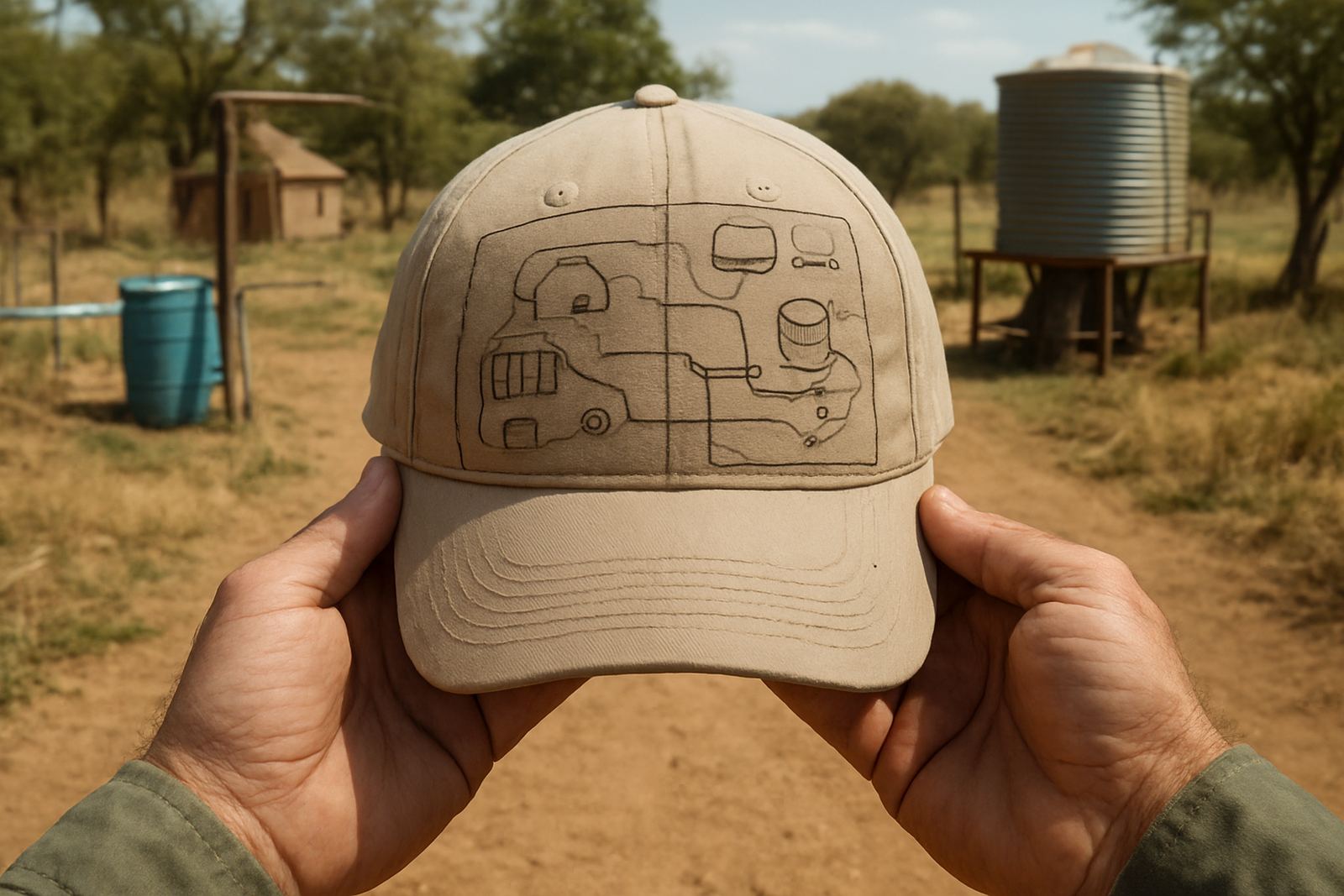
Before you choose a kit, list every point that needs water on the farm. On a livestock unit that may include drinking troughs, cattle kraals, pig pens, poultry housing, hand wash points, staff housing, and a wash-down area near the dairy or pack room. A crop farm may need irrigation top-up, spray tank fill points, cleaning water for equipment, and reserve storage for dry weeks.
Walk the site and note where water is used most often. For farms around Brits, Hartbeespoort and Rustenburg, borehole water is often the main supply, while some sites in the Western Cape use a mix of rain capture and municipal backup. The kit has to match the actual use pattern, not just the size of the land.
- Count livestock and working staff on a normal day
- List every trough, tap, tank and wash point
- Note peak use times such as milking, loading or spraying
- Record any seasonal spike during planting, harvest or lambing
Work Out Daily Demand and Reserve
The next step is to estimate daily consumption. A smallholding with a few cattle may only need a modest flow rate, while a dairy or feedlot can use many thousands of litres a day. Add reserve storage for at least one full day, and preferably two or three days if the farm is far from town water or has long power cuts. In some parts of North West, a 48 hour buffer is often the difference between a normal day and a scramble.
Do not size the system only for average use. A hot week, a broken trough valve, or a wash-down after mud and dust can push demand much higher. If you use a borehole, include recovery time and the pump's working hours. If you use rainwater, plan for the dry months and not only the first storm after winter. It helps to know the reserve before you decide on tank volume and pumping capacity.
- Average daily use
- Peak day use
- Minimum reserve target
- Expected borehole recovery or rainfall input
Choose the Right Mix of Borehole, Rain and Filtration
Most farms do better with a mixed system. A borehole can cover base demand, rain tanks can reduce running costs, and filtration can protect stock, staff and equipment. For drinking water, filtration is important where there is iron, silt, tannins or a high mineral load. For wash-down use, simpler screening may be enough, depending on the application.
In coastal areas like Stellenbosch, Somerset West and parts of the Western Cape, humidity and salt air can affect metal fittings and pump rooms, so material choice matters. On inland farms near Pretoria or Bloemfontein, dust and summer heat can be more of a challenge. The kit should be planned with the local conditions in mind, not just the water source.
- Borehole supply for steady daily demand
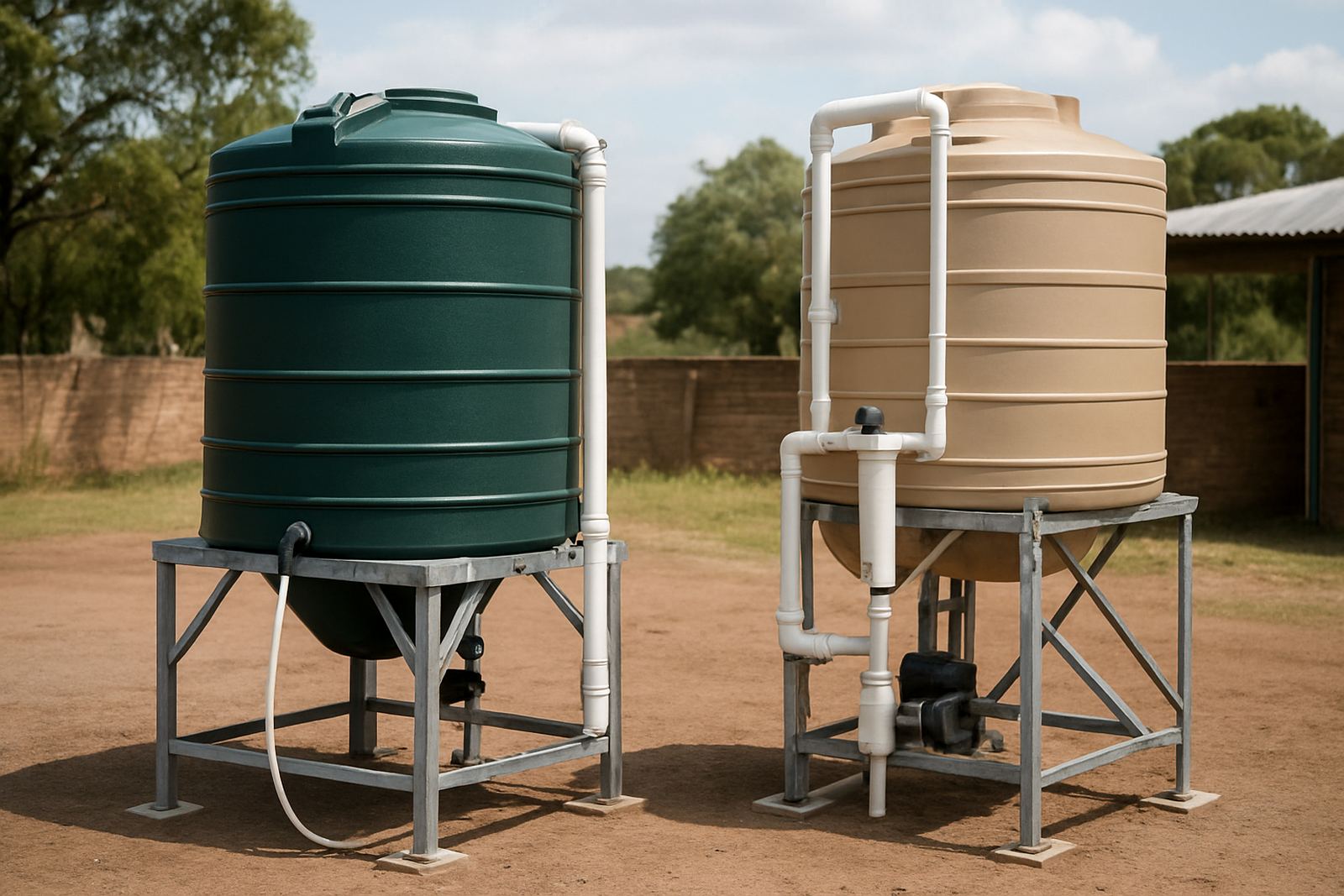
- Rain-tank storage for backup and cost control
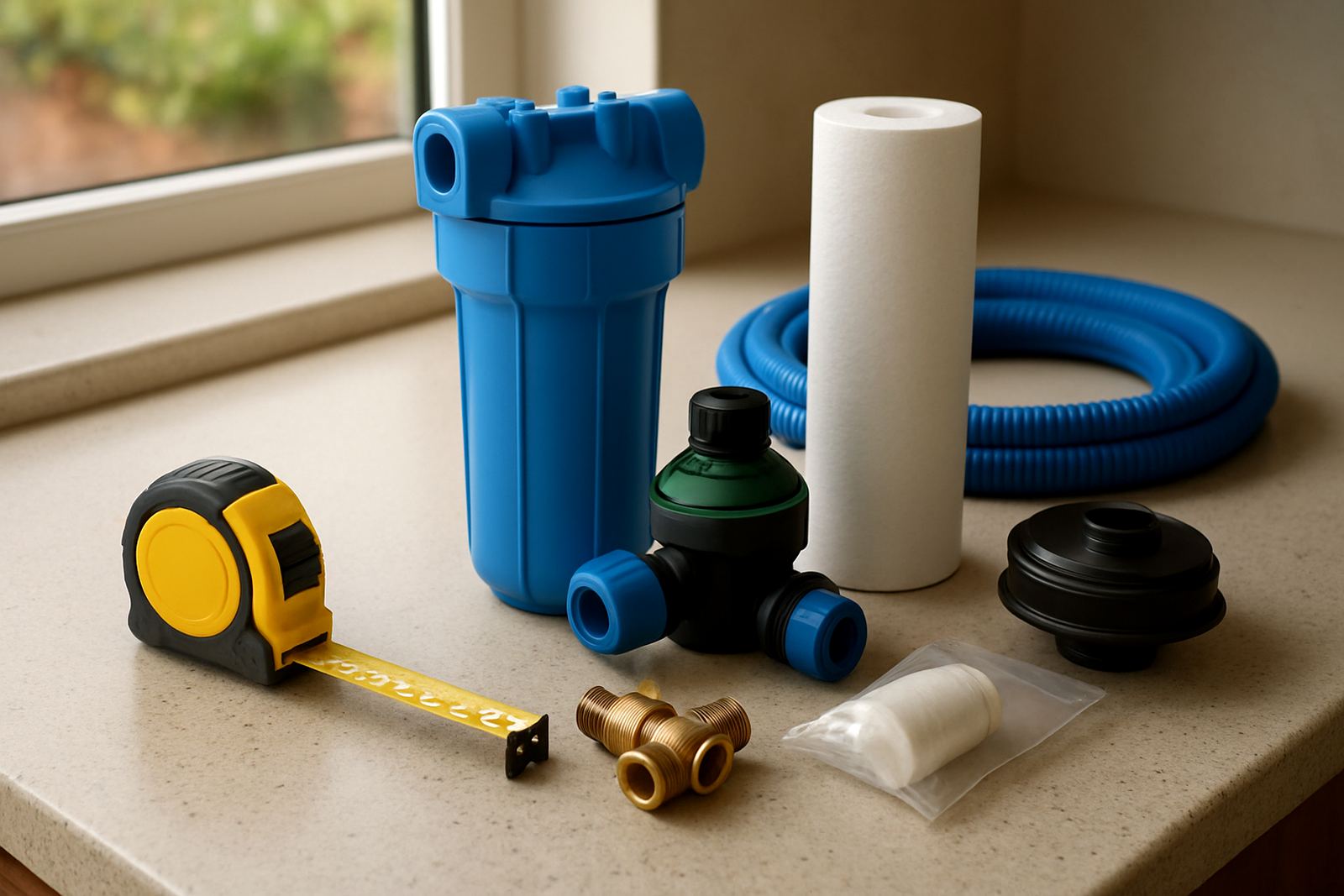
- Filtration for drinking, staff use and sensitive equipment
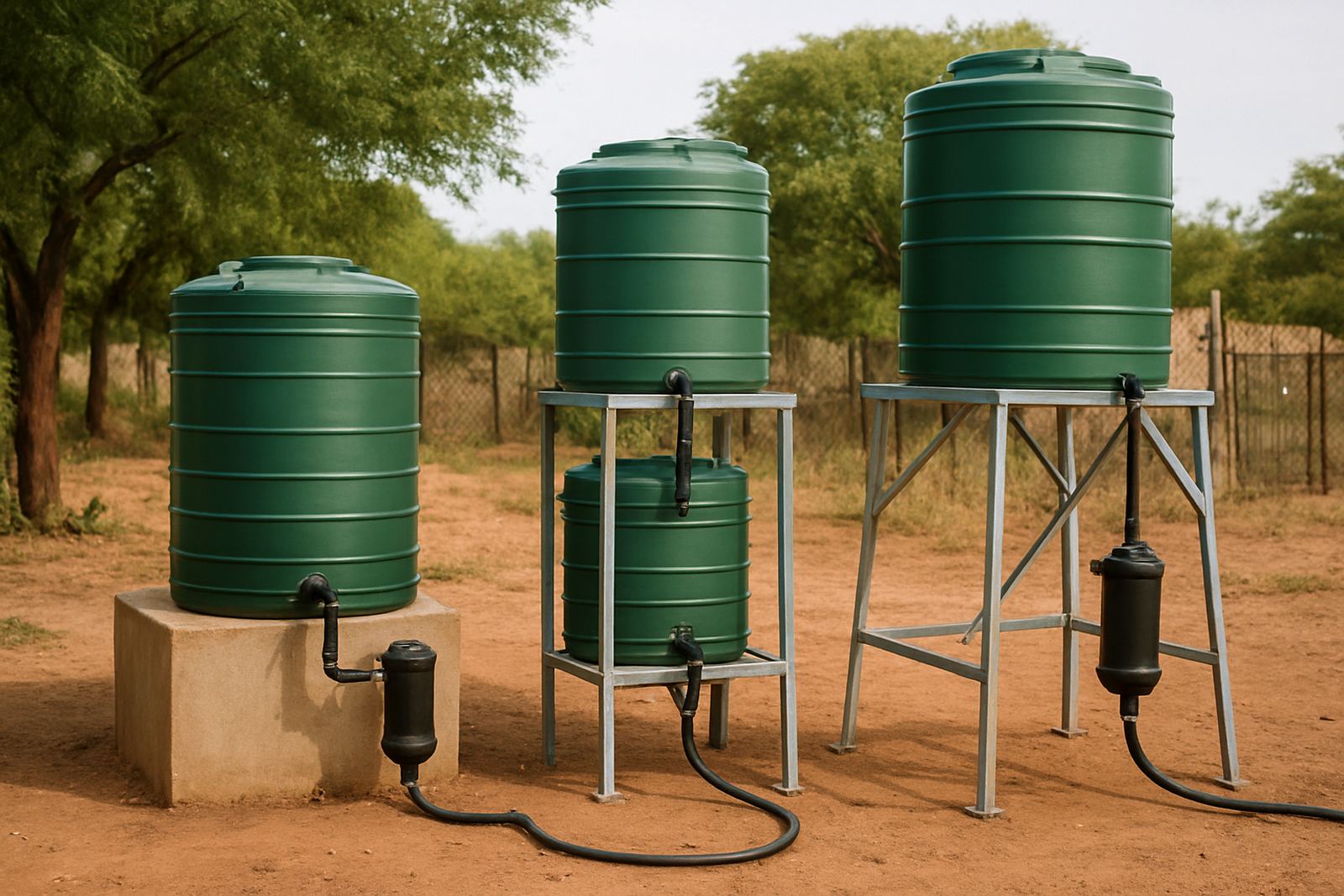
- Pressure control where trough lines or taps need steady flow
Map Troughs, Housing and Wash-Down Points
Place water where the animals and workers actually are. Long pipe runs mean pressure loss, higher material cost, and more chance of leaks. If the troughs are spread across multiple camps, split the system into zones so one fault does not stop the whole farm. Housing units should have easy access for cleaning and safe routing so pipes are not damaged by vehicles, feed trolleys or animals.
Wash-down points need special attention. They usually need stronger flow, hose connections that are easy to handle, and a drainage plan so muddy runoff does not pool around buildings. On dairy and poultry sites, a poor wash-down layout can waste time every day and create hygiene problems. It is worth checking hose length, tap height, and how close the point is to the main tank or pump.
- Keep trough lines short and direct
- Use separate zones for remote camps where needed
- Allow safe access for cleaning and servicing
- Plan drainage for wash-down water and dirty runoff
Plan for Power Cuts, Pump Failure and Dry Months
Farms cannot rely on perfect conditions. Load shedding, tripped pumps and dry weather all happen, and the water plan must account for that. A pressure tank, a gravity-fed backup line or a reserve storage tank can keep the farm going while the main pump is off. If the site depends on one pump only, have a service plan and spare parts strategy in place.
For remote farms, simple control logic is often better than a complicated setup. Keep the system easy to switch over, easy to monitor and easy to repair. If you are in a windy or dusty area, protect controls and filters in a sheltered room or enclosed housing. A good layout saves time for the owner and the team, especially when a fault shows up after hours.
- Backup storage for at least one full day
- Manual override where practical
- Accessible filters and valves
- Spare seals, valves and basic service items on site
Use a Simple Site Checklist Before You Order
Once the needs are clear, gather the site details and use them to finalise the kit. Measure distances, check elevation changes, and confirm where tanks, pumps and filters can be placed. A farm outside Brits may have a very different layout from a property near Paarl, so the same kit size will not suit every site. A short site assessment saves a lot of rework later.
It also helps to think about maintenance from day one. If the storage is hard to reach or the fittings are buried behind a shed, routine maintenance gets delayed. Keep access clear and leave enough working space around each component. That small detail makes daily life easier and reduces faults over time.
- Measure distances from source to tank and tank to use points
- Confirm elevation and pressure needs
- Check space for service access
- List cleaning, testing and annual maintenance needs