Start With Your Rainfall, Roof Area and Water Use
The first step is to work out how much water your roof can collect and how much your household or operation actually uses. In places like Brits, Pretoria and Hartbeespoort, summer storms can fill a tank quickly, while dry stretches mean storage size matters just as much as catchment area. A larger roof does not help if the tank is too small or the gutters cannot carry the flow.
As a simple check, look at the roof size in square metres, the average monthly use, and how often you want to rely on rainwater. A home may only need water for garden use and toilet flushing, while a farm might need supply for cleaning, livestock support or wash-down points. If the kit is undersized you will waste good rain, if it is oversized you may pay for capacity you never use.
- Measure the roof catchment area in square metres.
- Note how many people, taps or points will use the water.
- Decide whether the kit is for backup supply, daily use or irrigation support.
- Check gutter condition and whether downpipes can handle heavy rain.
Choose the Right Tank Size for Your Site
Storage is where many buyers go wrong. In South Africa, a tank that fits a short burst of summer rain may still leave you short in winter or during municipal interruptions. A good rule is to match the tank to the length of time you want to bridge without rain, plus a little extra for dry spells and load-shedding related pump stops. In coastal areas such as the Western Cape, where rain patterns differ from the Highveld, that buffer is important.
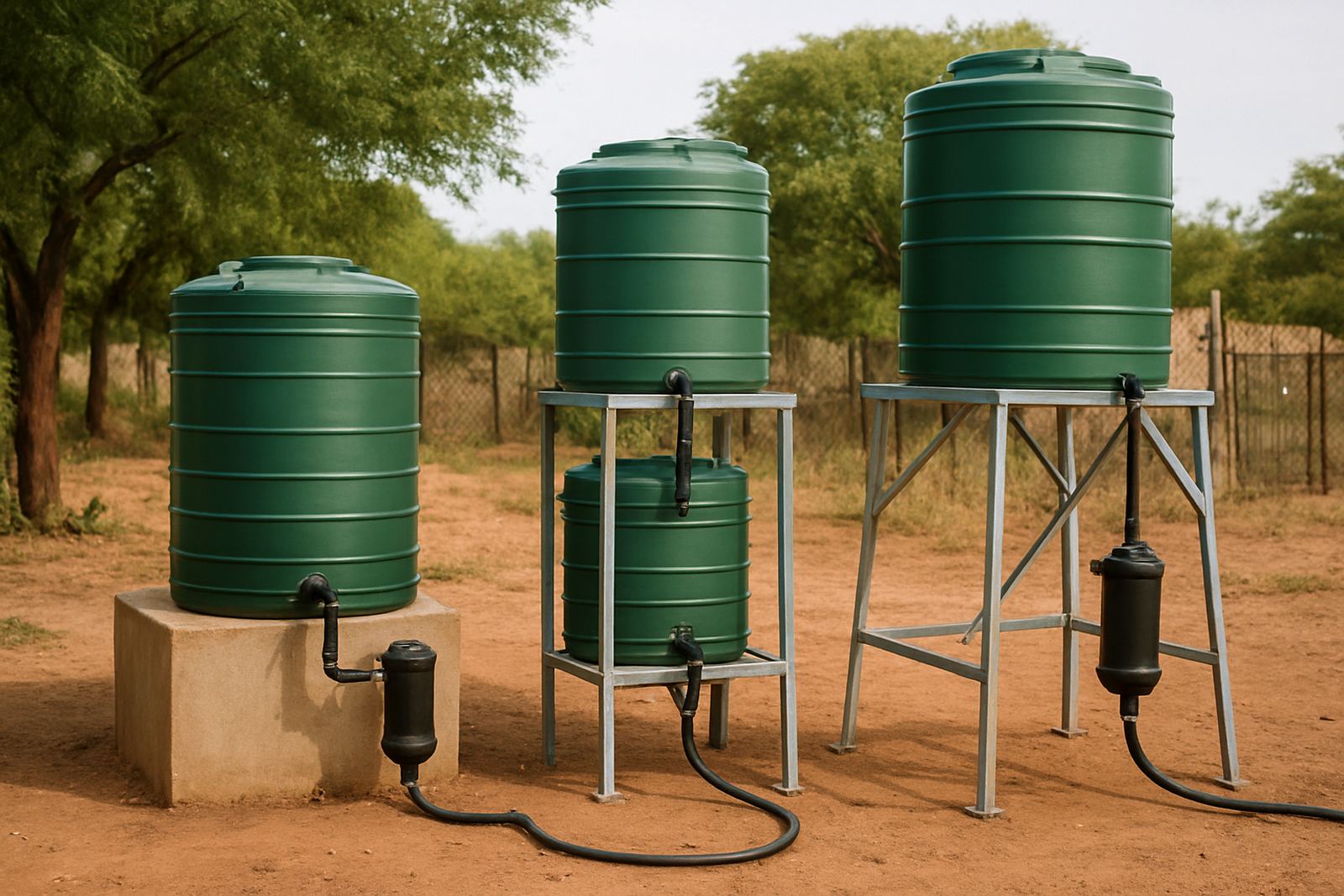
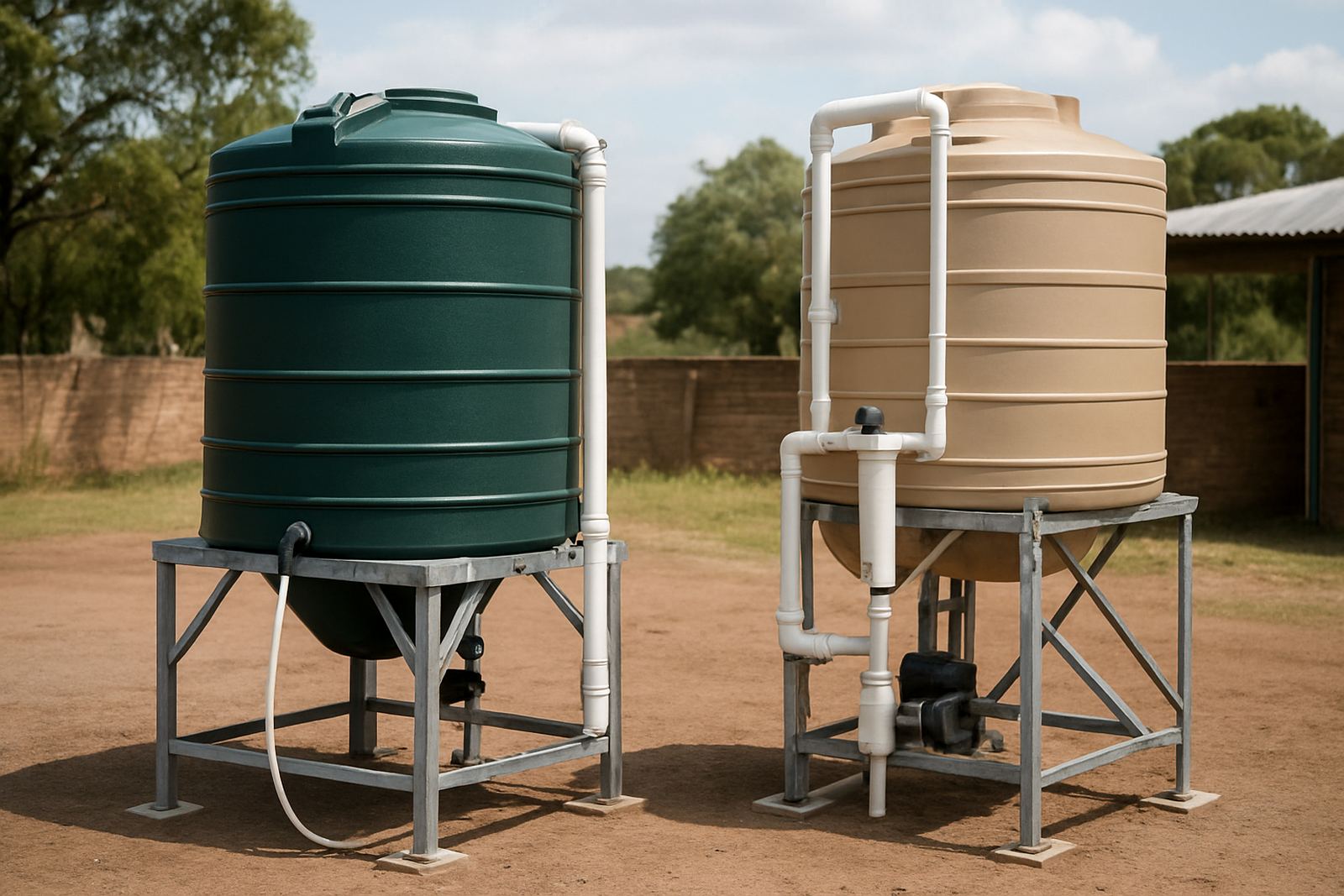
If space is tight, a single slimline or round tank may suit a suburban property in Stellenbosch or Somerset West. On farms around Rustenburg or in the North West, bigger volume can make more sense, especially where water is used across more than one point. The tank must also stand on level ground with a proper base, because poor support causes stress on fittings and shortens service life.
- Choose capacity based on days of backup needed, not just price.
- Allow space for tank height, fittings and maintenance access.
- Check whether your site needs one tank or more than one linked tank.
- Make sure the base is level, compacted and able to carry the full weight when filled.
Compare Filter Levels and Pump Options
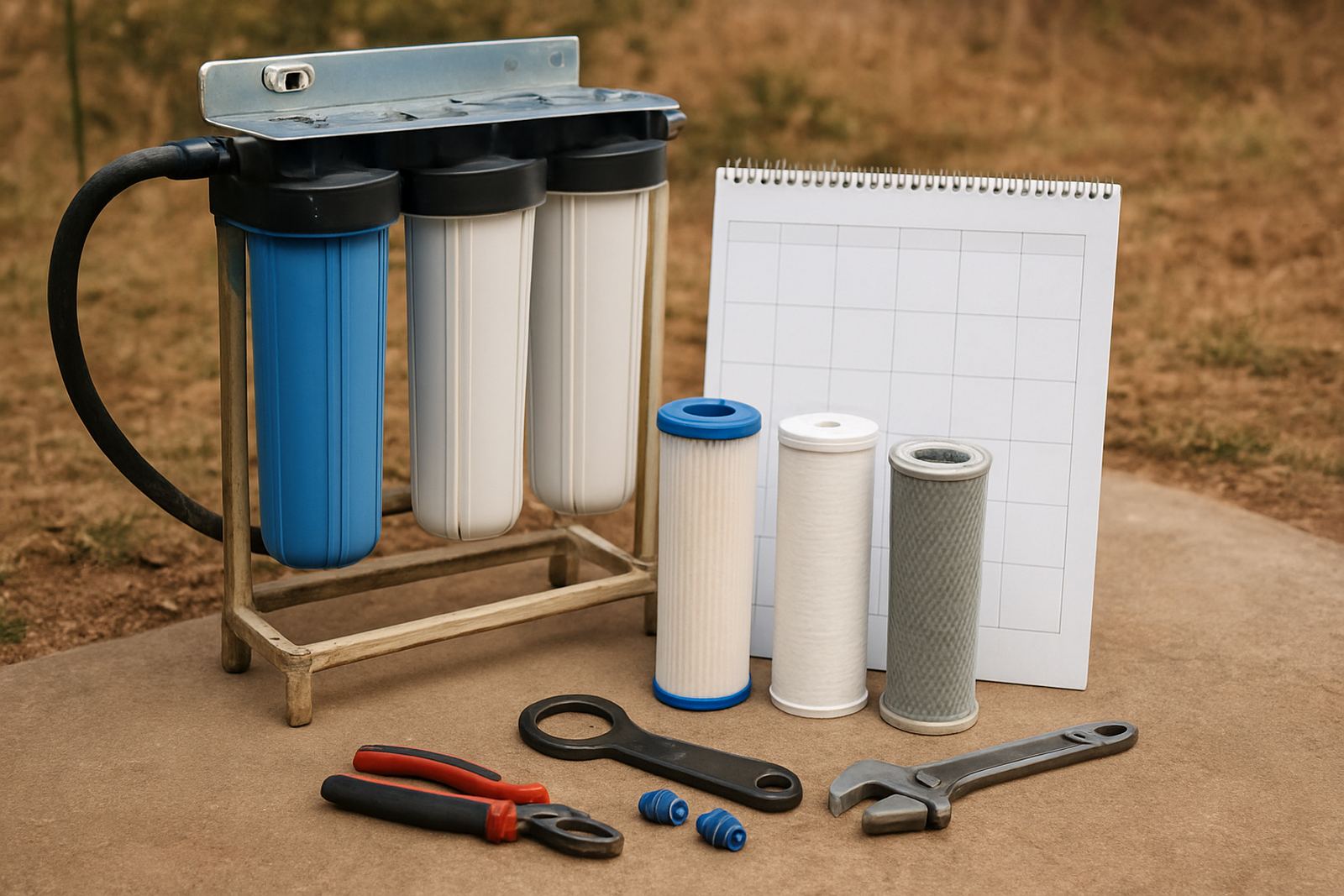
Not every rain tank kit needs the same level of filtration. If the water will only be used for gardens or general washing, a basic first-stage filter may be enough. If you plan to use the water for more regular domestic tasks, washing produce or feeding into plumbing, then finer filtration is worth considering. Water from roof catchment can carry leaves, dust, bird droppings and fine grit, so the filtration stage should be chosen with the end use in mind.
Pump choice matters too. A small home kit may only need a pressure pump for taps and hose points, while a farm setup may need a stronger pump, better pressure control and protection against dry running. If the pump is not matched to the tank and filter set-up, you can get poor flow, unnecessary wear or frequent faults. It is also worth planning for easy filter changes and pump servicing, so the system stays practical after installation.
- Basic use: garden watering, outdoor cleaning and non-potable use.
- Medium use: toilet flushing, washing bays and regular household backup.
- Higher use: filtered supply for repeated indoor or process use.
- Ask whether the pump has dry-run protection and suitable pressure settings.
Check What Is Included in the Kit
Before you compare price, look closely at what the kit actually includes. Some kits cover only the main tank and fittings, while others include pipework, valves, filter housings, pump components and installation support. A full kit can save time and reduce mistakes, especially if the system has to work around municipal restrictions or limited access on a farm. It also makes delivery and commissioning simpler because the parts are matched.
Hydrated supplies rain-tank kits for homes and farms across South Africa, with delivery coordination from our Brits base to places like Pretoria, Hartbeespoort, Bloemfontein and the Western Cape. That kind of service matters when you need the right parts on site the first time, not a pile of mismatched fittings. If you are unsure, ask for system sizing and a site assessment before ordering.
- Tank and lid
- Inlet and outlet fittings
- Filtration stages
- Pump and pressure components
- Overflow, valves and basic connection parts
- Installation support or commissioning checks
Plan for Rain, Dust and Seasonal Conditions
South African conditions can be hard on rain systems. In dusty inland areas, pre-filtration helps stop grit from clogging the line. In coastal towns, humidity and salt in the air can affect metal parts, so material choice and maintenance matter. During dry spells, stored water may sit longer in the tank, which makes cleaning, filter changes and inspection more important.
Think about local conditions before choosing the kit. A property in Paarl may face hot summers and strong sun, while a smallholding near Brits may need extra attention during high dust periods and storm runoff. If there are overhanging trees, more debris will enter the gutters. If the tank is exposed, shading and UV-resistant components help reduce wear. Good planning now can save a lot of repairs later, and a bit of regular care keeps the water cleaner.
- Trim overhanging branches where possible.
- Fit leaf guards or gutter screens if debris is a problem.
- Plan a cleaning routine for gutters, tank and filters.
- Use materials suitable for sun, humidity and outdoor exposure.
Use a Simple Buyer's Checklist Before You Order
Before you finalise a kit, walk through a short checklist and compare your site against it. This helps you avoid under-sizing, poor flow and storage that does not match your real use. It is also the best time to confirm delivery access, installation support and any municipal or estate rules that may affect placement. A clear plan saves time during commissioning and makes future maintenance easier.
If you are buying for a home in Pretoria, a farm near Rustenburg or a property in Somerset West, ask the same basic questions every time. What size roof is feeding the tank, where will the tank stand, how will the water be used, and who will service it later? Once those answers are clear, the right kit becomes much easier to spot, and you avoid paying for extras that do not help. When in doubt, get guidance on system sizing, pump servicing and annual maintenance before you order.
- Is the tank size suited to the roof area and use pattern?
- Is the filtration level right for the intended water use?
- Is there enough space for installation and future access?
- Does the kit include the parts needed for a proper setup?
- Have you considered cleaning, servicing and filter changes?