
When filtering the full house is the right call
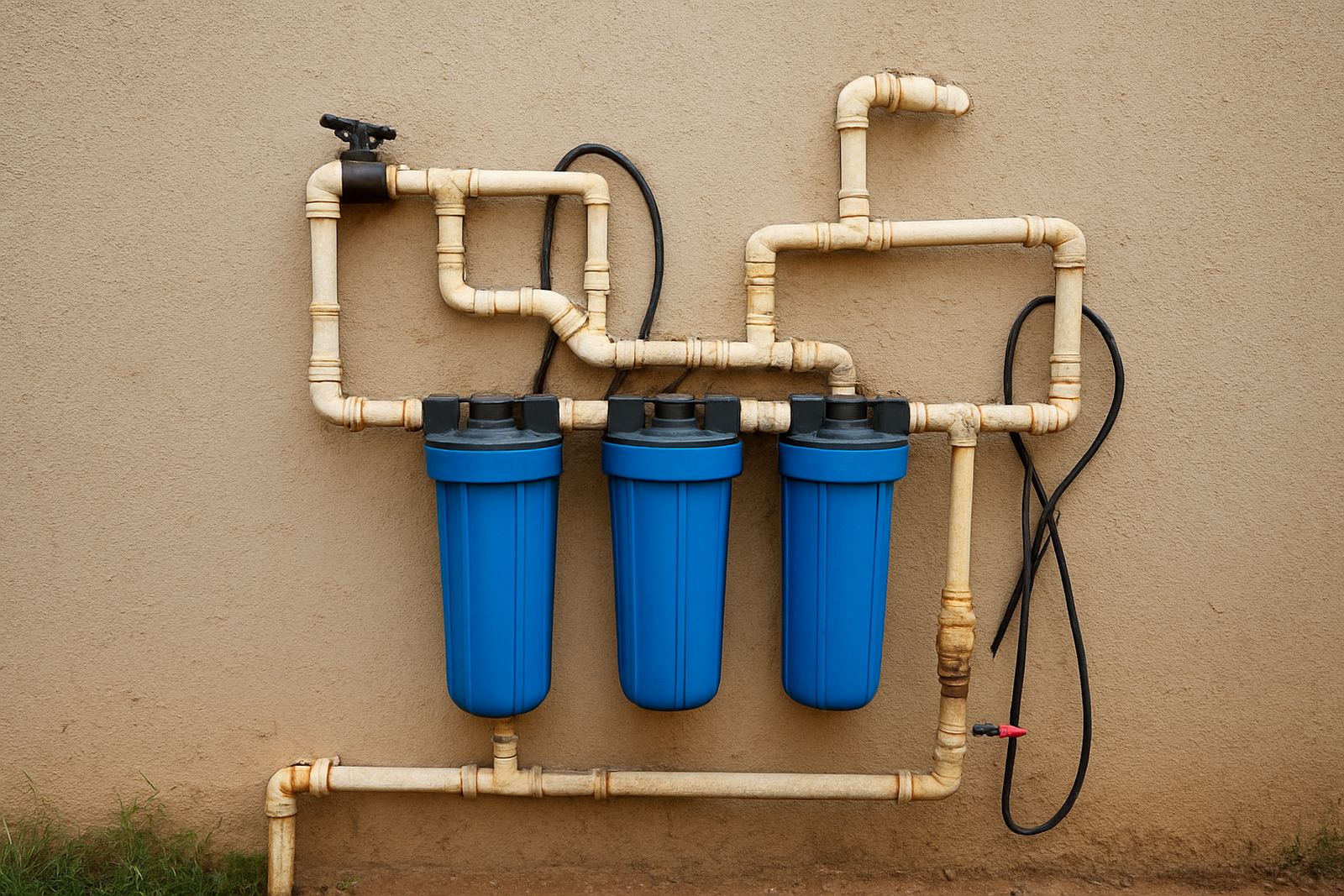
Whole-house filtration makes sense when the problem is in the water supply itself, not only in one drinking point. If you are on borehole water and see silt in the toilet cisterns, cloudy water after pumping, or fine grit in taps and geysers, a point-of-use filter alone will not solve the job. The same applies where municipal water picks up sediment after pipe work, pressure cuts, or after rain in areas with older infrastructure.
In homes around Brits, Hartbeespoort and parts of the North West, water often carries sand, iron staining or organic colour that can show up in showers, washing machines and geysers. On the coast, moisture and salt air can push homeowners to protect plumbing and appliances from premature wear. A full-house system helps keep that issue out of the entire line so the laundry, bathrooms and kitchen all benefit from the same treatment.
- Useful when all taps show sediment, smell or taste issues
- Better for protecting geysers, mixers, washing machines and dishwashers
- Ideal for boreholes, rain-tank supply, or unstable municipal quality
- Worth it when you want one treatment point for the whole property
What whole-house filtration can and cannot do
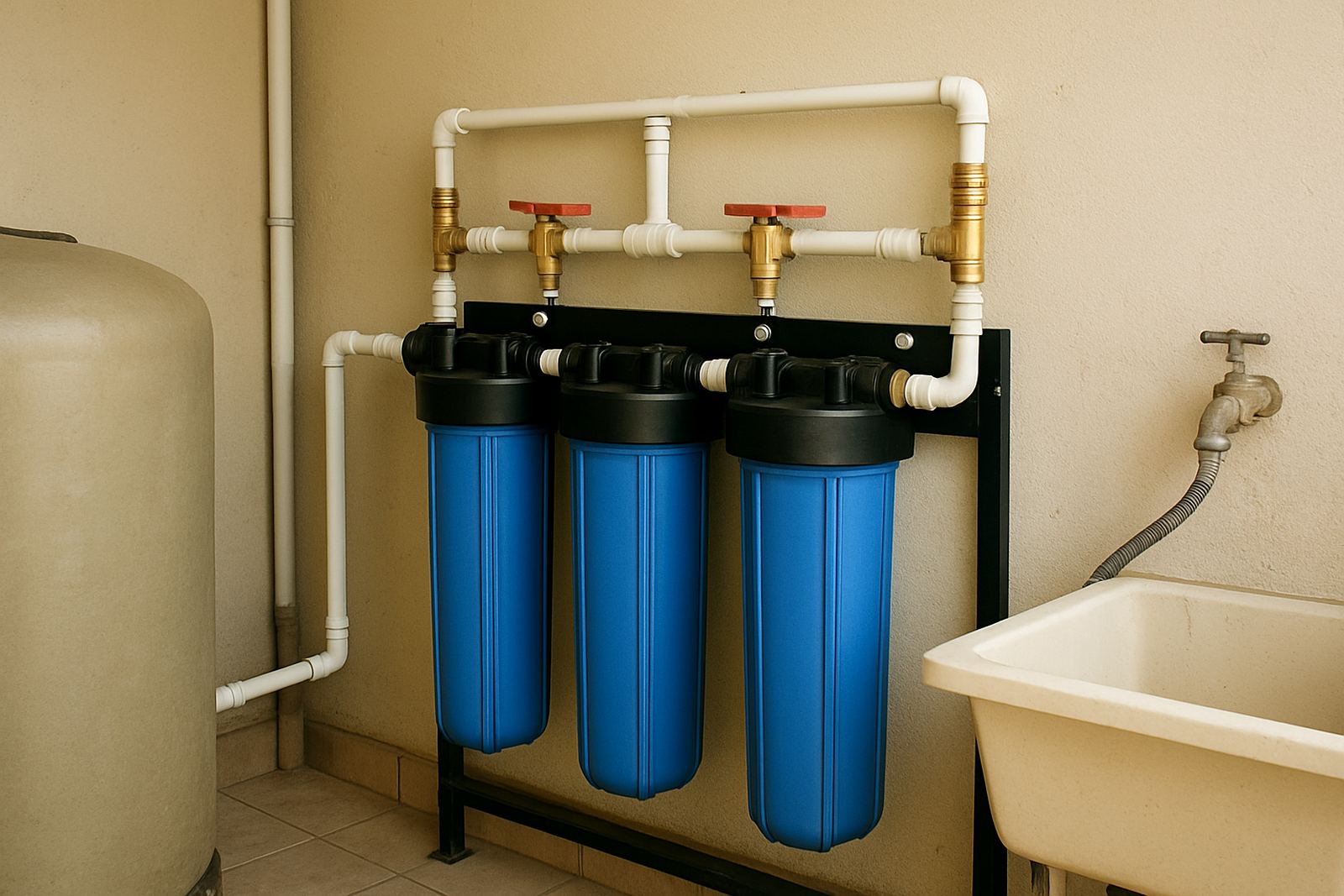
A good system is selected to match the water test and the actual use pattern. Some homes only need a sediment stage to stop sand and rust. Others need carbon for taste and odour, plus finer filtration for dust and suspended material. Where bacteria or high mineral content are involved, the setup can be more specific, and it must be sized properly for flow rate and household demand.
Whole-house filtration is not a one-size-fits-all fix. It will not repair a failing borehole, lower very high salinity on its own, or replace proper disinfection where water safety is a concern. It should be viewed as one part of a water system that may also include borehole pump work, tank storage, pressure control and regular testing. If that sounds like a lot, it is because homes in South Africa often pull water from more than one source and conditions change through the year.
Signs your home needs filtration at the main line
You do not need to wait for a major breakdown before acting. In many cases, the signs are already there, just getting ignored because the water still comes through the tap. If your filters clog too quickly, your shower heads keep blocking, or white and brown marks are showing up on sanitaryware, the incoming water is probably carrying too much material. A geyser that needs repeated maintenance can also point to sediment buildup.
Homes with borehole water often notice changes after heavy rain, pump servicing, or when the water level drops. Municipal homes may notice colour or odour after interruptions or line work. A proper assessment looks at the source, pressure, usage and tank storage if there is one. That way the filtration is matched to what the home actually needs, not just what looks easiest to install.
- Cloudy water or visible particles in a glass
- Blockages in taps, shower heads or toilet valves
- Unpleasant taste or smell at more than one tap
- Staining on basins, baths, laundry or tiles
- Frequent cartridge changes on small under-sink filters
Why borehole homes often need more than one stage
Borehole water is practical and in many cases it is the best option for a home or smallholding, but it usually needs treatment before it enters the house. Sand, fine sediment and iron are common in parts of the North West and can make water hard on fittings. If the water is pumped into a storage tank first, dirt can settle there and then move through the house when the tank is drawn down. That is why the filtration point and tank maintenance need to work together.
For a household in Pretoria or Rustenburg using borehole supply, a typical setup may include a sediment stage before or after storage, followed by a finer filter and, where needed, a carbon stage. In coastal towns like Somerset West or Stellenbosch, the concern may be different, with taste, smell or mineral build-up being more of a problem than visible grit. The principle is the same though: filter the incoming water before it reaches the geyser and the rest of the plumbing.
How to size a system for your household demand
The right system must handle the flow rate of the home without choking pressure. A family house with two bathrooms, a washing machine and a dishwasher will need a different setup from a small farm cottage or a larger property with irrigation off the same source. If the filter is undersized, the pressure drops too far and the household feels it straight away. If it is oversized without the right cartridge choice, you may waste money without fixing the real issue.
Good sizing starts with the source water test, the number of people in the home and whether the supply is continuous or stored in a tank. It also matters whether the system must fit inside a metre box area, a plant room or a utility space. On some properties, load-shedding means pumps restart often, so the system needs to cope with frequent cycling and still protect the household from sudden dirty water after the power comes back on.
A local example from a mixed water property
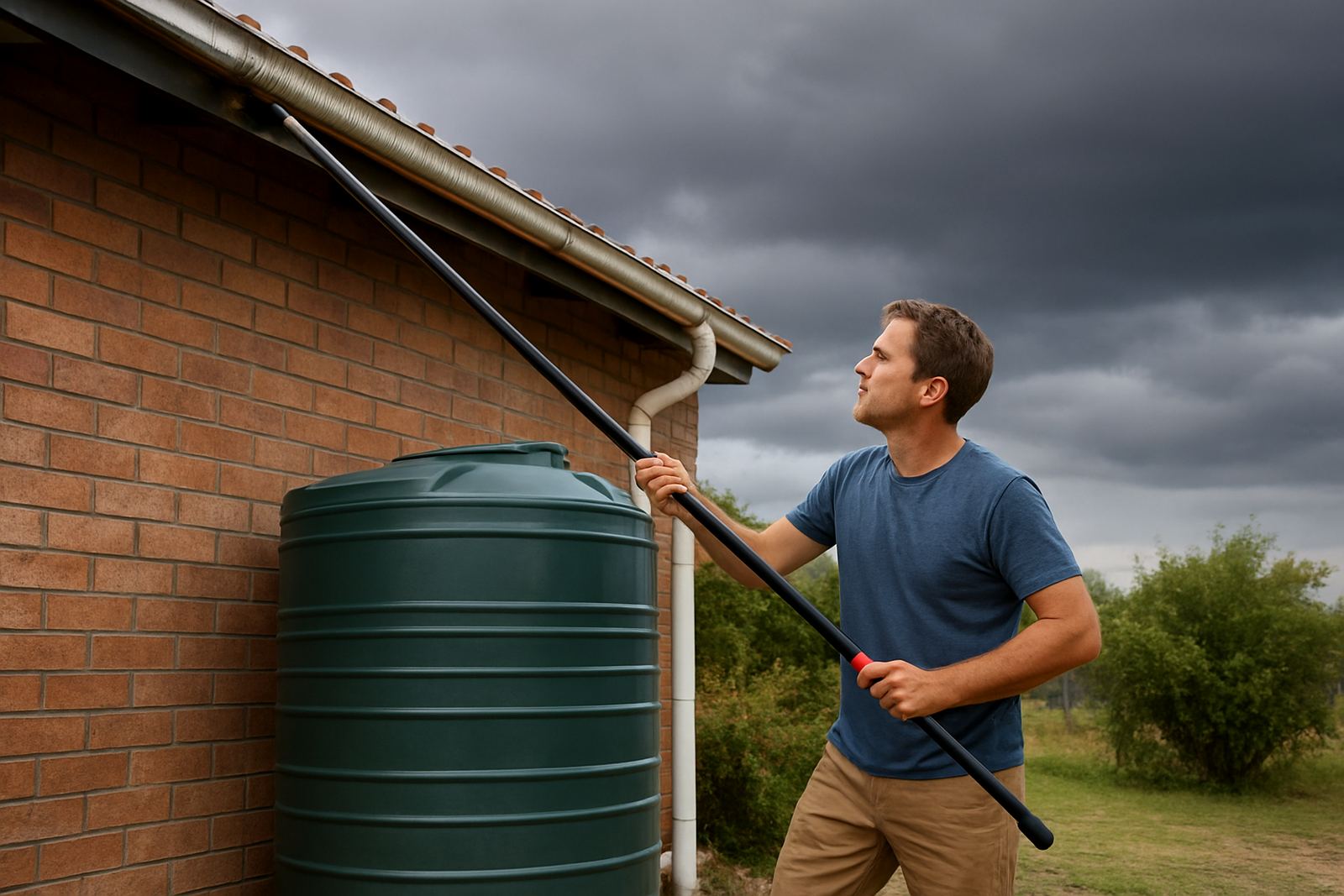
A common case is a home on the edge of Hartbeespoort where the owner uses borehole water for the house and keeps a rain tank for backup. The family notices sand in the shower, soap not rinsing properly, and constant blockages in the small filters at the kitchen sink. After a water test, the answer is not a single cartridge under the basin. It is a whole-house setup that treats the incoming line, protects the geyser, and makes sure the tank water is not moving dirty sediment into the house.
Once the right system is in place, the maintenance becomes manageable: cartridge changes at set intervals, pump servicing where needed, and annual checks on the tanks and filtration stages. That approach is practical for homes and farms across South Africa because it keeps the work simple and reduces avoidable damage. If the source changes, the system can be adjusted instead of starting over from scratch.
What to check before you commit
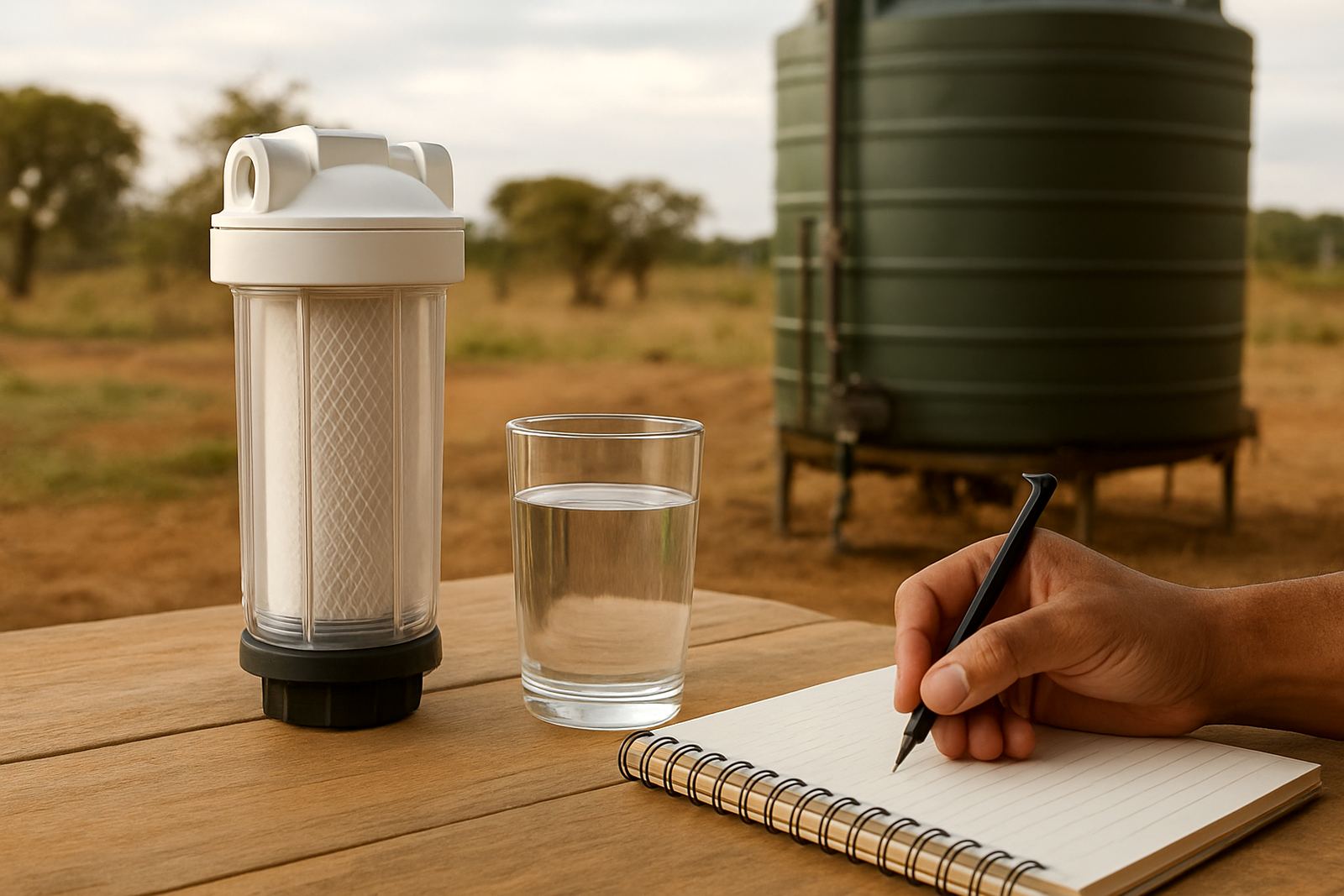
Before you install whole-house filtration, it helps to know exactly what you are trying to remove and where the problem starts. A proper site assessment should look at the water source, pressure, tank condition, pipe size and how often the supply is interrupted. If there is visible sediment, that points to one solution. If there is smell, discolouration or suspected contamination, then testing matters just as much as the hardware.
For homeowners in Brits, Pretoria, Rustenburg, Bloemfontein and the Western Cape, the practical move is to start with the facts. That avoids overspending on stages you do not need and saves time when the system is being sized and assembled. It also makes future maintenance easier, because you know which cartridge is doing what and when it should be changed.
- Water test results or a clear water sample
- Household size and expected daily demand
- Source type: borehole, rain tank, municipal or mixed
- Existing pump, tank and pipe details
- Any appliance or geyser issues already showing up