Start with the roof, gutters and first flush
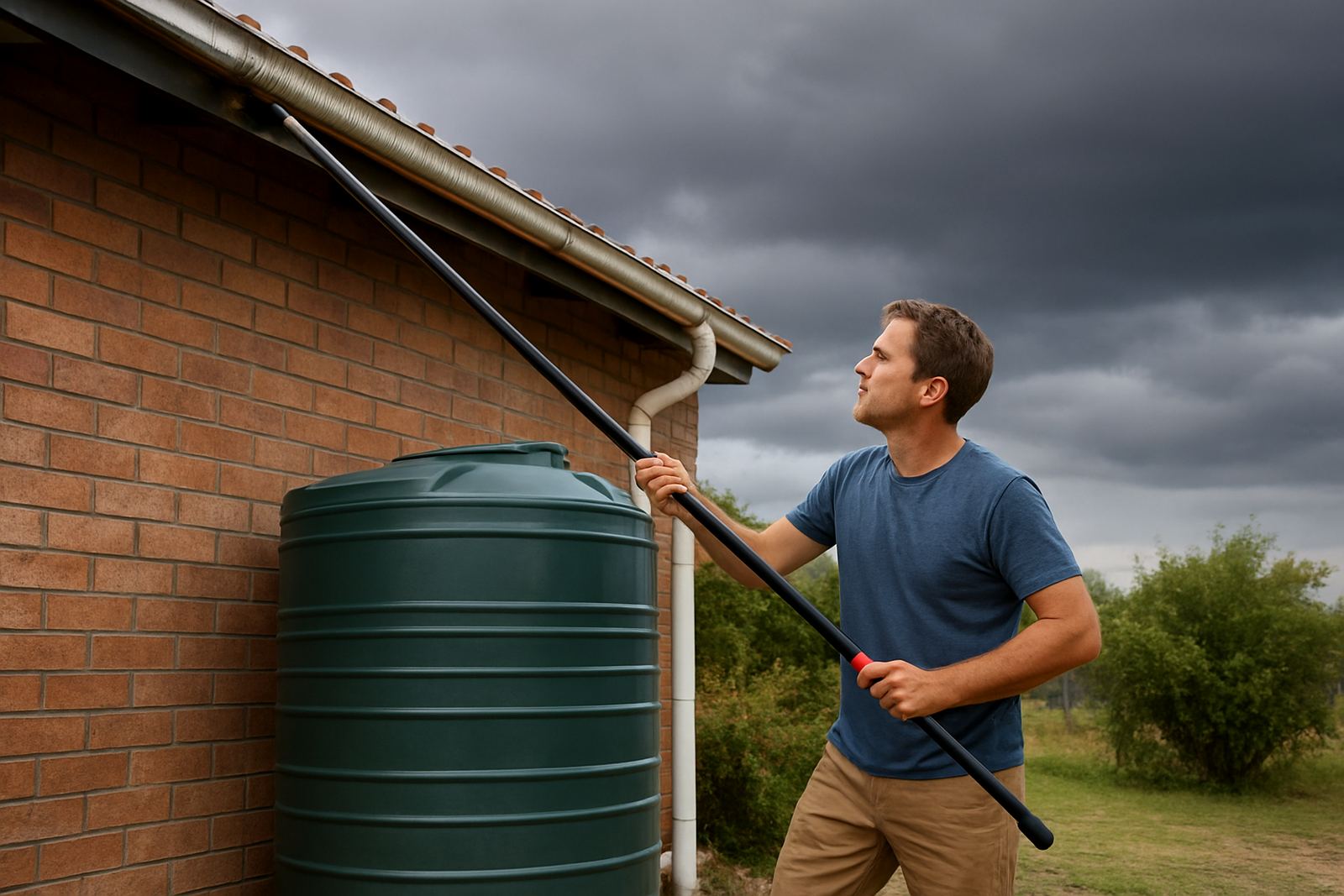
Before the rain starts in earnest, check every surface that feeds your rainwater system. Leaves, dust, bird droppings and broken roof sheets all end up in the tank if gutters and downpipes are not clear. In towns like Pretoria and Hartbeespoort, where summer storms can arrive hard and fast, a blocked gutter is often the difference between a clean first flush and a tank full of muck.
Look for loose brackets, sagging gutters and cracked downpipes. If your system has a first flush diverter, make sure it empties properly after each storm. If the valve sticks, the dirty first water will keep washing into the tank. On a small home setup, that may only mean more filter changes. On a farm, it can mean extra strain on irrigation and animal water points. It is worth spending 30 minutes outside before the first heavy rain, because roof debris only gets worse once the wind picks up.
- Remove leaves, seed pods and mud from gutters and downpipes.
- Check that all screens are in place and not torn.
- Test the first flush diverter with a hose or a short downpour.
- Make sure roof runoff does not pool near walls or foundations.
Check tank condition before the first heavy runoff
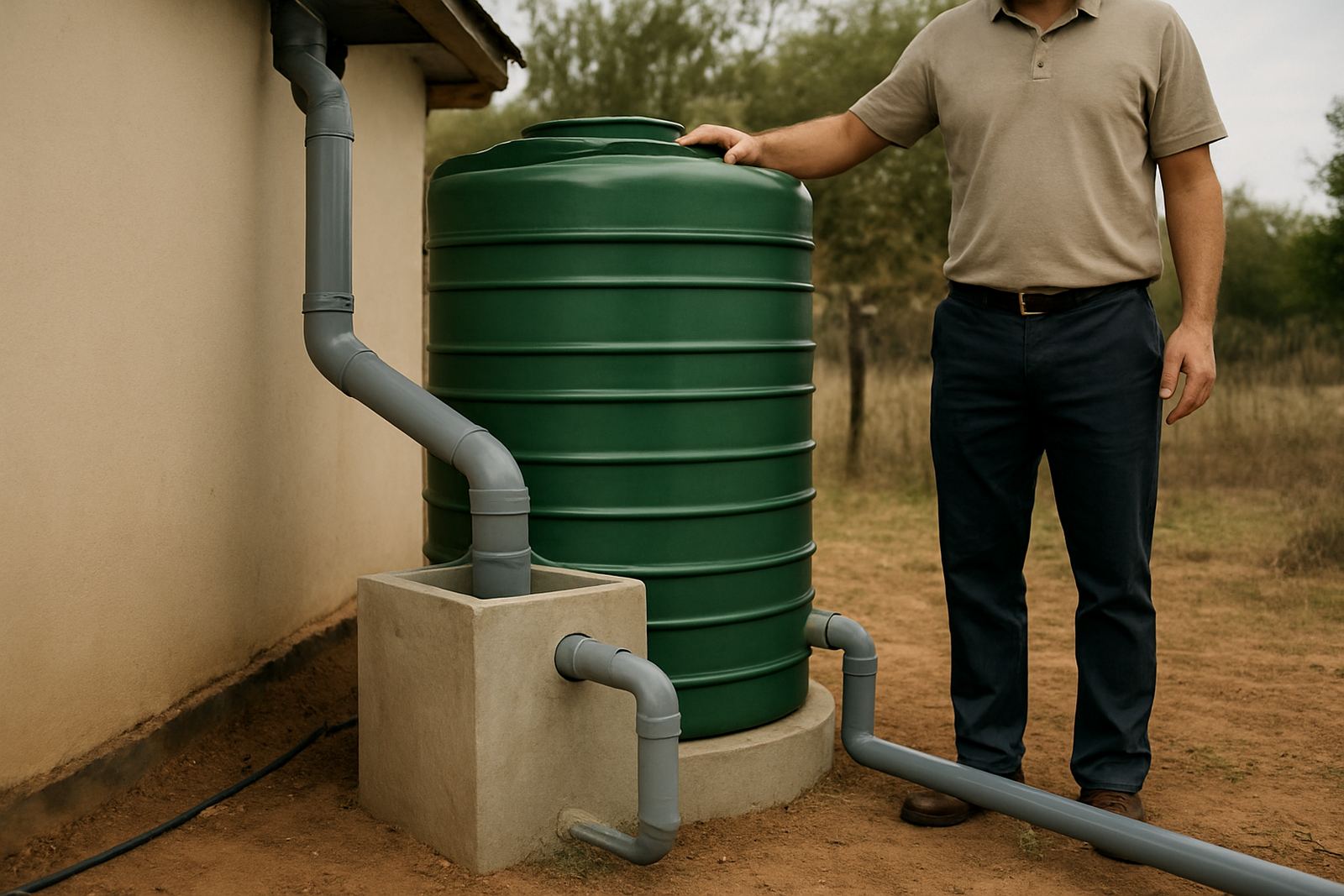
Tanks work best when they are clean, level and properly supported. Inspect the base for movement, especially on sandy ground or where recent work has disturbed the soil. If a tank is leaning even slightly, water pressure on the side wall changes and fittings can start to stress. That is a bigger concern in windy areas and on farm sites where tanks sit on exposed stands.
Look closely at inlet and outlet fittings, float valves, overflow points and lids. A cracked lid lets in insects, dust and sunlight, and sunlight can encourage algae if the tank is not opaque. If you use a slimline tank against a house in Rustenburg or Bloemfontein, check the wall clearance as well. A tank that rubs against a wall or fence during expansion can damage both the tank and nearby finishes.
- Wash the inside of the tank if silt has built up from previous rains.
- Inspect all joints for slow leaks before the tank reaches full volume.
- Confirm that the overflow outlet sends water away from paths and foundations.
- Keep the tank lid closed and screened against insects and dirt.
Service pumps and electrical connections before load-shedding season peaks
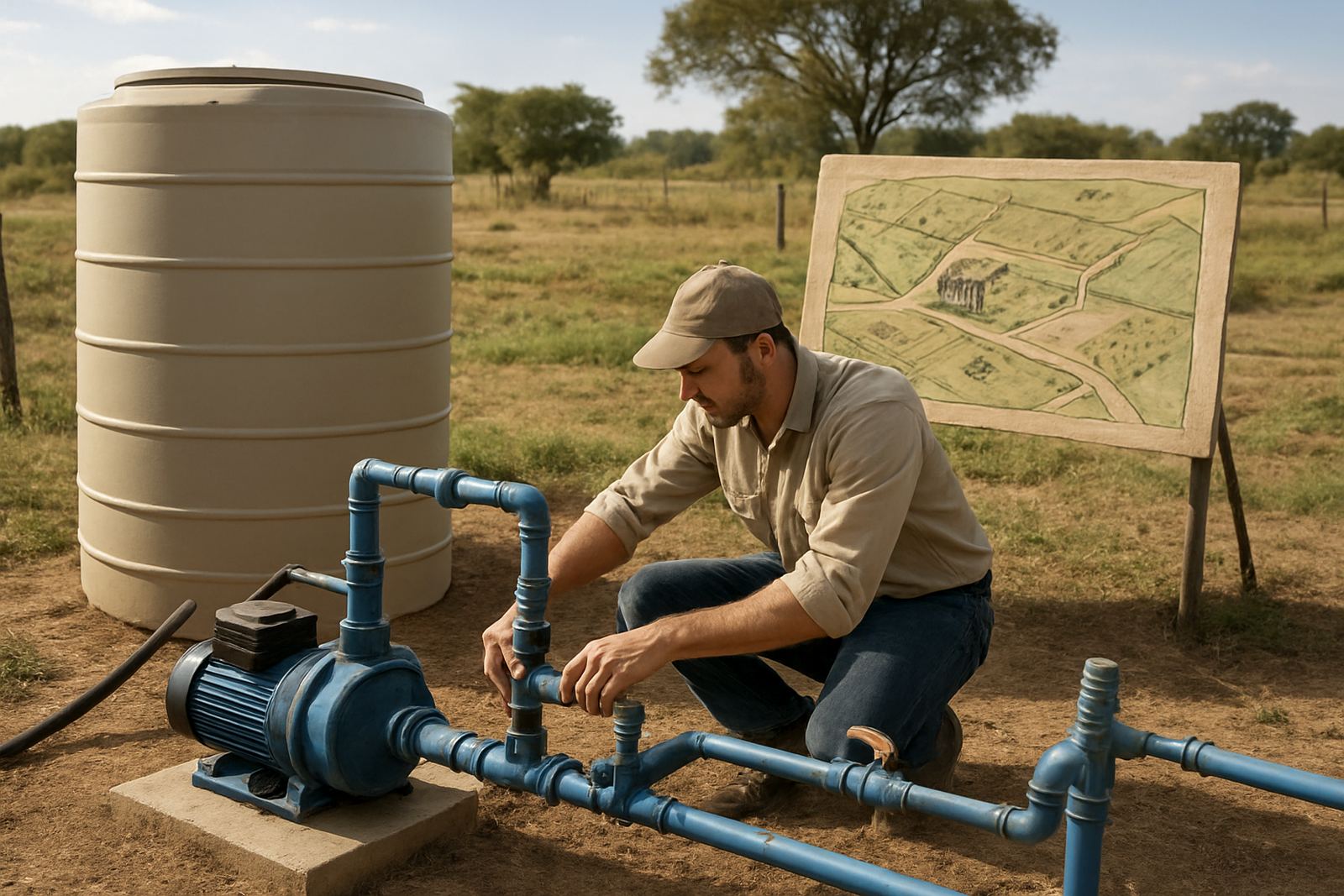
Summer rain often arrives during periods of higher electricity use and more frequent load-shedding. That makes pump readiness important. If your borehole or rainwater system relies on a pump, test it before the first wet spell, not after a storm when the pressure drops and everyone wants water at the same time. A tired pump may still start, but it can draw more current, trip a breaker or run too hot.
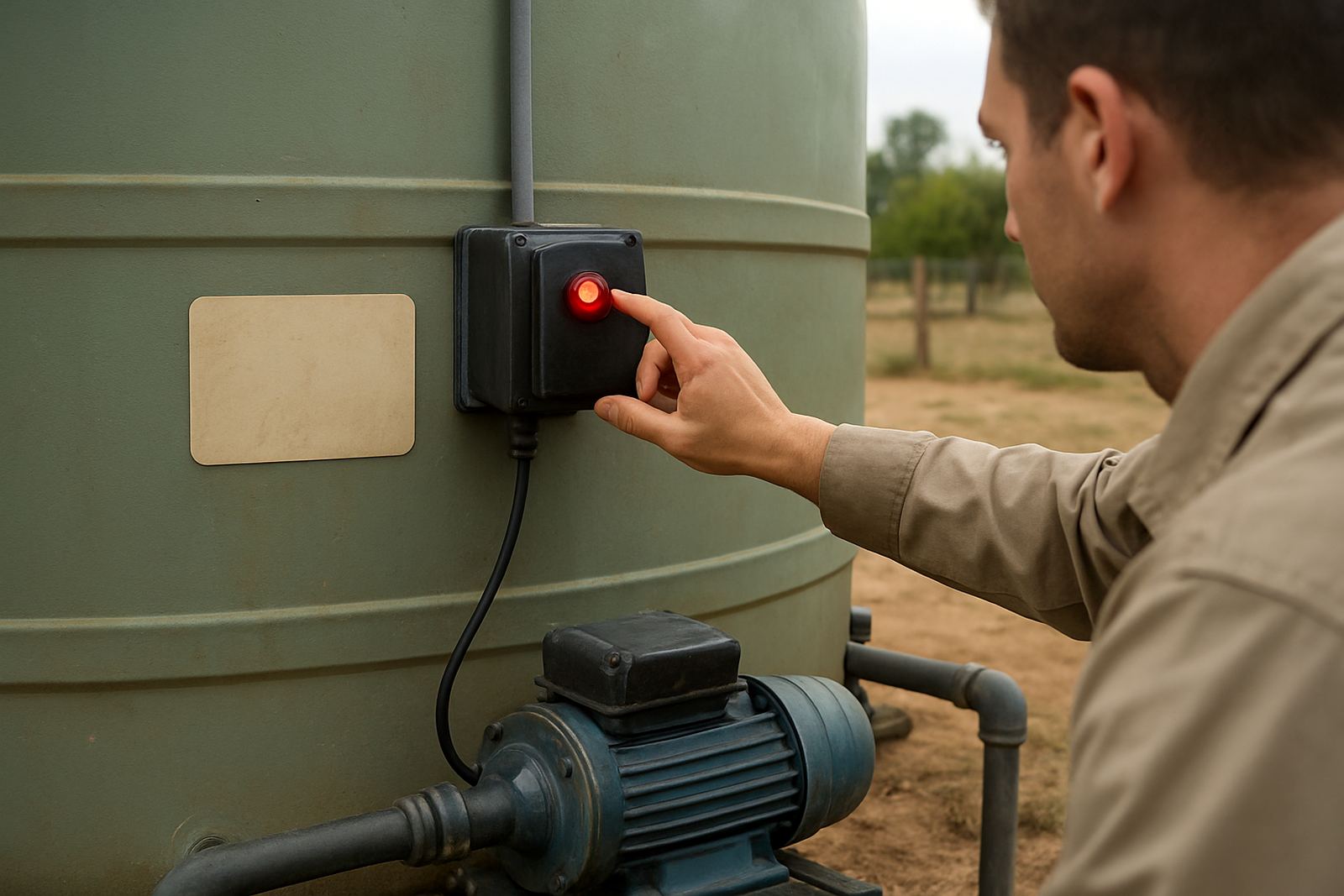
Check that wiring, isolators and control boxes are dry and secure. In coastal humidity, especially around Somerset West and Stellenbosch, condensation can sit inside enclosures and cause faults. Inland, dust can do the same job in a different way. Listen for unusual noise, delayed start-up or vibration. Those are often the first signs that a bearing, capacitor or pressure switch needs attention. If a pump is cycling on and off too often, the pressure tank or switch settings may need adjustment.
- Test the pump while the system is under normal demand.
- Inspect cables, switches and junction boxes for moisture or wear.
- Check pressure settings and look for short cycling.
- Keep a backup plan for watering livestock or essential household use during outages.
Make sure filtration matches stormwater quality
Rainwater looks clean when it first falls, but after a storm it can carry fine dust, organic matter and roof residue into the system. If you use water for drinking, kitchen use or washing produce, filtration needs to be right for the source and the season. A cartridge that copes well in winter may clog faster when the first summer storms wash grime from roofs and roads.
For homes, the usual warning signs are a drop in water pressure, a change in taste or visible particles in the glass. On farms, the concern is often blocked drippers, dirty spray nozzles or sediment in storage tanks. If your system includes activated carbon, sediment or UV treatment, check that each stage is still doing its job. Replacement intervals are not only about time, they also depend on how much water has passed through and what the source water is carrying.
Water testing is useful before the season gets busy. If you know what is in the water, it is easier to choose the right filter changes and treatment steps rather than guessing after the rain has already arrived.
Protect drainage and yard areas from overflow damage
Heavy rain can cause damage even when the water supply itself is working well. Overflow from a tank, blocked drains or poor yard grading can send water towards building foundations, sheds, animal pens and driveways. In places like Brits and Hartbeespoort, where many properties have sloped yards or mixed soil conditions, a small overflow can quickly become a washout.
Walk the site and look at where water actually goes. Follow the natural flow from roof to gutter, from tank overflow to stormwater outlet and from yard surface to the nearest low point. If rainwater is pooling where it should not, simple adjustments can help. That might mean moving a downpipe outlet, extending a soakaway, adding gravel, or cleaning a stormwater channel that has filled with silt.
- Keep overflow pipes pointed away from walls and footpaths.
- Clear stormwater channels, trench drains and soakaways.
- Check for erosion around tank stands and borehole caps.
- Store tools and loose items before storms to prevent blockage and damage.
Use a local example to plan the right seasonal checks
Take a small holding outside Pretoria as an example. The owner may use a borehole for daily supply, a rain tank for garden irrigation and filtered water for the house. If the first summer storm comes after a dry, windy spell, the roof runoff can carry a lot of dust into the system. At the same time, the borehole pump may be expected to work during a day of intermittent power cuts. If the filters are already partly blocked, and the tank overflow points are not clear, the whole setup becomes harder to manage.
A practical seasonal routine fixes that before trouble starts. Arrange a site assessment, confirm the system size is still right for the household or farm and deal with wear items while the weather is still calm. A clean tank, serviced pump and tested filter set do not just improve water quality, they also reduce call-outs when storms are already under way. That is the kind of preparation that saves time, water and a lot of frustration.
For homes and farms across North West, Gauteng, the Free State and the Western Cape, summer rain readiness is mostly about simple checks done in the right order. If the roof, tank, pump and filtration are all ready, the season is far easier to manage. It is practical work, and it pays off as soon as the first clouds build up.