Why guesthouses need more than a basic tank
A guesthouse water setup has to cope with short, heavy bursts of demand. In the morning you can have showers, basins, kitchen washing and laundry all happening together, then a quiet period later in the day. If the system is sized for average use only, pressure drops and the guest experience suffers quickly.
In many parts of South Africa, especially Pretoria, Hartbeespoort, Rustenburg, Bloemfontein and the Western Cape, owners also have to plan around municipal restrictions, fluctuating supply and seasonal changes in demand. A guesthouse with 8 rooms and a dining area may use far more water than a home, but the biggest issue is consistency. Guests do not want to hear that the tank is empty or that the pump has tripped just as everyone is getting ready for the day.
Sizing for peak occupancy and busy mornings
The first step is a proper site assessment and system sizing. A 4 room guesthouse in Brits may need a different setup to a 14 room property in Paarl, even if both sit on the same size stand. You need to look at room count, ensuite bathrooms, kitchen use, garden irrigation, pool top-up and laundry. Then the system should be built for the busiest 2 to 3 hours, not the quiet ones.
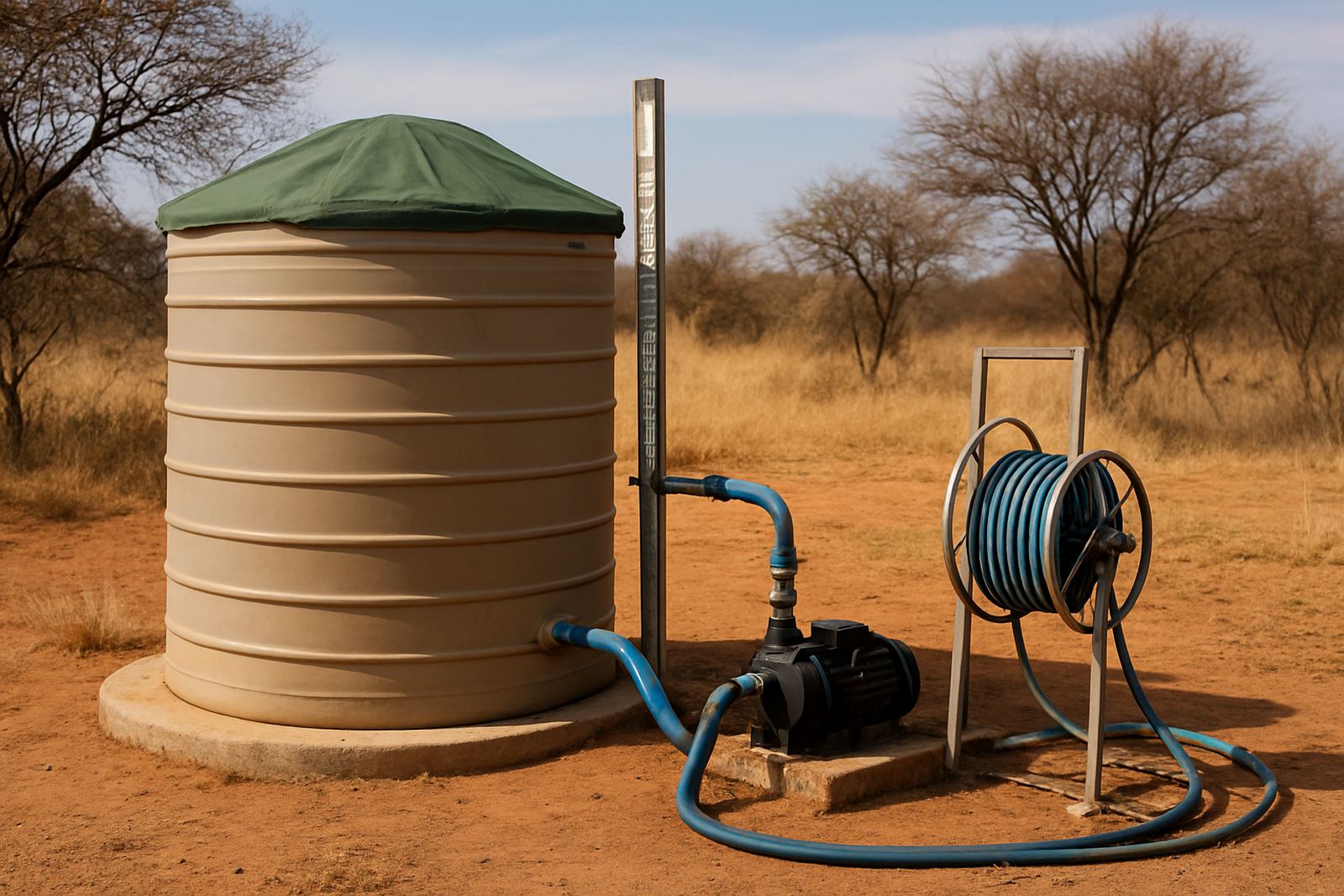
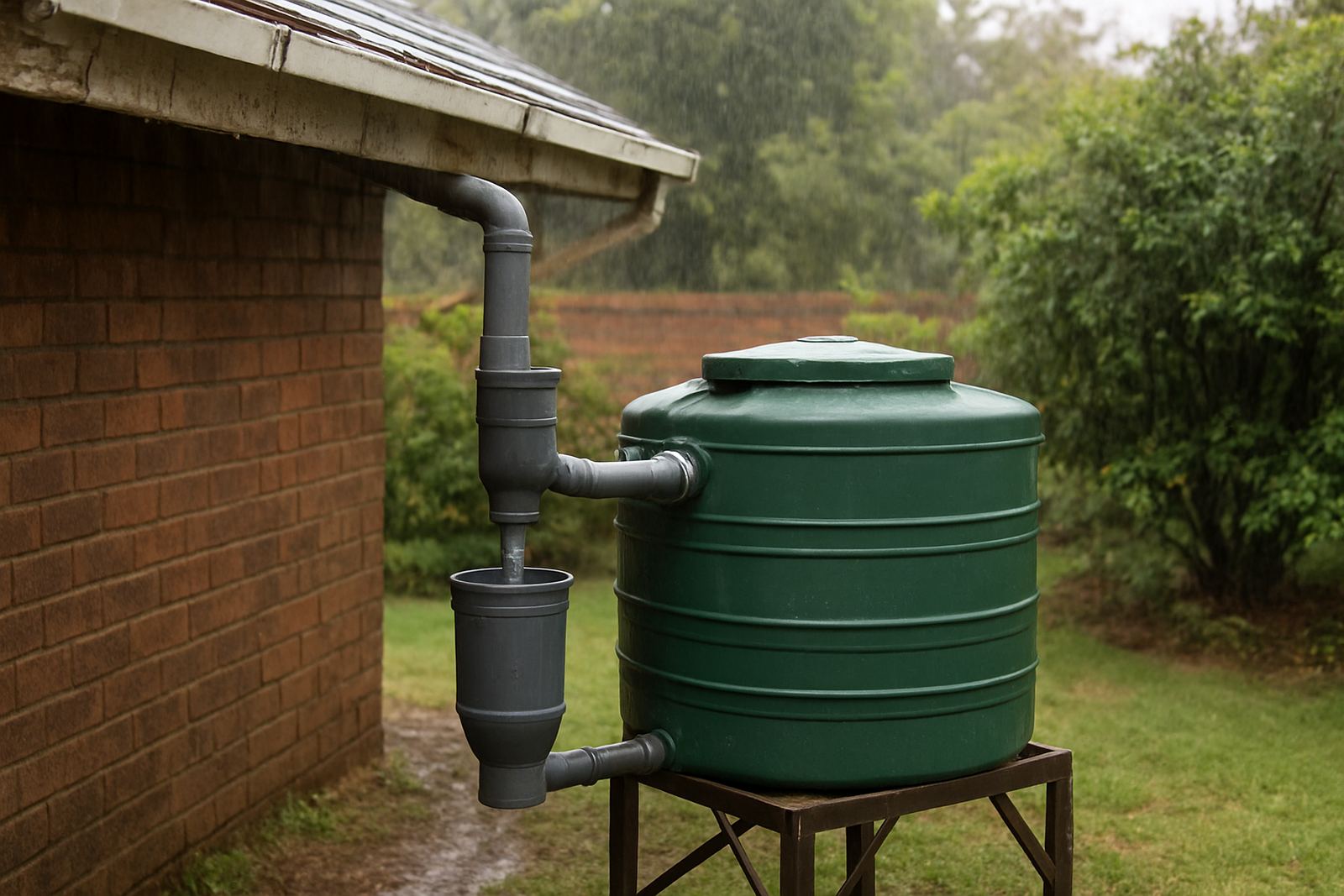
For many guesthouses, the answer is a combination of storage and pressure management. A borehole kit or rain-tank system can feed a storage tank, with filtration added where water quality needs correction. In some cases a smaller tank with reliable refill and pump control is better than a large tank that sits underused. The aim is steady flow at taps and showers, even when the accommodation is full and the weather is hot.
- Count bedrooms, bathrooms and staff use separately.
- Include laundry, cleaning and kitchen demand in the numbers.
- Allow for peak check-in and morning shower times.
- Check available borehole yield or rain catchment before choosing tank size.
- Plan for at least one backup layer, whether storage, filtration or a spare pump.
Keeping shower water clean and comfortable
Guests notice water quality fast. If the water has a smell, leaves marks on basins or makes towels feel stiff, complaints come in quickly. That is why filtration should be matched to the actual source water. Borehole water may need sediment removal, iron reduction or disinfection. Rainwater usually needs leaf screening, first-flush control and proper filtration before use indoors. In coastal areas like Somerset West and Stellenbosch, humidity and tank placement can also affect maintenance needs.
Water testing is worth doing before any final decision. Once the source is known, the right filter changes and treatment plan can be put in place. For guesthouses with sensitive guests, filtered water at the kitchen and handwashing points can make a clear difference. It also protects taps, valves and appliances from early wear, which saves money over time.
- Test for sediment, smell, colour and taste before finalising the system.
- Use filtration that suits the source, not a one-size-fits-all filter.
- Replace filter media on schedule, especially before holiday peaks.
- Inspect storage tanks for algae, dirt and insect entry.
What to do when the municipal supply drops
Many guesthouses rely on municipal water as the main source and then add backup storage for security. This works well if the tank is filled before pressure drops become a problem. In areas where outages are frequent, a delivery and refill plan may be part of the setup. In rural parts around Brits or Hartbeespoort, some owners also use borehole water for the property and keep mains water as a secondary line where available.
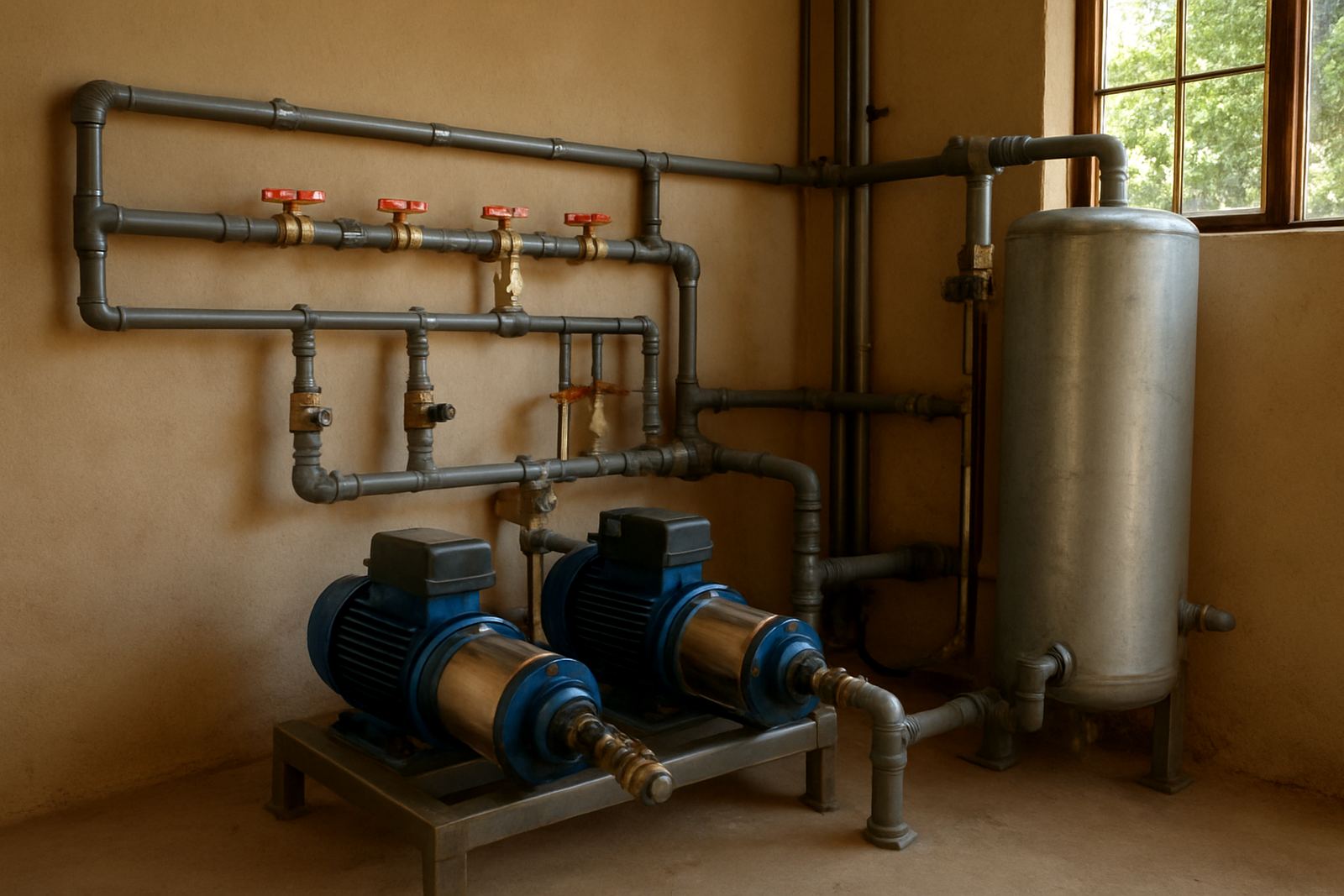
Backup supply should be practical. A tank sitting on the ground in the wrong place can be awkward for cleaning and service access, while a poorly set up pump can lose prime or cycle too often. The layout must allow for maintenance without closing the guesthouse. Where possible, keep the tank, pump and filtration area easy to reach. That helps with annual maintenance, fault finding and quick checks when pressure changes or the water goes cloudy after rain.
Planning for laundry, cleaning and kitchen use
Water demand in guesthouses is not just about guests bathing. Housekeeping, washing linen, dishwashing and garden care all add to the load. A property in Rustenburg with a small laundry room may need a stronger pump and extra storage than expected, simply because towels and bedding are washed daily. If you do not plan for that extra use, the system feels undersized even when the bedrooms are not full.
It helps to map the day into water events. Morning showers, midday cleaning and evening kitchen use all place different pressure on the system. With proper pump servicing and commissioning checks, the setup can be tuned so it does not hammer the tank or cut out too often. That protects the pump and gives guests a better experience at the taps.
A local example from Brits to the Western Cape
A guesthouse in Brits with six rooms and an outdoor dining area may start with municipal water, then add a rain-tank system for backup and garden use. The owner might choose a storage tank, filtration for indoor points, and a pump sized to keep shower pressure steady during the breakfast rush. If the same owner opens a second property in Somerset West, coastal conditions and higher summer occupancy may mean a different filter setup and larger storage allowance.
Hydrated works with guesthouses, homes and farms across South Africa from Brits to Pretoria, Hartbeespoort, Rustenburg, Bloemfontein and the Western Cape. Services can include site assessments, system sizing, kit assembly, delivery coordination, installation support, commissioning checks, filter changes, pump servicing, tank cleaning and annual maintenance. The right system depends on the property and the way it is used, not just on the size of the stand.
A practical checklist before the next busy season
Before holidays or long weekends, it is worth checking whether the water setup can handle full occupancy. A few hours spent on maintenance can prevent complaints, lost bookings and emergency callouts later. Guesthouses do best when the water system is treated like core infrastructure, not an afterthought.
- Confirm tank levels and refill timing.
- Check pump pressure and switch settings.
- Inspect filters, valves and visible pipe joints.
- Schedule tank cleaning before the next peak period.
- Keep a record of water tests and service dates.
If you are planning an upgrade, start with a proper assessment and build for the busiest week of the year, not the quietest. That approach keeps showers running, laundry moving and guests comfortable, even when the weather changes or supply becomes unreliable.