
Start with the roof, not the tank
Good rainwater harvesting begins on the roof because that is where the water first lands. A clean roof made from suitable sheeting or tiles, with gutters that are clear and securely fixed, gives you a better harvest than a bigger tank on its own. In Brits and the wider North West, summer storms can drop a lot of water in a short time, so the catchment area needs to move runoff quickly into storage without overflowing.
The roof size matters because it sets the volume you can collect. A small home roof may only fill a modest tank after a few decent rains, while a farm shed or warehouse roof can capture far more. Before buying equipment, check how much roof area you have, where the downpipes sit, and whether trees are dropping leaves, seed pods or bird mess onto the surface. A quick site assessment can save a lot of trouble later.
- Measure the roof area in square metres.
- Check gutter fall and downpipe positions.
- Look for rust, broken tiles, loose fasteners and blocked corners.
- Plan for the dirtiest rain after a dry spell, when the first flush is most important.
Choose a tank that suits your daily use
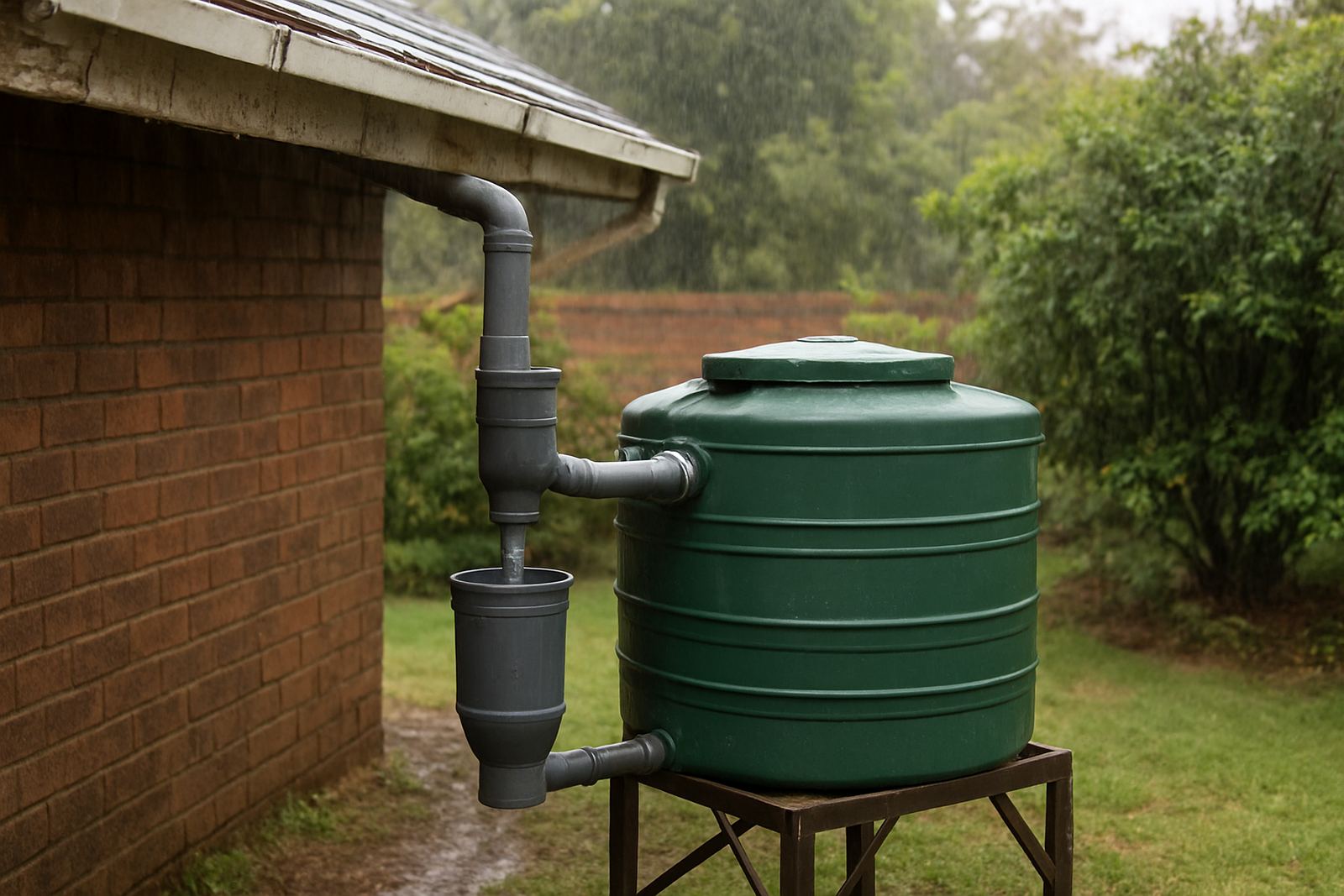
The tank is not just a holding point, it is the heart of the system. Size should match your roof catchment, your water use, and how long you want to bridge between rain events. A family home in Pretoria may want storage for garden watering and backup use, while a smallholding near Hartbeespoort may need enough capacity for animals and a few weeks of supply. On farms, bigger storage often makes sense but only if the collection and delivery lines can keep up.
Plastic tanks are common for homes and light commercial use because they are easy to place and maintain. In coastal areas such as Somerset West, tank placement should also consider wind, salt air and direct sun. UV exposure and heat can shorten the life of poor quality fittings, so valves, seals and pump housings need to be chosen with care. A tank that is too small fills fast and spills, while one that is far too big may sit half empty for long periods, which is not ideal for water turnover.
- Match storage to roof size and rainfall patterns.
- Allow space for a base, pipework and access for cleaning.
- Use lids, screened vents and secure overflows.
- Think about delivery routes, especially if the tank needs to be moved through a gate or over uneven ground.
First flush and filtration do the real cleaning
The first rain after a dry spell usually washes dust, leaves, pollen and roof debris into the system. That is why a first flush diverter is so useful. It sends the dirtiest early water away from the tank so the cleaner rainfall can enter storage. This simple part can make a proper difference, especially in towns like Rustenburg where dust and mining grime can build up on external surfaces.
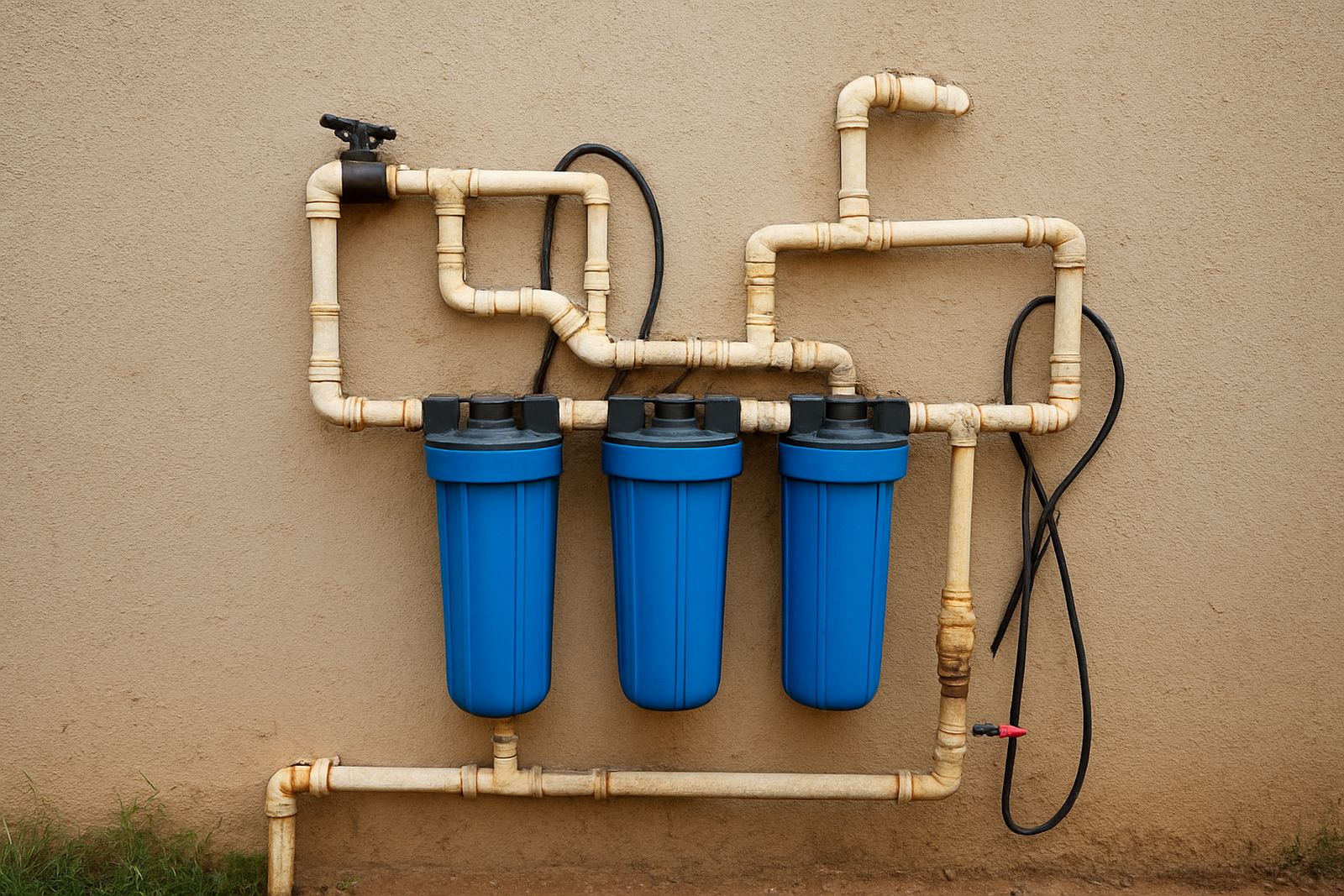
After the first flush, filtration should remove finer particles before the water is used. The level of filtration depends on how you plan to use the water. Garden use needs less treatment than water for washing, topping up a toilet cistern or other domestic tasks. For drinking water, much tighter filtration and regular testing are needed. A single filter is seldom enough if the water is going to be used across multiple points of use, so it is best to think through the full path from roof to tap.
- Use leaf guards to keep large debris out of gutters.
- Install a first flush device sized for the roof area.
- Choose sediment filtration to reduce grit and fine particles.
- Change filter elements on schedule, not only when flow becomes slow.
Pumps and pressure make the water usable
Stored water only becomes practical once it can be moved where it is needed. A pump helps push water to taps, irrigation lines or a pressure system, especially where the tank sits lower than the point of use. In many North West homes, and on farms around Bloemfontein and the broader Free State border area, pressure needs can vary a lot between a single tap and a long run to a workshop or animal pen.
The right pump depends on flow rate, lift height and the number of outlets. If the pump is too small, the system struggles and switches on too often. If it is too large, it can waste power and wear out quicker. It also needs protection from dry running and dirty water. During load-shedding, some customers want a setup that can recover quickly when the power comes back, while others prefer backup options that keep water moving with less interruption. A correct installation should include isolating valves, non-return protection and enough space for servicing.
Where a tank feeds a home, pressure tanks and switchgear may be needed to keep the flow steady. On farms, pumps may need to cope with longer pipe runs and more frequent operation. That is where proper system sizing matters, because water pressure and pipe diameter must work together, not fight each other.
Keep the water clean after the rain has stopped
Rainwater can look clean and still pick up contamination from roofs, gutters, tanks and pipework. Once water is stored, maintenance becomes part of the system. Tank lids should stay closed, overflow outlets should be screened, and the base around the tank should drain properly so dirty splashback does not enter through fittings. Algae and sediment build-up are common when tanks sit in full sun or are not cleaned for long periods.
Water testing is useful when the supply is used for washing, livestock, or any household task where quality matters. If the water changes smell, colour or taste, check the filters first, then the tank and pipework. In areas with dusty roads or heavy seasonal debris, filter changes may be needed more often than expected. A good maintenance routine keeps the system predictable instead of becoming a project every time the rain returns.
- Inspect gutters and screens after storms.
- Clean tank roofs and tops before the rainy season.
- Schedule tank cleaning at least once a year, or sooner if sludge builds up.
- Replace worn seals, cracked fittings and clogged filter elements promptly.
A practical North West example
Take a family home in Brits with a medium roof, a vegetable patch and a need for backup water during dry weeks. A simple setup might include roof collection, a first flush unit, sediment filtration, a storage tank and a pump feeding selected taps. If the household also wants to water trees or top up a small irrigation line, the system can be sized to suit that use without overcomplicating the layout. The same thinking applies to a farm outside Hartbeespoort, just at a larger scale and with tougher pipe runs.
What matters most is planning the full chain. If the roof feeds dirty water into a small tank, or the pump is matched badly to the pipework, the system underperforms and frustrates everyone. But when the catchment, storage, filtration and delivery are set up properly, rainwater becomes a useful part of daily supply instead of a last-minute backup. That is the main lesson for South African conditions: collect what falls, store it safely, and use it with a plan.
Hydrated supports that process with site assessments, kit assembly, delivery coordination, installation support and commissioning checks for homes and farms across South Africa. From Pretoria and Rustenburg to Paarl and Stellenbosch, the basics stay the same even if the rainfall and roof shapes differ.