
Why dry run damages pumps so quickly
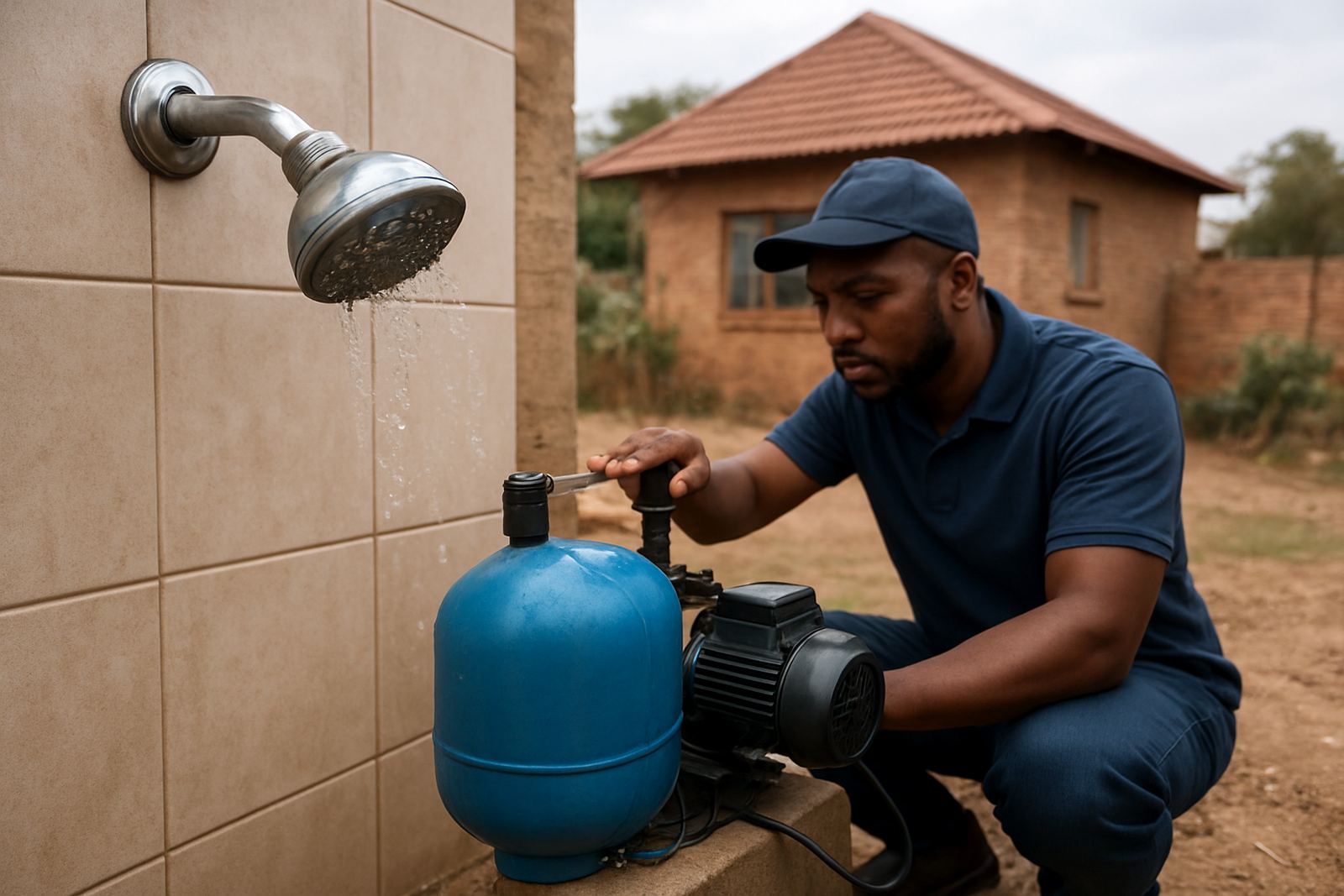
Dry run happens when a pump keeps spinning but there is little or no water at the inlet. Instead of moving water, the pump starts building heat and friction inside the casing, seals and bearings. That can happen in a borehole that drops during a long spell of dry weather, a rain tank that empties faster than expected, or a suction line that draws air because of a loose fitting or blocked strainer.
In practical terms, the damage is often fast. A small domestic pump may survive a short air pocket, but repeated dry running will wear the seals, score the impeller and shorten motor life. For farms around Brits and Rustenburg, where water demand can spike during irrigation and stock watering, the cost is not only the pump replacement. It is also the downtime, the callout, and the risk of losing water at a bad moment.
Dry-run protection matters because it gives the system a way to stop itself before the pump cooks itself. That is a much cheaper outcome than replacing a pump and redoing fittings after a failure.
The controls that stop a pump before it burns out
There is no single control that suits every setup. The right choice depends on the source, the pump size, the tank arrangement and how the system is used. A good installation will often combine more than one safeguard so that a fault is picked up early.
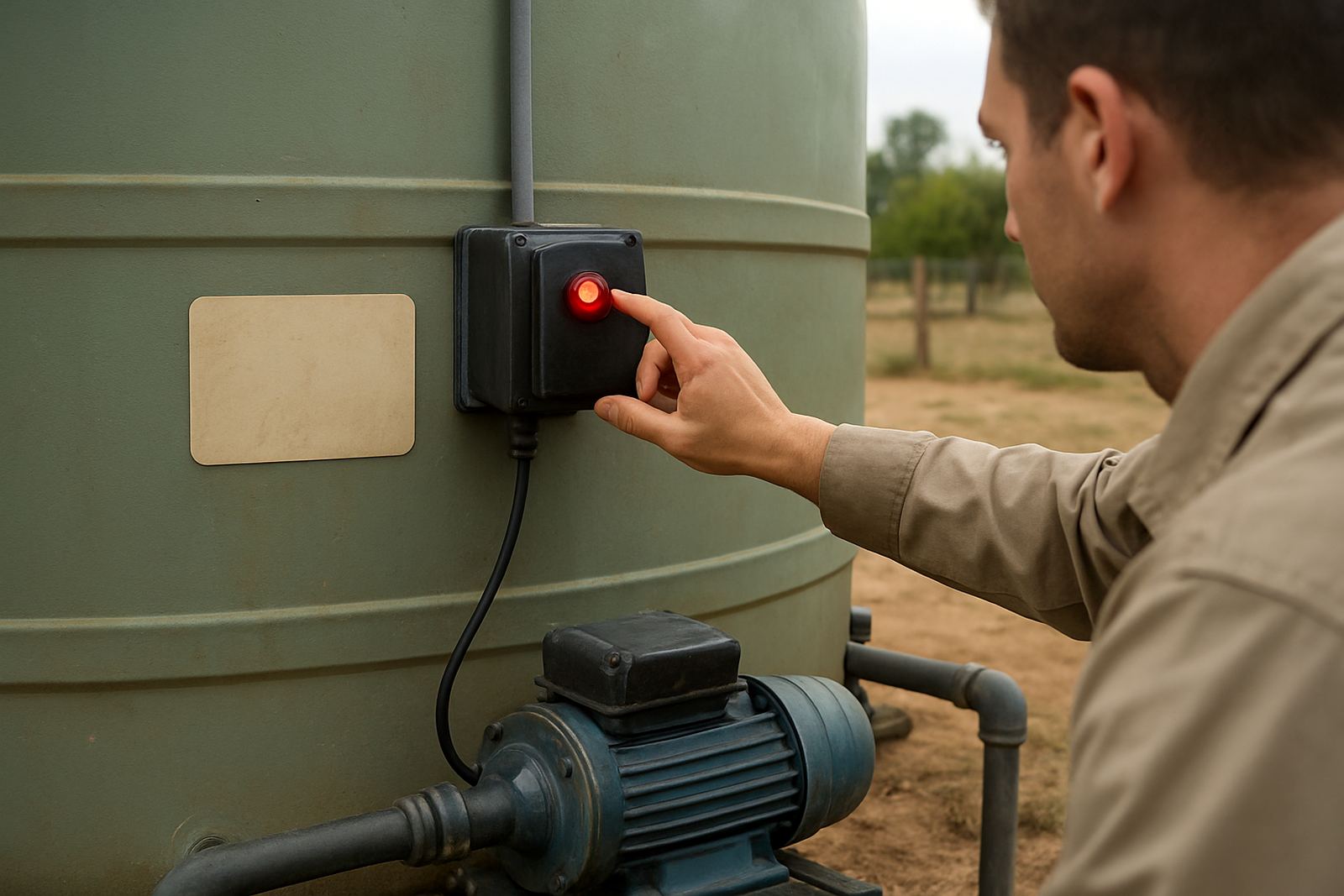
- Float switches: These are common on tanks. When the water level drops too low, the switch opens and stops the pump. They are simple and useful for rain tanks and transfer systems.
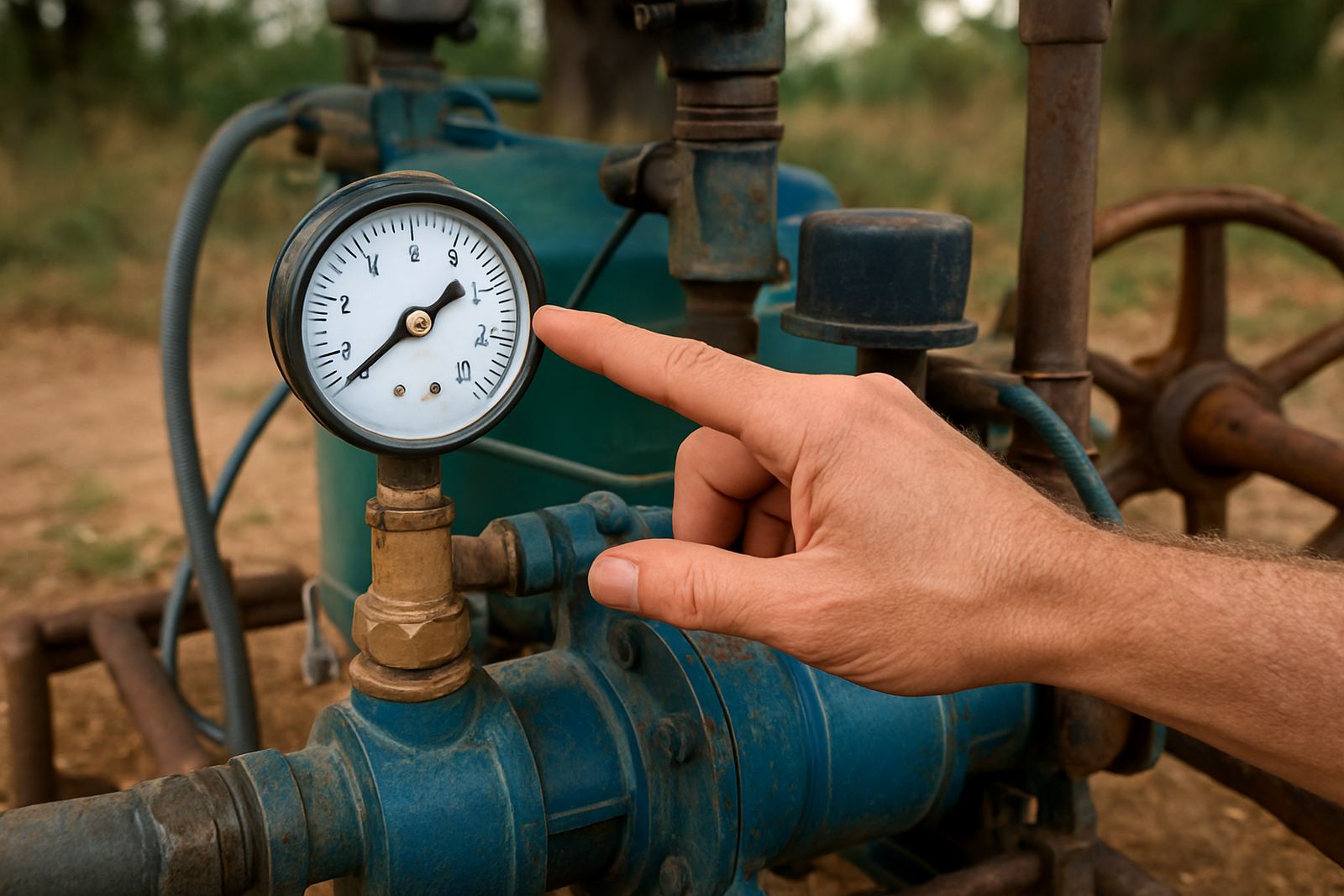
- Pressure switches and controllers: These help manage start and stop points and can cut power if pressure drops abnormally low, which may point to a dry source or broken line.
- Electrode level probes: These are fitted in tanks or reservoirs and sense water level directly. They are useful where floating parts are not ideal.
- Dry-run protection modules: These monitor current, pressure or flow and trip the system if the pump runs without water.
- Low-water cut-out valves: On some borehole systems, a level-based cut-out can be fitted to protect the pump when the borehole water column falls too far.
Not every control is needed everywhere. The point is to choose a control that matches the actual risk. A rain tank on the coast in Somerset West faces a different pattern from a deep borehole on a smallholding outside Bloemfontein.
A local example from a mixed-use property near Brits
Take a property near Brits with a borehole feeding a 5 000 litre storage tank, then a pressure system supplying the house and a few irrigation points. In summer, the household uses more water, the garden gets extra use, and the borehole pump runs longer. If the borehole level drops after a hot, dry week and the pump keeps running, the owner may only notice when the water pressure falls away or the motor trips on heat.
A better setup is to include a low-water protection device on the borehole side and a tank float switch on the storage side. That way the pump stops when supply is low, and it also stops if the tank is full. It sounds basic, but that is what keeps a simple system from becoming an expensive repair job. On farms, this matters even more because a pump that runs dry during load-shedding recovery can come back on into a low-water condition if the controls are not set correctly.
We often see the same pattern: the pump itself is not the real problem, the controls are. A loose float cable, a stuck valve or a poorly set pressure switch can leave the pump unprotected. A proper check once or twice a year can catch that before damage starts.
What to check during installation and sizing
Dry-run protection works best when the system is sized properly from the start. If the pump is too large for the yield, or the pipework creates unnecessary resistance, the pump may cycle badly and run in unsafe conditions. If the tank is too small for the demand, the system will empty too quickly and the pump will be forced to work harder than it should.
When we assess a site, we look at the water source, the depth or storage available, the expected daily use and the layout of the pipe run. On coastal properties, we also consider humidity and corrosion on fittings. In municipal areas, we check that the system layout still allows practical maintenance and safe isolation for cleaning, filter changes and fault finding.
- Confirm the source can supply the pump at the intended flow rate.
- Match pipe diameter to the distance and demand so the pump is not overworked.
- Use control gear that can stop the pump quickly when water runs low.
- Allow for easy access to float switches, valves and panels.
- Test the stop-and-start cycle before handing the system over.
Signs your pump may already be running dry
You do not always get a dramatic failure first. Sometimes the warning signs are small and easy to miss. A pump that is drawing air may sound harsher than usual. Pressure may drop off quicker than normal, or the system may switch on and off more often. In some cases the motor casing feels hotter than it should after only a short run.
Other warning signs include cloudy water after start-up, frequent tripping, or a tank that takes much longer to fill. On borehole systems, a sudden change in performance can point to a falling water level, a blocked foot valve or a leaking pipe joint. On rain-tank systems, the issue may be as simple as a clogged inlet screen or a float switch that has stuck in the wrong position.
If you notice these signs, do not keep forcing the system. Switch it off and have the source, controls and fittings checked before more damage sets in.
How maintenance keeps dry-run protection reliable
Dry-run protection is only useful if it still works when needed. That means the controls, sensors and wiring should be checked as part of normal maintenance. A float switch can jam with sediment. A probe can corrode. A pressure switch can drift out of range. Even a good pump panel can collect dust, moisture or insect damage over time.
Routine maintenance does not need to be complicated. It should focus on the parts that actually keep water moving safely. For homes and farms across Pretoria, Hartbeespoort, Rustenburg, Bloemfontein and the Western Cape, the right interval depends on use, water quality and how exposed the system is to heat or dust.
- Test the dry-run cut-out by checking the stop level or trigger point.
- Inspect float switches, level probes and cable routes for wear.
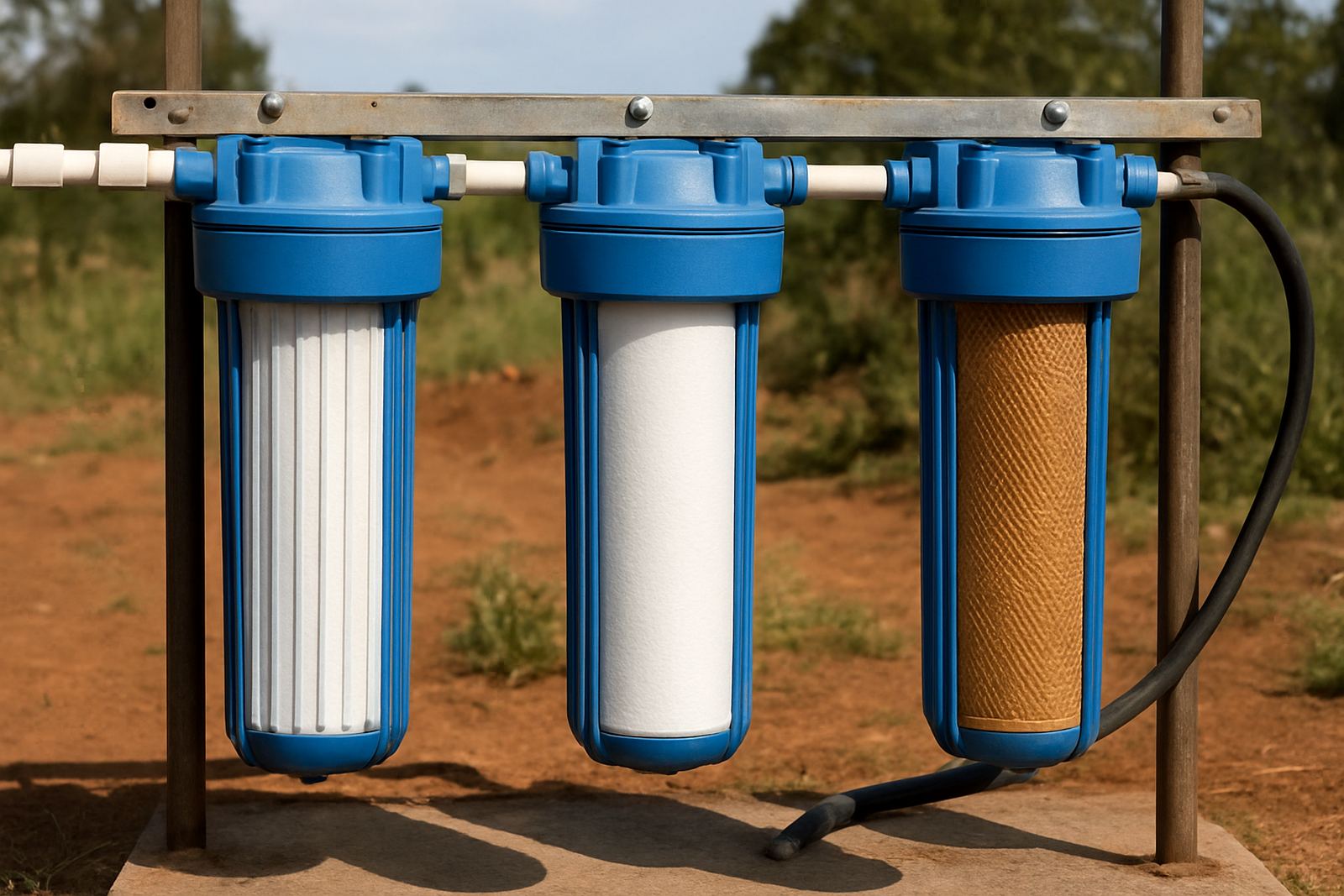
- Clean strainers, filters and tank inlets so flow is not restricted.
- Check for air leaks on suction lines and loose unions.
- Record any tripping, pressure drops or unusual motor noise.
That kind of attention keeps the pump working longer and gives you a clearer picture of the system before a small fault turns into a shutdown.
A practical approach for South African water systems
Dry-run protection is not just for large farms. A home in Stellenbosch with a rain-tank system, a guesthouse in Hartbeespoort with backup supply, and a smallholding outside Bloemfontein can all suffer the same damage if the pump is left unprotected. The conditions may differ, but the principle is the same: if the water source runs low, the pump must stop before it harms itself.
The best systems are the ones that are simple to understand and easy to maintain. That usually means a proper site assessment, correct sizing, the right protection controls and regular checks after installation. With that in place, you get a system that is safer, cheaper to run and less likely to fail when water is already under pressure.
If you are planning a new borehole, rain-tank or filtration setup, or your current pump keeps tripping and losing prime, it is worth getting the dry-run protection looked at properly. It is a small part of the system, but it protects the biggest moving part you have.