Start With The Roof, Then Plan The Water Path
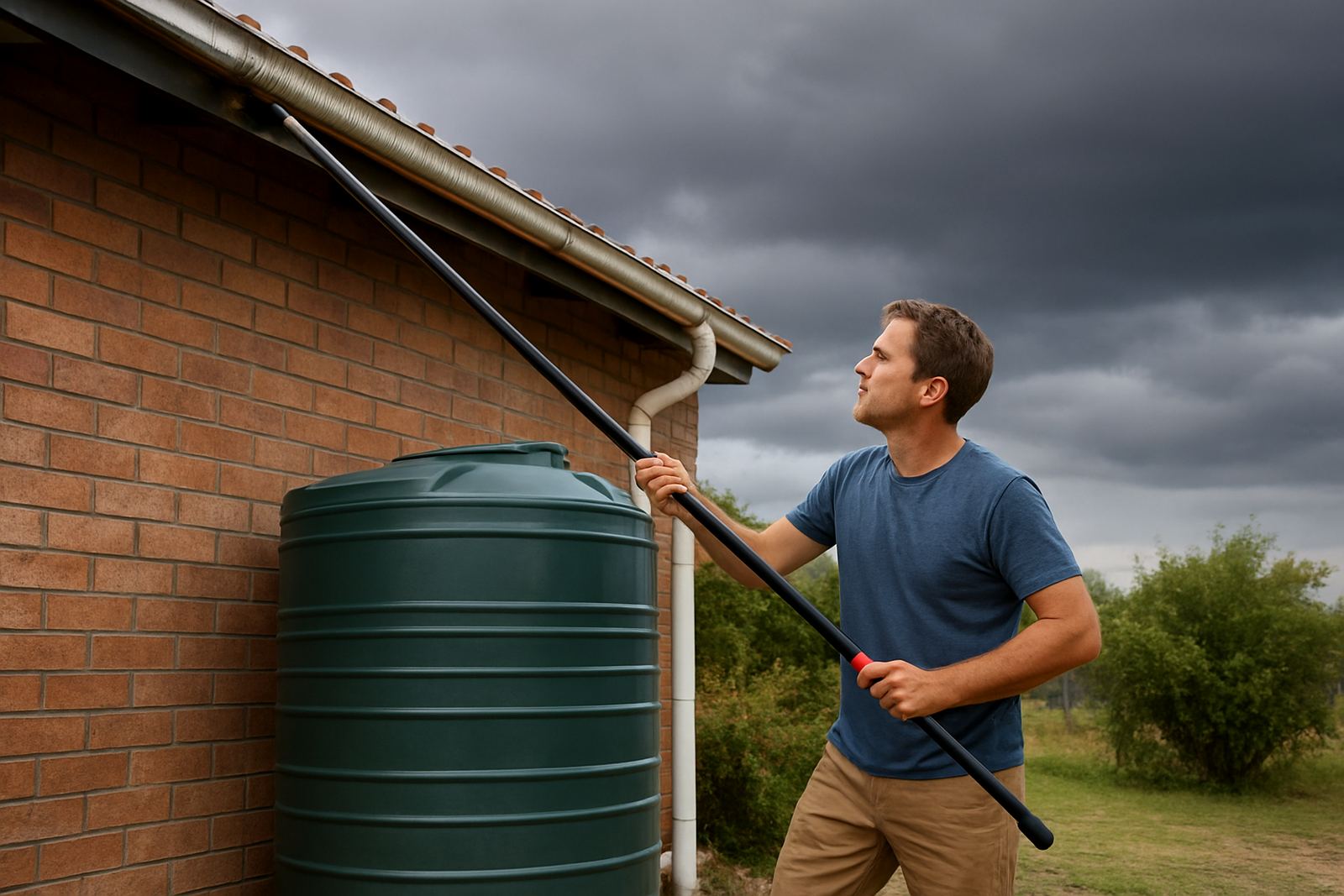
Harvesting rainwater begins at the roof, but the roof is only the start of the system. In a proper plan, every downpipe, gutter, pipe run and tank inlet is linked to the way water leaves the property during a heavy summer storm. If that flow is ignored, the first big downpour can send water across driveways, into flower beds, or back toward a wall where it should not sit.
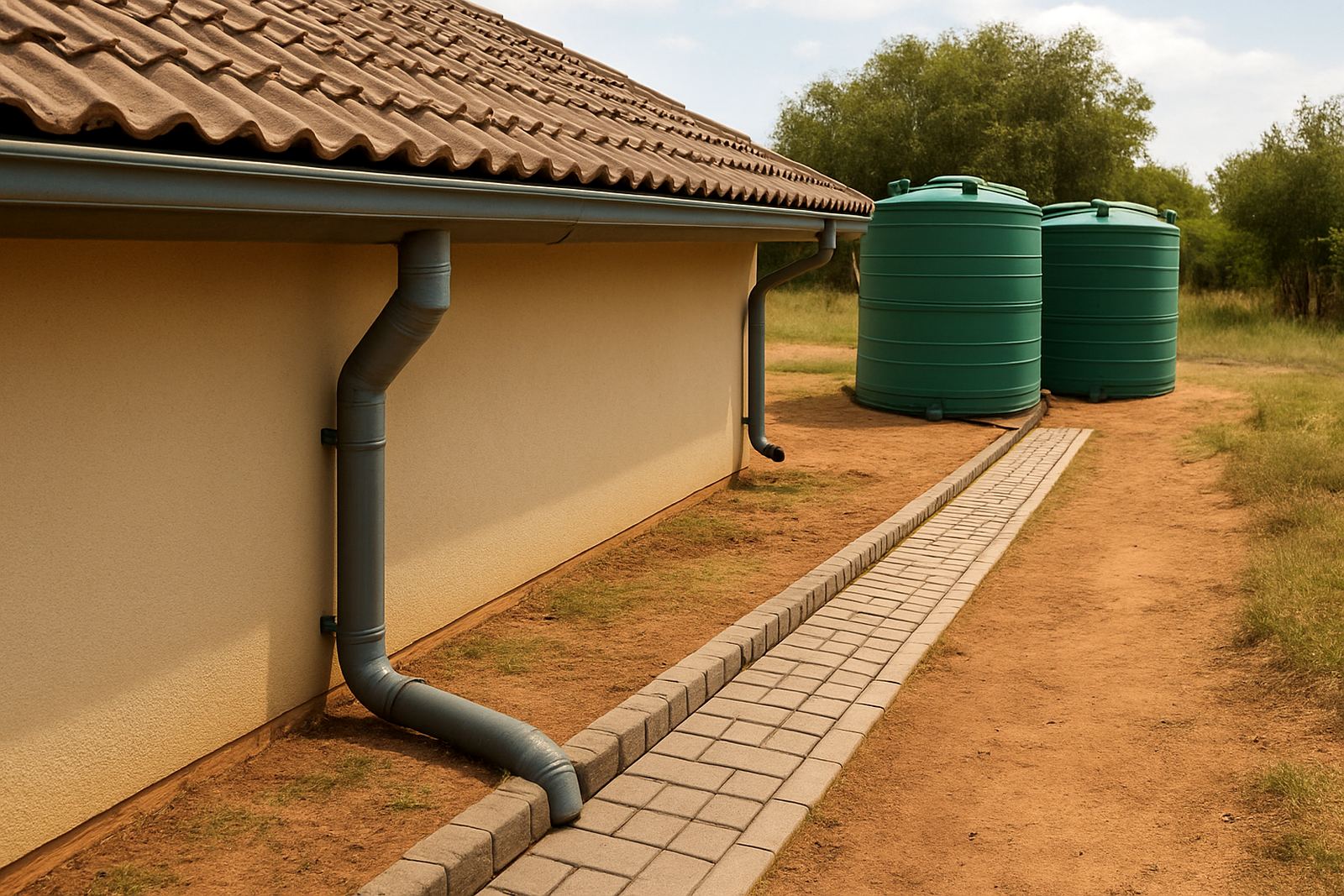
For homes and farms in Brits, Pretoria and Hartbeespoort, this matters because storms often arrive fast and with a lot of volume. A good setup looks at roof size, slope, gutter condition, ground fall and where the overflow will go if a tank fills up. That is basic site drainage planning, not just a water collection add-on. The aim is to collect what you can use and guide the rest away safely.
Where Roof Runoff Should Go When The Tank Is Full
A rain-tank system always needs an overflow route. If the tank is already full and the next storm hits, water must exit in a controlled way. The overflow should never dump against a foundation or into a low spot that already holds water after rain. On level sites around Rustenburg and parts of the Western Cape, this is especially important because a small misstep can leave puddles for days.
- Send overflow to a stormwater swale, soakaway, or approved drainage line where municipal rules allow it.
- Use leaf screens and first-flush diversion so dirt does not block the outlet.
- Keep the overflow pipe visible and serviceable, so blockages are easy to spot after wind or hail.
- On farms, direct excess water away from sheds, feed stores and access tracks that must stay usable.
It is also worth checking where the downpipe empties during a power cut or when pumps are off. Gravity flow should still work. If the tank inlet, overflow and outlet all depend on the same pump, the system becomes harder to manage during load-shedding or faults.
How Harvesting Helps Reduce Site Damage
Rainwater collection is often thought of only as a supply solution, but it also protects the property. When roof water is collected instead of running uncontrolled across paving, it reduces erosion and stops muddy splash-back along walls. Around farms outside Bloemfontein, where large roof areas can move a lot of water in one storm, that can make a clear difference to yard conditions and access.
A well planned system can support garden irrigation, animal trough top-up, wash-down points and basic domestic use. But the drainage side still matters. The tank should be set on a stable base with enough fall on the surrounding ground to prevent pooling. Guttering must be clean and secured, because loose clips or sagging lengths can spill water where it should not go. A simple cleanup after the first storm of the season often prevents bigger repair costs later.
Sizing Needs To Match Rain, Roof Area And Use
There is no point collecting water if the tank is too small for the roof or the demand is not realistic. Good sizing balances three things: the size of the catchment, the local rainfall pattern, and how much water the site will actually use. A family home in Paarl may want enough stored water for garden support and basic household security. A smallholding near Hartbeespoort may need more storage for cleaning, livestock and irrigation support.
Hydrated approaches sizing as part of the whole site, not just the tank itself. That means checking the roof area, the number of downpipes, the available space for a tank base, and whether there is room for safe overflow. On larger sites, it can make sense to split collection across more than one tank, so the drainage load is shared and maintenance is easier.
- Measure roof sections separately if the property has more than one building.
- Check that gutters can handle sudden rain without spilling over the edge.
- Allow space for filter access, pump servicing and future tank cleaning.
- Match the pump and filtration to the actual daily need, not just the biggest possible demand.
Filtration Keeps The Water Useful After The Storm
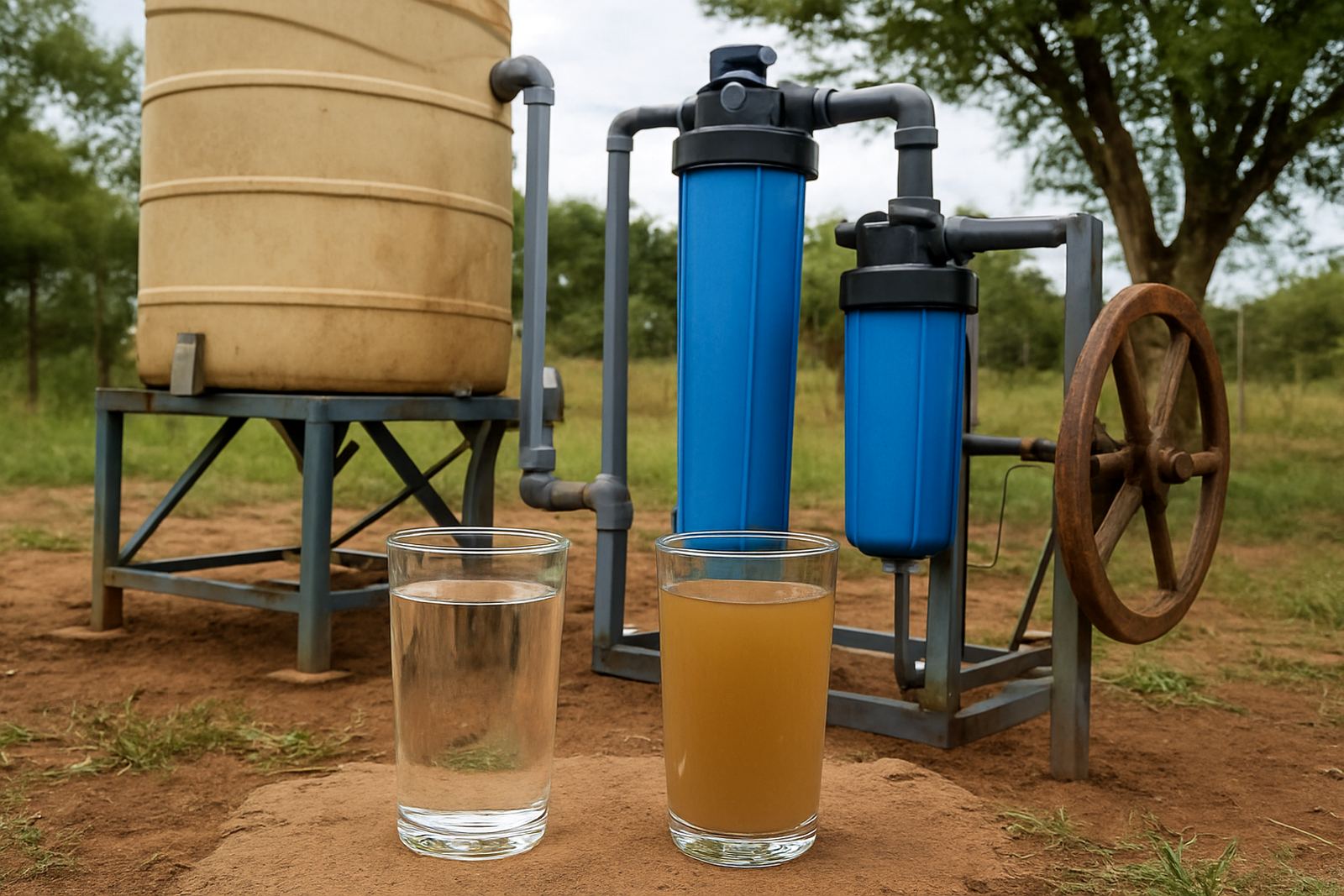
Collected water only stays useful if it stays clean enough for the job. Roof runoff can bring leaves, dust, bird droppings and fine grit into the system, especially after dry spells. For homes and farms across South Africa, filtration should be matched to the intended use. Water for irrigation needs a different setup from water that will be used for washing, drinking support or tank transfer to other equipment.
In coastal areas such as Somerset West and Stellenbosch, coastal humidity can increase organic build-up in gutters and tanks. That means more regular filter changes and tank checks. In inland areas, dust can do the same job. A practical maintenance routine is simple: inspect the first-flush unit, check the inlet screen, test the flow through the filter, and make sure the tank lid seals properly. If the system smells off or the water looks cloudy after rain, it needs attention before it is used again.
A Brits Example Shows The Full Picture
Take a family property on the outskirts of Brits with a tiled house roof, a small workshop and a paved yard. During summer storms, the gutters were overflowing on the side facing the driveway, while runoff from the rear roof section was cutting channels into the garden edge. The owners wanted rainwater for garden use, but they also needed the yard to stay dry enough for vehicles and deliveries.
The fix was not only a tank. The site was assessed, the roof runoff was redirected into proper collection points, and the overflow was planned to move away from the wall line into a safe drainage route. Gutter repairs were done first, then the tank, filters and pump were matched to the available roof area. After that, stormwater stopped tearing up the yard and the family had stored water ready for dry weeks. That is the benefit of treating harvesting and drainage as one project.
When To Bring In A Proper Site Assessment
If your roof is already overflowing, your paving stays wet after rain, or you are not sure where a tank overflow should go, it is time for a site assessment. The same applies if you want to expand an existing rain system, connect a borehole backup or add filtration for a more demanding use. Small errors in slope, pipe size or tank placement can cause bigger problems later.
A good assessment looks at drainage, storage, servicing access and practical use. It should also consider local by-laws, especially where water discharge may affect neighbours or municipal lines. On farms, the same plan should take account of vehicle movement, dust, long pipe runs and the distance between the roof and the point of use. When the full site is planned properly, the system works better and needs less fixing.
- Review roof condition before fitting collection gear.
- Confirm where overflow water will go in a heavy storm.
- Check access for cleaning, filter changes and pump servicing.
- Plan for seasonal demand changes, not just winter or summer use.
Hydrated works with homes and farms in Brits, Pretoria, Hartbeespoort, Rustenburg, Bloemfontein and the Western Cape, helping customers choose systems that fit the site instead of fighting it.