
Why a Tank Base Deserves Proper Planning
A full tank carries a serious load. Even a modest 5 000 litre tank can weigh more than 5 tonnes once filled, and larger farm tanks put far more pressure on the ground below. That weight does not spread itself evenly if the base is weak or sloped.
In places like Brits, Hartbeespoort and Rustenburg, soil conditions can change from one property to the next. Some sites have compact ground with good bearing strength, while others have loose fill, clay that moves with moisture, or sandy areas that wash out after heavy rain. A tank base must suit the site, not just the tank size.
What Level and Compacted Really Means
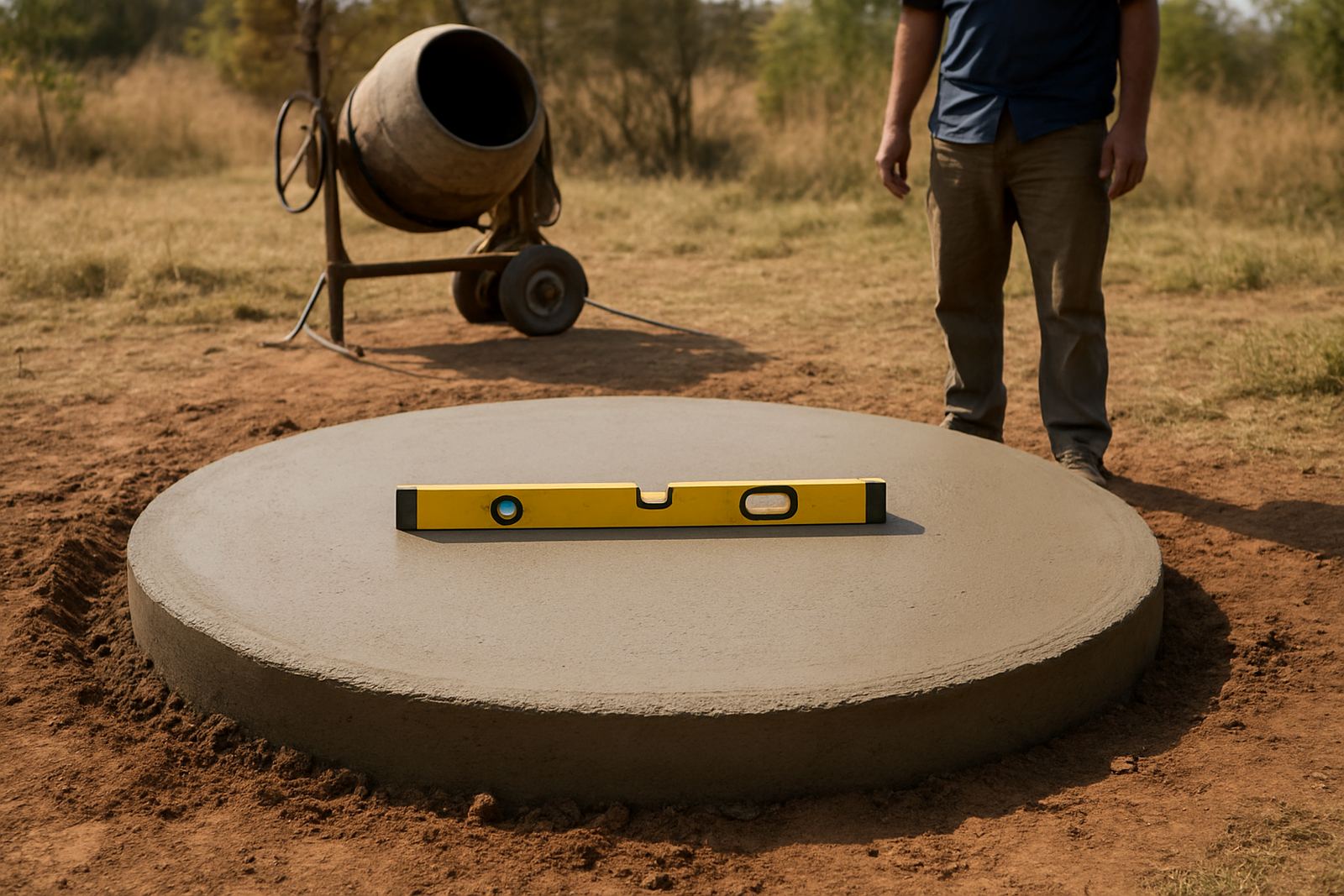
Level means the full footprint of the tank sits flat, with no high or low point that forces one side to carry extra weight. Compacted means the base material has been built up in layers and packed down properly so it does not settle later. That work is often rushed and then the tank starts leaning months after installation.
- Remove loose topsoil, roots and organic matter.
- Build the base in thin layers and compact each layer.
- Check level across the full pad, not just one edge.
- Allow for the tank footprint and a small working margin around it.
A pad that is level today but not compacted can sink after the first few rain cycles or after a tanker drives nearby. That is when fittings start to strain and the tank shell can distort.
Drainage Stops Hidden Damage Under the Tank
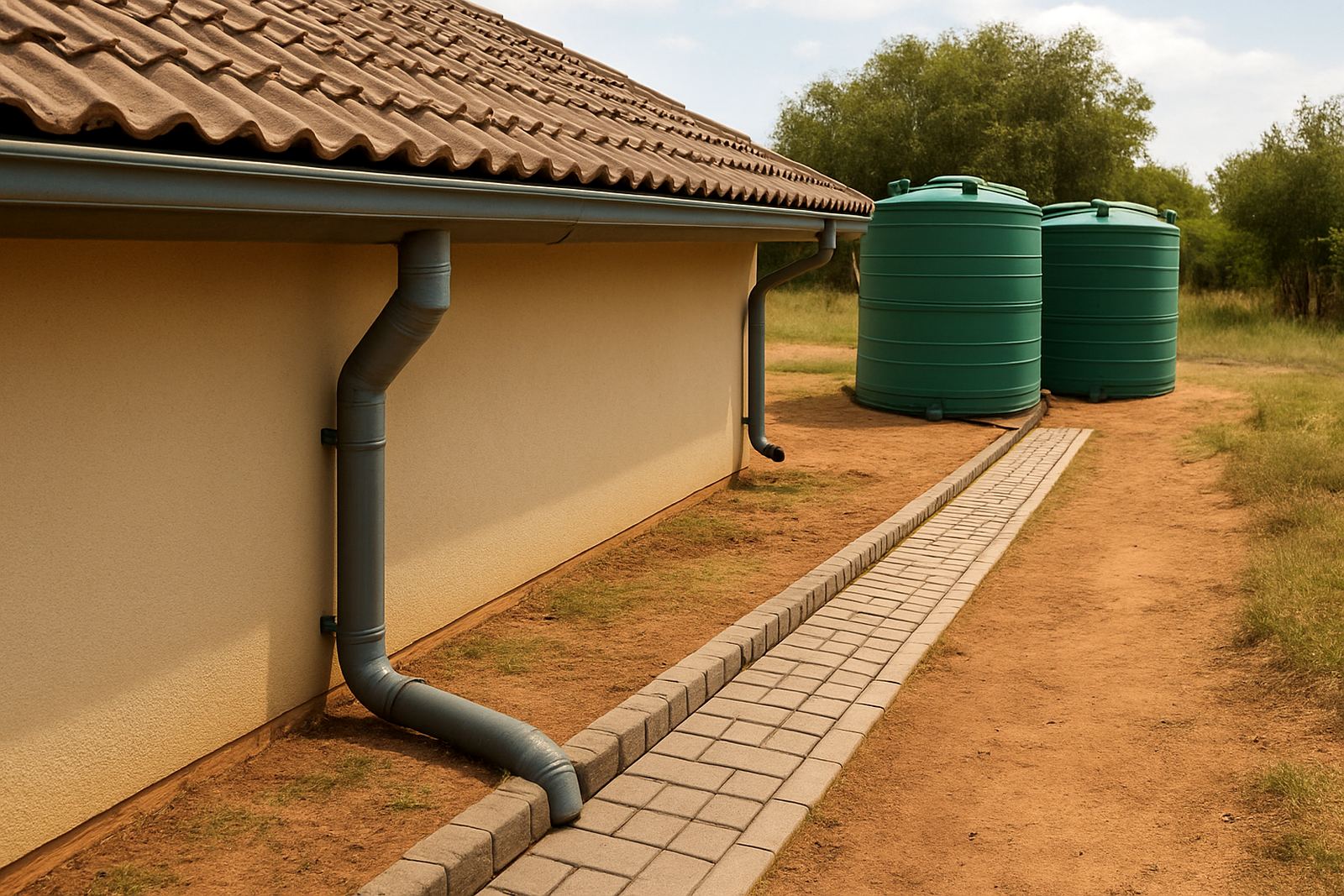
Water that collects under a tank softens the ground and slowly removes support. This is a common problem where rainwater runs off roofs, down a slope, or pools around the tank pad after a storm. On farms, irrigation overspray and muddy traffic can make it worse. Good drainage is not a bonus, it is part of the foundation.
If the base area stays wet, the tank may settle unevenly and put pressure on plumbing joints. In coastal towns such as Somerset West and Paarl, moisture can also stay in the ground for longer, so the drainage detail matters even more. A well-drained site helps the base stay firm through summer heat and winter rain.
- Grade the area so water flows away from the tank.
- Keep gutters, downpipes and irrigation lines off the base area.
- Use gravel or stone where suitable to improve runoff.
- Do not place the tank in a low spot where water naturally collects.
The Right Base for Homes, Plots and Farms
There is no single foundation that suits every installation. A small rain tank at a home in Pretoria may need a neat concrete pad or a properly compacted stone base, while a larger farm storage tank may need a heavier engineered surface with careful edge support. The tank type, height and access for delivery all influence the choice.
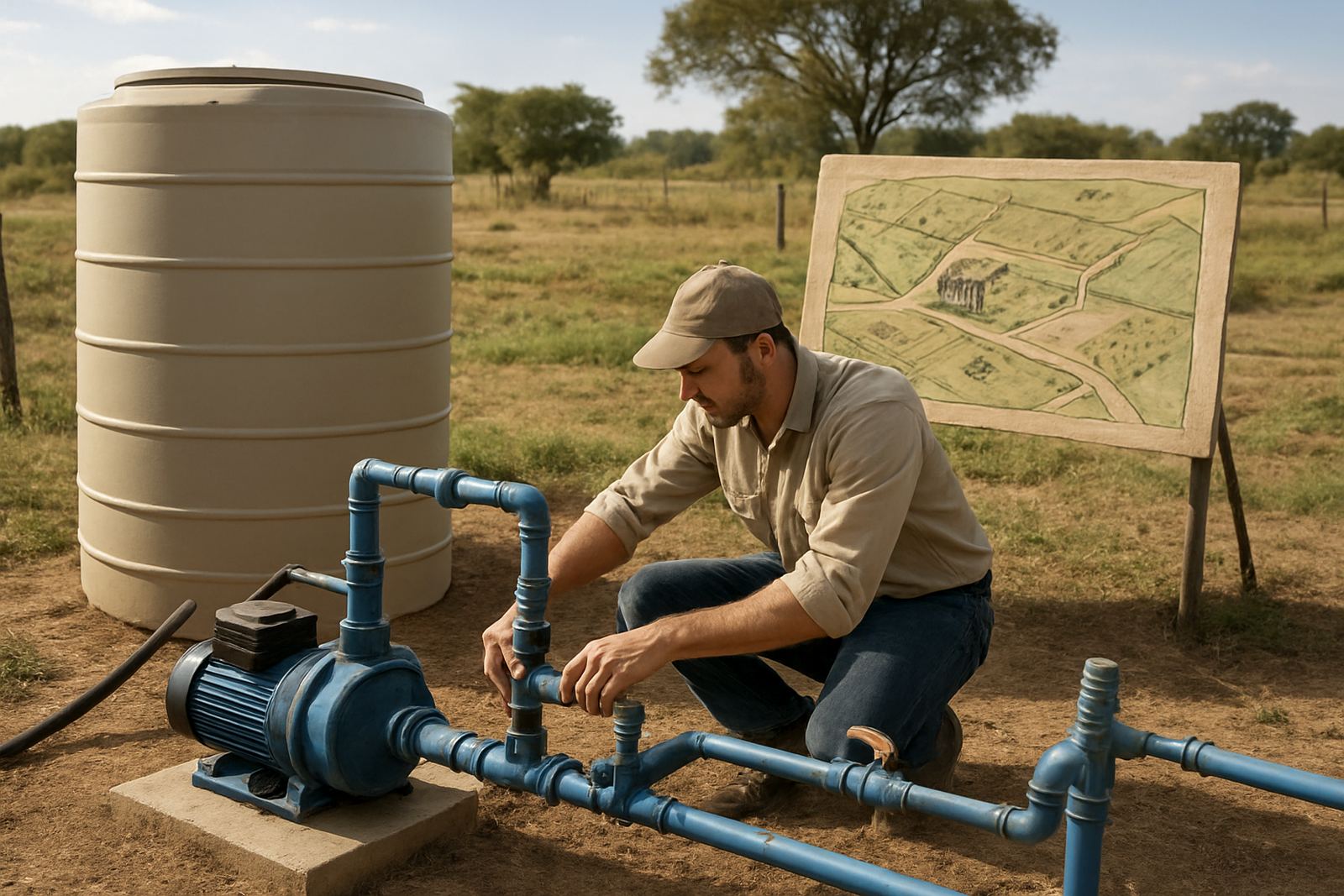
For homes, the base should also fit the way the water system is used. If the tank feeds a filtration kit or pressure pump, the foundation must keep fittings stable and allow safe access for maintenance. On farms, the base should cope with repeated loading from delivery vehicles and seasonal use. A patch of ground that looks fine can turn out to be too soft once the tank is filled and the weather changes.
Local Conditions Around Brits Can Change the Job
In the North West, some properties have firm ground and others have fill, clay or old disturbed soil from previous building work. Around Brits and Hartbeespoort, water movement after summer storms can wash away poorly prepared edges. In Rustenburg and surrounding areas, slopes and rocky patches can make levelling more difficult, while in Bloemfontein the dry ground can hide settling risks until the first heavy rain. Every site needs a proper look before the tank goes down.
A practical site assessment helps avoid surprises. It is also the point where you can plan for access, hose runs, pump placement and any municipal or estate rules that apply to water storage on the property. If the ground is not ready, the tank should wait. Rushing the install usually costs more later.
Simple Checks Before You Fill the Tank
Before the first fill, walk through a final check on the pad and the surrounding area. This is the moment to catch small problems while they are still easy to fix. A few minutes of checking can prevent a tank from sitting crooked for years.
- Confirm the base is level from side to side and front to back.
- Make sure there is no soft spot when you step around the edge.
- Check that drainage paths are open and not blocked.
- Inspect pipework, valves and support stands before water goes in.
- After the first fill, recheck the base for any sign of settling.
If a tank is part of a borehole or rain-water system, the foundation should also be reviewed during annual maintenance. A small shift in the base can affect pump alignment, filter connections and outlet height. It is easier to correct a base early than repair damaged fittings later.