

What a noisy pump is usually telling you
Most pump noise starts with a simple problem: the unit is working harder than it should. That can mean air in the line, a blocked strainer, worn bearings, loose fittings, cavitation, or a pump that is too small for the job. In some cases the pump itself is fine, but the way it has been installed makes every vibration travel through the slab, wall or pipework.
Homeowners often notice the sound first at night when the area is quiet. On farms it is different, because the pump may run near a tank store, workshop or packhouse and the noise gets mixed with other equipment. Either way, a change in tone matters. A smooth hum is not the same as a rattling, knocking or grinding sound, and each one points to a different fault.
If the noise started after load-shedding, a power surge or a plumbing change, check the system carefully. A pump that suddenly becomes louder often has more than one issue and a quick look can save a bigger repair later.
How placement changes the sound you hear
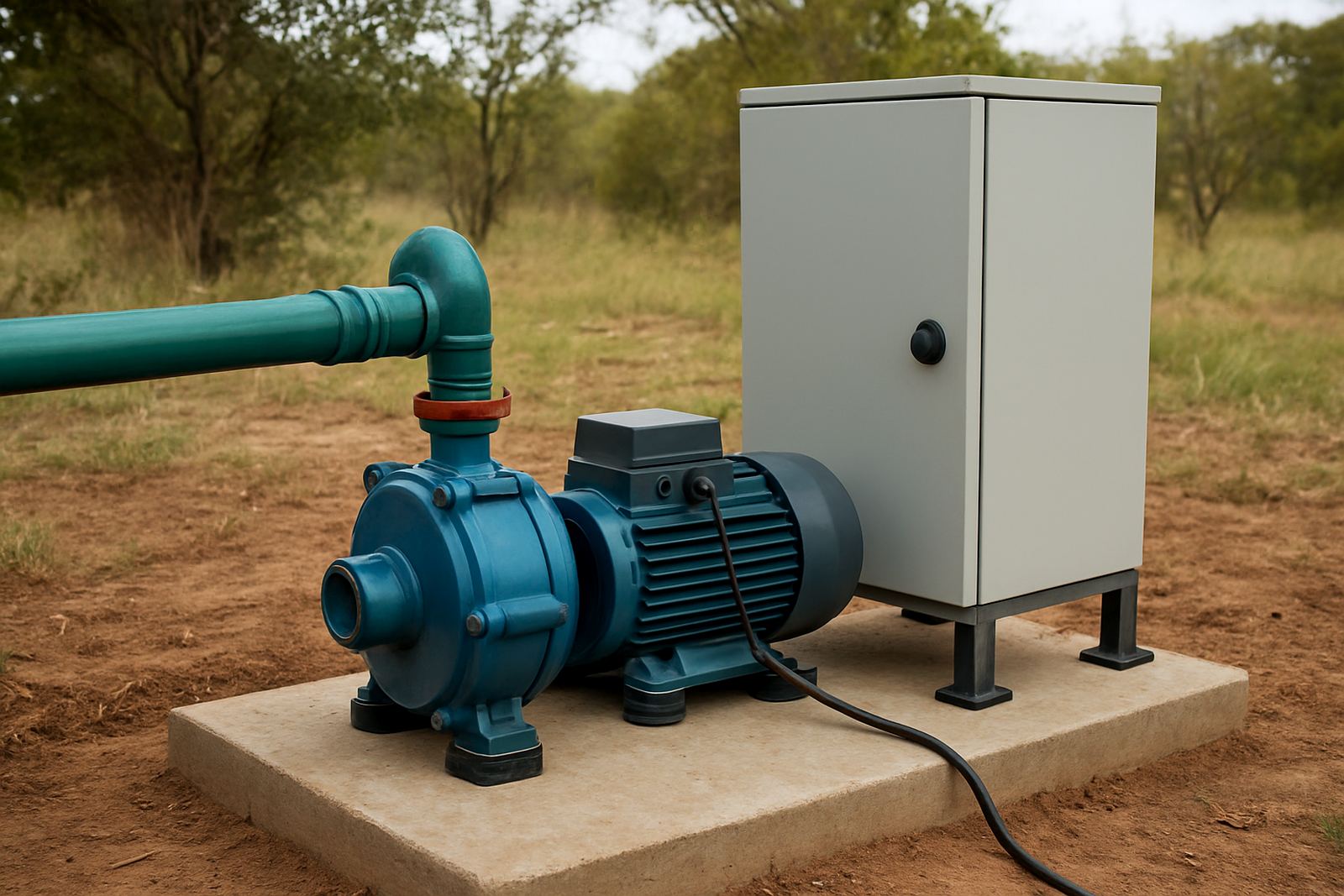
Pump position affects noise more than most people realise. A unit bolted directly to a hollow floor or mounted against a thin wall will send vibration straight into the building. The same pump, placed on a stable base with proper isolation, can sound much quieter even if the motor is doing the same work.
Placement also matters for air flow and heat. If a pump is boxed in too tightly, it can run hotter and louder, especially in summer or in a coastal area where humidity is high. Near the Cape coast, salt air and damp conditions can also affect metal parts and electrics if the pump area is not well protected. On the other hand, a pump installed in a cool shaded service space with room around it usually runs more steadily.
- Keep the pump on a firm level base, not on loose paving or soft soil.
- Use vibration pads or an isolation mount where suitable.
- Leave space around the motor for air movement and access.
- Keep suction and discharge pipes supported so they do not strain the body.
The most common causes of unwanted pump noise
There are a few faults we see often when pumps become noisy. Some are mechanical, some are hydraulic and some come from poor installation. A pump can still move water while sounding terrible, which is why people sometimes ignore the warning until the pressure drops or the motor trips.
- Cavitation: This sounds like gravel or marbles inside the pump and usually means the pump is starved of water or the suction line has restrictions.
- Loose fittings: A clamp, union or bracket that is not tight enough can buzz, rattle or chatter when the pump starts up.
- Air leaks: Small suction leaks can cause unstable flow and a rough noisy operation.
- Worn bearings: A whining or screeching sound often points to wear inside the motor or pump head.
- Pressure switch issues: Short cycling can make the system sound frantic, because the pump starts and stops too often.
- Wrong pump selection: If the pump is oversized or undersized for the borehole, tank or filter setup, it may run in an unhappy operating range.
In many cases the pump itself is blamed first, but the real problem is a pipe route that pulls, twists or vibrates under pressure. Sorting that out can make a big difference, and sometimes the fix is small but important.
What to check before calling it a pump problem
Before you assume the motor is failing, check the parts around it. A blocked filter, closed valve, low water level in the tank or a partially pinched pipe can change the sound of the whole system. This is especially common where a rain-tank or borehole system feeds several outlets at once, or where a filter set has not been cleaned on schedule.
For home owners in Brits or Hartbeespoort, a noisy pump often turns out to be a combination of poor suction and a hard mounting surface. On a small holding near Rustenburg or outside Bloemfontein, the issue may be a long pipe run that has not been properly supported, so the vibration carries all the way to the shed. It is worth checking the simple things first because the obvious fault is not always the real one.
- Look for low water level in the tank or borehole.
- Inspect strainers and filters for blockage.
- Check that valves are fully open.
- Listen for changes when taps are opened one at a time.
- Watch for visible movement in the pipework or base plate.
A local example from a North West installation
We have seen this many times on sites around Brits. One homeowner had a pump beside a covered tank area and complained that the noise could be heard inside the kitchen every time the unit kicked in. The pump was not broken. It was fixed directly to a thin concrete edge, with a rigid pipe run and no isolation between the unit and the wall.
After the base was corrected, the pipe supports were adjusted and the pump was serviced, the sound dropped noticeably. The system still did its job, but the vibration no longer travelled through the building. That kind of result is common, and it shows why placement matters just as much as the equipment itself. In a farm setting, the same approach can help protect workers and reduce wear on the system over time.
For clients in Pretoria, Paarl or Somerset West, we often also consider weather exposure. A pump under a leaking roof or in a damp corner can rust, bind up and become louder much faster. A better location, even a small one, can make maintenance easier and extend service life.
How to reduce pump noise without losing performance
The aim is not to make a pump silent, because every working unit makes some sound. The aim is to stop harsh vibration, knocking and short cycling. A good setup gives steady pressure, reasonable sound levels and easy access for servicing.
If you are planning a new borehole, rain-tank or filtration kit, think about the pump room or service point before installation begins. A little planning can prevent a lot of irritation later. It also helps with annual maintenance, because a system that is easy to reach is easier to check, clean and keep in good order.
- Place the pump on a stable base with proper isolation where needed.
- Use the correct pipe size so the pump is not forced to work too hard.
- Keep the suction pipe run short, direct and with as few bends as possible.
- Service filters, check valves and seals on a regular schedule.
- Ask for system sizing before the pump is fitted, not after the noise starts.
At Hydrated, we supply borehole, rain-tank and water-filtration kits for homes and farms across South Africa, and we often see that noise complaints are really installation complaints. A well-set system should move water cleanly, with less stress on the motor and less disturbance for the people nearby. If your pump is getting louder, the safest move is to find out why before the wear spreads to other parts of the system.