Why a garden tank works best when it stays simple
For most homes and smallholdings, the goal is not to build a complicated water system. It is to store enough water for the garden, keep it clean enough for sprinklers or drip lines, and make sure it is ready when the municipal supply is down or the borehole needs a rest. A good garden irrigation tank does this with as few moving parts as possible.
In practice, that means choosing the tank size around the garden’s real demand. A few flower beds and a small lawn may only need a modest tank, while a larger property in Hartbeespoort or a farmstead outside Brits may need more storage to bridge several dry days. The best setup is the one that matches the water use pattern, not the biggest tank on the property.
Hydrated supplies borehole, rain-tank and filtration kits for this exact kind of use. We work with homes and farms across Pretoria, Rustenburg, Bloemfontein, Paarl, Stellenbosch and Somerset West, where water quality and pressure can change from one area to the next.
Choosing tank size for lawns, beds and trees
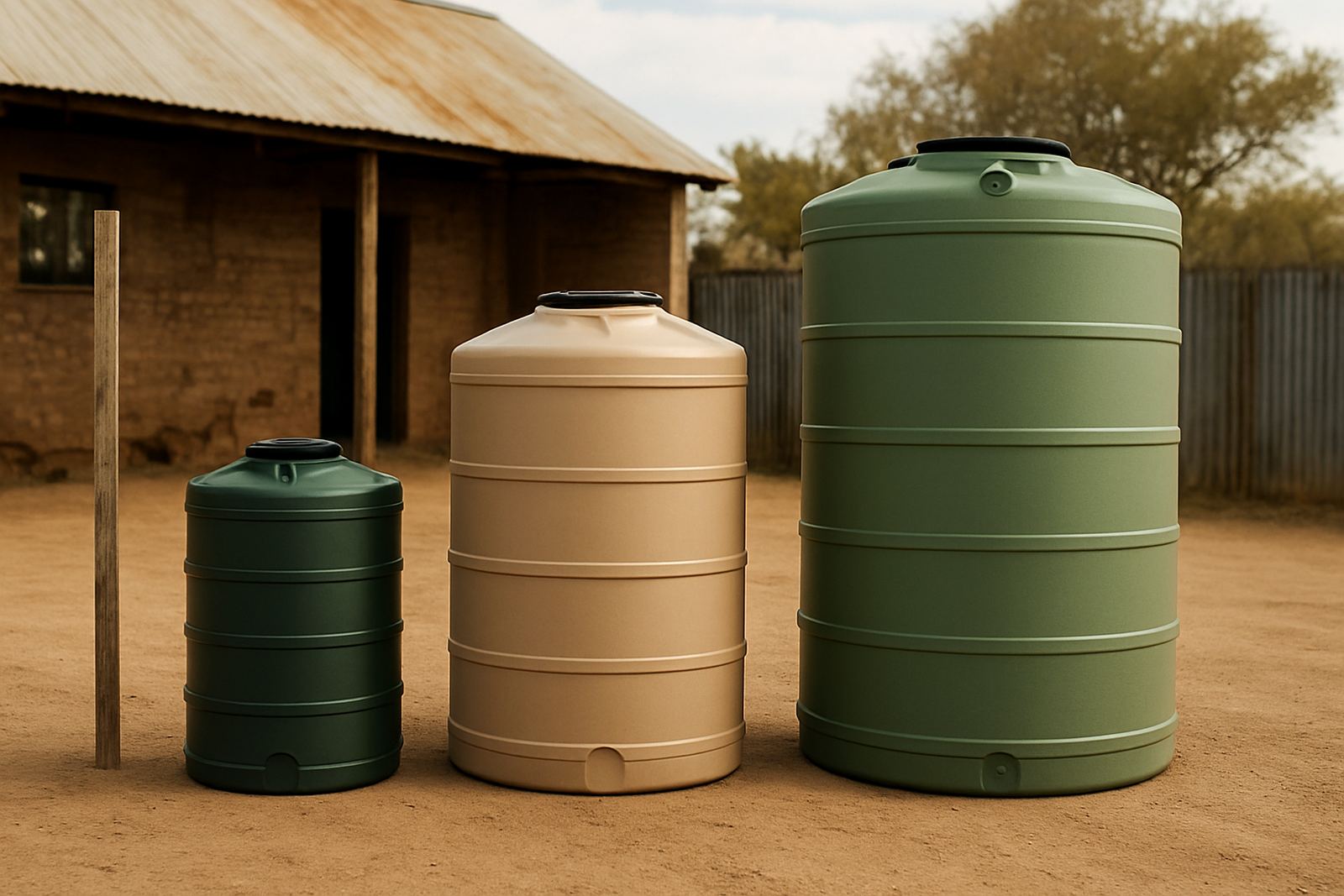
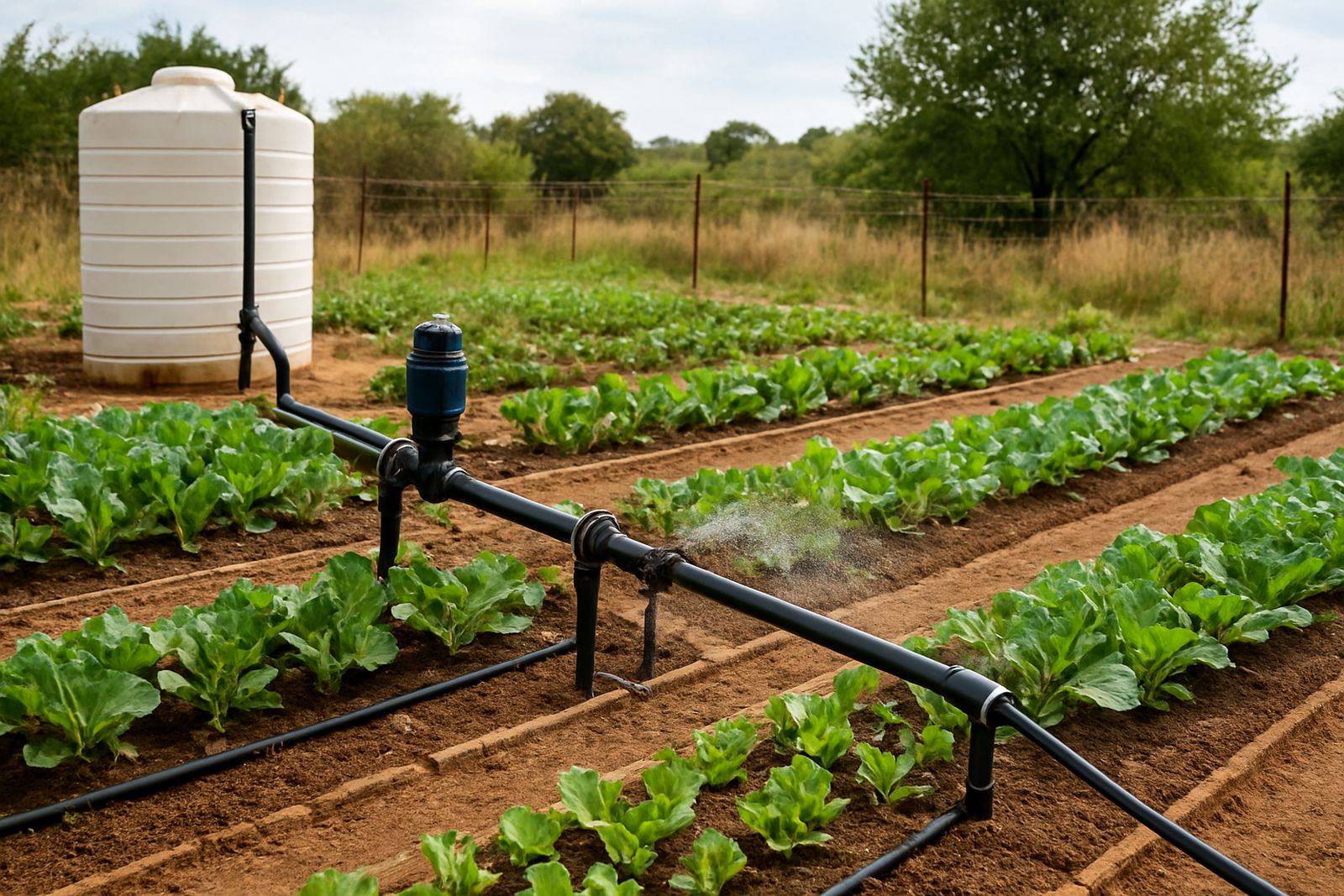
A common mistake is sizing a tank for one good week and forgetting about the rest of the month. Gardens drink more during hot, windy periods and less in cooler weather, so it helps to think in terms of a few days of reserve. If you are watering by hand, the demand is lower. If you are running pop-up sprinklers or multiple drip zones, the tank and pump need to keep up.
For many homes, a small to medium tank gives enough storage for garden use without taking up too much yard space. On larger stands and farms, it can make sense to split irrigation between two tanks or connect a tank to a borehole supply, so the garden can be fed without draining household water.
- Match storage to actual watering days, not just tank space available.
- Allow extra capacity for summer peaks and windy coastal conditions.
- Keep the tank close enough to the pump to reduce pressure loss.
- Leave room for safe access during cleaning and maintenance.
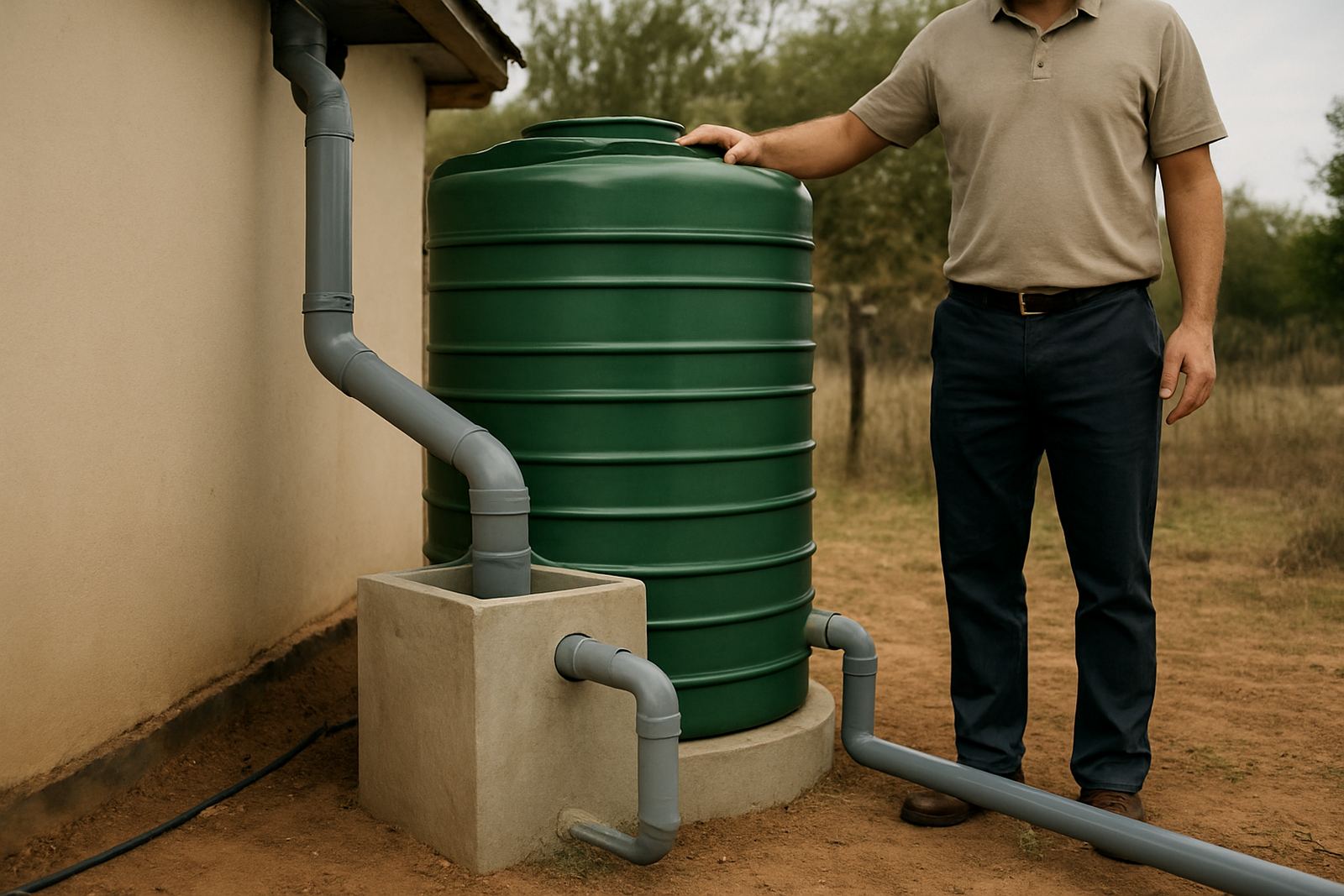
If your site is in a windy area or on uneven ground, placement matters as much as the tank itself. A level base, proper overflow routing and enough clearance for maintenance will save trouble later.
Filtration that protects sprinklers and drip lines
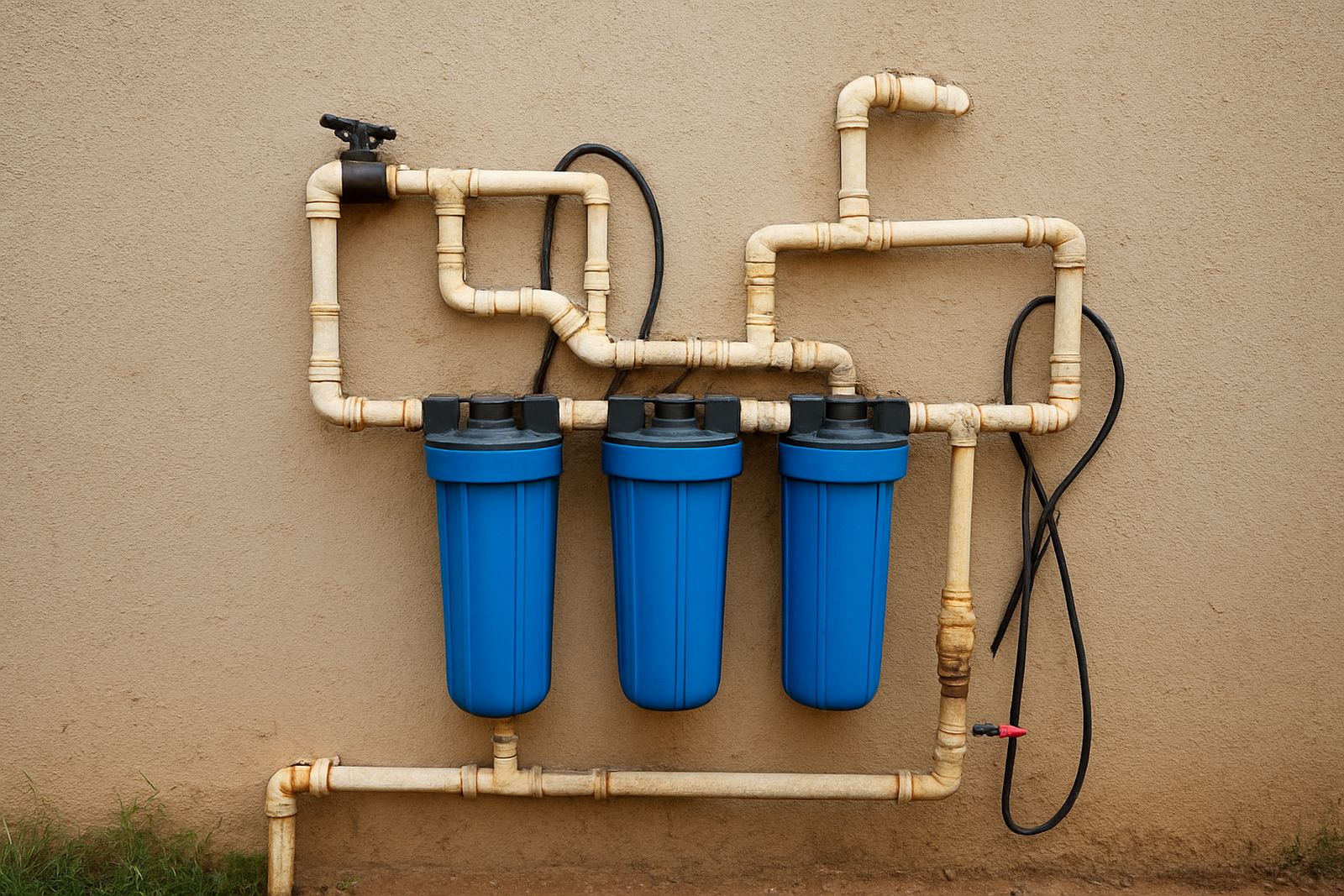
Garden irrigation tanks do not need the same treatment as drinking water, but they still need sensible filtration. Leaves, sand and sediment can block nozzles, wear out pump parts and leave drip lines patchy. In areas with roof-harvested rainwater, or borehole water that carries fine particles, a basic filter stage is usually worth it.
Water quality also affects long-term maintenance. In coastal parts of the Western Cape, humid conditions can encourage algae growth if tanks are left open or poorly sealed. Inland, fine dust and grit are more common. The right filter changes how often you need to flush lines, clean the tank and service the pump.
- Use a pre-filter where water enters the tank.
- Add a line filter before drip irrigation or sprinklers.
- Check for sediment after heavy rain or windy days.
- Schedule regular filter changes so pressure stays steady.
At Hydrated, water testing and filter changes form part of the practical support we offer, because a small change in water quality can make a big difference to how well a garden system runs.
Pump choice, pressure and load-shedding planning
Water storage only helps if the delivery side is sorted. A pump that is too small will struggle to maintain pressure, while an oversized pump may cycle too often and wear out early. The aim is enough pressure for the watering method you use, whether that is hand-held hoses, sprinklers or drip lines.
Load-shedding is another reason to keep the setup straightforward. If the pump is tied to a simple control arrangement and the tank has reserve water, the garden can still be irrigated when power cuts interrupt the normal routine. For larger systems, a pressure tank or controller may be useful, but only where it is needed. More parts are not always better.
Our team can handle system sizing, commissioning checks and pump servicing so the garden tank works properly from the start. Pieter Johannes van der Merwe oversees the business from Brits, with support from Zander Snyman on technical sales, Morne du Toit on installation supervision, and Kabelo Molefe on logistics planning.
Rainwater and borehole water each suit different gardens
Not every garden needs the same water source. Rainwater is often ideal for flower beds, lawns and trees, especially when you want to reduce pressure on municipal supply. Borehole water is useful where you need a steady supply through dry periods or on larger properties with greater watering demand. In some cases, a mix of both works best.
A simple example is a home in Hartbeespoort with a medium-sized lawn, vegetables and a few fruit trees. Rainwater from the roof can top up a tank during the wet season, while a borehole kit can support the garden in winter and through the dry months. That way the system stays practical, and the homeowner is not relying on one source alone.
For farms around Brits and the North West, a garden tank may also support workers’ accommodation, nursery areas or shade-net plants. The same principle applies: store enough water, filter it properly, and keep the mechanics simple enough to maintain locally.
Keeping the tank clean and ready for the next dry spell
Garden tanks work best when they are maintained before problems start. Sediment builds up slowly, seals wear out, and pumps lose efficiency if they are not checked. An annual maintenance visit can catch small issues before they affect the garden or damage the equipment.
Our support services include tank cleaning, fault finding, pump servicing and annual maintenance. That matters when a garden is being watered regularly through hot months, because blocked lines or a tired pump can cause dry patches fast. A clean tank and a well-set pump also reduce the chance of unpleasant smells, algae and inconsistent pressure.
- Inspect the tank after heavy rain or windy periods.
- Flush drip lines if the garden pressure drops.
- Check for leaks around fittings, valves and joins.
- Replace worn filter media before it affects flow.
Thandiwe Maseko and Ayanda Nkosi help customers through the process, from the first enquiry on the contact page to delivery coordination and follow-up support. That makes it easier to keep the system practical, rather than patching it together later.
A practical garden tank setup that does the job
The best garden irrigation tank is the one that matches your water use, your property layout and your maintenance capacity. It should store enough water for dry days, protect the pump and irrigation lines, and fit the space you have without becoming a nuisance. If it does that, watering becomes less stressful and the garden stays healthier through the seasons.
Whether you are in Pretoria, Rustenburg, Bloemfontein or along the Western Cape coast, the details still matter. Size, filtration, pressure and maintenance all affect how well the system works. A straightforward setup usually outlasts a complicated one, and it is easier to keep going when municipal supply is uncertain or the power is off.
Hydrated supplies and supports garden water systems for homes and farms across South Africa, with delivery and installation support arranged from our Brits base. Ntombizodwa Shirinda manages operations, and the rest of the team keeps the practical side moving so the right kit reaches the right place on time.