Start with daily use, not tank price
Many people begin by asking which tank is cheapest, but the better question is how much water your property actually uses. A family home in Pretoria with garden irrigation, laundry, bathing and a backup supply for load shedding will need a different storage plan from a small holding near Brits that relies on borehole water for animals and cleaning.
A practical way to think about it is to match storage to your daily demand and the number of days you want to cover. If municipal supply is interrupted for a day or two, a modest tank may be enough. If you want to bridge longer outages, or you live in an area where water pressure drops often, then a larger tank gives more breathing room. We always look at the full picture, including roof space, pump capacity and whether the tank will be used for household water, garden use, or both.
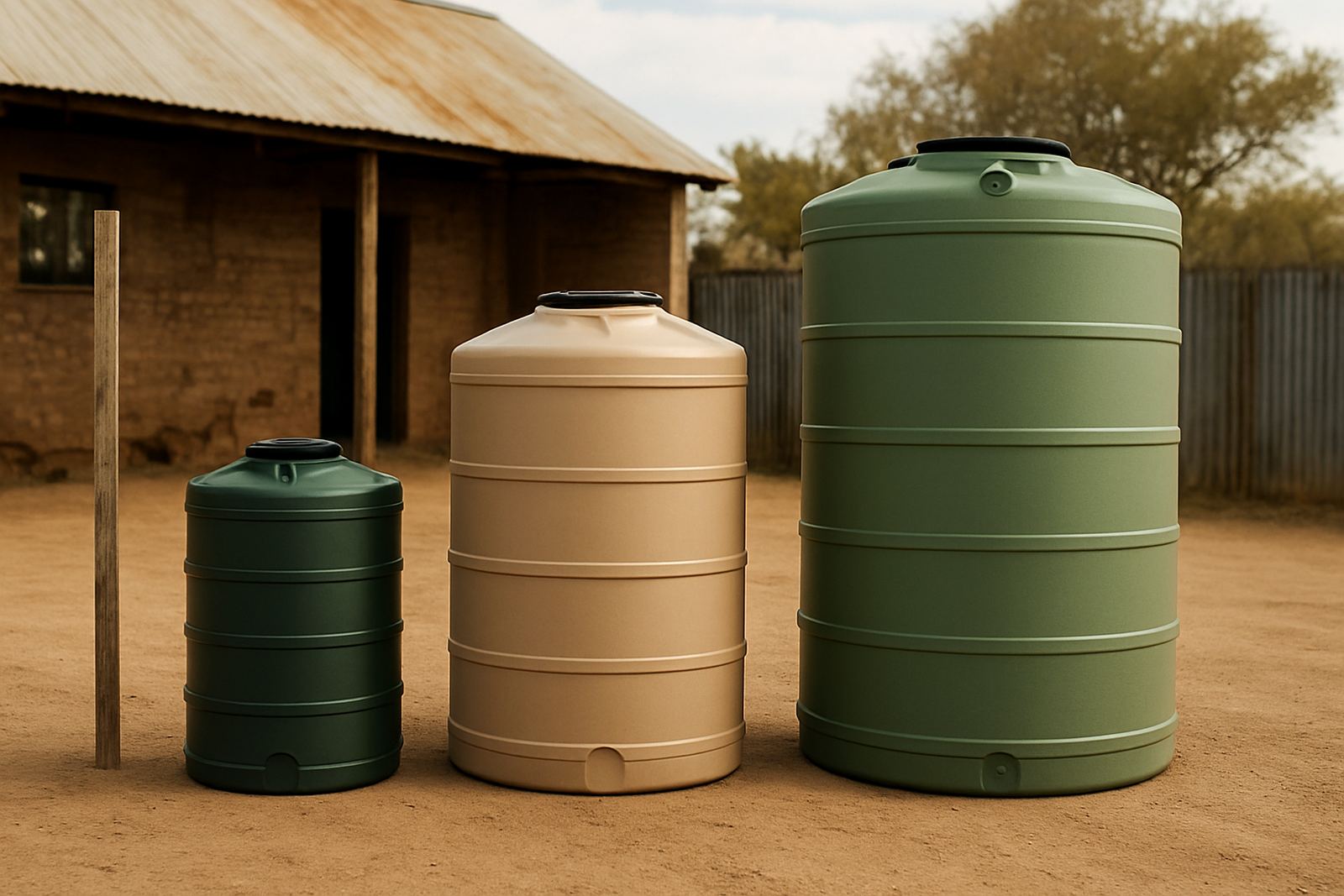
- Small household backup: 1 000 to 2 500 litres
- Medium family use: 2 500 to 5 000 litres
- Larger homes or mixed use: 5 000 litres and up
- Farm and commercial use: often multiple tanks linked together
Match tank size to the water source
Rainwater, borehole water and filtered municipal water all place different demands on storage. A rain-fed system needs enough capacity to catch a good storm and hold it until the next rainfall. In places like Somerset West or Paarl, where winter rain can be useful but uneven, a bigger tank often makes sense if roof area allows it. In dry inland areas, a borehole may feed the tank more steadily but the pump and filtration setup must keep up.
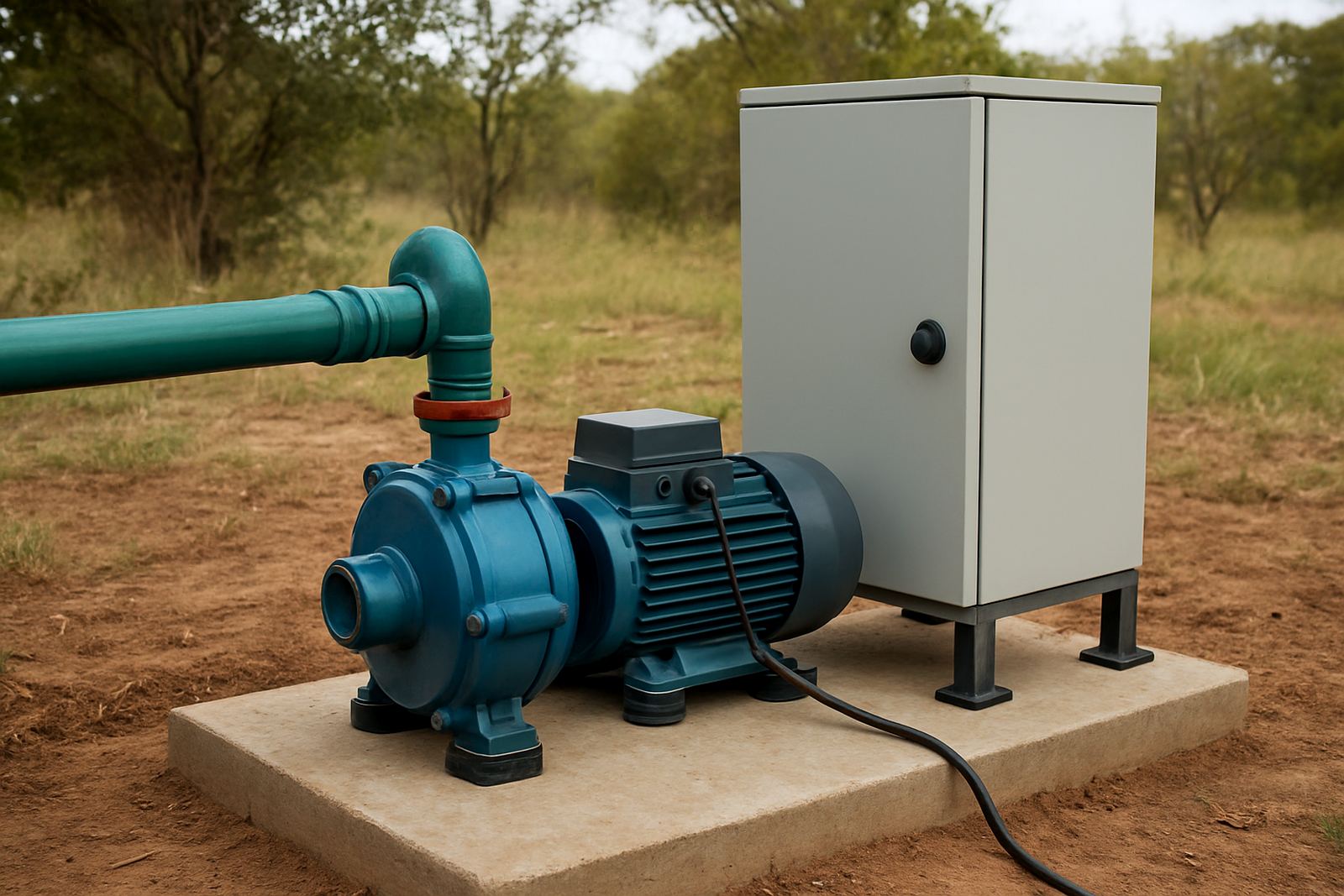
If the tank is fed by a borehole, the pump output matters as much as the tank volume. A small pump into a very large tank can leave you waiting too long for recovery, while an oversized tank can tie up space and money without adding much value. On farms around Rustenburg or Hartbeespoort, we often size the tank to suit livestock needs, cleaning schedules and how the borehole performs over a full day. It is better to have the right balance than a large tank that stays underused.
- Rainwater systems need roof catchment and first-flush planning
- Borehole systems need pump flow rate checked carefully
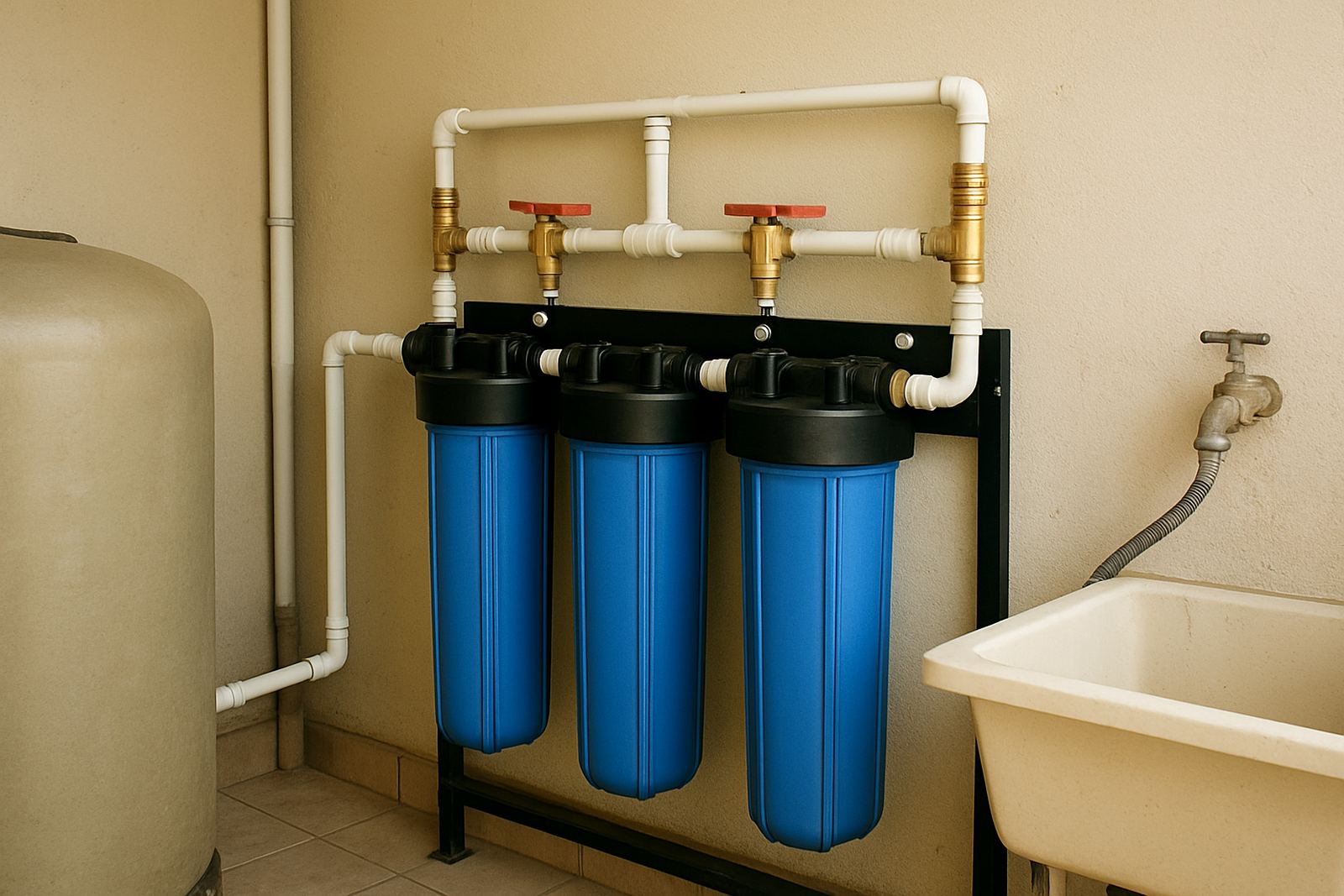
- Filtered supply needs enough capacity for backwashing and refilling
- Coastal areas may need extra thought for algae and warm weather growth
Households: the most common size mistakes
For homes, the main mistake is buying a tank that looks fine on paper but does not carry enough water through a real interruption. Another common issue is choosing one that is too large for the available space, then struggling with stand height, delivery access or municipal restrictions on placement. In built-up suburbs, there may be rules about where water storage can sit relative to boundaries and buildings, so it is worth checking before installation.
For a typical family, the right size depends on whether the tank is for backup only or for regular use. A backup tank can be smaller if it is only meant to cover washing and toilet use for a short time. If you want to run the home more independently, then a larger tank paired with filtration gives more certainty. We also look at whether the property has enough roof runoff, because a tank that never fills properly is just wasted money.
- 1 000 litres: light backup for a small household
- 2 500 litres: useful for families needing a few days of cover
- 5 000 litres: better for larger households or frequent interruptions
- 10 000 litres: often suited to bigger stands or multi-use homes
Farms need volume, but also control
On farms, tank size is not only about litres. It is about keeping water available for stock, spraying, cleaning and staff use without constant worry. A small tank can work for a compact operation, but once you are supplying several points of use, the system needs more than simple storage. It needs good inlet control, overflow management and practical access for maintenance.
In many cases, two or more tanks are a better choice than one very large unit. This gives flexibility if one tank needs cleaning or if a section of the system is being serviced. Around the North West, where dust, heat and seasonal demand can be hard on equipment, farmers often prefer a setup that can be expanded later. That way they are not forced into a full redesign when livestock numbers increase or new planting areas come online.
- One tank is simpler, but less flexible for maintenance
- Multiple tanks can be linked for higher total capacity
- Farms should allow for future growth, not just current demand
- Access for tank cleaning and pump servicing should be planned early
Rain capture and roof space decide a lot
Rainwater storage only works well when the roof and gutters can feed the tank efficiently. A small roof on a flat cottage roof in Bloemfontein will not collect the same volume as a larger roof on a farm shed, even if both have the same tank. That is why tank selection has to start with capture area. If the catchment is too small, a large tank may sit half empty for long periods.
Gutter condition matters too. Blocked gutters, poor fall and weak downpipes all reduce the amount of water reaching the tank. We often advise clients to look at the whole system: roof condition, debris screens, first flush diverters and where the overflow will go. The tank should suit the rainfall pattern and the property layout, not just the wish list.
- Check roof area before choosing capacity
- Factor in gutters, downpipes and debris screens
- Allow for overflow drainage that will not flood paths or walls
- Use water testing and filtration if the stored water will be used indoors
A local example from Brits to the Cape
A homeowner in Brits may want a tank for municipal interruptions, garden watering and backup during pump failures. The same family may only need 2 500 to 5 000 litres, depending on how much water they use and how quickly they want the system to recover. A smallholder outside Hartbeespoort, on the other hand, may need more storage because the tank is supporting animals, washing and basic irrigation. The correct size changes with the property, not the postcode.
For deliveries to Pretoria, Rustenburg, Bloemfontein and the Western Cape, we also consider access routes, ground level and where installation support will be needed. It is no use choosing a tank that fits the water budget if it cannot be delivered to the site or serviced properly later. Pieter Johannes van der Merwe and the team at Hydrated work through the practical side first, then match the kit to the use case so the owner is not left with guesswork.
If you are unsure, start with a site assessment and a clear look at your daily demand. That gives you a realistic size, not an optimistic one. The best tank is the one that fits your use, your space and your supply pattern, with enough room to handle the dry weeks, the power cuts and the surprise breakdowns.