Start With the Way Water Is Actually Used on the Farm
Farmhouse planning begins with a clear picture of daily demand. A family home on a smallholding in Brits will use water very differently from a farmhouse outside Rustenburg with staff accommodation, irrigation points and a few outbuildings. Before choosing a borehole pump or rain-tank kit, list every tap point, storage container, trough and appliance that depends on water.
It helps to separate use into three groups. First is domestic water for showers, toilets, cooking and washing. Second is outdoor use such as hose points, garden beds and cleaning yards or vehicles. Third is farm use, which may include animal drinking points, nursery benches or light wash-down work. When those are mixed together without planning, tanks empty too fast and pressure drops at the worst time.
A proper site assessment also considers roof catchment, borehole recovery, municipal supply reliability and the distance from the tank to the house. In some areas the issue is not total water, but poor pressure during peak use. That is often where a system sizing check pays off.
Choose Storage That Matches the Dry Weeks, Not Just the Good Ones
Many farmhouse systems fail because storage is too small for the real season. A tank that works fine after summer rain can feel far too small by August, especially where load-shedding interrupts pumping and the borehole recovery slows down. In dry months, storage is your buffer.
For a typical farmhouse, storage usually needs to cover at least a few days of normal use, and longer if the property depends on one source only. If rainwater forms part of the plan, it is worth using more than one tank so one can be cleaned while the other stays in service. On coastal properties in the Western Cape, tank placement and fittings also need to handle wind, salt air and algae growth, so the details matter.
- Use tank size to match household demand and animal or garden use separately.
- Allow space for overflow, maintenance access and cleaning around the base.
- Keep the inlet, outlet and pump position easy to reach for servicing.
- Plan for municipal rules where discharge, overflow or backflow may need attention.
Hydrated often assembles kits to suit the source, the roof size and the daily load, which makes it easier to get the right balance instead of guessing.
Borehole Water Needs Testing Before It Enters the House
Borehole water can be a strong supply for a farmhouse, but it should not be assumed to be ready for every use straight away. Mineral content, sediment and bacteria can vary from one property to the next, even in the same area. A borehole near Hartbeespoort may behave very differently from one outside Bloemfontein, especially after heavy rain or a long dry spell.
Water testing tells you what the system needs to remove or reduce. That can mean sand filtration for grit, sediment filters for fine particles, or more specific treatment if the water has taste or clarity issues. If the water will be used for drinking, food preparation or staff housing, filtration should be part of the plan from the start, not added later when a problem appears.
It also helps to check pump performance and tank turnover. If the pump cycles too often, the system may be too small or the pressure settings may need adjusting. A simple fault finding visit can save a lot of wear and tear, and it often explains why the water supply looks fine on paper but struggles in real use.
Rainwater Is Useful When It Is Collected and Stored Properly
Rainwater is one of the best ways to reduce pressure on boreholes and cut the risk of running short during a dry week. For farmhouse use, it works especially well for toilets, washing, garden irrigation and cleaning yards. The key is clean collection and sensible first flush management, so leaves, dust and roof dirt do not end up in the tank.
Roof type, gutter condition and tank position all play a role. A farmhouse with wide roof areas can collect a useful volume, but only if gutters are clear and downpipes are sized properly. On farms with corrugated roofs, it is also worth checking that the roof and plumbing are in reasonable condition before sending water into storage.
- Inspect gutters before winter and after windy spells.
- Keep first flush units clear of debris and mud.
- Use filtration before sensitive points such as washing machines or drinking lines.
- Clean tanks on a planned schedule rather than waiting for sludge to build up.
When rainwater is treated as a proper supply, not an afterthought, it can take a fair amount of pressure off the main source and stretch the system through dry periods.
Set Up Pressure, Pumps and Filtration for Daily Comfort
Farmhouse comfort is not only about litres, it is about steady pressure at the tap. A system that fills tanks but gives weak showers or slow laundry fills soon becomes frustrating. Pump selection, pressure control and pipe size must work together. If the pump is undersized, the house will feel underpowered. If it is oversized, it can waste energy and shorten the life of fittings.
Good installation support should look at how water moves from source to tank to household points. Commissioning checks make sure the system starts correctly and that there are no leaks, air locks or odd pressure swings. This is especially useful on properties where the family is away part of the week, or where staff need a reliable setup even when the owners are not there.
Annual maintenance should include filter changes, pump servicing, tank cleaning and a quick look at valves and wiring. That sort of routine care is simple, but it prevents bigger problems later. On a working farm, one blocked filter can become a very expensive inconvenience.
A Brits Example: One Supply, Several Uses, Fewer Headaches
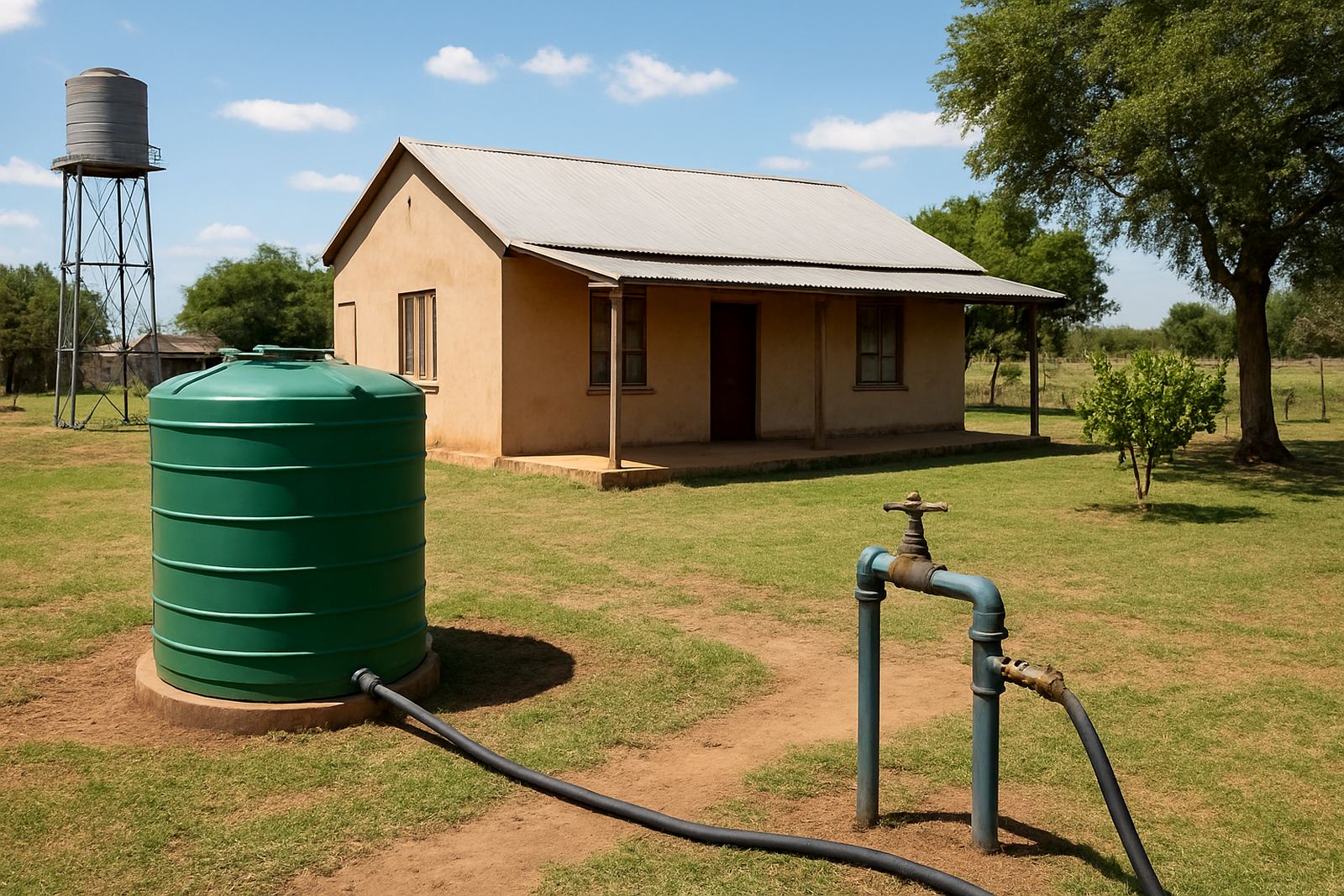
Consider a farmhouse just outside Brits, where the family uses borehole water for the house and rainwater for gardens and outdoor cleaning. The property has a few outbuildings, two bathrooms, a laundry room and a small staff unit. In summer, the garden and yard use rises sharply, while winter brings lower rain and more dependence on storage. The answer is not one big tank for everything, but a clear split between domestic and outdoor demand.
In that kind of setup, the household can use tested and filtered water for the kitchen and bathrooms, while a separate storage line handles washing down equipment and watering plants. If one source needs maintenance, the other can keep the property running. That kind of planning reduces risk, saves water and gives the owners a much calmer routine during dry spells or power cuts.
Hydrated works with homes and farms across Pretoria, Hartbeespoort, Rustenburg, Bloemfontein and the Western Cape, so the approach can be adjusted to local conditions instead of forcing the same answer everywhere. In some places the challenge is sandy borehole water, in others it is roof collection or long delivery distances, so the system must fit the property, not the other way round.
Why Ongoing Support Matters After the Kit Is Installed
A farmhouse water plan should not stop once the tanks are full. Silt builds up, filters clog, pumps wear, and the family’s water use changes over time. If the property expands, or if more animals or garden areas are added, the system should be reviewed again. A small change in use can create a big change in pressure and storage needs.
That is why regular servicing and water testing are worth building into the plan. It keeps the system honest and helps catch problems early, before they become a dry tap on a Saturday afternoon. For practical advice, site assessments and kit supply, Hydrated’s team in Brits can help shape a plan that suits the home, the land and the people using it every day.