Start With Daily Demand, Not Tank Size
The first step is to work out how much water the farm actually uses on an ordinary day, then build storage around that number. A cattle unit, a few staff houses and a small pack shed all draw differently, and a one-size tank plan often leaves you either overpaying or underprepared. For livestock, count drinking needs per head, then add cleaning, cooling and washing water. For homes and staff housing, include showers, laundry, toilets and kitchen use. It is worth adding a safety margin of 20% to 30% because demand changes fast in hot weather, during calving, or when extra hands are on site.
In the North West and Free State, many farms rely on a borehole as the main source and use tank storage to manage pressure drops and power cuts. That means storage should not only cover the average day but also the time the pump is off. If the farm has irregular delivery access, or if rainfall is seasonal, the storage plan should allow for several dry days at once. A practical sizing conversation should include the number of animals, the number of people on site, and whether water is needed for irrigation or washing equipment too.
Split Storage By Use So One Problem Does Not Stop Everything
On mixed farms, the best results usually come from separating storage into different zones. Livestock water, staff housing and seasonal operations should not all depend on one outlet. If a filter blocks, a pump faults, or a line gets contaminated, separate storage helps keep the most important users supplied. It also makes maintenance easier because you can isolate one section without shutting down the full system.
Good planning often includes a clean water tank for people and a bulk tank for animals or production use. Where water quality varies, a filtration stage before the domestic line is sensible, especially if the borehole has iron, sand or a strong taste. Around Hartbeespoort and Brits, some farms also deal with high mineral content, so regular water testing helps decide whether sediment filtration, carbon filtration or disinfection is needed.
- Keep drinking water for people on a cleaner line than wash water or irrigation water.
- Use clear labels on valves and tank outlets so staff know what can be switched off safely.
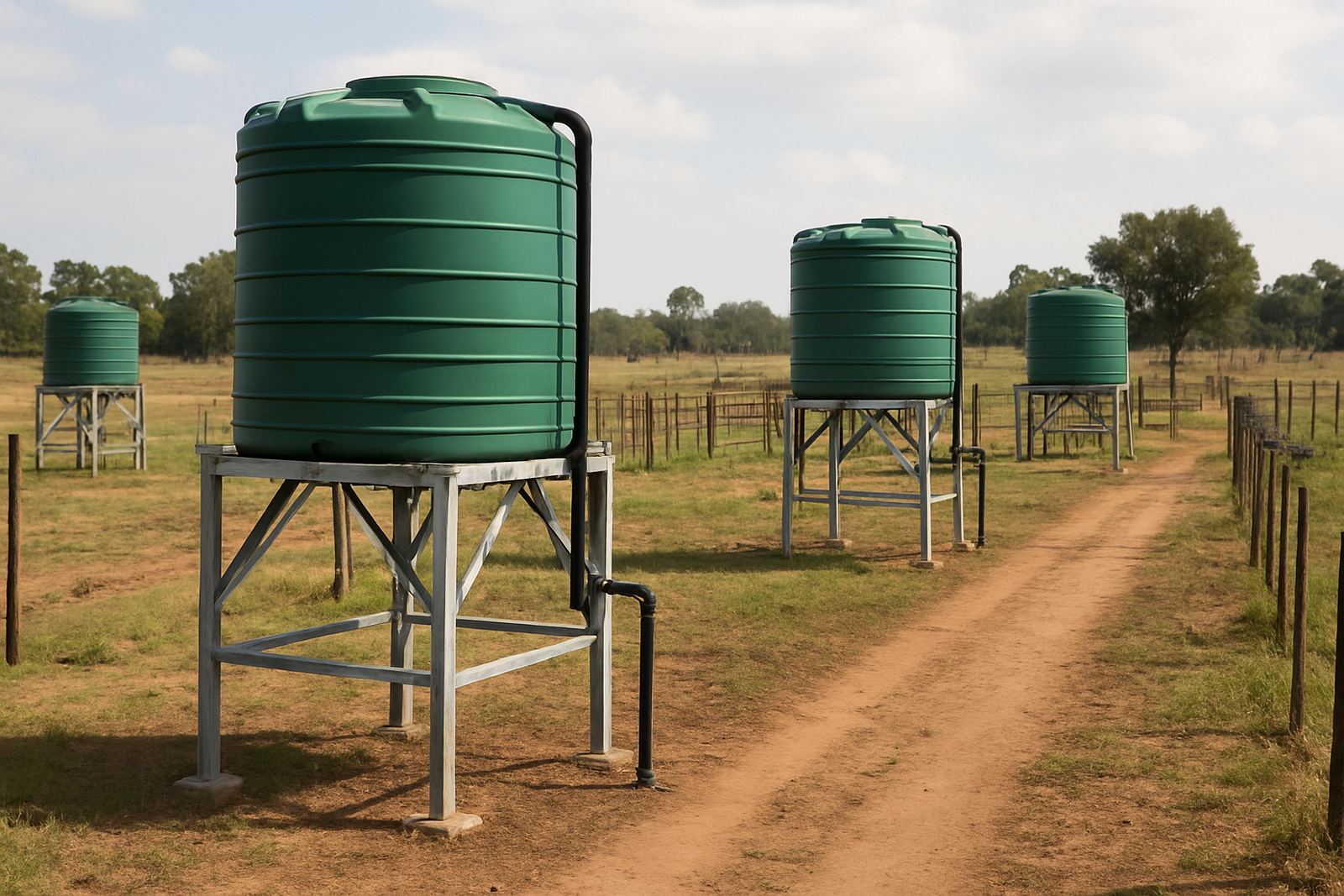
- Allow for gravity feed where possible, because it gives backup supply during load-shedding.
- Place critical storage close to the main users to reduce pump cycling and pressure loss.
Think About Placement, Height And Access Before You Pour Concrete
Tank placement affects more than convenience. It changes pressure, pipe length, maintenance access and how well the system handles wind and heat. On exposed farms, tanks should be set on a stable base with enough height for gravity feed if that forms part of the backup plan. If the tank is too low, staff housing may get poor pressure, and if it is too high without proper bracing, the structure can be unsafe in strong summer winds.
Access matters as well. A tank tucked too far from the road can be hard to clean, inspect or refill. The site should allow for delivery trucks, service vehicles and safe ladder access. In coastal areas like the Western Cape, salty air and humidity can shorten the life of fittings and metal supports, so corrosion-resistant parts and regular checks are worth the extra cost. A neat base, proper drainage and a protected valve box can save a lot of trouble later.
It also helps to keep tanks away from dust, manure runoff and chemical storage. Clean water is easier to keep clean than to fix after contamination. Even a well fitted lid can let trouble in if the area around the tank is poorly managed.
Plan For Seasonal Peaks Before They Catch You Out
Farm water demand changes through the year. Harvest time, lambing, calving and spraying seasons all lift usage. Staff housing may also fill up when seasonal teams arrive, and then drop back down again. The storage plan should handle those peaks without forcing the borehole pump to run constantly. Frequent short cycling wears equipment faster and raises power costs.
Seasonal planning should include a buffer for crop washing, animal handling and extra cleaning after dusty weather. In areas like Rustenburg or Bloemfontein, a dry spell can stretch longer than expected, so a reserve for at least a few days of essential use is sensible. If the farm also depends on municipal top-up water, remember that pressure changes and restrictions can affect refill timing. A tank is only useful if it can be refilled in time.
- Mark the months when water demand is highest and size storage for those periods first.
- Check whether pumps and filters can keep up with refill after peak use.
- Keep one reserve tank or reserve compartment for emergency supply.
- Review demand after each season, because farm use patterns change more often than people expect.
Use The Right Components To Protect Water Quality
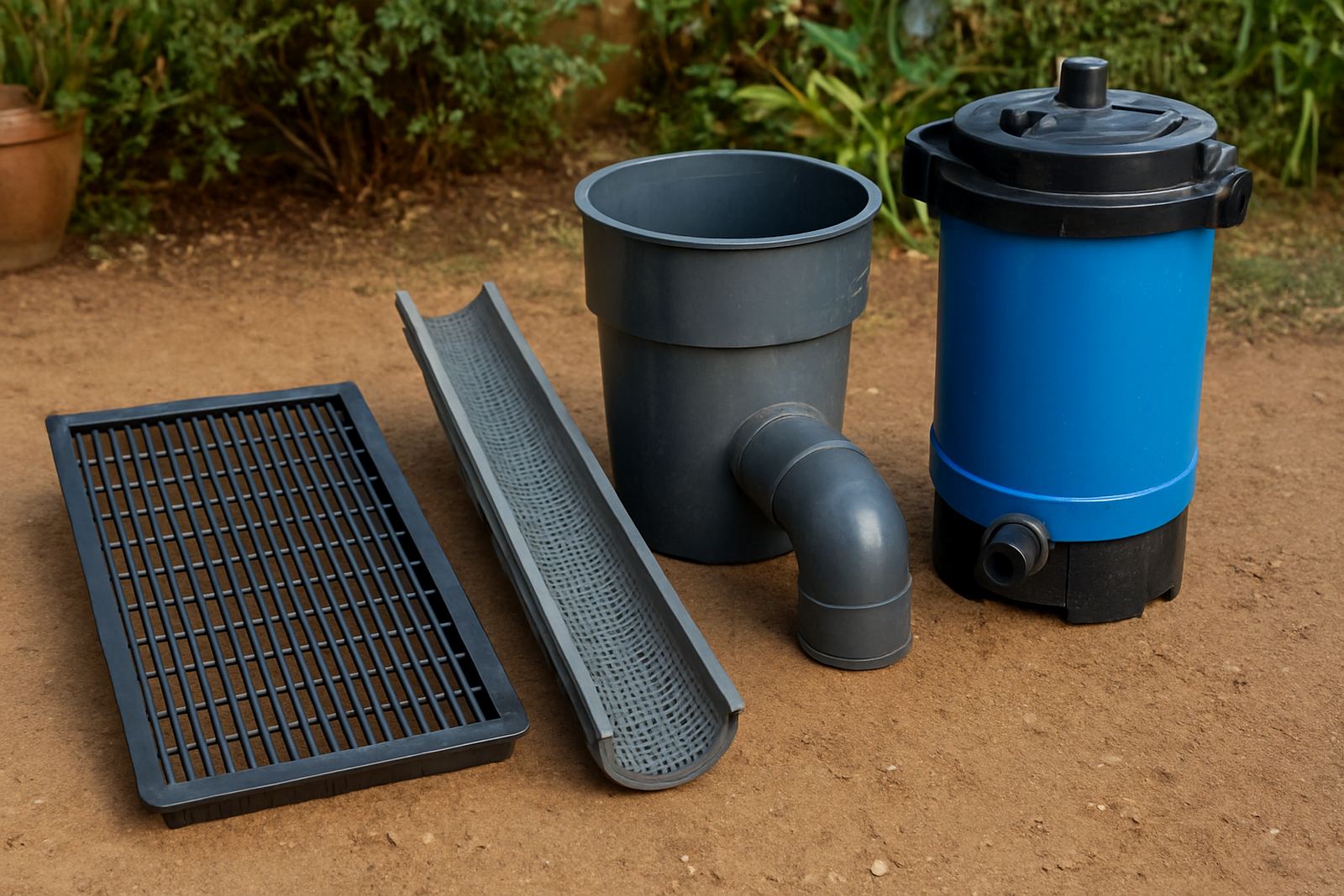
Storage only works well when the rest of the system is matched to it. A good tank with poor piping or no filtration can still leave you with dirty water, pressure loss or constant call-outs. For farm systems, the basics usually include a pump sized for the job, float switches or level controls, sediment filtration where needed and a way to isolate tanks for cleaning. If livestock drink from the same supply line, make sure the controls are simple enough for farm staff to use correctly.
Rainwater storage is useful on farms too, but it should be treated as a separate source unless it has been tested and filtered properly. Water off a roof can carry leaves, bird droppings and dust, so first flush diversion and tank cleaning are important. Borehole water can also change over time. A system that worked well two years ago may need different filtration now, especially if the borehole has started to pull in more fine sand or the taste has changed a little.
For farms in coastal or humid areas, fittings and pump housings should be checked for corrosion before the wet season. In drier inland towns, dust and sediment are often the bigger problem. Either way, a proper maintenance plan keeps storage useful instead of becoming just another item to fix.
A Brits Farm Example Shows Why Backup Matters
A mixed farm outside Brits may have a borehole supplying the main house, three staff units and a cattle watering point. During summer, the daily demand rises sharply because animals drink more and washing increases. If the pump trips during load-shedding or a power fault, the family and staff cannot wait until the next day for water. In that kind of setup, split storage with a domestic reserve tank and a separate livestock buffer gives much better control.
With proper sizing, the borehole can refill overnight and the tanks can carry the farm through a power outage or a maintenance stop. If the water is slightly sandy, a sediment filter before the household line helps protect taps and geysers. If the farm also collects rainwater from sheds, that water can be used for washing yards or irrigation, while the cleaner stored supply is kept for drinking and cooking. That simple split often saves both water and time.
The main lesson is that storage planning should follow the way the farm really runs, not a guess. Once the team knows who needs water, when they need it and what quality they need, the right tank layout becomes much easier to choose.