
Start With the Water You Are Actually Pumping
Dam water changes through the year. After summer rain you may get floating grass, leaves and fine silt, while in dry months the water level can drop and expose more mud around the edge. Before you buy equipment, check what the water looks like after wind, rain and heavy use by livestock or irrigation. That tells you more than a quick glance on a calm day.
For later treatment, the first job is to keep the intake as clean and stable as possible. If the water is full of sediment, a storage tank alone will not solve the problem. You need to think about intake depth, suction distance, and whether the water will be moved only when needed or on a schedule. In rural North West conditions, a system that works in winter may struggle in summer if the water level drops by half a metre or more.
Choose an Intake Point That Avoids Silt and Floating Debris
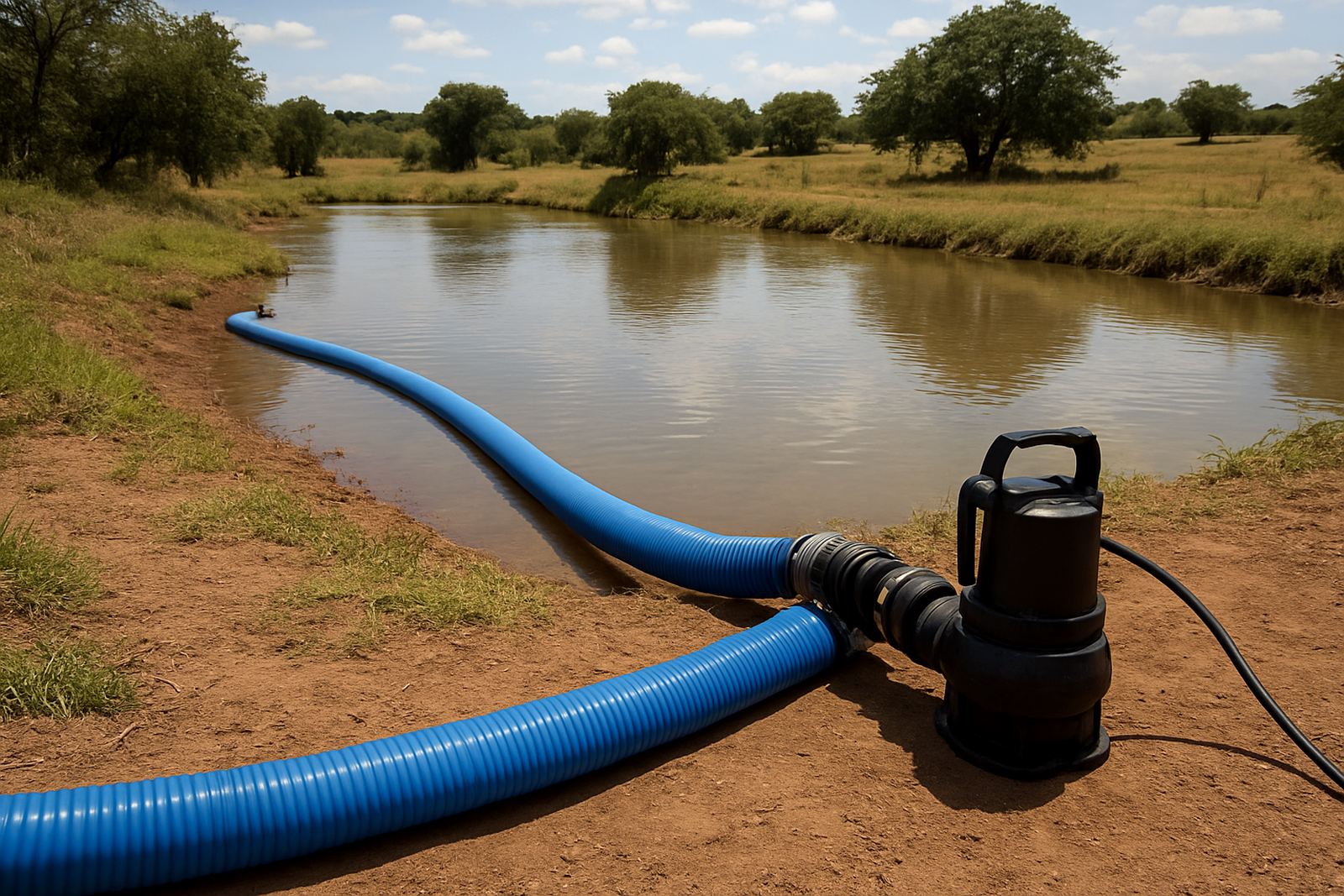
Where you place the intake matters as much as the pump itself. Keep the intake off the bottom so it does not suck up mud, and keep it away from the surface where floating leaves, duckweed and scum collect. In many cases, a floating intake or a weighted line set at a steady depth gives more consistent water quality than a fixed pipe on the bank.
- Keep the intake clear of the shoreline churn area where animals enter the water.
- Use a strainer or screen suited to the expected debris size.
- Allow for movement in water level so the intake does not sit in silt after a dry spell.
- Leave enough access for cleaning and inspection without damaging the bank.
On farms near Brits and Hartbeespoort, it is common to see dam edges disturbed by animals, wind and runoff. A small change in the intake position can reduce blocked filters and help the pump run steadier. It sounds basic but it makes a big difference over a season.
Match the Pump and Pipework to the Distance and Lift
Many transfer problems come from undersized pumps or pipe runs that are too restrictive. If the tank is far from the dam, or higher up on a slope, the system must overcome both horizontal distance and vertical lift. A pump that is fine for a short run may lose flow once you add bends, long suction lines, or a full tank sitting uphill.
As a rule, the longer the transfer line the more careful you must be with pipe diameter and fittings. Tight bends, unnecessary valves and narrow hoses all steal performance. It is better to size the line correctly from the start than to force a small pump to do a big job. In load-shedding areas this becomes even more important, because a weak system that takes too long to fill a tank is harder to manage when power is on for only a few hours.
- Measure the horizontal distance from dam to tank.
- Measure the height difference between the water level and storage point.
- Check whether the pump will run on grid power, generator power or solar support.
- Allow for priming and dry-run protection where needed.
Treat the Water in Stages, Not All at Once
Dam water is usually best treated in stages. First remove the bigger bits, then handle fine sediment, and only then focus on drinking or process water quality. If you try to do everything with one cartridge or one filter housing, maintenance becomes expensive and flow drops too fast. A staged approach is easier to service and more reliable on a working farm.
A typical setup may include a coarse screen at the intake, followed by pre-filtration before storage or before the final use point. If the water is for household use, final filtration should be matched to the actual test results. If it is for irrigation or washing, the target is different. That is why water testing is worth doing before and after the transfer process. It gives you a clear picture of what still needs attention.
For homes and smallholdings in the Western Cape, coastal humidity can also affect equipment condition over time. Metal parts corrode faster and filter housings can be harder to open if they are not serviced regularly. Good planning at the start saves trouble later.
Storage Tank Placement Should Make Maintenance Easy
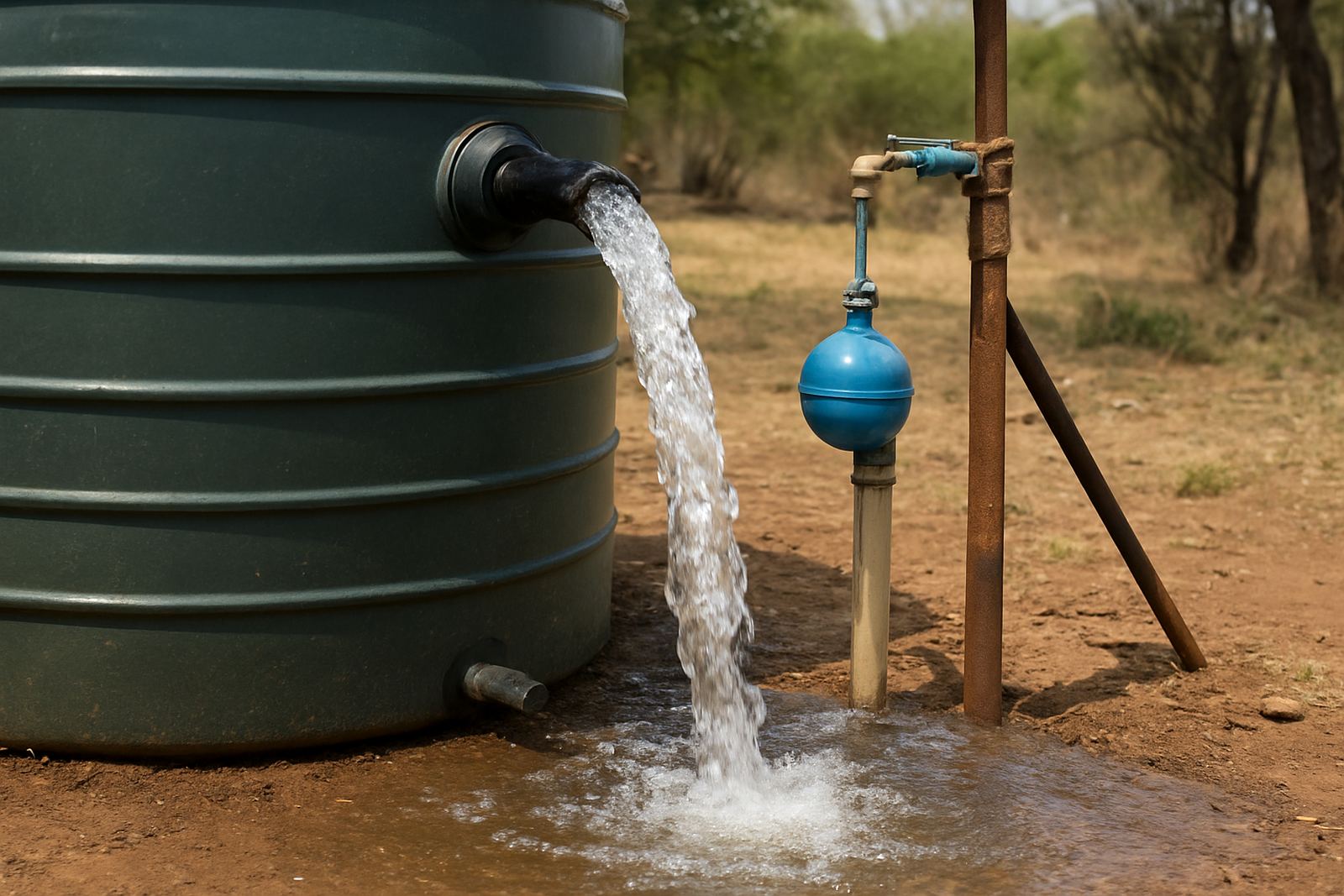
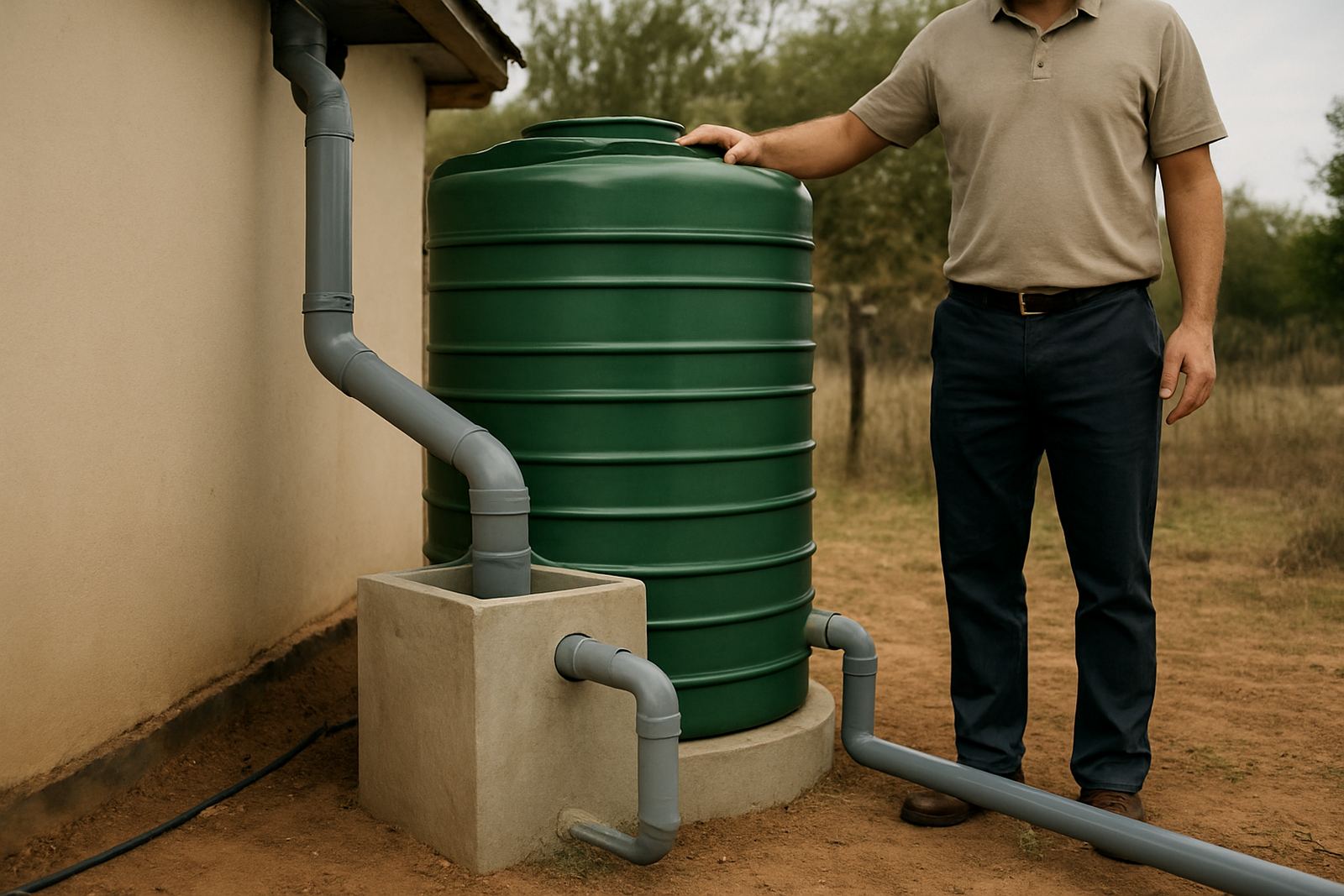
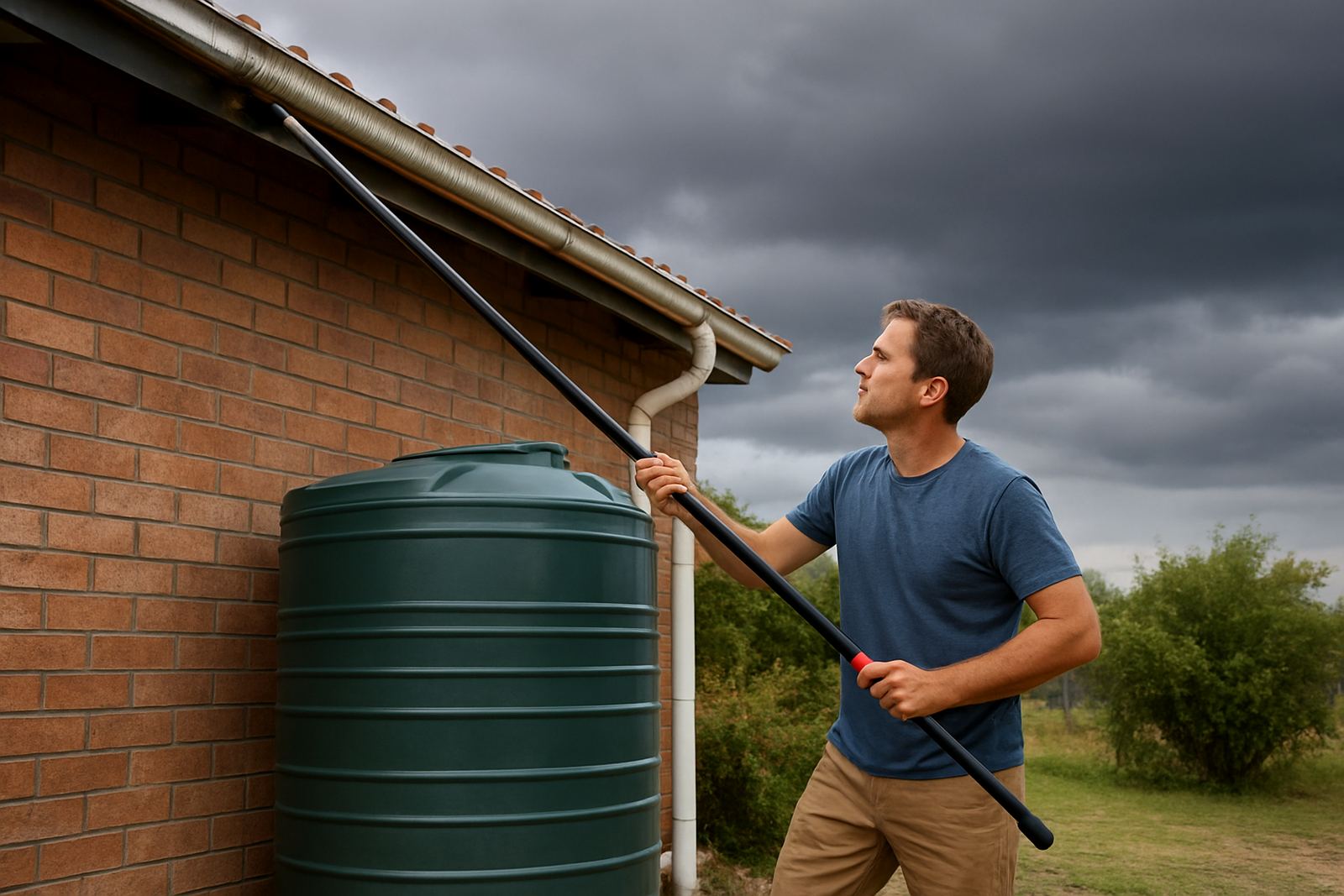
The storage tank should be easy to reach, easy to clean and placed where the pipework can run without strain. If the tank sits too high or too far from the service area, every inspection becomes awkward and people postpone maintenance. That is how sludge builds up and valves start failing. A practical layout is usually worth more than a fancy one.
Think about access for tank cleaning, filter changes and any future expansion. If you plan to add more capacity later, leave space for it now. Also consider wind, shade and protection from animals. In exposed areas around Rustenburg or Bloemfontein, secure tank bases and pipe supports help prevent movement and cracking. A tank that is stable today is less likely to give problems when the weather turns.
A Local Example: Moving Dam Water on a Small Farm Near Brits
A mixed farm outside Brits needed water moved from a dam to a storage tank near the workshop, then treated for use at the homestead. The problem was not just distance. Summer reeds kept clogging the intake, and after heavy rain the water carried a fine brown silt that blocked filters in a week. The owner had tried a small pump first, but it could not hold flow once the tank level dropped and the line ran uphill.
The practical fix was to reposition the intake higher off the bottom, add better pre-filtration, and size the transfer line for the full distance rather than the shortest part of it. Once that was done, the system became more predictable. The tank filled at a steady rate, filter changes were less frequent, and the household had cleaner water ready for final treatment. It was not a complicated solution just a properly matched one.
- Check the water source in both wet and dry conditions.
- Size the pump for real distance and lift, not just a guess.
- Use staged filtration so each component does one job well.
- Plan storage and access so the system can be serviced without hassle.
Keep the System Working Through the Season
Once the transfer system is running, regular checks are what keep it dependable. Look for air leaks on suction lines, blocked strainers, loose clamps and unusual pump noise. A small fault can turn into a failed transfer if it is left until the tank runs dry. Annual maintenance is worth doing even when everything seems fine, because hidden wear usually shows up at the worst time.
If your dam water is meant for later treatment, do not wait until the dry season to inspect the setup. Test flow, check water quality, clean the tank and confirm the filters are working before demand rises. That way you are not chasing problems when irrigation, household use or livestock needs are all high at once.
At Hydrated, we help homes and farms with site assessments, system sizing, delivery coordination, installation support and ongoing servicing across Brits, Pretoria, Hartbeespoort, Rustenburg, Bloemfontein and the Western Cape. For dam water transfer, the goal is simple: move the water cleanly, store it safely and keep the system practical to run all year.