What backup water needs to do on South African properties
Backup water is not only about having a tank in the yard. It needs to cover the real use on the property, from toilets and washing to livestock troughs, irrigation and basic cooking. In places like Brits, Pretoria and Hartbeespoort, interruptions from municipal supply, borehole downtime or dry spells can stretch from a few hours to several days, so the system must match the risk.
The first question is simple: do you want water stored for later use, water pushed to the house under pressure, or a setup that can switch between sources? Once that is clear, the rest becomes easier to plan. A good system also needs proper filtration, safe pipework and a way to clean the tank, otherwise the backup is there but the quality is poor.
Storage-only backup: the lowest maintenance option
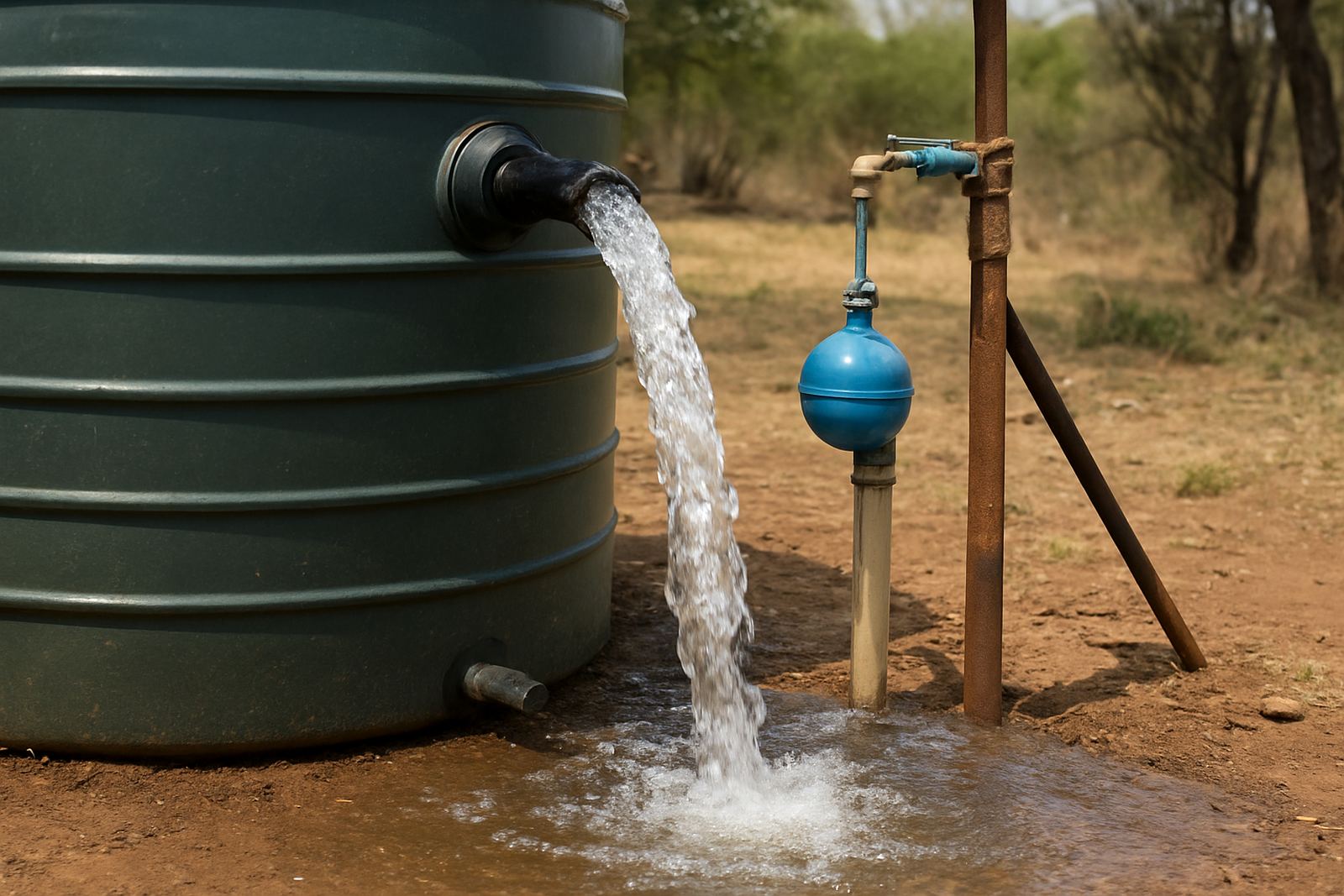
Storage-only backup suits properties that mainly want reserve water on hand. A rain tank or borehole tank can hold several days of use, and water can be drawn by gravity or by a small transfer pump when needed. This is often the simplest route for households that want cover during load-shedding or short municipal outages.
The benefit is lower running cost. There are fewer moving parts, less electrical dependence and less chance of a breakdown. The trade-off is pressure. If the tank sits low or you rely on a gravity feed, taps may run slowly and some appliances will not work properly without a pump. For farms, storage-only can still work well for washing, stock water or emergency supply, but it needs enough volume to matter.
- Best for short outages and low-pressure needs
- Simple to maintain and easier to inspect
- Works well where water is already available on site
- Needs correct tank placement and overflow control
Pumped backup: better pressure, more control
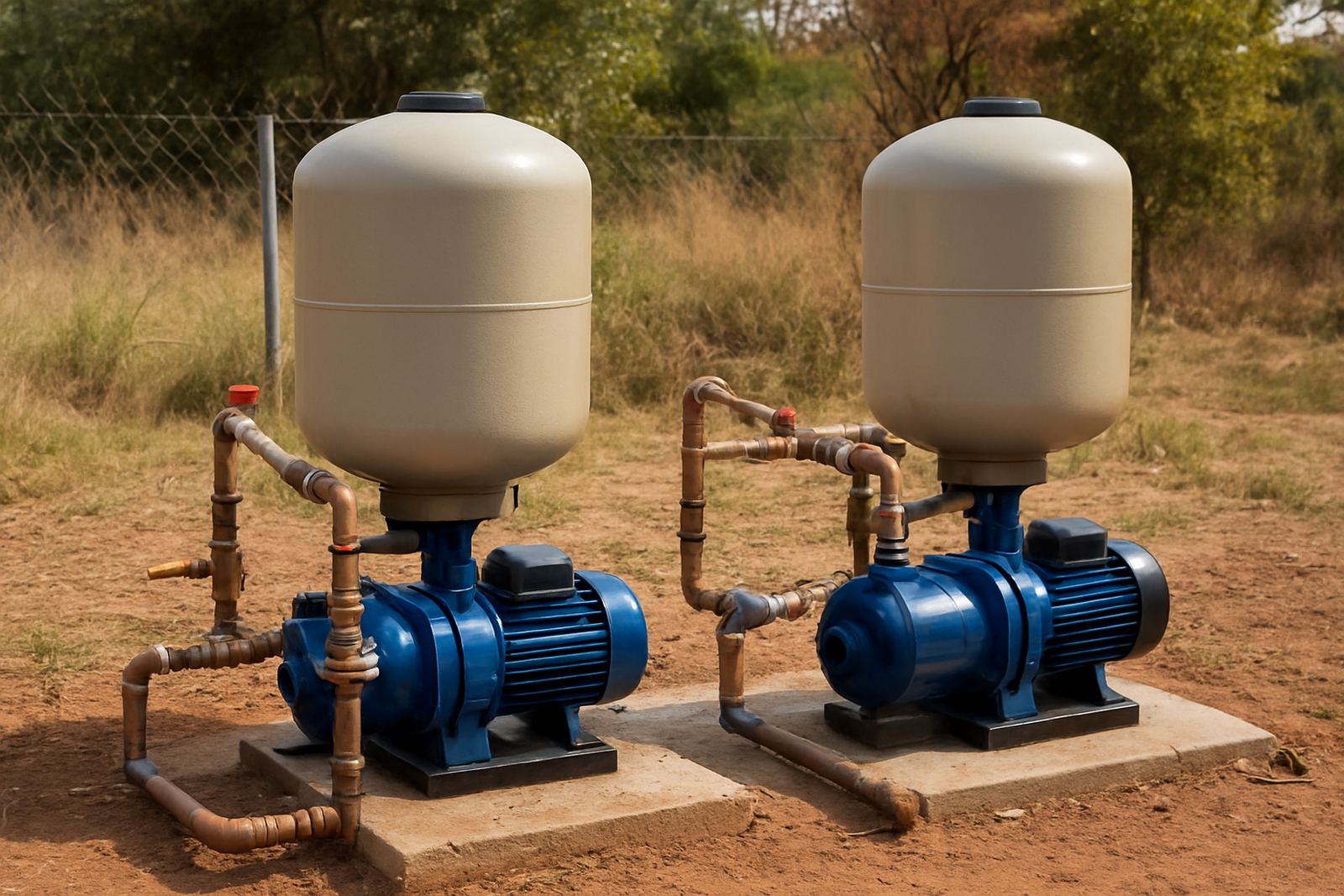
Pumped backup systems use a pressure pump to feed the property from a tank or borehole. This is the more familiar choice for homes that want normal tap pressure and for farms that need a steadier flow to lines, filters or irrigation points. If the property is split across more than one building, pumped delivery is usually the practical choice.
The extra control comes with extra responsibility. Pump sizing must suit the number of bathrooms, taps, filtration stages and the vertical lift from tank to outlet. If the pump is too small, it cycles too often and wears out early. If it is too large, it can push the system harder than needed and waste power. In areas affected by load-shedding, a pump also needs a sensible power backup plan, whether that is batteries, inverter support or a schedule that makes use of available supply.
- Ideal for homes that need normal water pressure
- Useful for farms with longer pipe runs and multiple points of use
- Allows pressure control and more stable delivery
- Requires servicing, electrical planning and fault checks
Dual-source systems: the practical middle ground
Dual-source systems combine two water inputs, usually municipal supply plus borehole water, or rainwater plus borehole storage. For many properties this is the smartest option because it gives flexibility. If one source is low, off-line or needs treatment, the other can take over. That matters in western Cape conditions where rainfall patterns change sharply, and also on inland sites where a borehole may be fine in winter but needs rest during heavy summer use.
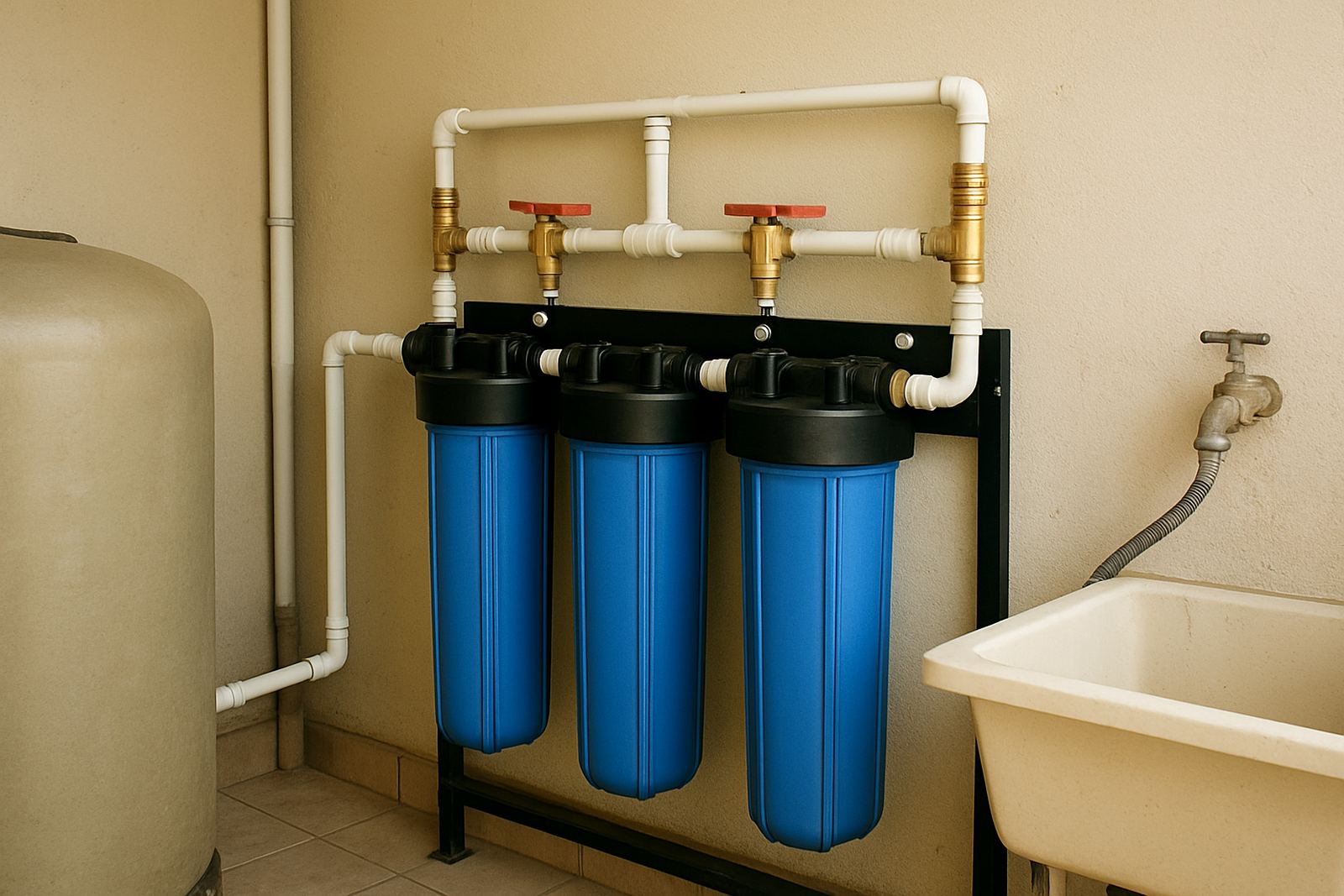
The main advantage is continuity. Dual-source systems can be set up with changeover valves, monitoring and treatment stages so water quality stays consistent. They do need careful design, because the two sources may have different pressure, hardness or sediment levels. A borehole with iron staining and a rain tank with leaf debris cannot be treated the same way, and the filtration should reflect that.
For many clients, this option gives the best balance between running cost and peace of mind. It is not always the cheapest to install, but it can reduce risk over the long term, especially on larger homes, guest properties and mixed-use farms.
How to choose the right size and kit
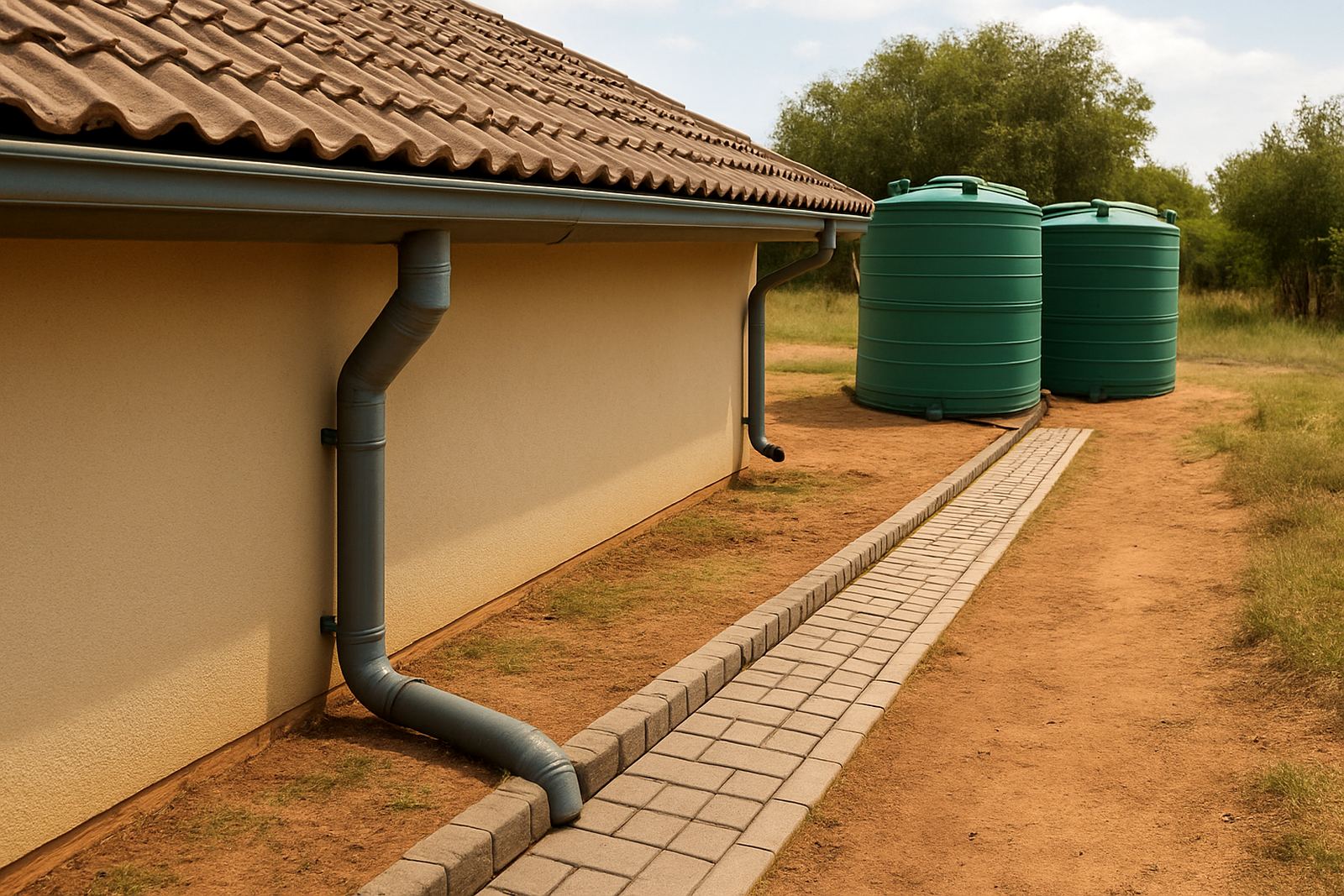
Size matters more than people expect. A small tank may help with a single day outage, but it will not support a household through a dry spell or keep a farm running through a pump fault. The correct size depends on daily consumption, roof area for rain capture, borehole yield, and how many people or animals depend on the water. In Brits and Hartbeespoort, many properties can use a mix of storage and pumping to cover both peak demand and backup supply.
We normally look at the property layout, existing plumbing, where the tank can sit and whether the owner needs only backup water or also filtered drinking water. A proper site assessment helps avoid overbuying equipment that never gets used, or underbuying a setup that runs out too soon. If water quality is a concern, tank cleaning and filter changes should be part of the plan from the start.
- Households: check bathrooms, laundry and kitchen demand
- Farms: check stock, cleaning and irrigation need
- Coastal areas: allow for corrosion and coastal humidity
- Municipal areas: include local by-law and overflow requirements
Local example: a family home in Pretoria with a borehole and rain tank
A typical Pretoria property might have municipal supply during the week, a rain tank for stormwater capture and a borehole for backup. The family wants enough pressure for showers, the garden and the kitchen, but also wants water available during interruptions. In that case, a dual-source setup with a pressure pump and staged filtration is often the best fit.
The borehole water may be clear but still need sediment and taste treatment, while the rain tank may need first-flush control and regular cleaning. If the system is commissioned properly, the household can switch sources without fuss. It also helps during maintenance, because one source can be serviced while the other carries the load. That kind of arrangement is common on larger suburban plots, smallholdings and guest units around Pretoria, Rustenburg and the West Rand.
For a farm near Brits, the same idea can be scaled up with larger storage and more durable pipework. The principle stays the same: keep water available, keep it clean, and avoid a setup that depends on one weak point.
Why planning and maintenance matter after installation
Backup water systems work best when they are checked regularly. A pump can lose pressure, a filter can clog, a tank can collect sediment, and a valve can stick without being obvious at first. Annual maintenance is not a nice extra. It protects the investment and keeps the water usable when the main supply drops out.
Our team handles site assessments, system sizing, kit assembly, delivery coordination, installation support, commissioning checks, water testing, tank cleaning, pump servicing, fault finding and filter changes. For homes and farms across South Africa, that practical support makes a difference because the system is only useful if it is ready when the taps stop flowing.
If you are weighing up storage-only, pumped or dual-source backup, the safest choice is the one that fits your real demand, your site layout and your water quality. Get that right and backup water becomes part of normal property planning, not a scramble after the fact.