Water Needs That Schools Cannot Afford To Guess
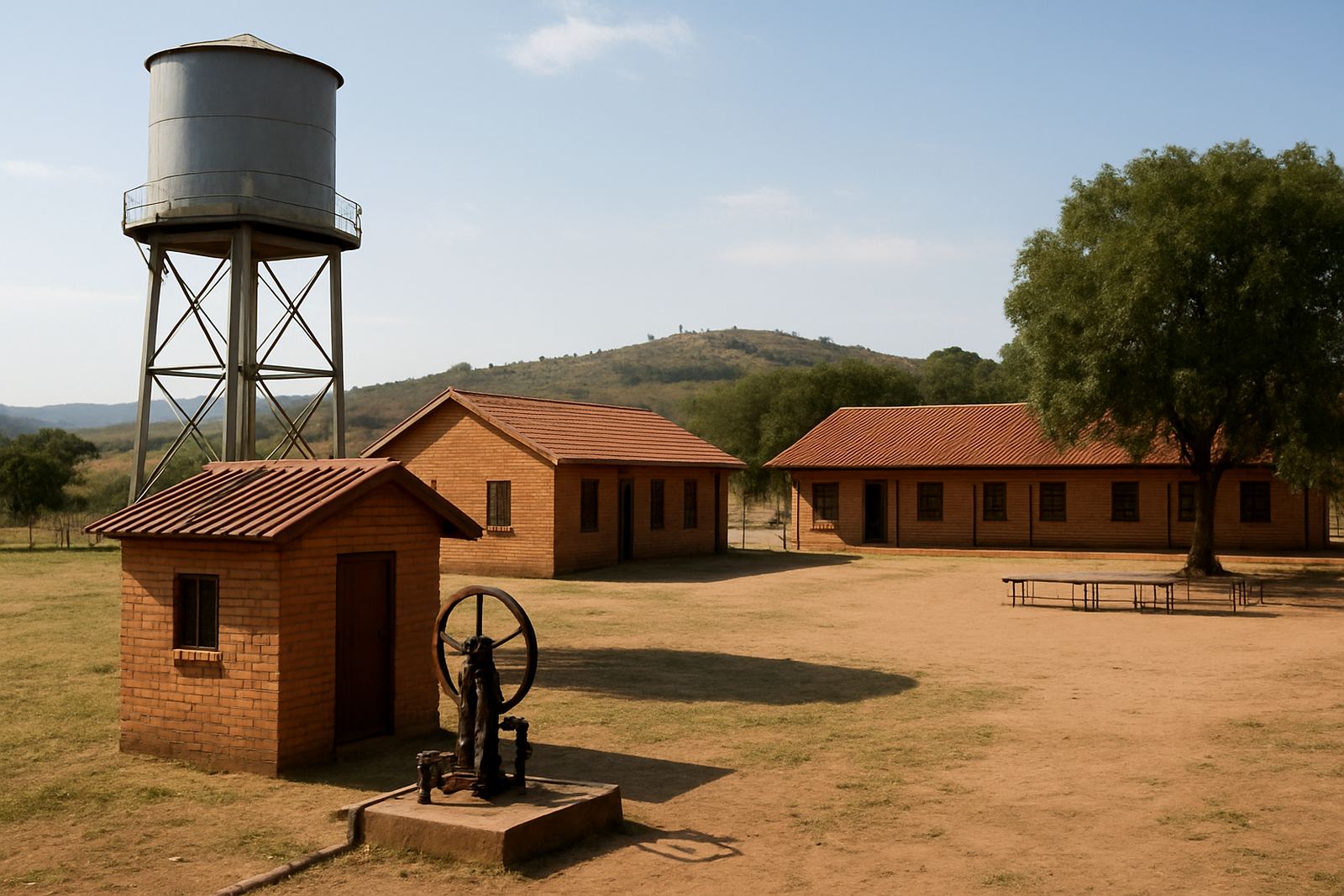
A rural school usually has a mix of daily demand points: classrooms with handwashing, ablutions, tuckshop or kitchen use, and outdoor cleaning for walkways and sports grounds. In many parts of North West, Limpopo, Gauteng outskirts and the Western Cape, supply may be irregular, pressure may be low, and a municipal interruption can shut down toilets before lunch. A school system has to cover people, not just litres on paper.
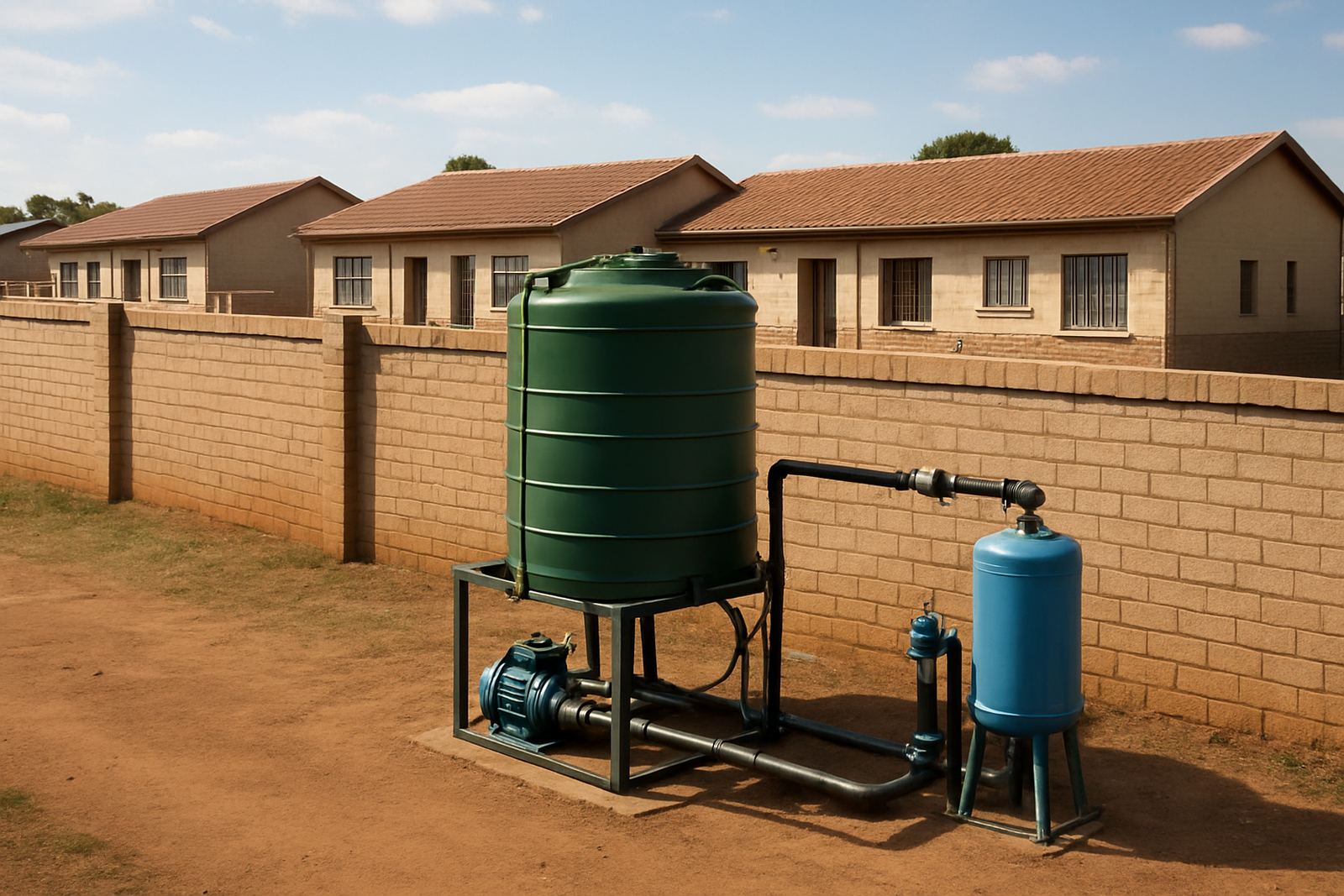
We start with the number of learners, staff, ablution blocks, kitchens and any boarding rooms or aftercare spaces. From there we look at whether the school needs a borehole supply, a rain-tank backup, or both. A borehole gives steady water when the site has reliable yield, while rain harvesting helps reduce running costs and gives backup during outages. The right answer is usually a mix, especially where load-shedding affects pumps and treatment equipment.
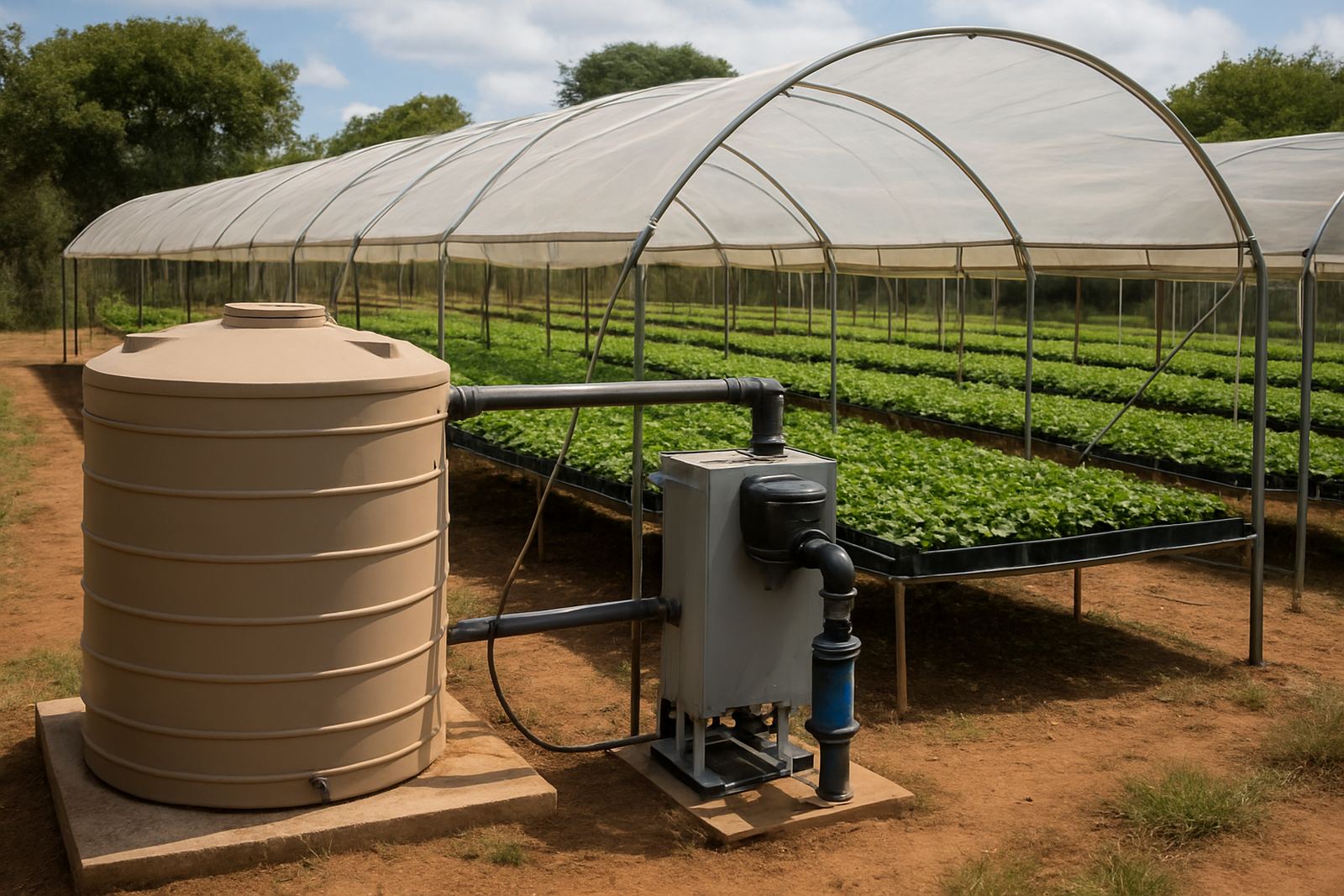
For smaller schools, a basic package may be enough for toilets and wash basins. Larger campuses often need separate storage for cleaning, irrigation and drinking water, with filtration on the potable line only. That separation keeps maintenance manageable and helps avoid overworking pumps and filters.
Typical Kit Set For A Rural Campus
A school water kit is not one box. It is usually a planned set of equipment that matches the site and the daily demand. For schools, we often recommend a staged setup so the essentials come first, then grounds watering or extra storage can be added later without redoing the whole system.
- Borehole pump set or rain-tank feed pump, sized to site depth and daily draw
- Storage tanks from 2,500 litres to 10,000 litres, or larger for high-usage sites
- Filtration for drinking and kitchen water, often with sediment and carbon stages
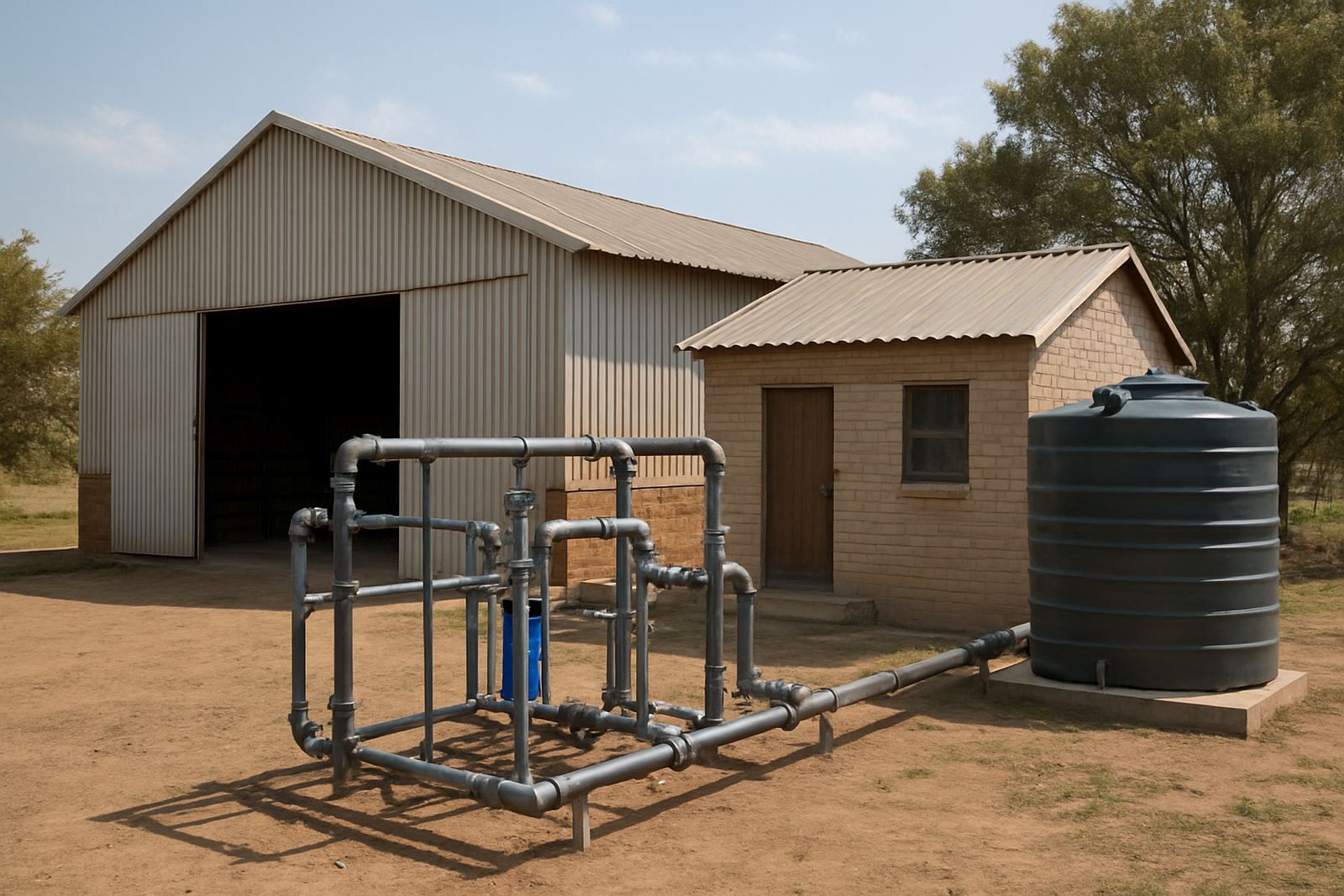
- Pressure control, float valves, plumbing fittings and basic protection gear
- Optional UV or finer filtration where water testing shows a need for it
- Backup switching for power cuts, where the school needs water during outages
In many school projects, a single 5,000 litre tank is a starting point for a small site, while larger schools may need 10,000 litres or two linked tanks. If the borehole is the main source, a tank gives storage for peak use and keeps pressure stable during the day. If rainwater is part of the plan, roof catchment area matters. A good roof can fill a tank quickly in summer storms, but it should still be treated as a supplement, not a promise.
We also factor in pipe runs between the tank stand, ablution blocks and kitchen. Long distances can cause pressure loss, so layout matters as much as the pump spec. A tidy plan from the start saves a lot of repair calls later.
Planning The Layout So Learners Are Not Left Waiting
The best school system is the one that fits the campus, not the other way round. On many rural sites the tank ends up too far from the point of use, or the pump is installed where maintenance is awkward. That leads to slow fill times, pressure problems and a lot of frustration when a class needs water and the system is still catching up.
We usually suggest placing storage close enough to the main block to keep pipe runs short, but with safe access for maintenance and tank cleaning. Filtration should sit where the water enters the drinking line, not on every tap. For schools with gardening plots or sports fields, it is better to separate irrigation from drinking and kitchen supply so the critical line stays protected.
- Keep tanks on level bases with room for tank cleaning and valve access
- Use clear line marking for potable and non-potable water
- Allow space for future tank additions if learner numbers grow
- Plan overflow routes so water does not damage walkways or foundations
- Put controls where staff can reach them, not in a locked corner nobody checks
In coastal areas like Stellenbosch, Somerset West and Paarl, humidity and salt in the air can shorten the life of exposed fittings. In dry inland areas like Brits, Rustenburg and Pretoria outskirts, dust and heat matter more. The layout should suit the site conditions, because school maintenance teams are already stretched.
Common Mistakes We See On School Projects
A lot of trouble starts when a system is sized only for average use and not for the busy parts of the day. Toilets need water at break time, kitchens need it when meals are prepared, and grounds staff need it when dust is at its worst. If the tank is too small, the school runs dry before the day is done. If the pump is too weak, refill times become a problem.
Another common mistake is treating borehole water as fit for drinking without testing. Borehole water can be clean enough for washing but still need treatment for taste, sediment or higher mineral content. We always advise water testing before drinking lines are connected. A test saves money because you only buy the filtration you actually need.
- Undersized tanks that empty too fast during peak use
- No backup plan for power cuts or pump faults
- Mixing irrigation and drinking water on one line
- Skipping filter changes and tank cleaning until problems show up
- Installing pumps without proper commissioning checks
Another issue is delayed maintenance. Filters clog, float valves stick and tanks collect sediment if they are never cleaned. A school should have a simple annual plan so staff know when to call for service. A short inspection at the start of term is far cheaper than dealing with a dry ablution block in the middle of exams.
Budget Ranges For Schools In Rand
School budgets vary a lot, but it helps to have working ranges before you request quotes or compare options. A basic rain-tank support setup for a small rural school may start from around R18,000 to R45,000, depending on storage size, pipework and pump needs. A borehole support package with storage and filtration can start from about R35,000 and move upward quickly when the site needs deeper pumping, more tanks or stronger treatment.
For larger campuses, or where the school needs drinking water, ablution supply and garden watering all at once, budgets often fall between R60,000 and R150,000. Sites with longer pipe runs, multiple buildings or heavier demand can go beyond that. The main cost drivers are tank capacity, pump depth, filtration level, plumbing distance and whether installation support is included. It is better to spend on the right size once than to keep adding parts later.
We also recommend setting aside an annual maintenance budget. Filter changes, pump servicing, tank cleaning and fault finding are not optional extras on a school site. A modest maintenance allowance can protect the original investment and keep the water flowing through the term.
How Hydrated Supports Rural Schools From Brits
From our base in Brits, North West, we supply and deliver school water kits to Pretoria, Hartbeespoort, Rustenburg, Bloemfontein and the Western Cape, including Paarl, Stellenbosch and Somerset West. Our team works with school committees, principals and facilities staff to make sure the system is practical on the ground, not just on paper. Pieter Johannes van der Merwe leads the business, with support from Ntombizodwa Shirinda, Zander Snyman, Ayanda Nkosi, Morne du Toit, Thandiwe Maseko and Kabelo Molefe.
We can assist with site assessments, system sizing, kit assembly, delivery coordination, installation support, commissioning checks, filter changes, pump servicing, fault finding, water testing, tank cleaning and annual maintenance. For schools, the important part is keeping the process clear and manageable, especially where staff numbers are limited and every Rand has to work hard.
If your school needs a practical water plan for classrooms, ablutions, kitchens or grounds upkeep, use the enquiry form on our contact page and we will help you work through the options.