What rental sites usually need
In rental blocks, the main problem is not only water availability, it is how the water moves between units. A single small pump often struggles when three or four showers open at once, and pressure drops show up quickly in kitchens, geysers and toilets. In some places the supply is from a municipal line with low pressure, in others there is a borehole or rain-tank backup for times when the municipal water is off or the area is affected by load-shedding and pumping interruptions.
A good shared system is planned around demand at peak times, not just average use. That means looking at how many rooms or flats are on site, whether each unit has its own kitchen and bathroom, whether there is garden irrigation, and how much storage the owner wants on hand. In coastal towns like Somerset West or Stellenbosch, corrosion resistance matters as much as pump size. In dry inland areas like Brits or Rustenburg, storage and recovery time are often the bigger concern.
Typical equipment for shared supply and pressure
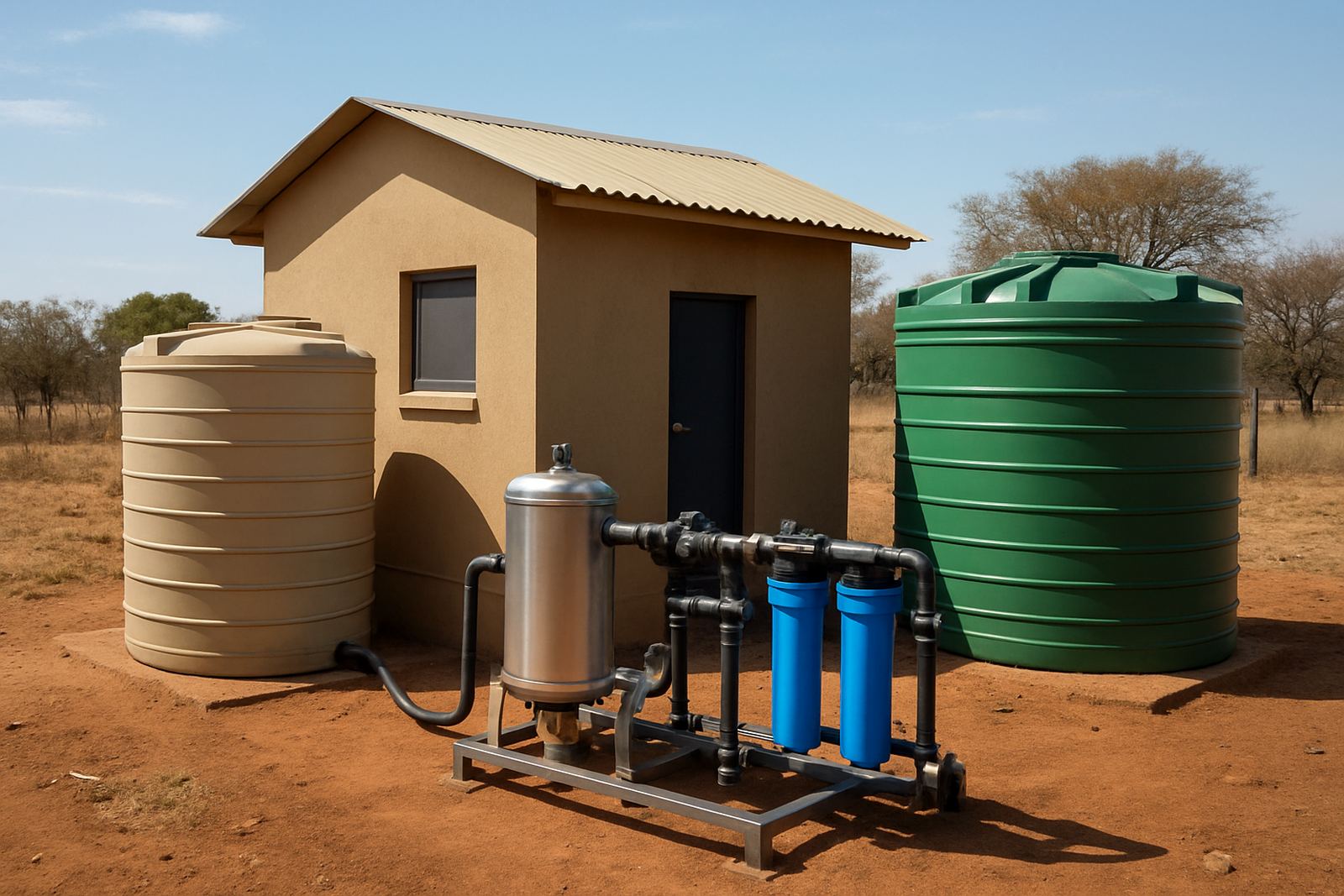
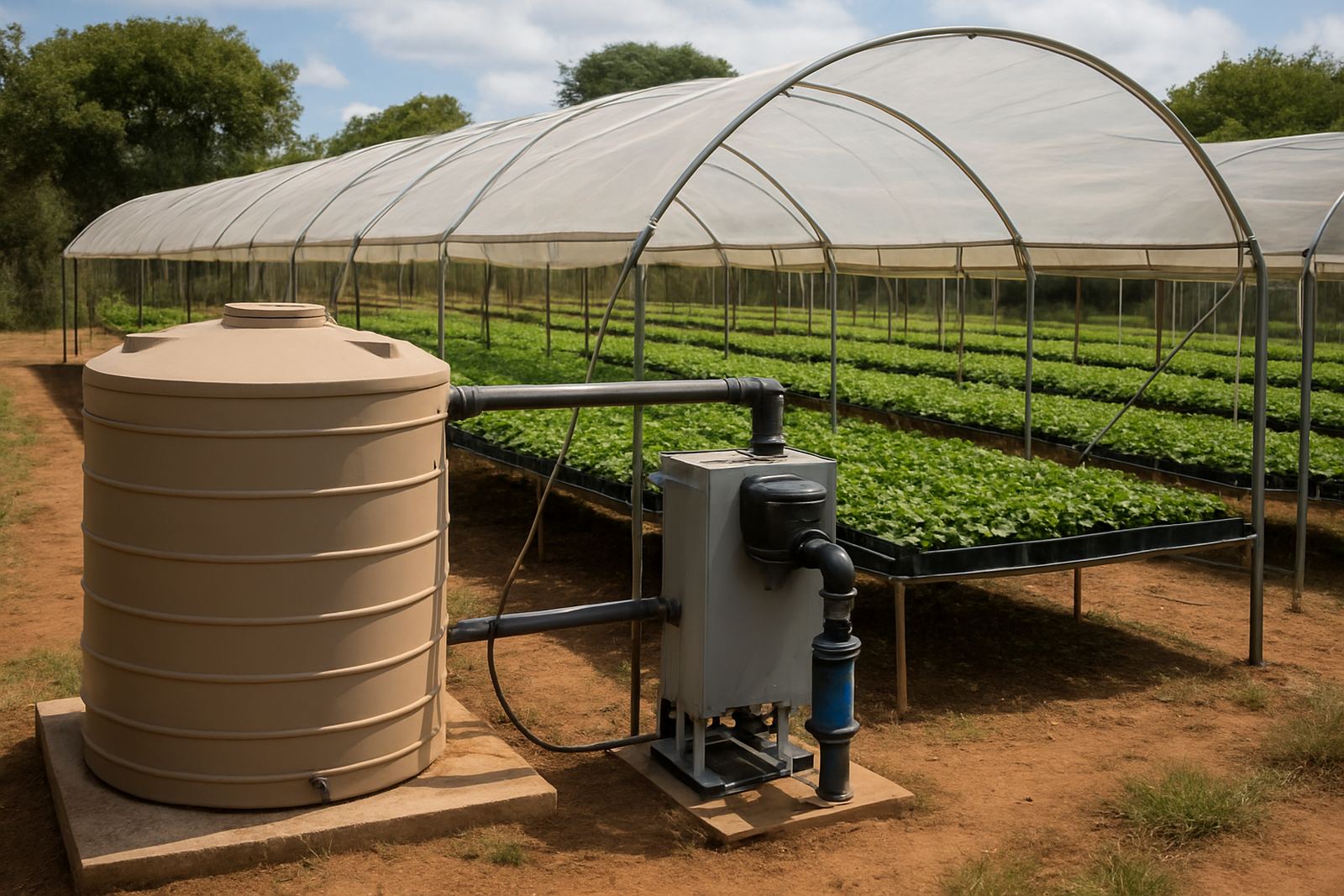
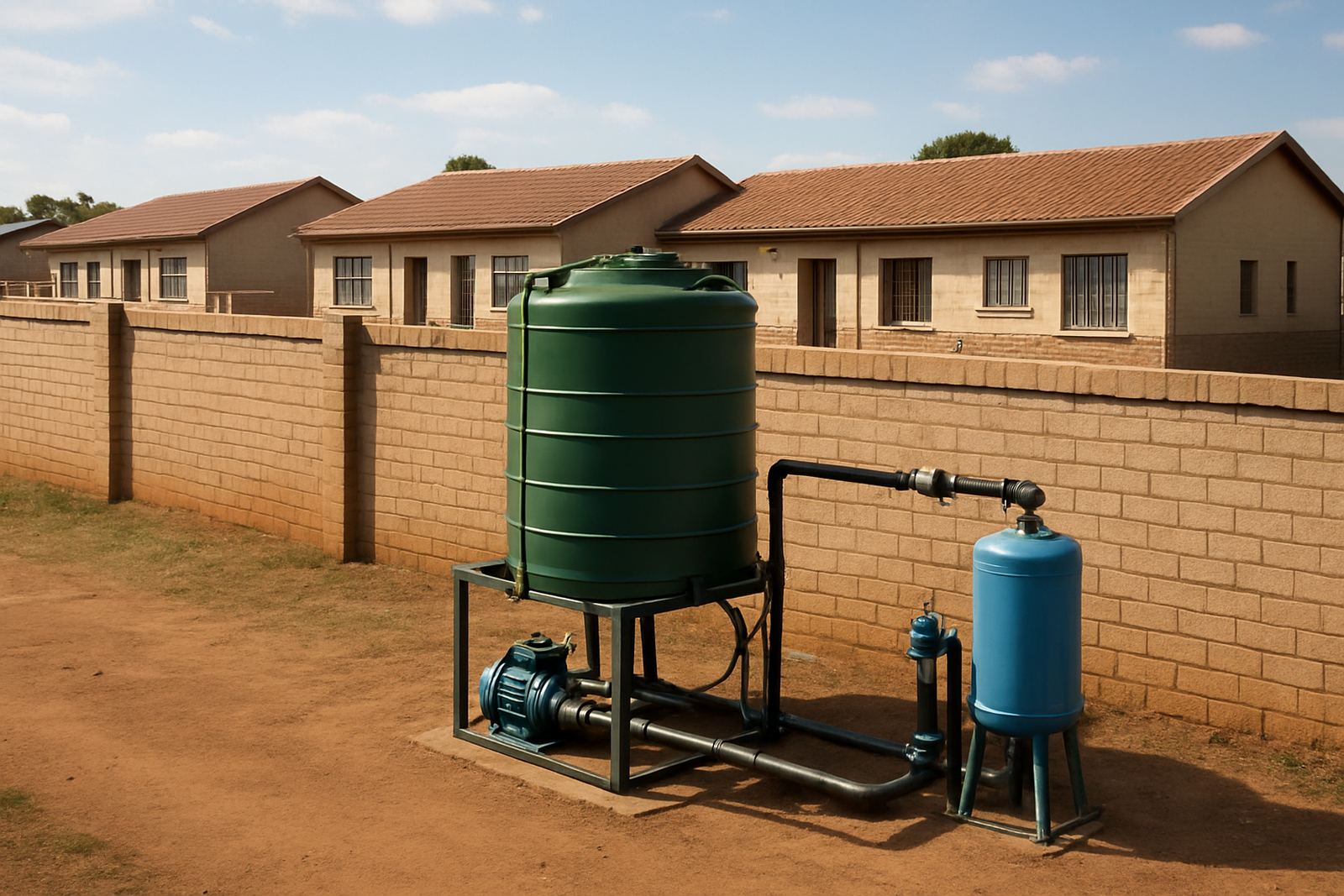
Most rental unit projects use a mix of storage, pressure control and basic filtration. The exact set depends on the source water and the layout, but the aim is the same: enough pressure to serve multiple units without wasting power or overworking the pump. Where borehole water is used, the kit often includes pre-filtration, a pressure vessel, a controller and the pump set matched to depth and draw-off needs. Where rainwater is added, a tank with first-flush protection and a filter stage helps keep grit and leaf matter out of the system.
- Storage tanks from 1 000 litres for small backyard setups to 10 000 litres or more for larger rental sites
- Pump sets sized for peak demand and line length, with pressure control for steady flow
- Sediment and carbon filtration where water clarity or taste needs improvement
- Isolation valves, non-return valves and gauges for easier fault finding
- Optional booster support for upper-storey units or long pipe runs
For many clients, a shared tank and booster arrangement is simpler than fitting separate systems to each unit. It usually costs less to maintain too, because filters and pumps can be serviced in one place rather than scattered across the property.
Planning the layout before you buy
The best rental system starts with a site assessment. We look at where the source water enters, where the main line runs, where the tanks can sit safely, and how the units are grouped. A long pipe run with small pipe diameter can cause pressure loss even if the pump is strong, so layout matters just as much as hardware. On mixed sites, it helps to separate domestic use from garden or washing areas so one heavy demand does not starve the rest of the property.
Owners should also think about access for maintenance. If the tank is boxed in against a wall, the filter cartridges become a pain to change and the pump can overheat. Leave space around the equipment, keep it above flood risk, and put the controller where a technician can reach it without disturbing tenants. If the site has several metres or a split billing arrangement, map the lines clearly before installation starts.
- Measure the peak number of users at the busiest hour, not just the number of units
- Check available space for tanks, valves and future expansion
- Confirm whether the source is municipal, borehole, rainwater or a mix
- Plan for power cuts, especially where the pump must recover after load-shedding
- Keep pipe runs short where possible and avoid unnecessary bends
Common mistakes that cause complaints
A lot of rental water trouble comes from undersizing. People buy a pump that seems fine on paper, then four tenants shower at 6 am and pressure collapses. Another common problem is trying to run the whole site through one thin pipe. That can leave one flat with strong flow and the next one with barely a trickle. It is also common to skip proper filtration on borehole or rainwater systems, which means blocked shower heads, dirty cisterns and more service calls.
Another issue is poor commissioning. A system can be fitted neatly but still give trouble if the pressure settings, float valves and cut-in levels are not checked properly. The same goes for tank cleaning. In dusty inland towns and in areas with strong winds, sediment builds up faster than owners expect. If the tank is never cleaned, that dirt ends up in the pump and then in the tenants taps, which is a problem nobody wants.
For rentals, quiet operation matters too. Pumps that cycle too often can disturb tenants and wear out quicker. A correctly sized pressure vessel and proper line design reduce start-stop cycling and give a steadier supply.
Budget ranges for small and larger rental sites
Budget depends on the source water, the number of units and whether the site needs storage only or full pressure support. As a practical guide, small backyard rental setups usually start from about R18 000 to R35 000 for a basic shared supply arrangement with storage and pressure assistance. Mid-size blocks or clusters of rooms often fall between R35 000 and R75 000 when proper filtration, valves and commissioning are included.
Larger sites, especially those with multiple flats, longer pipe runs or a borehole backup, can move into the R75 000 to R150 000 range and up depending on tank size, pump duty and installation complexity. If the system needs water testing, additional filtration or a maintenance plan, that should be allowed for upfront. It is usually cheaper to size the system properly from the beginning than to keep replacing small pumps and repairing pressure problems.
Some owners also ask for phased rollouts. That can work well on growing rental sites. Start with storage and a booster for the busiest block, then add another tank or treatment stage later as occupancy increases.
How Hydrated supports rental unit projects
From our base in Brits, North West, we supply and deliver rental water kits to sites in Pretoria, Hartbeespoort, Rustenburg, Bloemfontein and the Western Cape. Our team handles site assessments, system sizing, kit assembly, delivery coordination, installation support, commissioning checks and follow-up maintenance. Where needed, we also assist with pump servicing, fault finding, tank cleaning, filter changes and water testing.
Hydrated is led by Pieter Johannes van der Merwe and supported by Ntombizodwa Shirinda, Zander Snyman, Ayanda Nkosi, Morne du Toit, Thandiwe Maseko and Kabelo Molefe. That mix matters on rental jobs because these projects need clear planning, practical logistics and support when tenants start using the system daily. If you are running flats, rooms or backyard units, we can help you choose a setup that keeps pressure steady and gives you fewer complaints. Small typo or not, the real aim is simple: water that works when people need it.