
Water Supply That Keeps Seedlings Moving
In a nursery, water is not just for irrigation. It is used for propagation benches, potting mix preparation, cleaning, mist lines, hose points and keeping stock healthy through hot spells. When supply is inconsistent, young plants dry out fast and labour gets wasted on carrying drums around the yard. We work with nurseries in Brits, Pretoria, Hartbeespoort, Rustenburg, Bloemfontein and the Western Cape where the daily demand can shift between light watering and heavy fill-up periods after potting day.
The right setup starts with knowing where your water comes from and how it will move across the site. Some nurseries rely on a borehole with storage for daytime use. Others combine rain tanks with a backup supply for dry months. For many operations, the best answer is a mixed system with filtration first, then storage and controlled transfer to the points where staff actually need it.
Typical Kit Set For A Nursery Yard
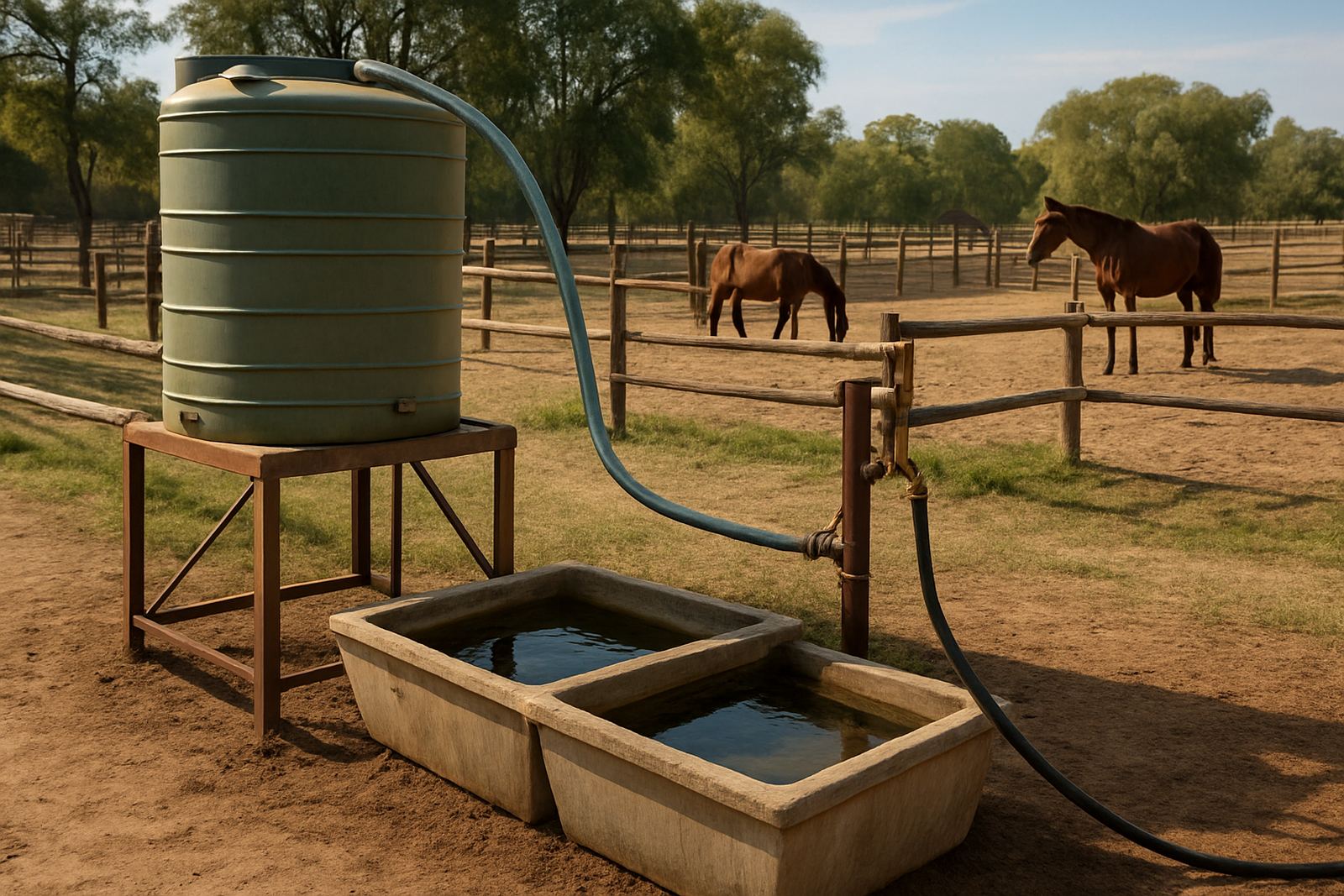
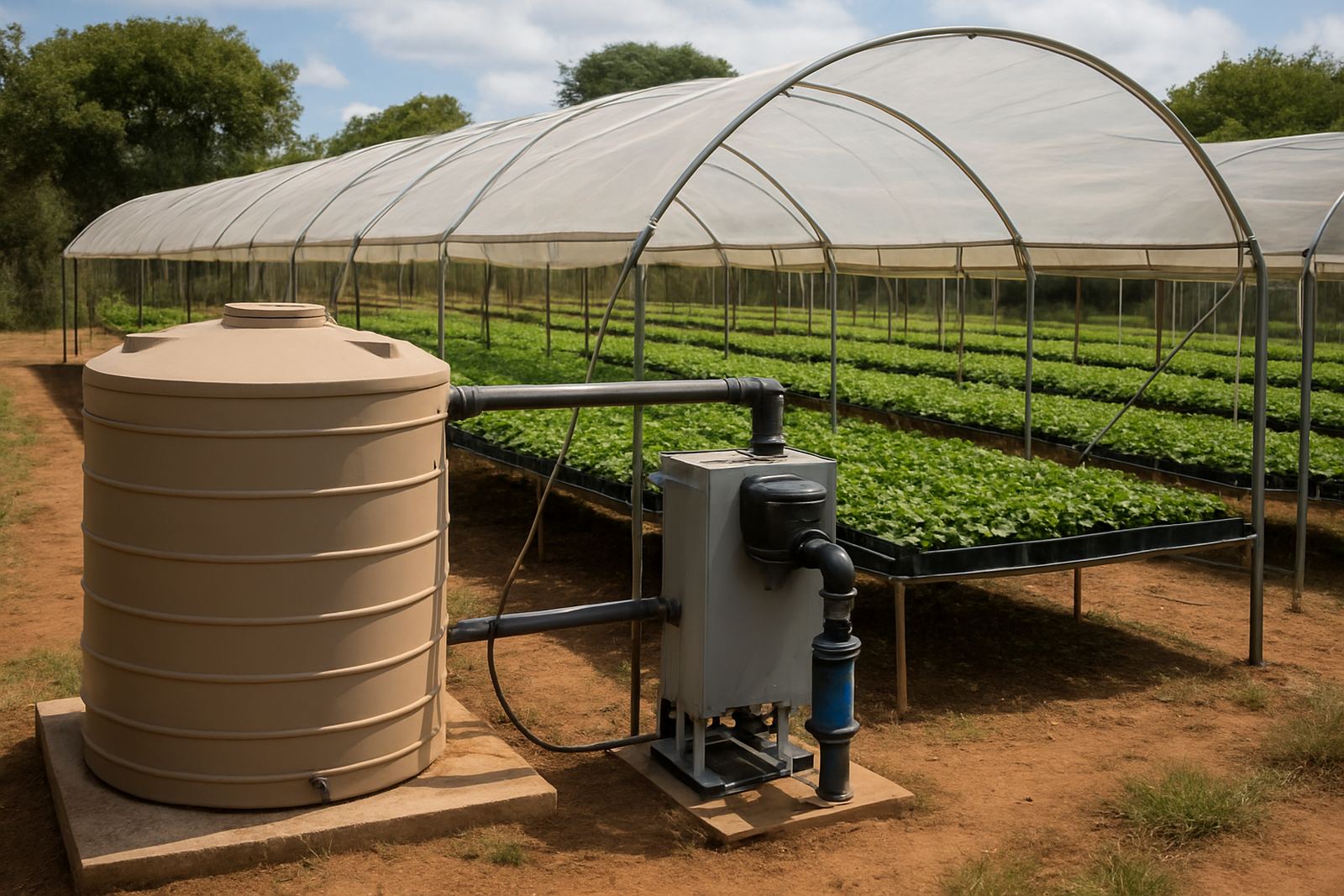
A nursery setup usually needs more than one tank and a single pump. The kit often includes storage tanks, a transfer pump, filtration housings, valves, pipework, pressure control and hose connections at the right points. On farms outside Pretoria or in hotter areas near Brits, we often recommend bigger storage so the nursery can water early morning and late afternoon without running the pump all day.
- Storage tanks for raw water and treated water
- Transfer pump for moving water between tanks and irrigation points
- Filter housings for sand, silt and organic matter
- Pressure control for misting lines and hose use
- Non-return valves and isolation valves for easy servicing
- Sampling point for basic water testing and checks
If the nursery uses propagation misting, fine filtration matters. Tiny nozzles block quickly when borehole water carries grit or rain water picks up roof debris. In coastal areas such as Somerset West and Paarl, humidity can help plants but it also means algae and biofilm can build up in tanks and lines if the system is not cleaned regularly.
Layout Planning For Propagation And Daily Watering
Good planning saves water and labour. The safest layout is usually simple: source point, filtration, storage, then distribution to the nursery zones. Keep the pump as close as practical to the storage tank, and place filters where a technician can reach them without moving benches or crates. If the site has slopes, plan for gravity where possible because it reduces pump strain and keeps things working during load-shedding.
For propagation areas, we normally advise separate lines for misting, overhead watering and general hose use. That way a fault in one section does not stop the whole site. If you are building new shade houses or extending benches, allow for future pipe runs now. It is cheaper to install extra take-offs and blanked-off lines than to trench again later. A little planning also helps with municipal rules where connections, discharge or tank placement need to stay clear of access paths and boundaries.
- Keep filters and valves at a serviceable height
- Allow space around tanks for cleaning and inspection
- Separate clean water from muddy washdown areas
- Use labelled pipe runs for quick fault finding
- Plan overflow points away from benches and potting areas
Common Mistakes That Cost Nurseries Time
The most common mistake is buying a pump before measuring actual demand. A nursery with 10 benches and a few taps needs a very different system from a site with misting, washdown bays and a filling station. Oversized pumps cause pressure swings and unnecessary wear, while undersized pumps leave staff waiting. Another mistake is underestimating water quality. Even a clear-looking supply can carry fine sand, iron, tannins or organic matter that blocks nozzles and stains stock.
We also see storage tanks placed where they are hard to clean or where tank lids sit in full sun and breed algae. On some sites the first rain-tank flush is missed too, so roof dust goes straight into the system. If the nursery is close to a busy road or open ground, more pre-filtration is often needed. Small issues like loose fittings or poor pipe support become bigger problems when the system runs every day.
Another trap is skipping maintenance. A nursery may run well for months and then suddenly struggle because a filter cartridge is clogged or a float valve is not closing properly. Regular checks keep the system stable and save money on emergency call-outs.
Budget Ranges For Nursery Water Systems
Budgets vary based on water source, storage size, number of outlets and the level of filtration needed. A small nursery with basic watering and a single storage point may start from about R18 000 to R35 000 for a practical supply and transfer setup. Medium sites with better filtration, larger tanks and more distribution points often fall in the R35 000 to R85 000 range.
For larger nurseries with propagation misting, backup storage, multiple pumps and more detailed commissioning, the budget can move from R85 000 to R180 000 or more. These figures depend on the tank size, pipe lengths, installation access and whether the system needs borehole support, rain capture or both. It is usually better to phase the work if cash flow is tight, starting with storage and filtration first then adding more lines as the nursery grows.
We help clients choose a sensible build sequence so the money goes where it matters most. In many cases a well-sized first phase prevents downtime and protects plant quality from the start.
How Hydrated Supports Nursery Projects
Hydrated works from Brits in the North West and supplies and delivers nursery water kits across South Africa, including Pretoria, Hartbeespoort, Rustenburg, Bloemfontein and the Western Cape. Our team can assist with site assessments, system sizing, kit assembly, delivery coordination, installation support, commissioning checks, pump servicing, filter changes, fault finding, water testing, tank cleaning and annual maintenance.
The team is led by Pieter Johannes van der Merwe, with support from Ntombizodwa Shirinda in operations, Zander Snyman in technical sales, Ayanda Nkosi on project coordination, Morne du Toit overseeing installations, Thandiwe Maseko handling customer support and Kabelo Molefe managing logistics. That mix matters when a nursery needs practical answers, not theory. We look at how the site works, how often it waters and what happens when supply drops off on a hot day.
If you are setting up a nursery or improving an older one, the enquiry form on our contact page is the best way to start. We can help match the system to the site, the crop type and the budget so water is ready when the plants need it.