Water Needs On A Working Crop Farm
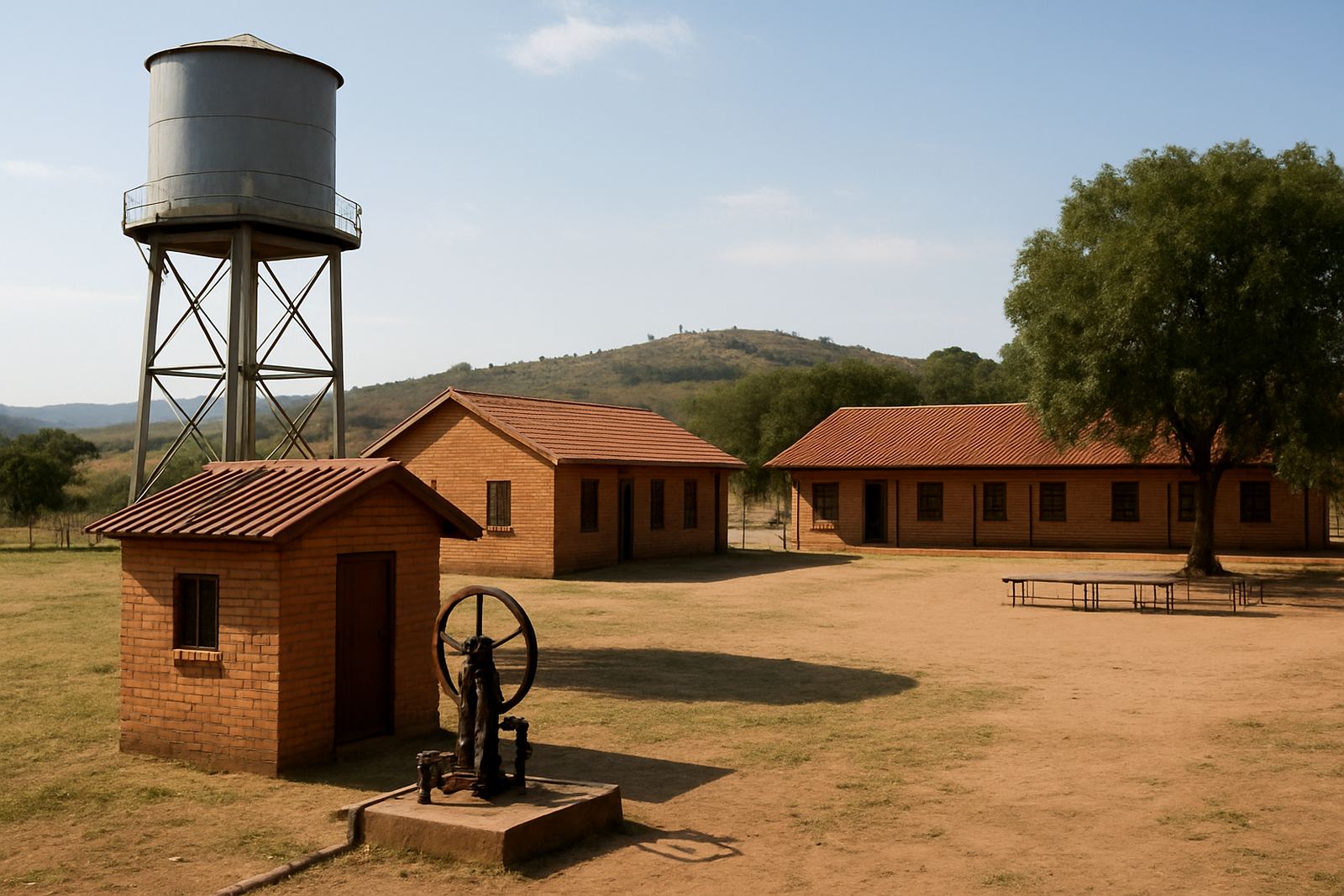
On a crop farm the water demand is not steady. One day it is staff housing, tanks and toilets, the next day it is wash-down after spraying, diesel mixing, packhouse cleaning or topping up selected irrigation zones. That is why a farm system has to be planned around actual use, not guesswork. A borehole, rain harvesting setup or treated storage system may carry the main load, with a second source keeping things going when one line is under pressure.
We often work with farms where the kitchen, ablution block and yard taps all run from one supply point. That can work, but only if the tank size, pump duty and pipe layout are set up properly. In North West and the Free State, long dry spells can expose weak systems very quickly. On the coast, higher humidity and salty air can shorten the life of fittings if the materials are not chosen carefully.
- Farmyard taps for cleaning, mixing and general use
- Staff housing supply for toilets, showers and kitchens
- Wash-down points for tools, crates and equipment
- Selected irrigation support for young trees, tunnels or trial blocks
Typical Kit Setups We Supply For Crop Farms
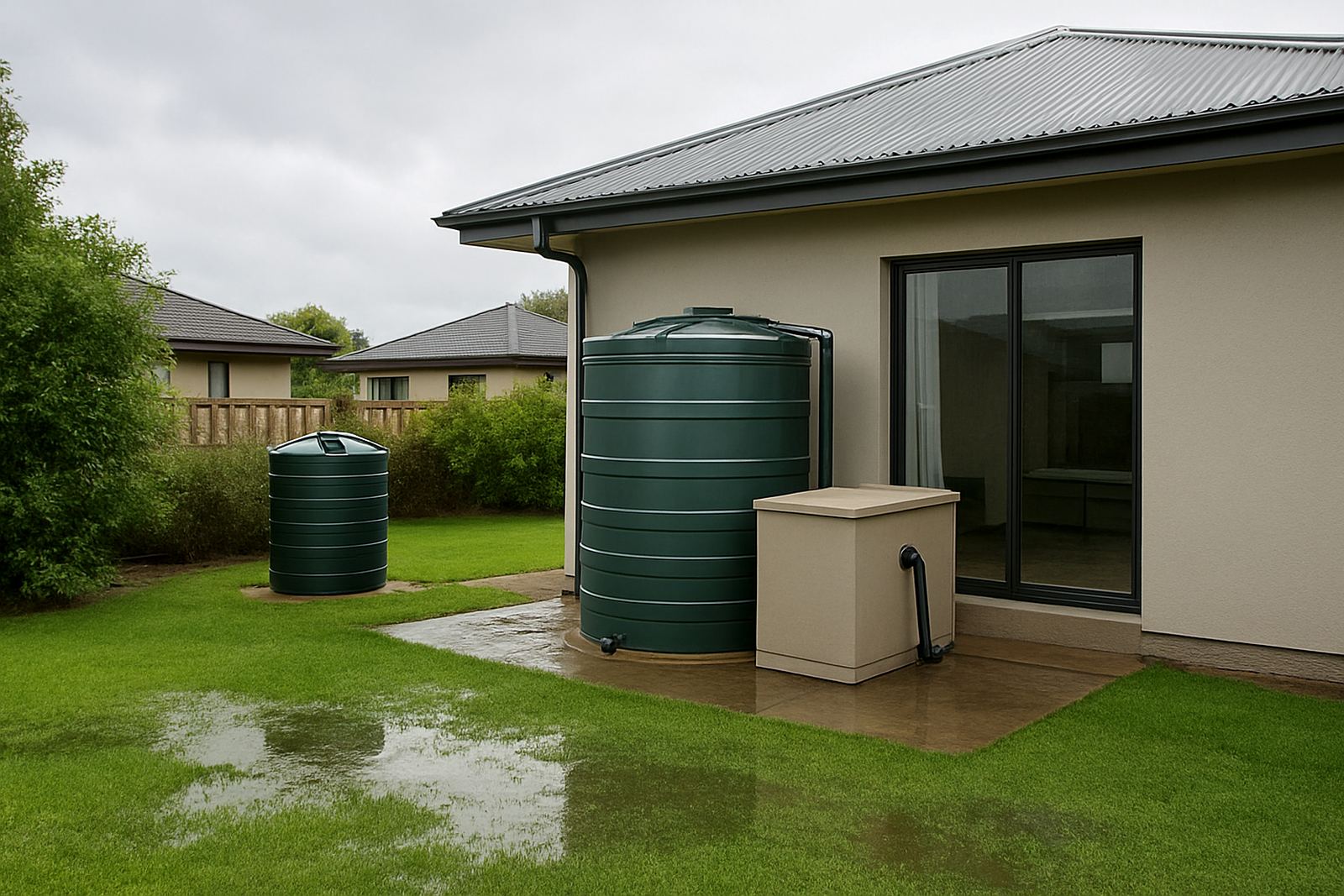
The right kit depends on whether you are drawing from a borehole, a municipal feed, a river licence point or rainwater storage. For many farms near Brits, Hartbeespoort and Rustenburg, a borehole kit with filtration and storage is the most practical answer. In areas with good roof catchment, a rain-tank system can reduce pressure on the borehole and help during load-shedding or pump downtime.
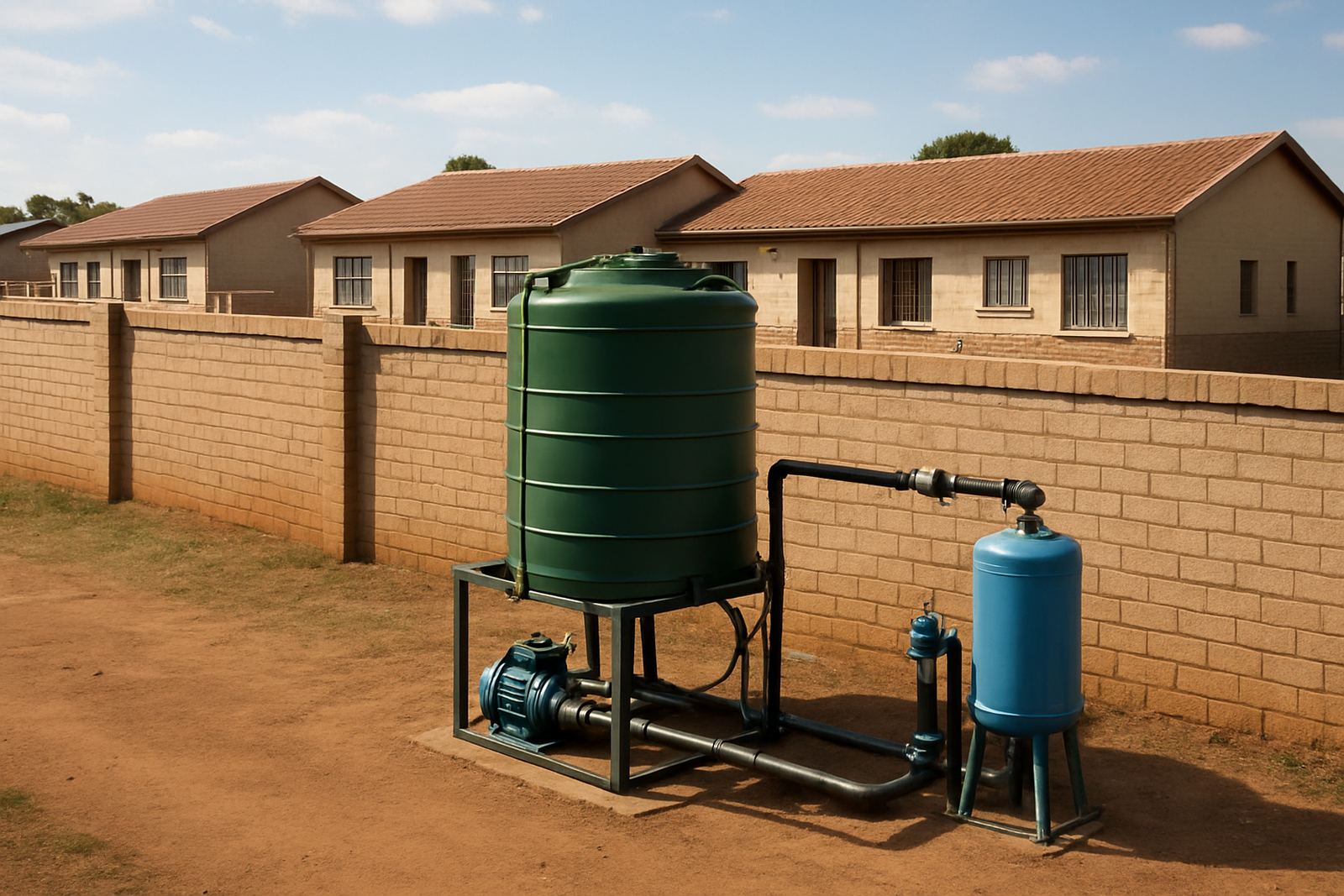
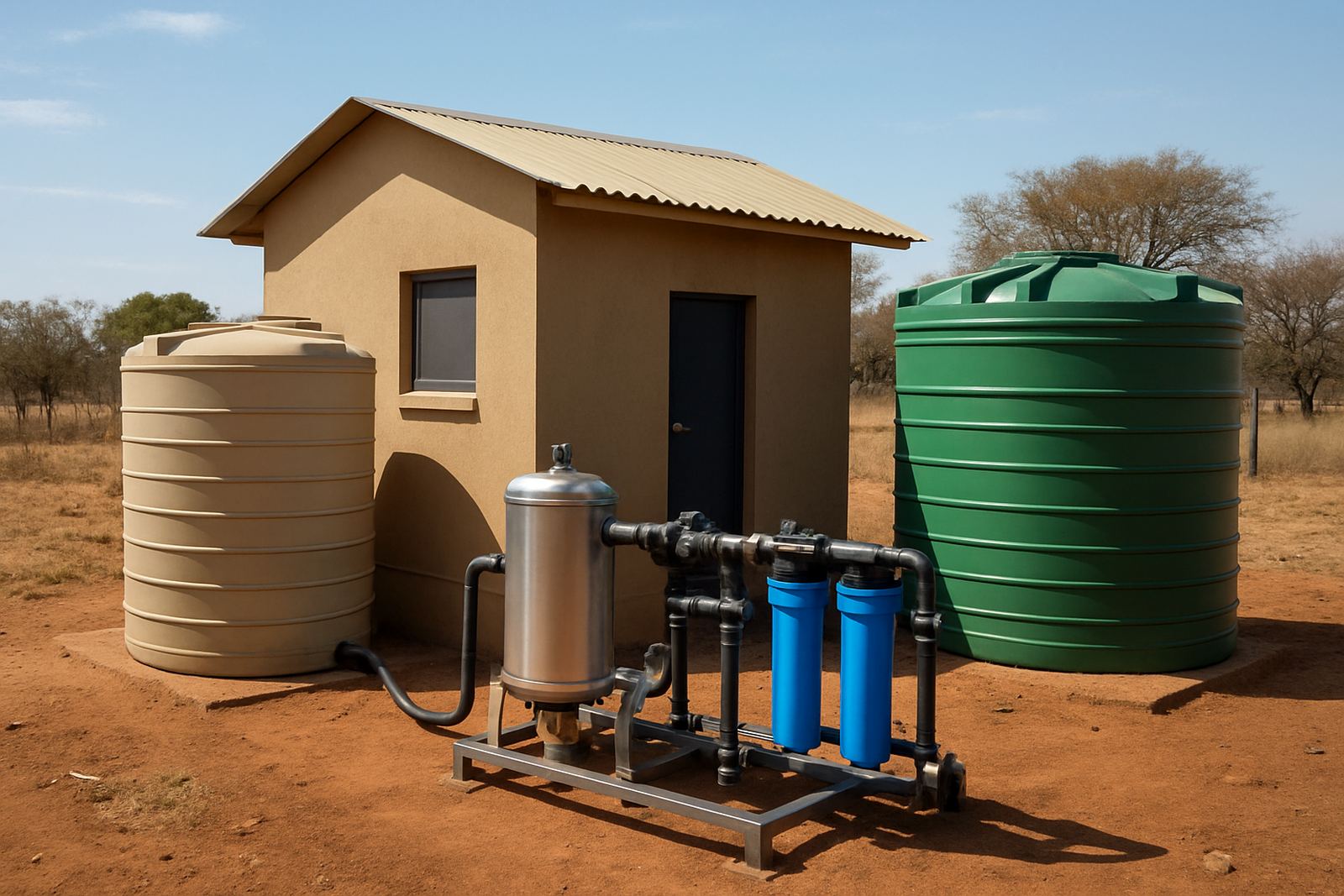
A typical farm setup may include a submersible or surface pump, controller, pressure tank, non-return valves, sediment filtration, cartridge housings, UV treatment where needed, and one or more polyethylene storage tanks. For higher flow needs we can add booster pumps, level control and float valves. If the water is for people as well as plants, testing is important before finalising the filtration line.
- Borehole pump and controller matched to depth and yield
- 5000 L to 30 000 L storage tanks, or larger where the site allows
- Sediment, carbon and fine filtration depending on water quality
- Pressure control for taps, wash bays and staff housing lines
- Optional treatment for drinking water after testing
How To Lay Out A Farm System Properly
Good layout saves money. The tank should be close enough to the pump and point of use to reduce pipe losses, but not so close that maintenance becomes cramped. We also look at slope, access for delivery trucks, cable runs, and whether the tank stand or slab can carry the load once the tank is full. A 10 000 L tank weighs a lot more than it looks like when empty, so the base must be level and sound.
For crop farms outside Pretoria, Bloemfontein and the Western Cape, we often recommend separating the farmyard line from the irrigation support line. That way, if a filter blocks or a valve fails, the staff housing and wash-down points are not left dry. It also makes fault finding easier because each line has a clear job. Simple labelling helps too, especially where more than one tank is involved.
- Keep the main tank on a firm, level base with easy service access
- Use separate lines for drinking, wash-down and irrigation support where possible
- Allow for future expansion, not only current demand
- Protect exposed fittings from sun, dust and theft risk
Mistakes That Cost Farms Time And Rand
The most common mistake is under-sizing the system. A pump that works well for a house may struggle when a farmyard tank, ablution block and wash-down hose all run at once. Another mistake is leaving filtration for later. By the time sediment has blocked valves and sprinklers, the repair bill is often higher than the cost of getting the right filter in from the start.
We also see systems installed without proper access for cleaning or maintenance. If the filter housing is tucked behind equipment or the tank valve is too high to reach safely, small jobs become big jobs. Then there is the issue of water quality. Clear water is not always safe water, and a farm that uses the same source for people and produce needs regular checks. Small issue ignored today can turn into a full stop in peak season.
- Choosing a pump by price only, not by duty cycle or head
- Skipping water testing before selecting filtration
- Putting tanks too far from the usage point
- Forgetting backup supply for load-shedding or repairs
- Not planning for future staff housing or extra blocks
Budget Ranges For Crop Farm Water Systems
Budget depends on source, distance, water quality and how much storage you need. A smaller farmyard and staff housing kit may start from about R25 000 to R55 000 for basic supply and filtration, while a more complete borehole and storage package can range from R60 000 to R180 000 or more. Larger farms with multiple tanks, booster pumps and treatment stages can move well beyond that, especially where the site needs trenching, long pipe runs or custom mounting.
For farms near the Western Cape coast, corrosion-resistant fittings and careful enclosure choices may add cost but save money later. In dry inland areas, extra storage often gives better value than pushing a pump too hard. We help size the system so you are not paying for capacity you will never use, and not left short when the season gets busy.
When planning budget, include delivery, installation support, commissioning checks and the first set of filter changes. That gives a clearer picture of the real cost, not just the equipment price. It also helps with municipal or site approval where storage tanks and new pipe runs need to be placed correctly.
Support From Brits To Farms Across South Africa
Hydrated is based in Brits, North West, and we support crop farms across South Africa through site assessments, system sizing, kit assembly, delivery coordination and installation support. Our team works with farms in Pretoria, Hartbeespoort, Rustenburg, Bloemfontein, Paarl, Stellenbosch and Somerset West, as well as surrounding farming areas. We also assist with commissioning checks, fault finding, water testing, tank cleaning and annual maintenance.
You can use the enquiry form on our contact page to tell us what the farm needs, where the source is and what the water will be used for. From there we can advise on the pump, tank size and filtration sequence that fits the site. If the system needs to support farmyard use today and irrigation later, we can plan for that from the start.
- Site assessments for new and existing farm systems
- Kit assembly matched to the actual water source
- Delivery support to farms and outlying areas
- Maintenance for pumps, filters and storage tanks