
Water needs on a poultry site
For a small poultry unit, water is not only for drinking. It affects bird growth, feed use, egg production and shed hygiene. When the supply is uneven, drinkers run dry, lines draw in air and birds crowd around the same points. That can lead to stress, wet litter and avoidable losses.
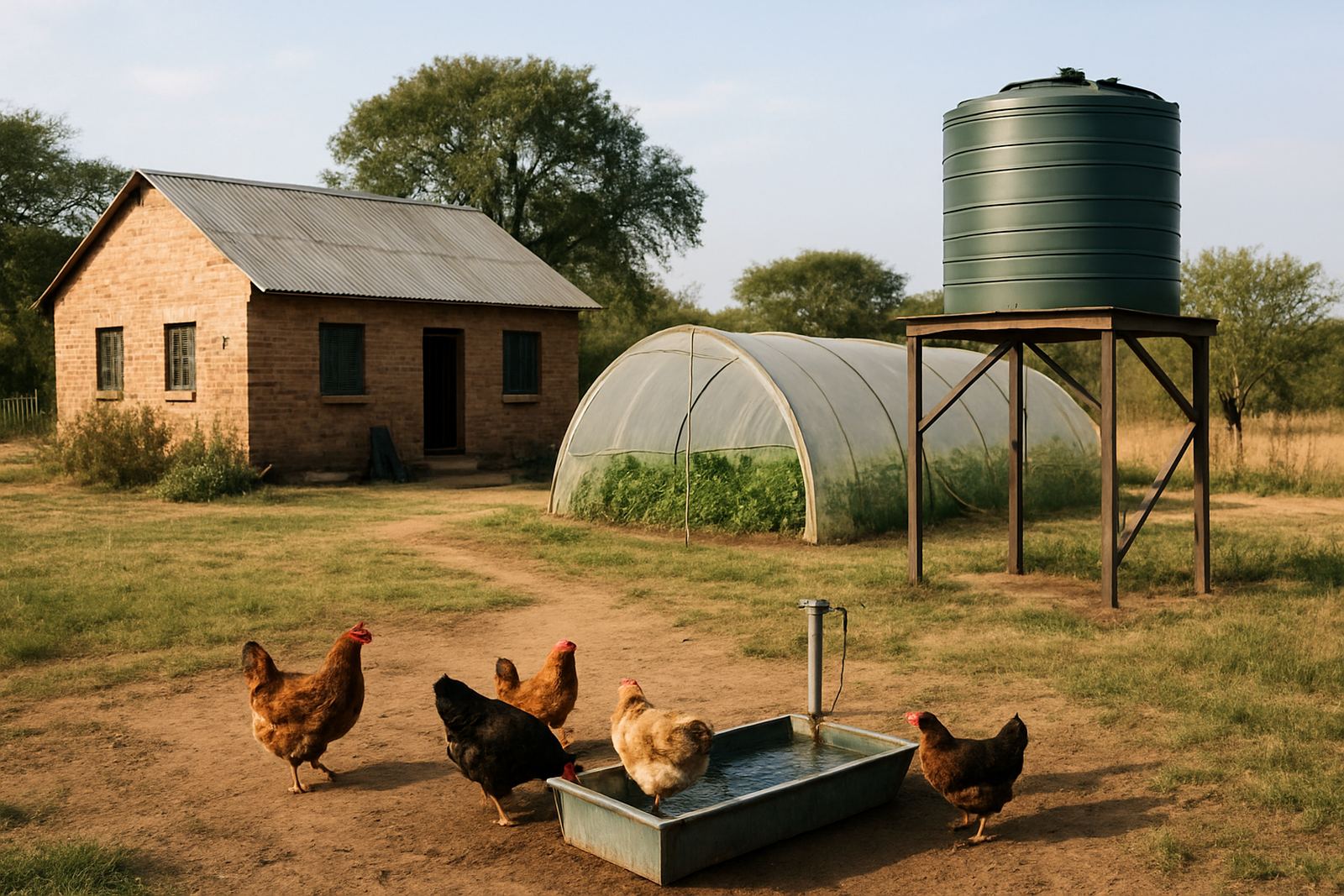
We work with home flocks, small broiler rooms, layer houses and mixed-use farm yards around Brits, Pretoria, Hartbeespoort, Rustenburg, Bloemfontein and the Western Cape. Some sites have boreholes with sandy water. Others rely on rain tanks and need proper storage before the first flush of the season. The goal is a controlled supply that is clean enough for birds and simple enough for the person running the site.
Typical kit setup for smaller poultry housing
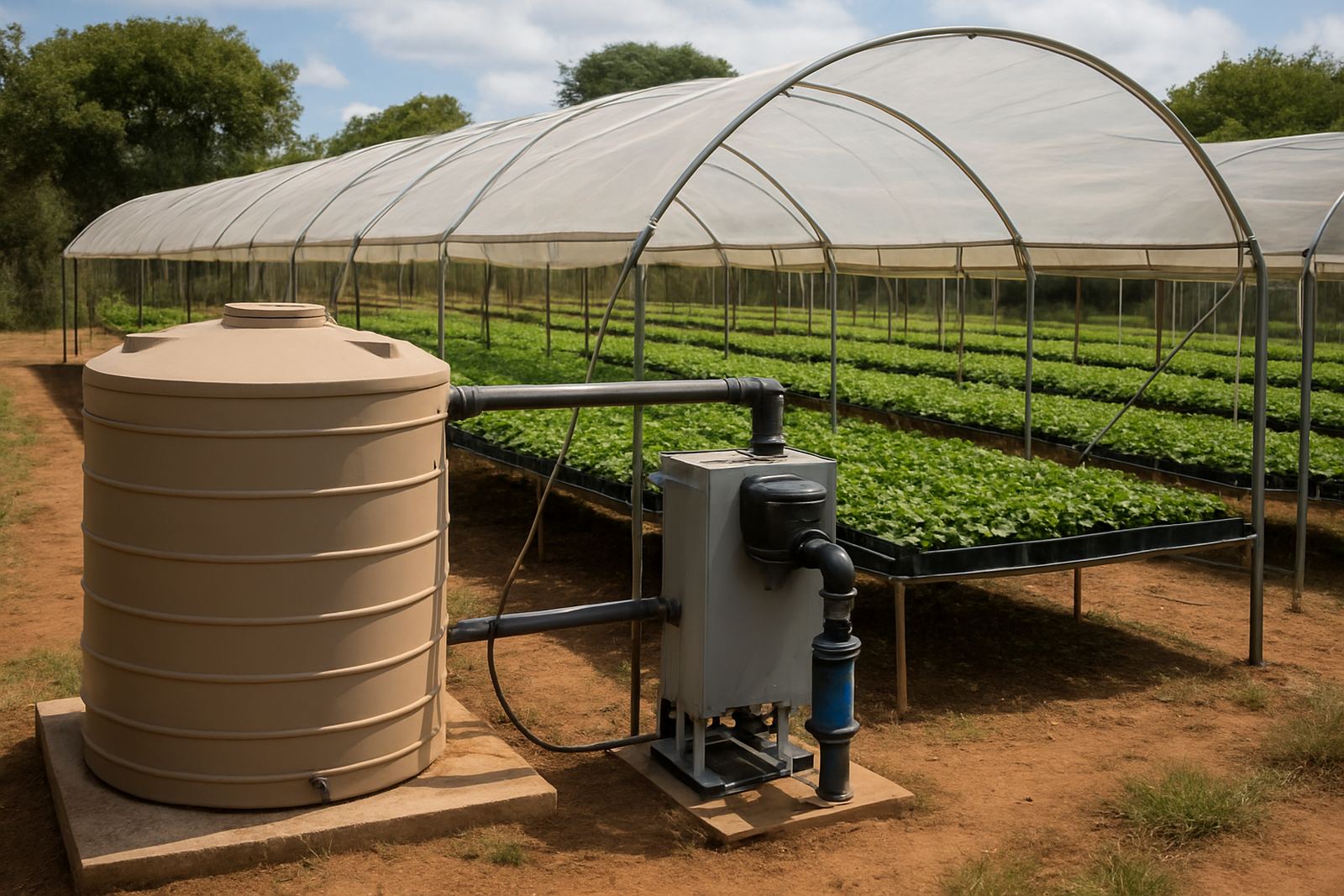
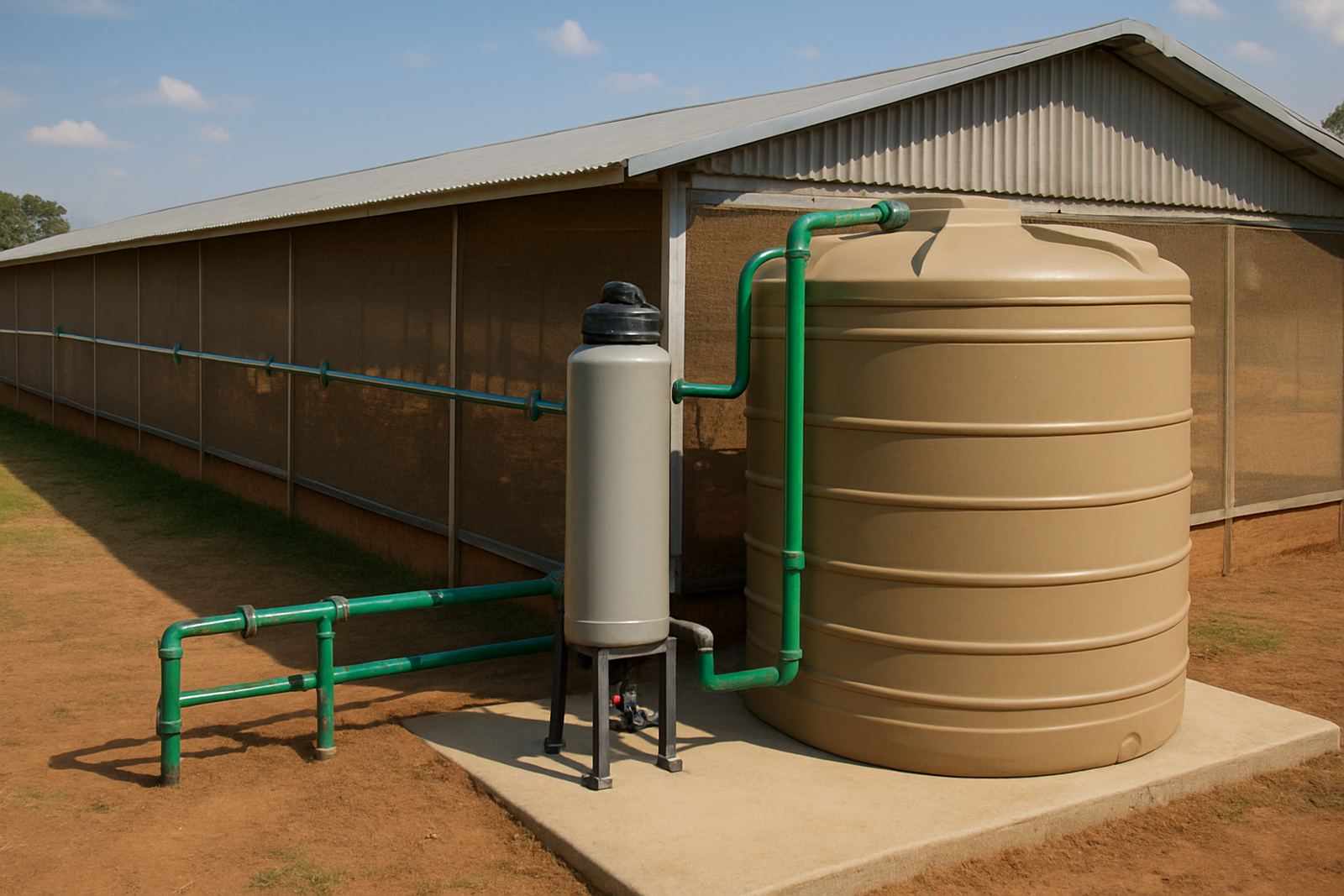
A poultry water setup usually starts with storage, then filtration, then pressure control and finally the drinking line. The exact mix depends on flock size, daily demand and whether you are filling nipple lines, bell drinkers or troughs. We size the kit so it suits the house, not just the pump rating on paper.
- Storage tank or tanks sized for daily use and backup during load-shedding
- Sediment filtration for sand, rust and fine solids
- Carbon or finer filtration where taste, smell or organics are a problem
- Pressure pump or pressure control set for steady delivery to drinker lines
- Non-return valves, isolation valves and drain points for service work
- Basic water test points so you can check clarity and catch problems early
If the site is on borehole water with high sediment, we may suggest a simple pre-filter before the main line. If the farm is coastal, corrosion resistance matters as much as flow rate because humidity can shorten the life of fittings and electrical parts.
Layout planning that saves headaches later
Good planning starts with the water source and ends at the drinker line. Keep tanks close enough to reduce pipe runs, but high enough or pressured enough to deliver stable flow. Put filters where they can be reached without moving feed bins, and leave space for cleaning and replacement. On poultry sites, maintenance access is often ignored until the first blockage, then everybody feels it.
We usually advise a sheltered pump position, tidy pipe supports and a clear separation between clean water and dirty wash-down areas. If the site is in a municipal area, make sure any discharge, overflow or wash water follows local rules. In windy or dusty areas like parts of North West and the Free State, keep tank lids sealed and inlet points protected from dirt.
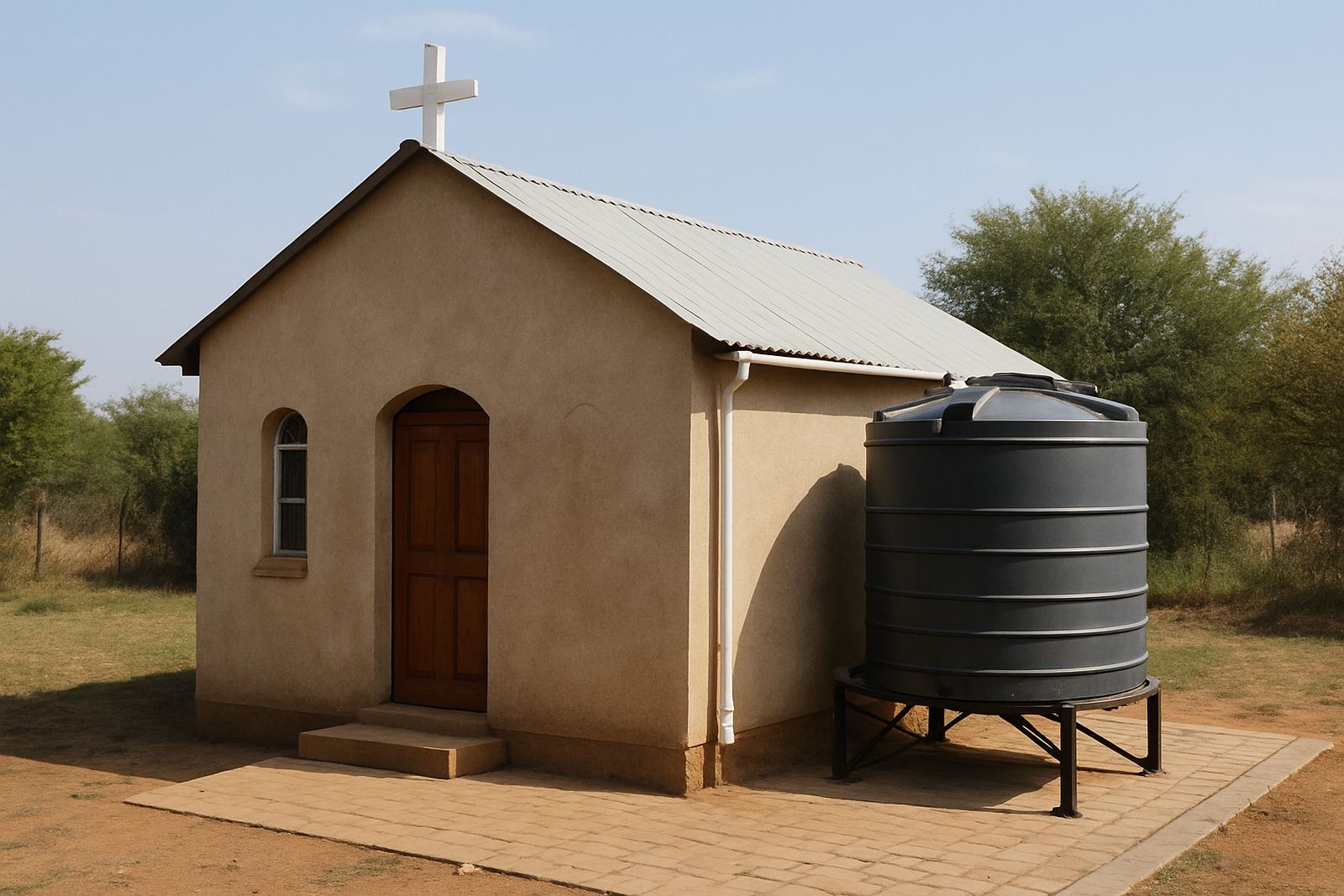
- Place the tank on a level base with proper drainage around it
- Use pipe runs that can be flushed without dismantling the whole line
- Keep electrical gear away from standing water and wash-down spray
- Allow space for future expansion if the flock grows
Common mistakes on poultry water systems
One of the biggest mistakes is undersizing the storage. A site might work on a mild day, then a hot spell or pump fault leaves birds short of water. Another common issue is fitting a pump that is too strong for the line or too weak to hold pressure across the full house. Both cause trouble, just in different ways.
Dirty source water is another problem people leave too late. If sediment builds up in the lines, drinkers clog and birds start competing for clean points. We also see systems where the owner can reach the tank but cannot service the filters without moving half the shed. That makes routine care harder than it should be. On some sites the first sign of trouble is not a broken pump, it is litter getting wetter near one end of the house.
- Using no pre-filtration on sandy boreholes
- Ignoring pressure loss over long pipe runs
- Installing tanks without a cleaning plan
- Waiting for total failure before testing water quality
Budget ranges for small poultry operations
For smaller poultry sites, budget depends on source water quality, house size and whether you need a basic supply kit or a more complete filtration and pressure package. A simple storage and pump arrangement may start from about R18 000 to R35 000. A more complete system with better filtration, controls and installation support can run from R35 000 to R85 000 or more, depending on site conditions and pipe lengths.
If the water is heavily loaded with sediment, or if you need multiple houses on one supply, the cost can rise further. That said, a well-planned system is usually cheaper than repeated line blockages, bird stress and emergency call-outs. We help clients choose the right level for the flock they have now, while keeping room for the next cycle or two.
How Hydrated supports poultry sites from Brits to the coast
Our team handles site assessments, system sizing, kit assembly, delivery coordination and installation support for poultry sites across South Africa. In the North West and Gauteng, that often means planning around borehole reliability and power cuts. In the Western Cape, the focus may shift to rain harvesting, storage and clean filtration for drier months. We also assist with commissioning checks, pump servicing, fault finding, water testing and annual maintenance.
You can send an enquiry through the contact page and we will work from the details you provide, including flock type, house size, source water and distance from the tank to the drinkers. Pieter Johannes van der Merwe leads the business, with support from Ntombizodwa Shirinda, Zander Snyman, Ayanda Nkosi, Morne du Toit, Thandiwe Maseko and Kabelo Molefe. The aim is simple: steady water, less waste and a setup that is practical to run day after day.