When an off grid setup makes sense
Off grid homes often need a plan that covers low pressure, water restrictions, summer demand and long periods without reliable municipal service. In Brits, Pretoria, Hartbeespoort and many coastal towns, people also have to factor in load-shedding, hard water, sand in the line and the cost of trucking water when a tank runs dry. A proper system gives you enough storage, clean drinking water and a way to keep daily life moving when supply is interrupted.
For some properties, the aim is full independence. For others, it is simply reducing monthly reliance and keeping a reserve for peak use, gardening or guests. We assist with site assessments, system sizing and kit assembly so the setup matches the property instead of forcing the property to fit a generic package.
Typical equipment for a home that runs on its own supply
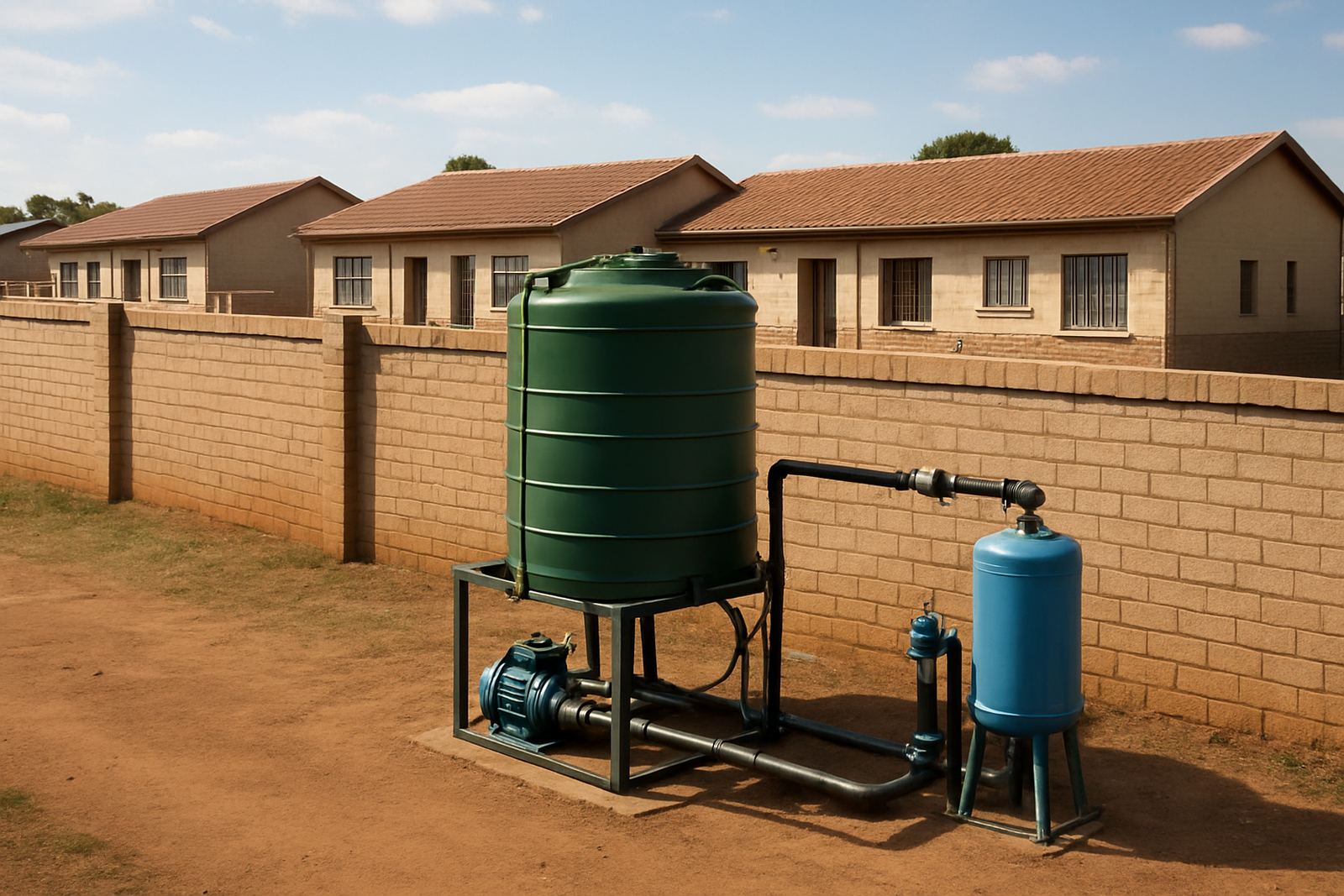
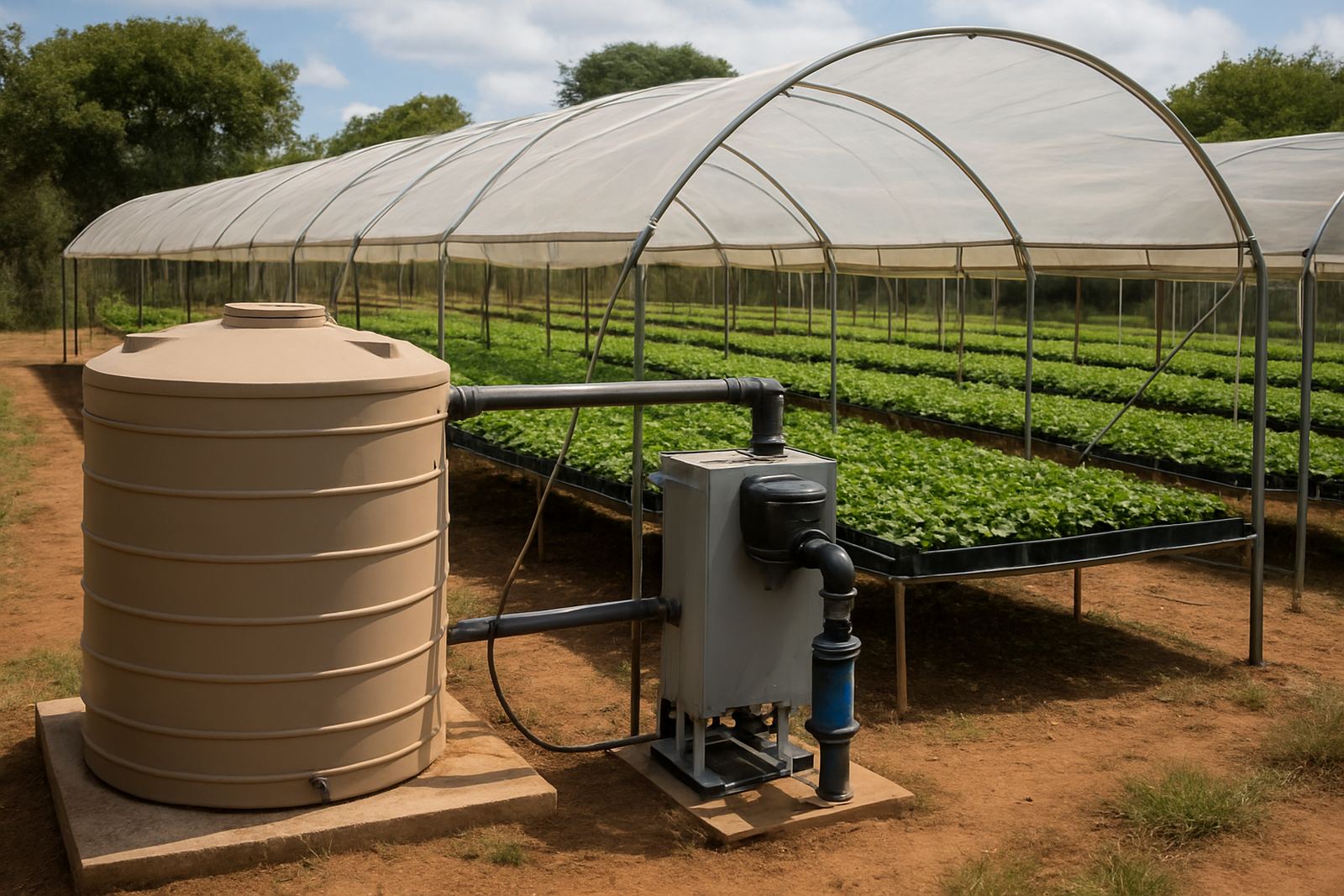
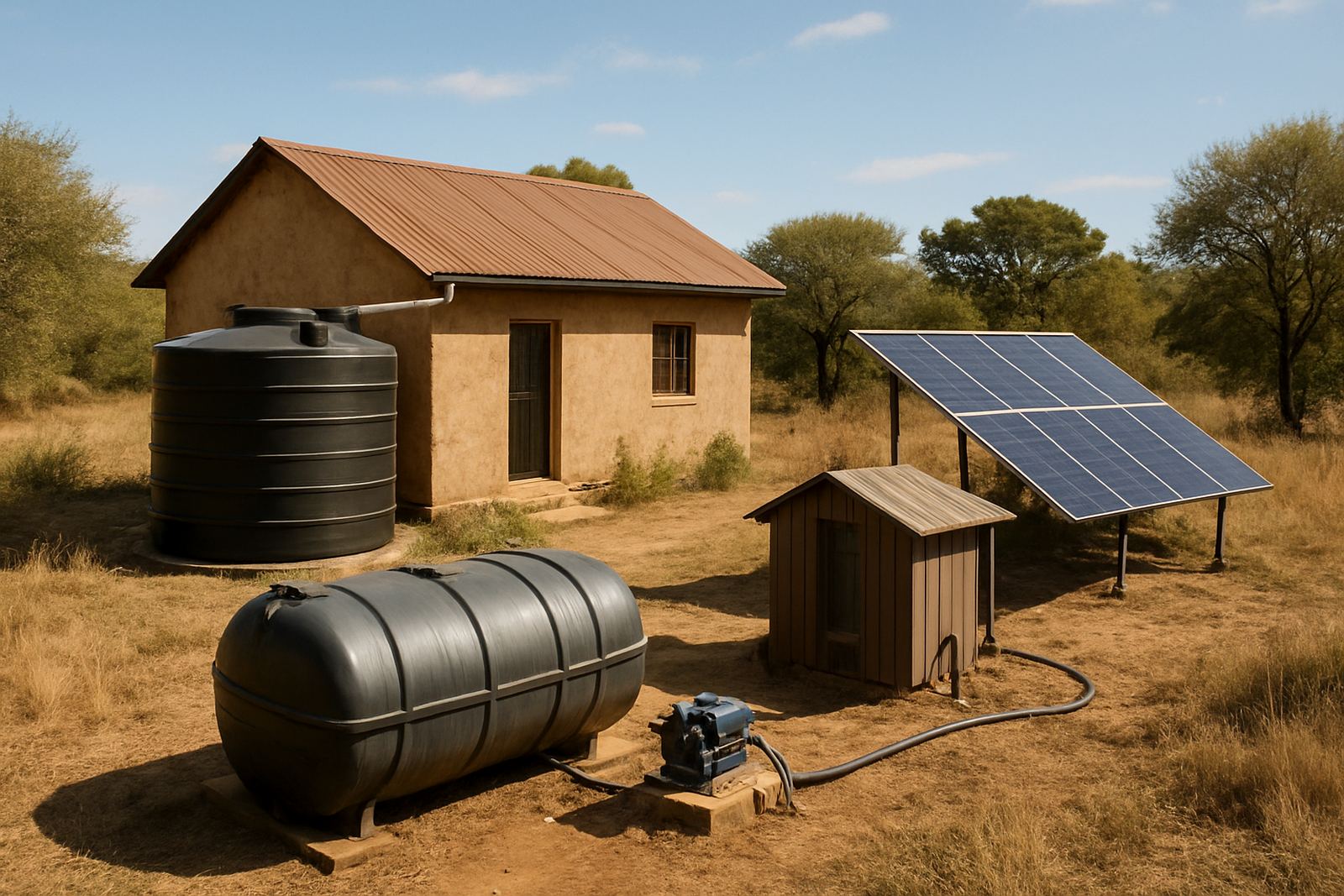
The right kit depends on whether the main source is borehole water, rainwater, or a combination of both. A good off grid home often uses two storage points, one for raw water and one for treated water, so you can keep supply steady while the filtration system does its work. In the North West and Western Cape, many clients also add pump protection and surge control because repeated power cuts can damage poorly protected systems.
Common equipment includes:
- Borehole pump or transfer pump sized to the depth and daily demand
- Rain tank or storage tank, usually with first-flush diverters and screened inlets
- Pressure pump for household delivery
- Sediment, carbon and finer filtration stages for taste and safety
- UV or other disinfection where water quality requires it
- Float switches, valves, gauges and dry-run protection
- Piping, fittings and a neat manifold for cleaner maintenance
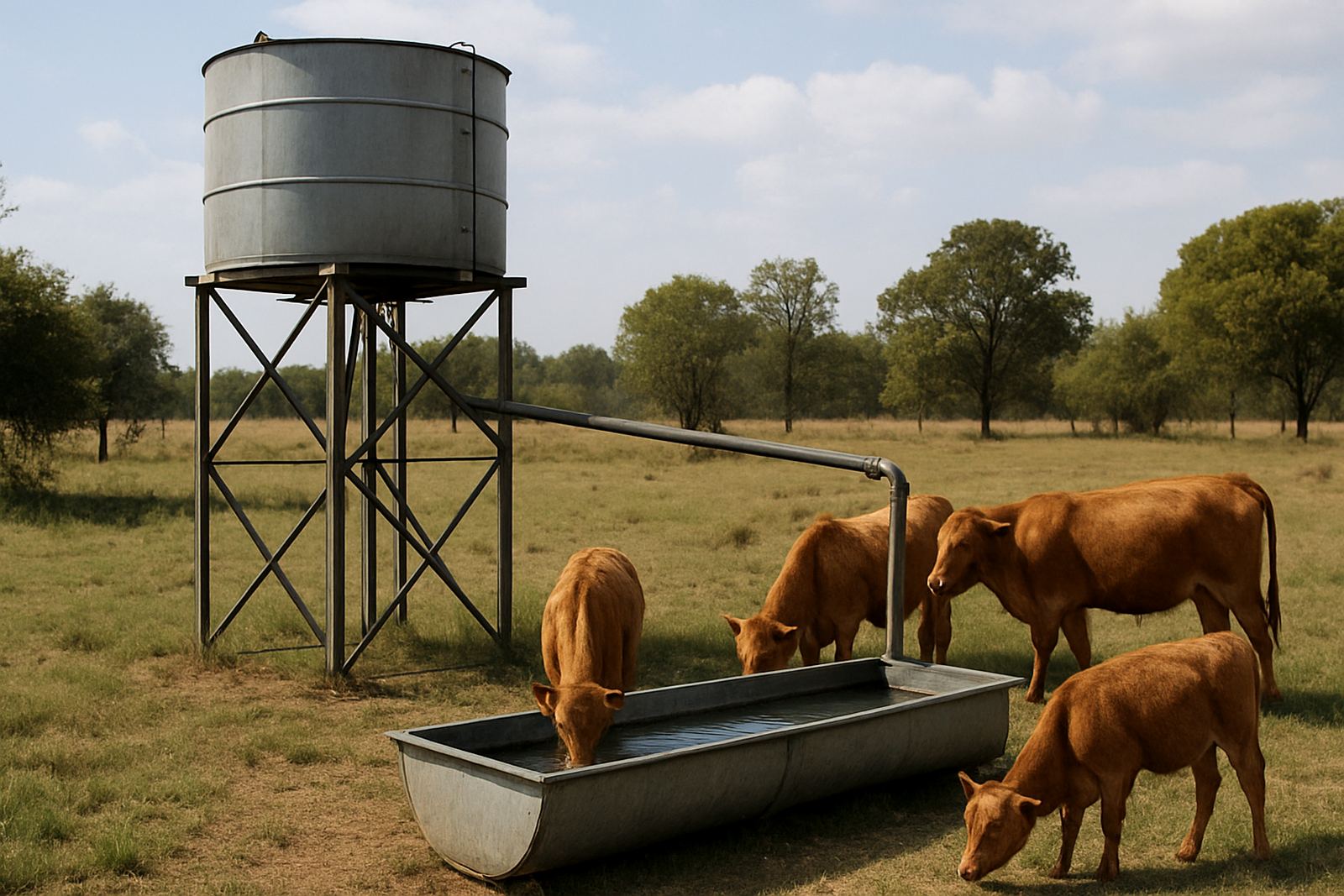
For homes in Paarl, Stellenbosch and Somerset West, filtration often matters more because mineral content and seasonal tank build-up can affect taste and appliance life. For inland farms, the focus may be higher storage and stronger pumping capacity.
Planning the layout before you buy anything
The most common mistake is buying tanks and a pump first, then trying to make the plumbing work afterwards. A better approach is to look at where the source sits, where the tanks can be placed, how high the water has to travel, and where the treated line enters the home. If the pressure pump is too far from the tank or the pipe run is undersized, you lose performance and pick up unnecessary noise.
We recommend a proper layout before installation support is needed. That includes checking municipal rules where relevant, making sure overflow water drains away from buildings and not into foundations, and confirming that the tank base is level and fully supported. A simple slab done well is better than a fancy stand that settles later, especially on sandy or uneven ground.
- Keep tank lids accessible for cleaning and inspection
- Allow space for filter housings, bypass lines and future upgrades
- Place pumps where they stay protected from weather and direct sun
- Use pipe diameters that match the flow, not just the cheapest fitting size
- Leave room for maintenance without moving the whole system apart
How homes in different regions use the same base kit differently
A family home in Pretoria may need a smaller daily volume but more emphasis on pressure consistency and clean indoor delivery. In Hartbeespoort, a property near the dam may still want rain capture and storage because a private reserve can be empty at the wrong time. Rustenburg clients often look for higher durability because of dust, heat and heavier household use.
In Bloemfontein, where dry periods can stretch on, storage planning usually matters as much as source quality. On the Western Cape side, especially around Paarl and Somerset West, people often choose water-filtration kits that handle taste issues, sediment and routine filter changes. Coastal humidity can affect housings and connections too, so tidy installation and corrosion-conscious materials are worth paying for.
We supply and deliver kits to homes and farms across South Africa, and the sytsem is always adjusted to the real water demand on site. That includes borehole depth, tank size, roof catchment area and how many bathrooms or staff units are involved.
Budget ranges for off grid home water systems
Budget depends on source, storage size and how much treatment you need. A small backup rain-tank arrangement for a household may start from about R18 000 to R35 000, depending on tank size, pump choice and filtration. A mid-range borehole and filtration package for a full home often sits between R45 000 and R95 000. Larger properties, multi-building stands and farms can move well above R100 000 once you add more storage, stronger pumping and extra treatment stages.
On camps and working sites, low upfront cost can end up costing more once breakdowns and callouts start. Under-sized pumps, weak fittings and poor filtration usually cost more later in repairs and water loss. It is better to spend once on the right layout than to keep changing parts after the first summer peak or the first power interruption.
- Entry-level backup water: R18 000 to R35 000
- Single-home borehole solution: R45 000 to R95 000
- Larger off grid property or farm package: R100 000 and up
What usually goes wrong after installation
Most problems come from poor sizing, weak maintenance or trying to stretch a domestic kit beyond its purpose. A pump that is too small will struggle to fill tanks, while one that is too large can cycle too often and wear out faster. Another common issue is skipping water testing, which means owners only learn about sediment, odour or high mineral content after taps, filters and appliances have already suffered damage.
People also forget that a tank and filter system needs regular attention. Filters clog, pump seals wear, tank interiors need cleaning and fittings loosen over time. Annual maintenance is not overkill, it is what keeps the system working when you need it most. Our team can help with fault finding, filter changes, tank cleaning, pump servicing and commissioning checks so the system stays dependable through dry months and load-shedding periods.
- Do not install tanks on soft ground without a proper base
- Do not ignore overflow routing and backflow protection
- Do not assume all water is fit for drinking without testing
- Do not let borehole or rainwater lines mix without proper controls