What a Cattle Farm Usually Needs Day to Day
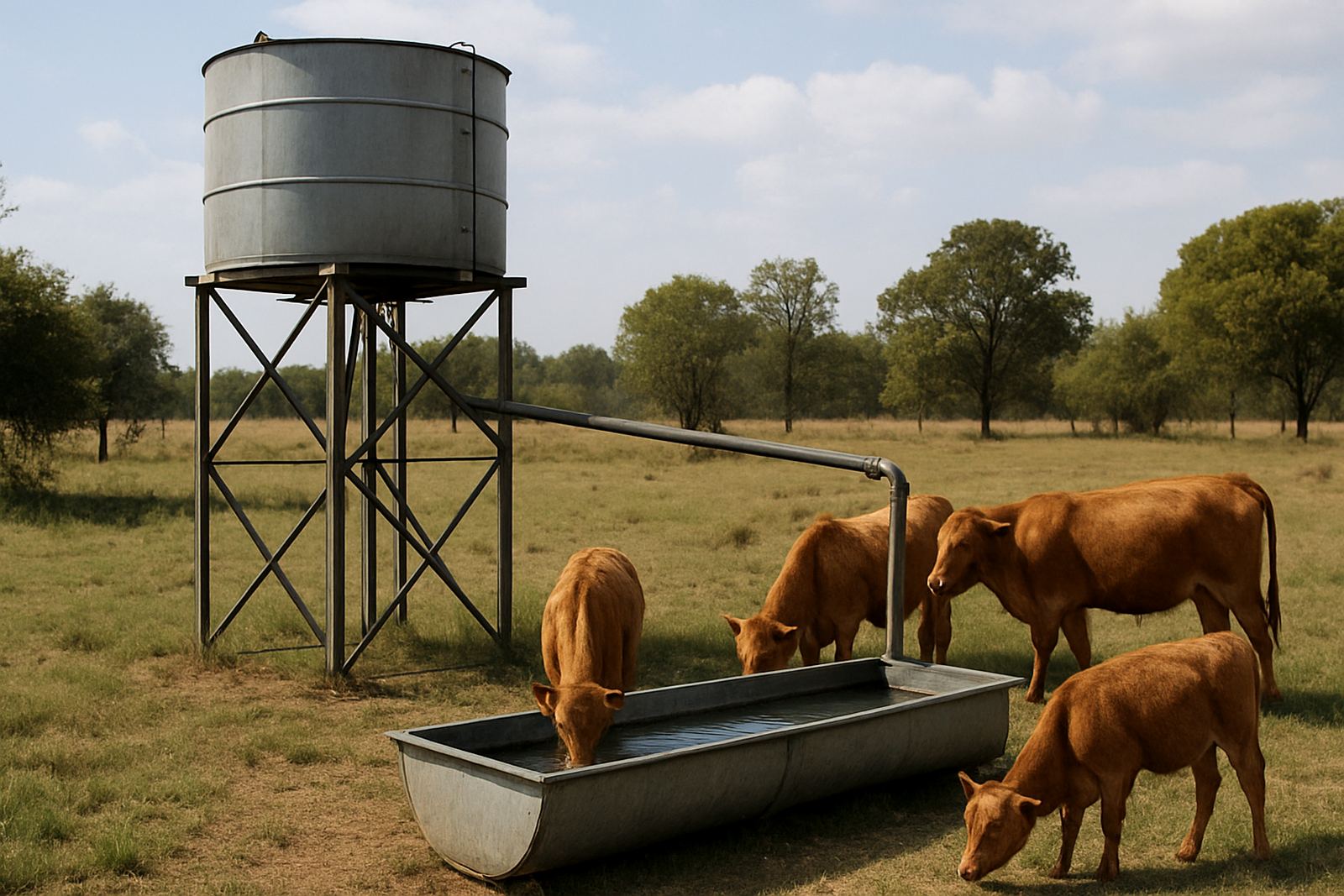
On a cattle farm, water has to do more than fill one tank. It must feed drinking troughs, keep a storage tank topped up, and supply the farmhouse or staff housing without pressure dropping every time a pump starts. In North West heat, and on coastal properties where humidity and salt air can affect fittings, the right kit saves a lot of trouble.
We work with farms around Brits, Hartbeespoort, Rustenburg and further out to Bloemfontein and the Western Cape. A typical setup starts with a source, usually a borehole or rain collection, then moves through filtration, pumping, storage and distribution to the points that matter most on the farm.
Typical Kit Setup for Troughs, Tanks and the House
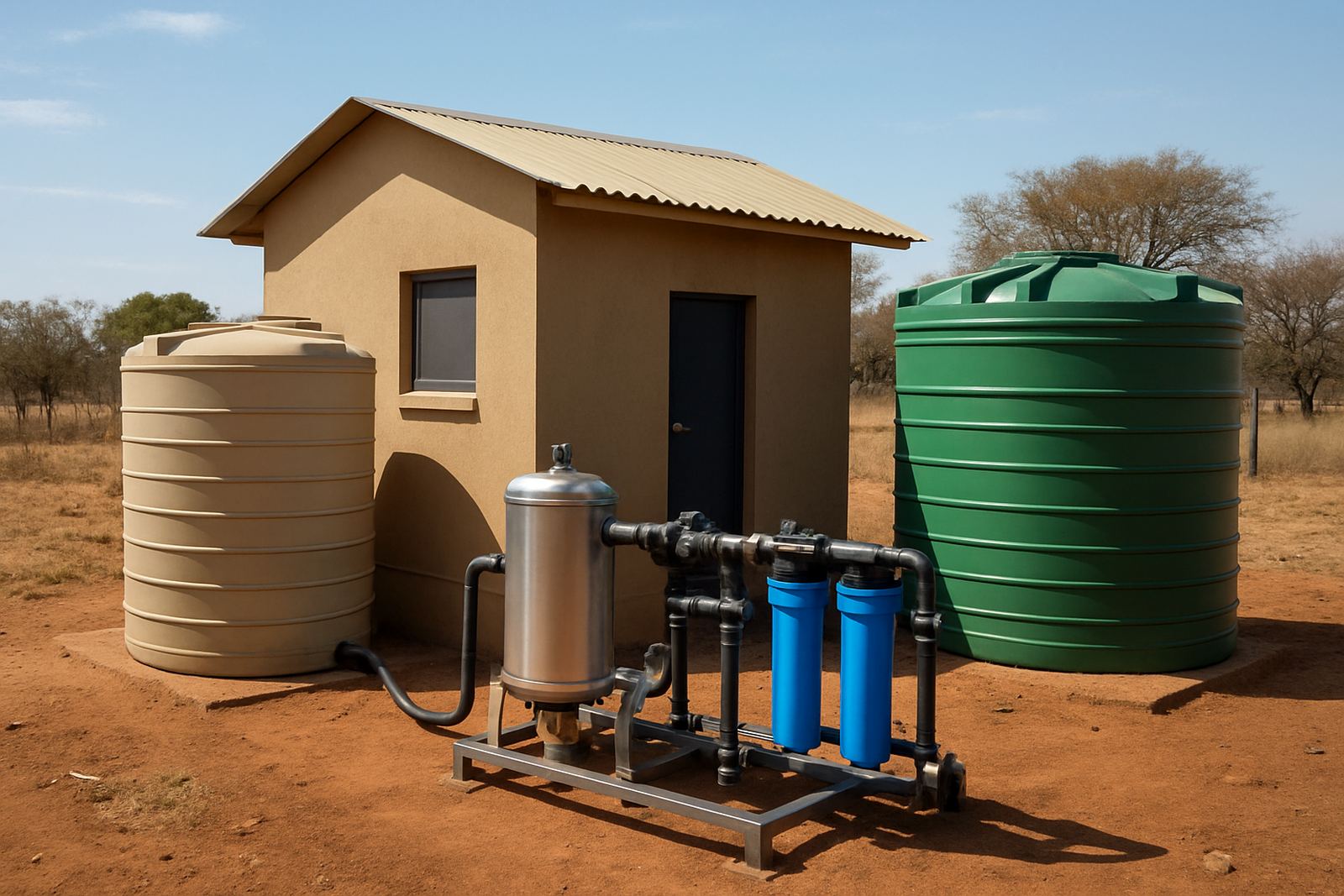
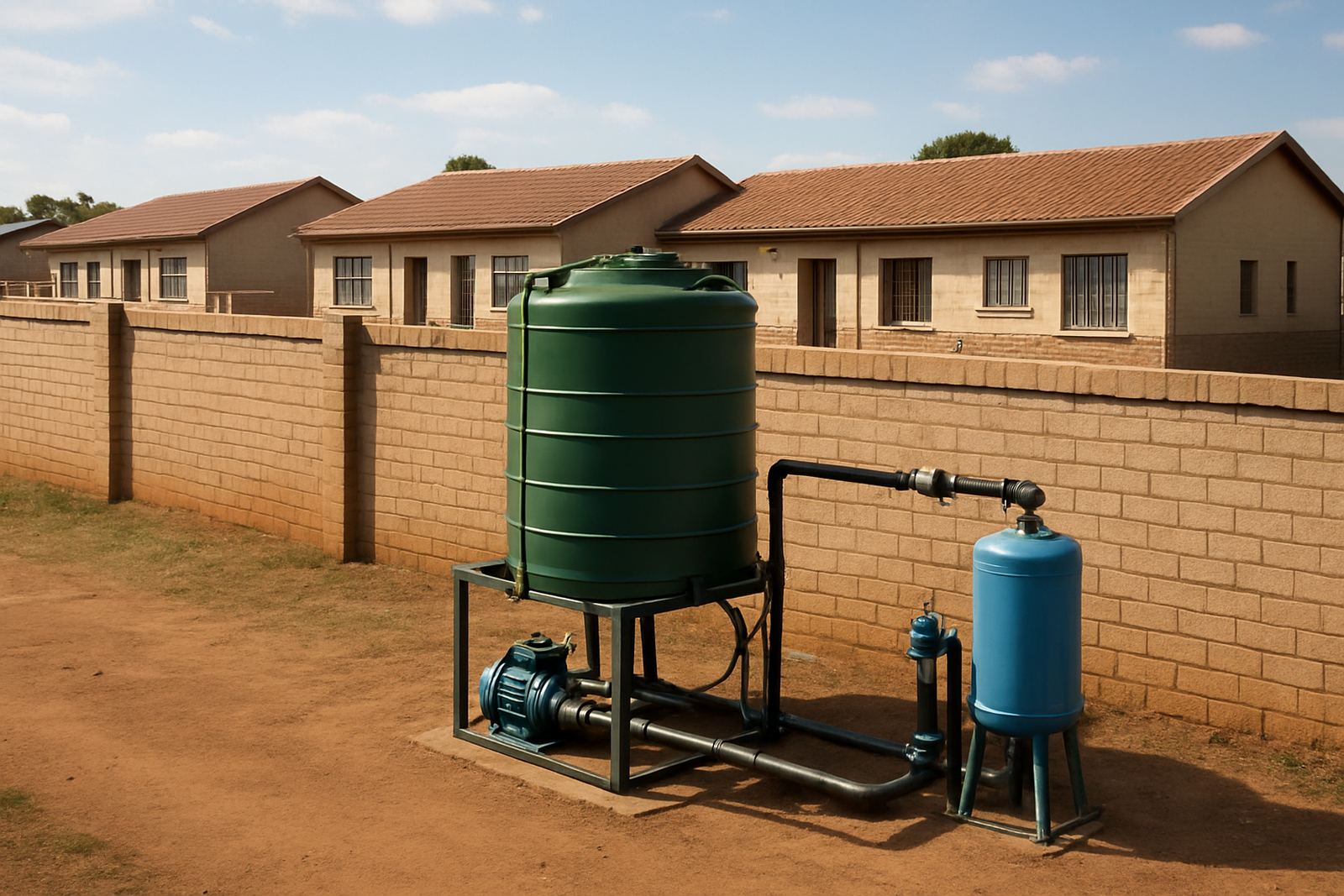
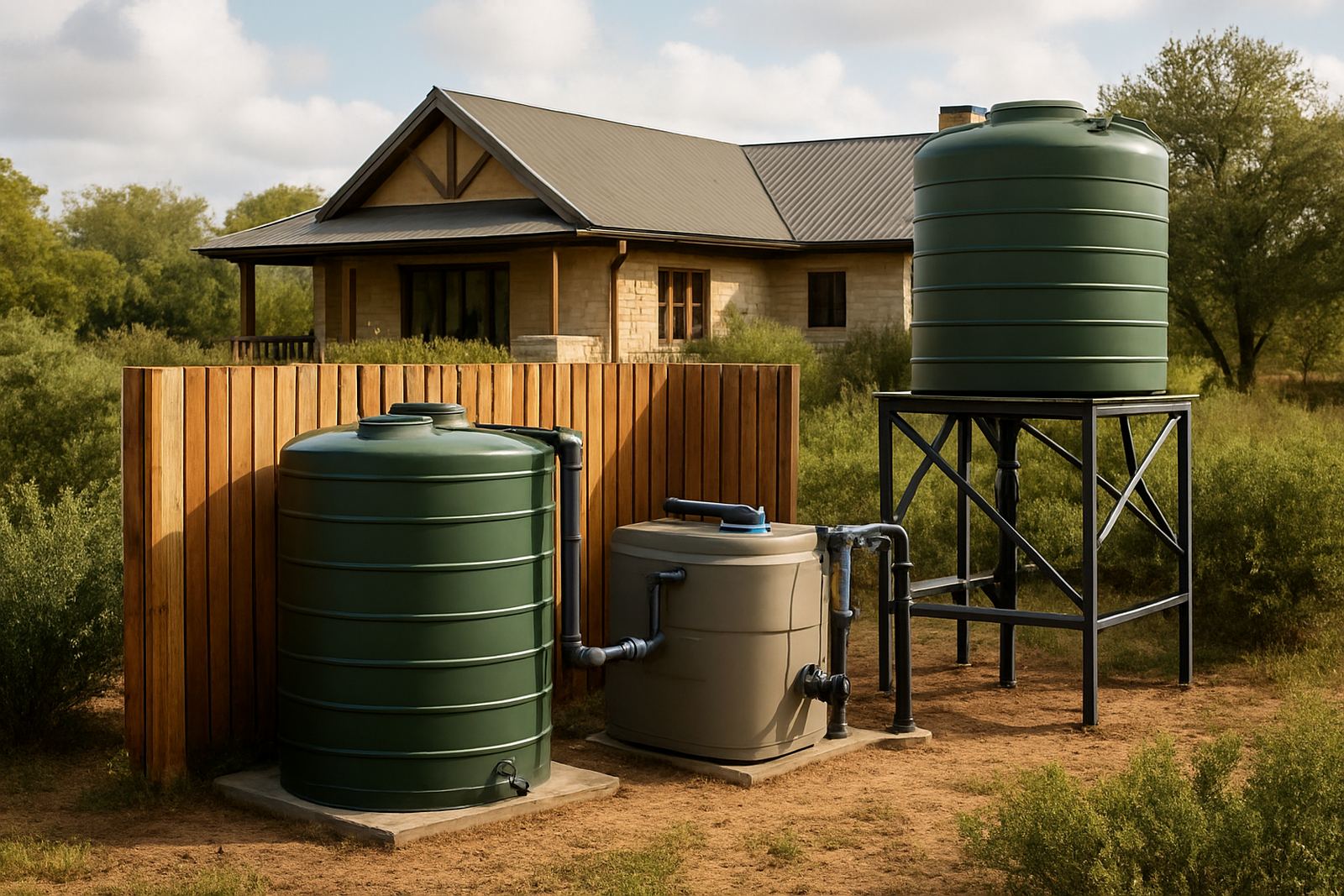
The size of the herd and the layout of the farm decide the equipment. A smaller unit may only need a submersible pump, pressure pump, controller, basic sediment filtration and a 5,000 L to 10,000 L tank. Larger cattle operations often need a higher flow borehole pump, a bigger storage tank bank, non return valves, float switches and separate lines for stock and domestic use.
- Borehole pump or surface pump, selected to suit depth and yield
- Storage tanks from 2,500 L to 10,000 L or larger
- Sediment and carbon filtration where water quality needs treatment
- Pressure pump for farmhouse taps, kitchen and washing points
- Pipework, valves, floats and fittings for trough filling control
- Optional water testing before final system sizing
For many farms, a split system works best. That means one line fills the stock tank, while another line supplies the house. It reduces pressure drops and makes fault finding simpler when something stops working.
Planning the Layout Before You Buy Anything
Good planning starts with the distance from the borehole to the kraal, the tank stand height and how far water must travel to each paddock. A long run with too many bends can reduce flow, so it helps to map the farm before equipment is ordered. On sloping land around the North West, gravity can be used to your favour, but only if the levels are checked properly.
We usually recommend placing the main storage tank where it is easy to service, close enough to the pump to reduce losses, but still protected from stock damage. On windy or dusty sites, a covered filter area and a secure pump house make maintenance easier. If the farm is in a load shedding area, backup power planning should be included from the start, because a cattle farm cannot wait for the next power window.
- Keep the storage tank on firm, level ground or a properly built stand
- Leave space around filters and pumps for servicing and annual maintenance
- Separate drinking water lines from domestic lines where possible
- Use cable protection and pipe burial depth suitable for tractor movement
- Allow for future herd growth, not only the current herd size
Common Mistakes That Cost Time and Money
One of the biggest mistakes is buying a pump by horse power only, without checking flow rate and head. Another common problem is undersized storage, which means the farm runs dry before the next pumping cycle. We also see systems fitted with no proper filtration, then the pump and trough valves clog up after a few muddy weeks. It happens more often than people think.
Farmers sometimes place tanks too far from the watering points, or use pipe that is too small for the demand. That leads to slow refill times and hot water in summer, especially on exposed sites. Another issue is poor commissioning. If float valves, cut-out settings and pressure switches are not tested properly on day one, the system can fail when it is needed most.
Budget Ranges for Cattle Farm Water Kits
Budgets vary depending on borehole depth, tank size, filtration level and whether installation support is needed. For a small cattle farm with modest water demand, a basic kit can start from about R18,000 to R35,000. A more complete setup with larger tanks, stronger pumps and better control gear can range from R40,000 to R90,000. For bigger operations with multiple trough points and backup power provision, costs can move from R100,000 and up.
We keep the sizing practical, so you are not paying for equipment that sits idle, or a weak setup that struggles after the first dry spell. If the site is in Paarl, Stellenbosch or Somerset West, we also factor in coastal conditions and service access, because fittings and filters can wear differently there than they do inland.
It is also worth budgeting for annual maintenance, filter changes, pump servicing and tank cleaning. Those smaller costs are easier to manage than a full breakdown in the middle of a hot spell when cattle need water every day.
How Hydrated Supports Farms from Brits to the Cape
Hydrated is based in Brits, North West and supplies cattle farms across Pretoria, Hartbeespoort, Rustenburg, Bloemfontein and the Western Cape. Our team handles site assessments, system sizing, kit assembly, delivery coordination, installation support and commissioning checks. Pieter Johannes van der Merwe leads the business, with support from Ntombizodwa Shirinda, Zander Snyman, Ayanda Nkosi, Morne du Toit, Thandiwe Maseko and Kabelo Molefe.
For farms that already have a borehole, we can assist with fault finding, water testing, tank cleaning and filter changes. If the farm is starting from scratch, we can help match the kit to the actual herd size and water pattern, rather than guessing. That makes the system easier to manage and cheaper to run over time, which matters on any cattle farm.