Water Demand on a Horse Property
A small horse property can use far more water than people expect. Between drinking points, stable washing, grooming, hose-down areas, garden use and the home itself, demand can rise quickly in dry months or when more horses come in for training. In areas like Brits, Hartbeespoort and Rustenburg, many properties also need a back-up plan for municipal supply interruptions and seasonal pressure drops.
The best setup starts with a proper view of daily use. A property with 4 to 8 horses, a few staff and a house may need a different arrangement from a riding school, livery yard or small breeding farm. We look at where the water is needed, how high it has to move, and whether the supply must work during power cuts too.
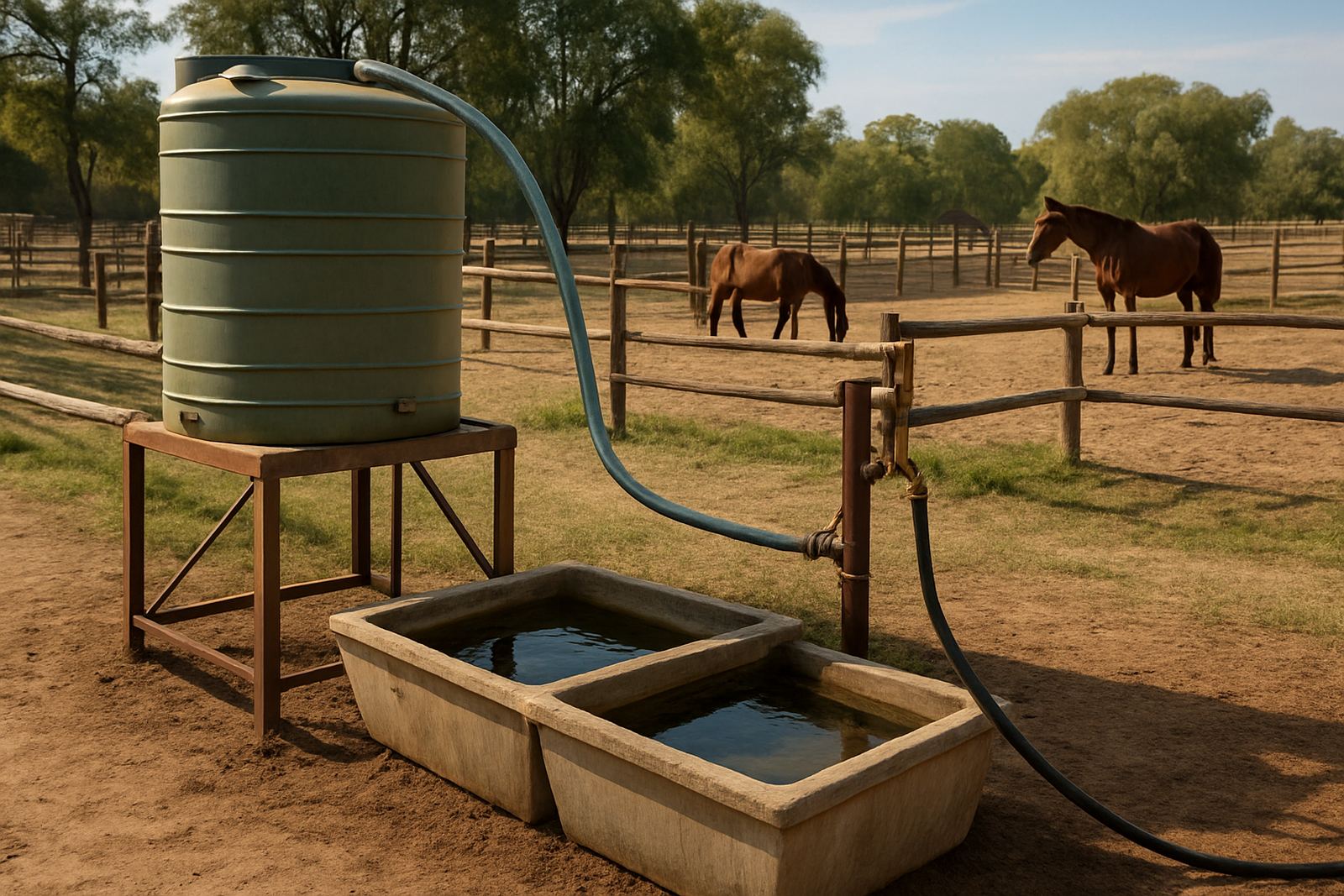
- Stable drinking troughs or automatic drinkers
- Wash bays with hose points and good pressure
- Paddock and arena water points where needed
- Main house use for bathrooms, laundry and kitchen
- Back-up supply for dry spells and outages
Typical Kit Sets for Stables and Homes
Most horse properties do well with a mix of storage, pumping and filtration rather than one single fix. A borehole kit can provide the main supply, while a rain-tank kit gives extra cover for washing and garden use. If the water is for horses as well as people, filtration is important for taste, odour and sediment control.
Common equipment includes tanks from 1 000 litres to 10 000 litres or more, pressure pumps, booster pumps, filters, pipework, fittings, valves and level control parts. For boreholes, the set often includes a submersible pump, control gear, cabling and delivery to a storage tank. For rainwater, first flush handling and debris control help keep leaves, dust and roof dirt out of the system, especially in coastal areas where humidity and mould build-up can be an issue.
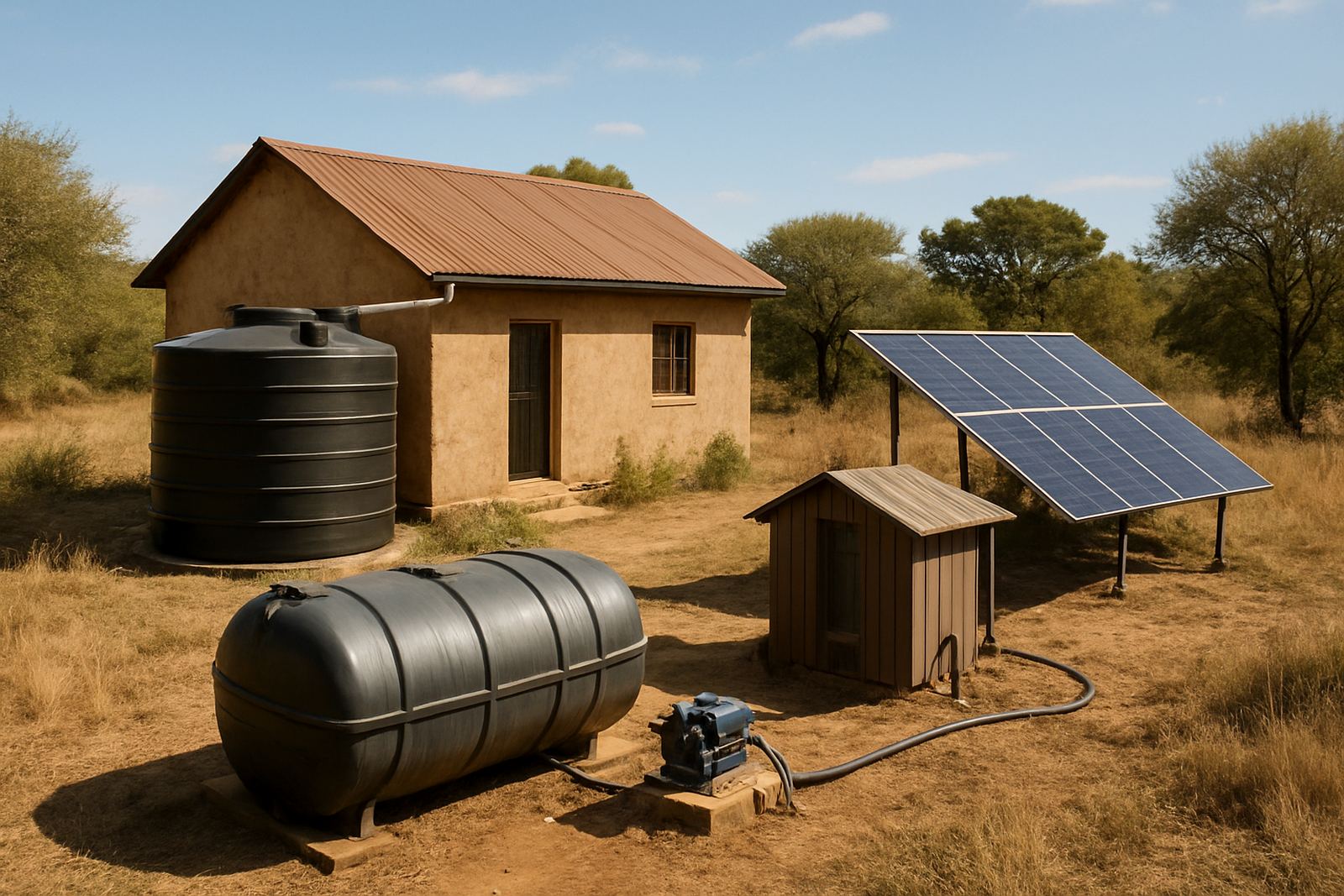
- Borehole pump and control set for primary supply
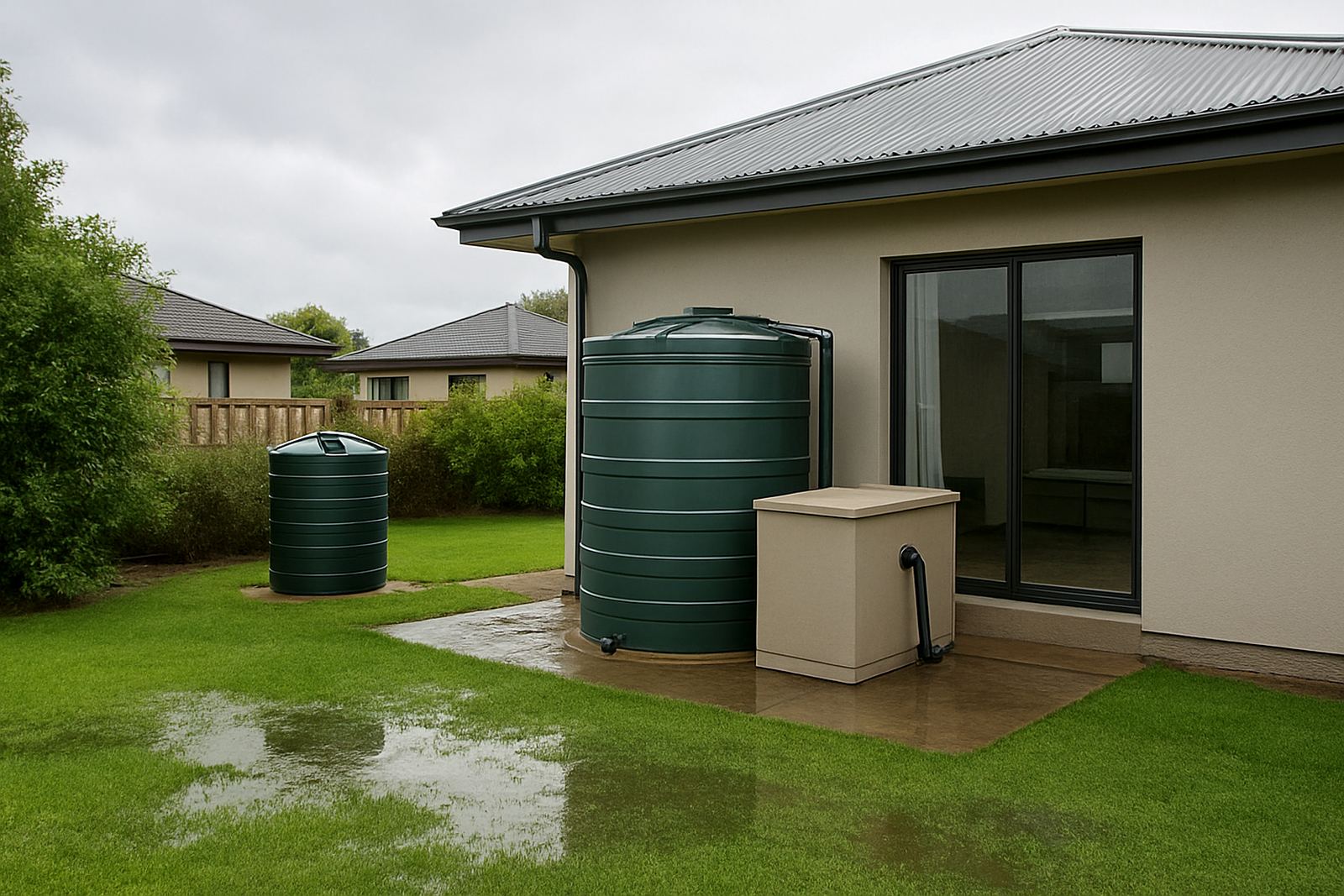
- Rain tank, gutters, first flush and pre-filtration
- Sediment and carbon filtration for stable water quality
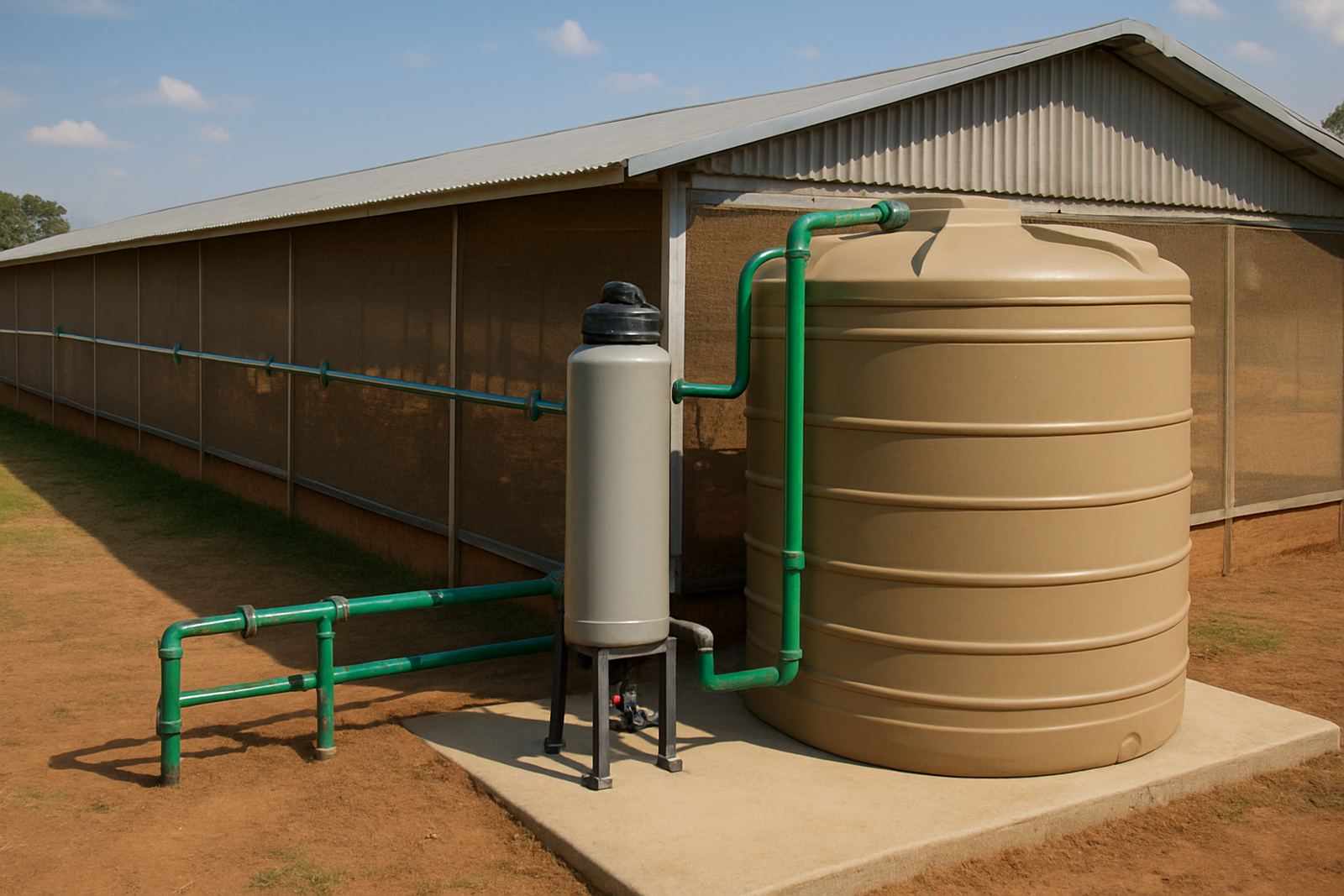
- Pressure pump for wash bays and household use
- Storage tank with float valves and overflow routing
Layout Planning for Stables, Wash Bays and Paddocks
Good layout saves money and avoids rework. On horse properties, the tank should be placed where delivery vehicles can reach it, but not where horses can knock it or where mud will build up around the base. Wash bays need enough water pressure and a floor slope that drains away from stalls and feed areas. Paddock lines should be routed to avoid damage from hooves, gates and moving equipment.
We normally advise keeping the system simple enough for staff to use without confusion. A labelled manifold, clear isolation valves and a proper pump house or protected cabinet make maintenance much easier. If the property has long pipe runs, that must be planned in from the start because distance and height both affect pressure, and a line that is too small will leave you with weak flow at the far end.
- Keep tanks on level concrete or a properly compacted base
- Use UV-protected pipe where lines run in the sun
- Separate horse water from household water where practical
- Allow for future paddock taps or an extra stable block
- Plan drainage so wash water does not run back to feed areas
What Usually Goes Wrong on Horse Properties
The most common mistake is under-sizing. A system that works for one house can struggle once horses, wash bays and irrigation are added. Another problem is poor water quality management. Borehole water may carry sediment or mineral content that blocks drinkers and stains troughs, while untreated rainwater can pick up dirt from the roof if the capture system is not set up correctly.
We also see pumps installed without proper protection against dry running, voltage fluctuation or poor priming. On smallholdings and farms near Pretoria, Bloemfontein and the Western Cape, power cuts can expose weak systems quickly. If the pump cycles too often or the tank is too small, the whole setup wears out faster and the water supply becomes erratic. A bit of planning at the start saves a lot of frustration later, and the horses notice the difference too.
- Using a tank that is too small for daily peak use
- Ignoring water testing before choosing filters
- Plumbing wash bays with pipe that is too narrow
- Leaving pumps unprotected from dust, heat and theft
- Skipping maintenance until drinkers or filters block
Budget Ranges in Rand for Horse Property Systems
Budget depends on water source, property size and the level of finish required. A basic rain-tank and filtration setup for a small home with light stable use can start at about R18 000 to R35 000. A more complete borehole and storage system for a few horses and a household often sits in the R45 000 to R120 000 range, depending on pump depth, tank size and pipe runs.
For larger horse yards, breeding properties or training facilities, the budget can move from R120 000 to R250 000 or more where multiple tanks, heavier pumping, wider filtration and longer distribution lines are needed. Installation support, commissioning checks and water testing should be allowed for as part of the project. If the property is remote or the terrain is uneven, delivery and setup costs may also shift the total a fair bit.
We recommend breaking the budget into three parts: source, storage and delivery. That keeps decisions clear and helps avoid spending too much on one section while leaving another weak.
Maintenance That Keeps the Water Flowing
Horse properties need regular checks because dust, feed chaff, hair and mineral build-up can all affect performance. Filters should be changed on schedule, tanks should be cleaned when sediment shows up, and pumps should be serviced before they fail. If the property relies on water every day, annual maintenance is cheaper than emergency call-outs, and it keeps staff from having to improvise with buckets and temporary hoses.
Hydrated supports installations with fault finding, pump servicing, filter changes, tank cleaning and commissioning checks. We work with homes and farms from Brits and Hartbeespoort through to Rustenburg, Pretoria, Bloemfontein and the Western Cape. For horse properties, that means practical support that keeps drinking points, wash bays and household supply working in the same system, without fuss.
- Inspect filters every 1 to 3 months depending on water quality
- Check tank levels and overflow lines weekly
- Listen for pump short-cycling or unusual noise
- Flush sediment from lines after heavy use or maintenance
- Book an annual service before the dry season starts