Water Demand in Guest Lodges Changes by the Hour
A lodge is not like a normal household. Water use rises with check-ins, showers after travel, laundry loads, kitchen prep and garden irrigation, then drops again at odd times. In busy periods you may also need to handle staff accommodation, backup water for cleaning and guest rooms that must be turned over quickly. That is why a lodge system has to be planned around peak demand not just average use.
For sites in Hartbeespoort, Rustenburg, Pretoria and the Western Cape, the first step is a proper site assessment. We look at guest count, number of bathrooms, geyser setup, laundry equipment, garden size and whether the property has borehole water, rainwater storage or a municipal supply that needs buffering. If the lodge is on a coastal or humid site such as Somerset West or Paarl, storage and filtration choices also need to account for corrosion and algae growth.
Typical problems show up fast when a lodge is undersized. Pressure drops in the morning, tanks empty before housekeeping is done, or the water tastes different after rain. That is why we size for the worst day of the month, not the quiet Tuesday in low season.
The Usual Kit Setup for Lodge Properties
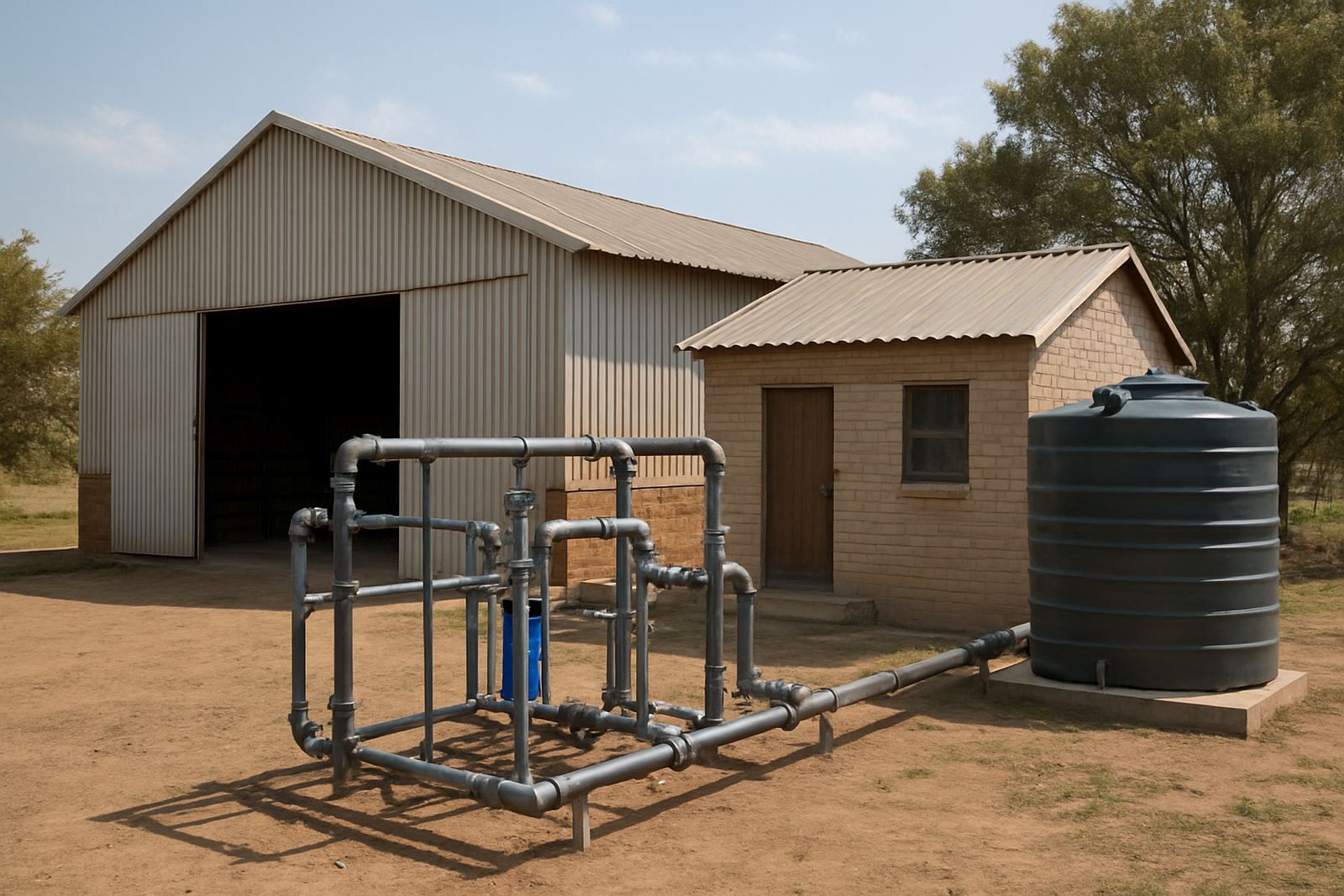
A guest lodge system often combines a few layers so the property can keep running if one source weakens. Borehole kits suit lodges with reliable groundwater and enough space for storage. Rain-tank kits help reduce pressure on the main supply and give a useful buffer in dry months. Filtration is often the part that keeps guests happy because clear, good-tasting water matters in rooms, kitchens and breakfast service.
The exact mix depends on the property, but common equipment includes:
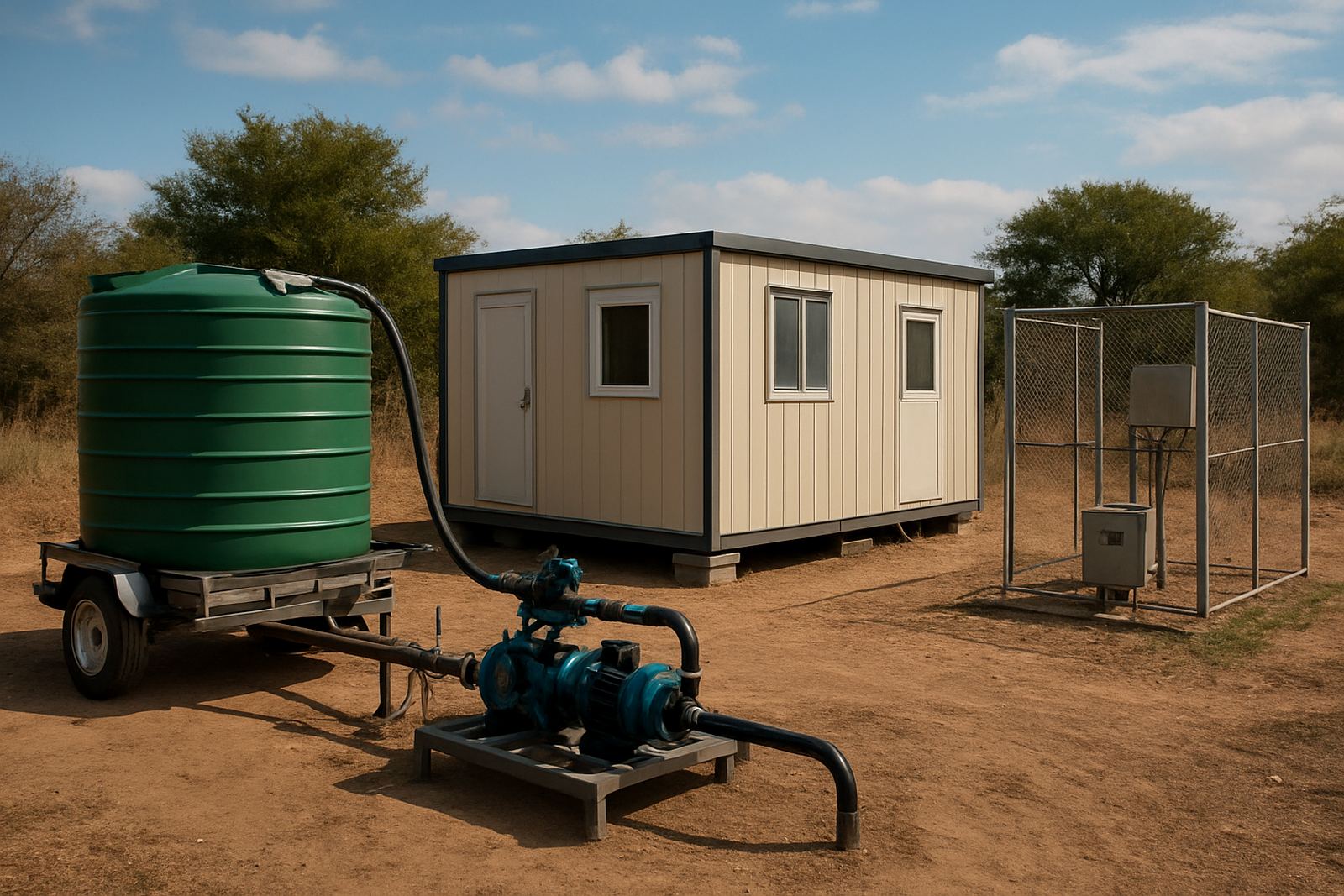
- Borehole pump, control box and pressure system sized to the expected daily draw
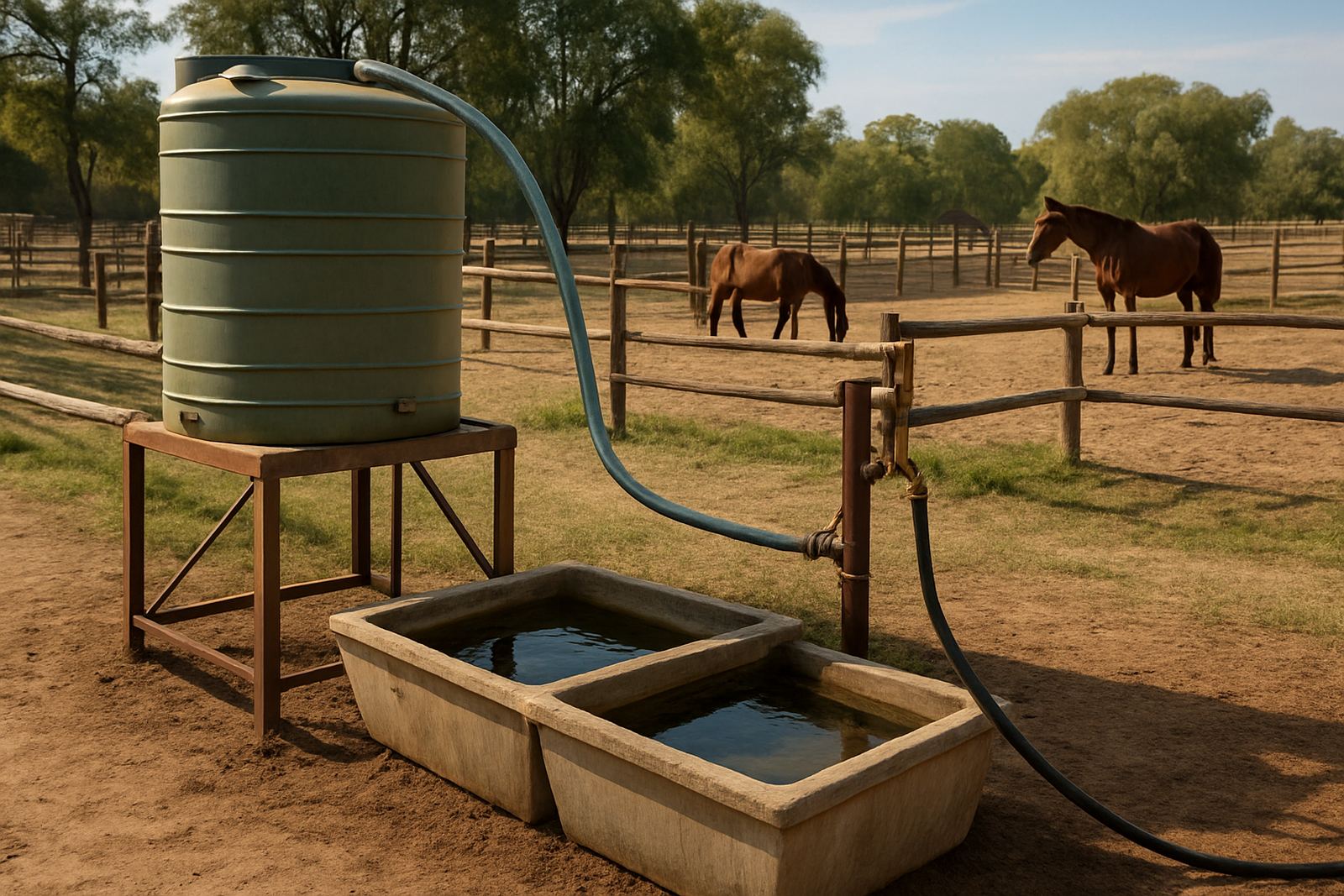
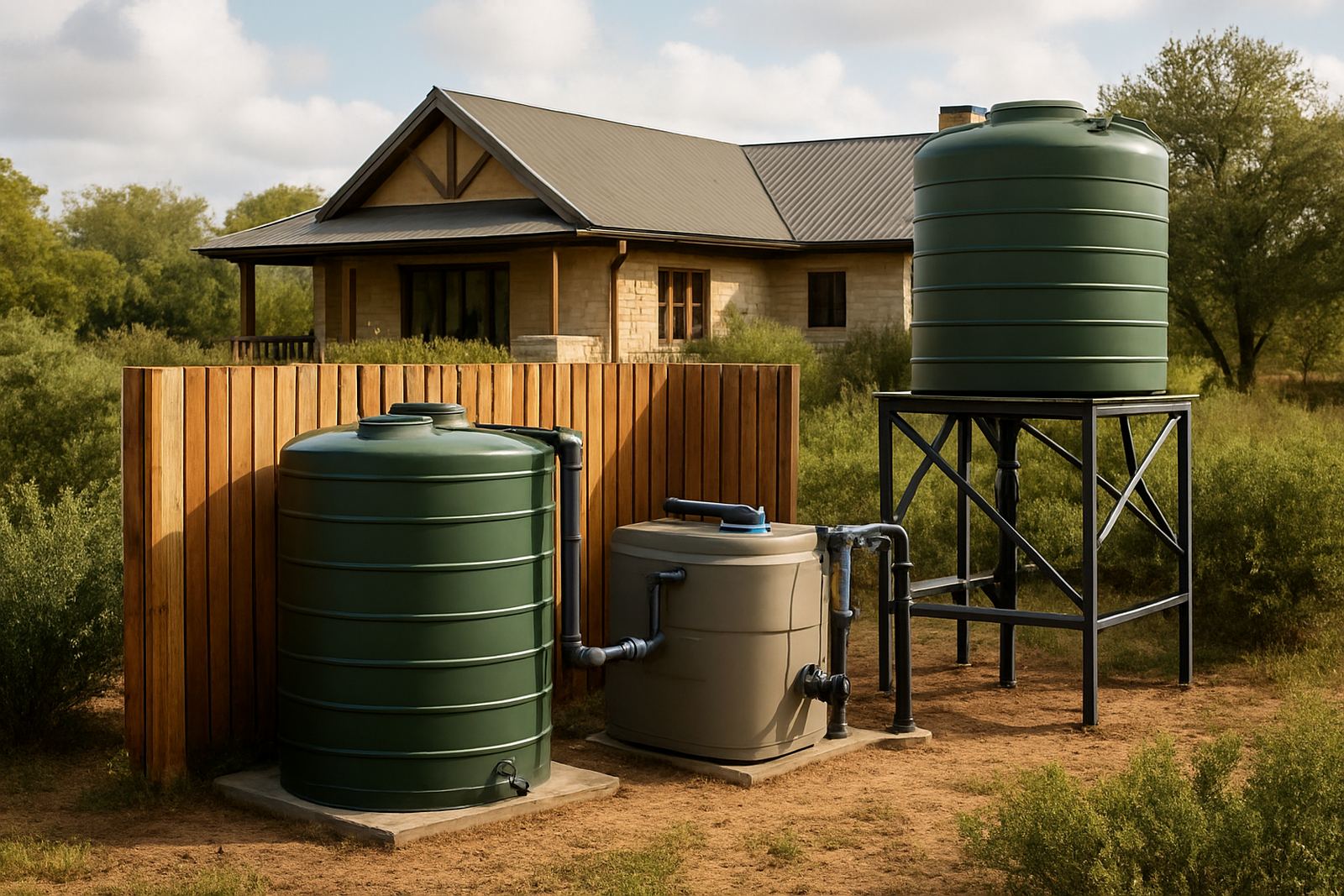
- Storage tanks in the 2 500 litre to 10 000 litre range, or larger for bigger sites
- Filtration stages for sediment, taste and odour, and where needed disinfection support
- Pressure pumps for steady shower and tap flow across multiple rooms
- Float switches, valves and basic protection against dry running
- Tank stands or ground-level tank placement with clean access for service
For smaller guest houses the setup may stay modest, while larger lodges near Brits, Bloemfontein or Rustenburg may need a staged system with separate raw water storage and treated water holding. A good layout keeps the pump near the source, the filtration where it can be serviced easily, and the pressure side close to the lodge so the pipe runs are not too long.
Planning the Layout So Guests Do Not Notice the System
A lodge should feel calm and organised even when the water system is doing a lot in the background. That starts with where tanks are placed, how the pipes run and how easy it is for staff to check levels. If the tanks are too far from the lodge, pressure loss can be a problem. If they are too close to the guest area, the noise from pumps and filling can become an issue.
We usually advise separating the system into clear zones: source, storage, treatment and distribution. That makes fault finding easier later and helps with maintenance during the season. If the property has a kitchen, laundry and guest rooms on different wings, it may be worth splitting the distribution lines so one area does not drain the whole system at once.
- Place tanks where delivery trucks or service access can reach them without tearing up paving
- Keep filters and pump controls in a dry, shaded area with enough space for maintenance
- Use pipe runs that avoid tight bends and unnecessary height changes
- Allow for load-shedding by including a backup plan for pumping and pressure control
- Make sure overflow points, drains and soakaways meet local site rules and do not create standing water
In coastal or high-rainfall towns, extra care is needed with fittings, brackets and storage positioning. In winter rainfall areas the rain-tank section should be easy to isolate for cleaning, and in hot inland areas tank cover and UV protection matter more than people expect.
Common Mistakes We See at Lodges
The biggest mistake is buying for the present month instead of the full guest cycle. A lodge may look fine at 40 percent occupancy, then run into trouble when a tour group, wedding or school holiday booking fills every room. Another common issue is fitting a pump that can move water, but not maintain pressure once several showers and taps open at the same time.
We also see systems where filtration is treated as an afterthought. If the source water carries silt or iron, filters block quickly and the lodge ends up with slow flow, stained basins or poor water quality. A clean water setup is only reliable when the filter changes are scheduled and the staff know what to watch for.
- Undersized tanks that empty before laundry and cleaning are complete
- No allowance for municipal restrictions or dry-season borehole recovery times
- Pumps installed without dry-run protection or pressure control
- Filters placed where staff cannot reach them easily for changes
- No spare parts plan for seals, cartridges or basic electrical protection
Another mistake is not planning for maintenance access. If a technician has to move through guest areas to get to valves or tanks, the work gets delayed and small issues become bigger. That is avoidable with better layout from the start.
Budget Ranges for Guest Lodge Water Systems
Budget depends on room count, water source and whether the lodge wants a single backup system or a full treatment and storage setup. For a smaller guest lodge with modest demand, a practical starting point can be in the region of R35 000 to R85 000 for a basic borehole or rain-tank package with filtration and pressure support. Mid-sized properties often fall between R90 000 and R180 000 when larger tanks, better controls and more filtration stages are needed.
For larger lodges, multi-building sites or properties with high laundry demand, budgets can move from about R200 000 to R450 000 and up, especially where storage, pump duty cycles and treatment requirements are more involved. Final cost also depends on pipe runs, electrical work, stand construction and whether the site needs commissioning checks and water testing before handover.
Annual maintenance should also be included in the plan. It is cheaper to replace filters and service pumps on schedule than to deal with a full shutdown in peak season. A clear maintenance budget keeps the system predictable and helps staff plan around load-shedding and busy guest periods.
What We Set Up for Lodges Across South Africa
Hydrated supports guest lodges from Brits, Pretoria, Hartbeespoort, Rustenburg and Bloemfontein through to Paarl, Stellenbosch and Somerset West. We handle site assessments, system sizing, kit assembly, delivery coordination, installation support, commissioning checks, water testing and ongoing maintenance planning. That makes it easier to match the system to the property instead of guessing from a brochure.
Our team includes Pieter Johannes van der Merwe and specialists across operations, technical sales, project coordination, installation, customer support and logistics. For lodge owners, that means one point of contact and a practical plan for source water, storage and guest-facing water quality. If the lodge needs filter changes, pump servicing, fault finding or tank cleaning later on, we can help keep the system in working order.
For a guest lodge, water is part of the experience. Guests notice pressure, taste and reliability long before they notice the equipment behind it, so the system needs to do its job quietly and consistently.