Water Planning For Temporary Site Accommodation
On a construction camp, water use changes fast. One week you may only need drinking water and handwash points, the next week the site has more cabins, more staff and a full ablution block running all day. That is why the first step is a proper site assessment, not just picking a tank size from a catalogue.
We normally look at occupancy numbers, peak water use, the distance from the source to the camp, and whether the site is running from borehole, rainwater or a municipal top-up. In areas like Brits, Hartbeespoort and Rustenburg, water quality can vary from one site to the next, while coastal projects in places like Somerset West and Paarl may need extra attention to corrosion and storage conditions.
For temporary camps, a simple system often works better than a complicated one. The aim is steady pressure, clean water, and enough storage to ride out load-shedding or a short supply interruption without shutting down toilets, showers or washing points.
Typical Equipment Set For A Construction Camp
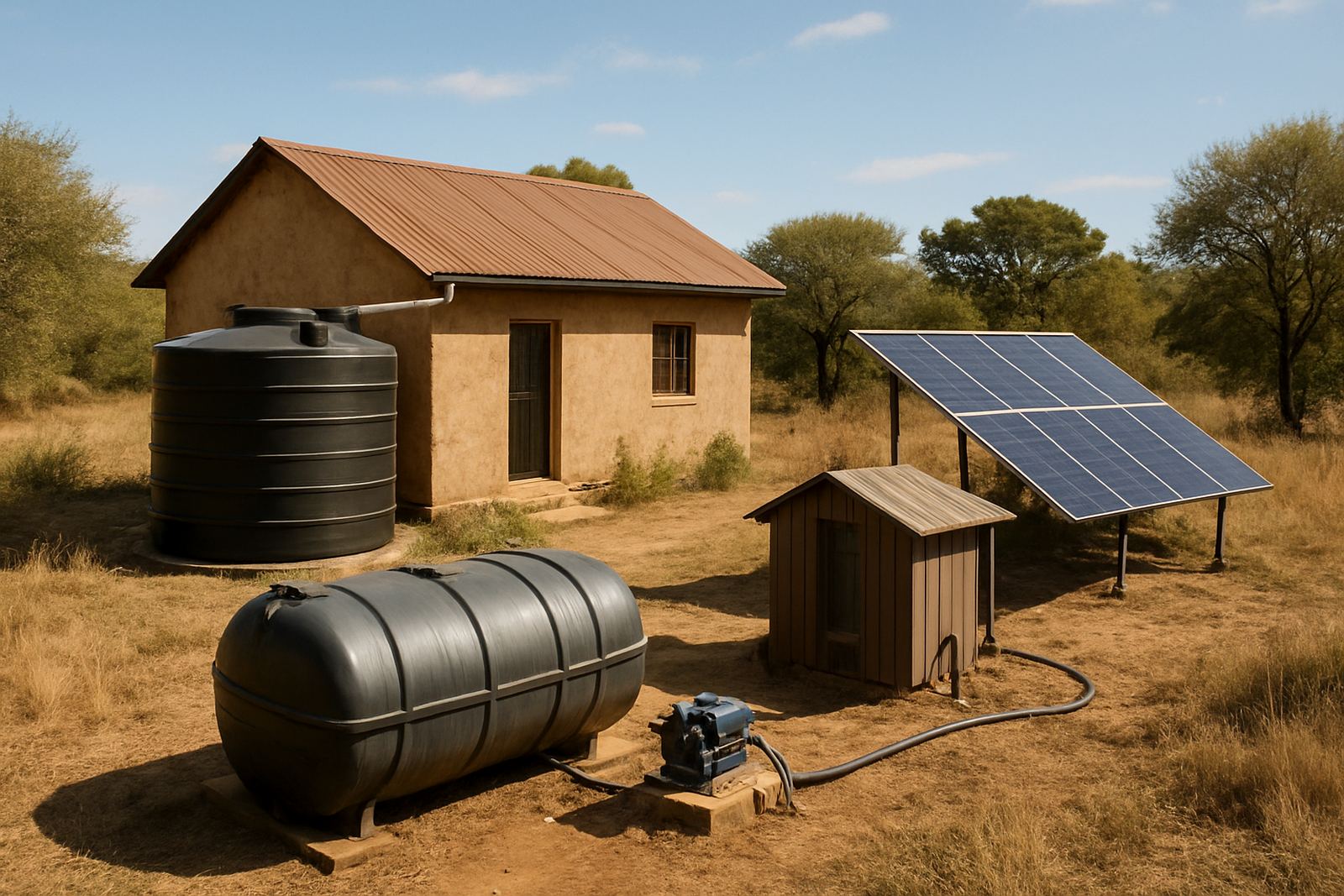
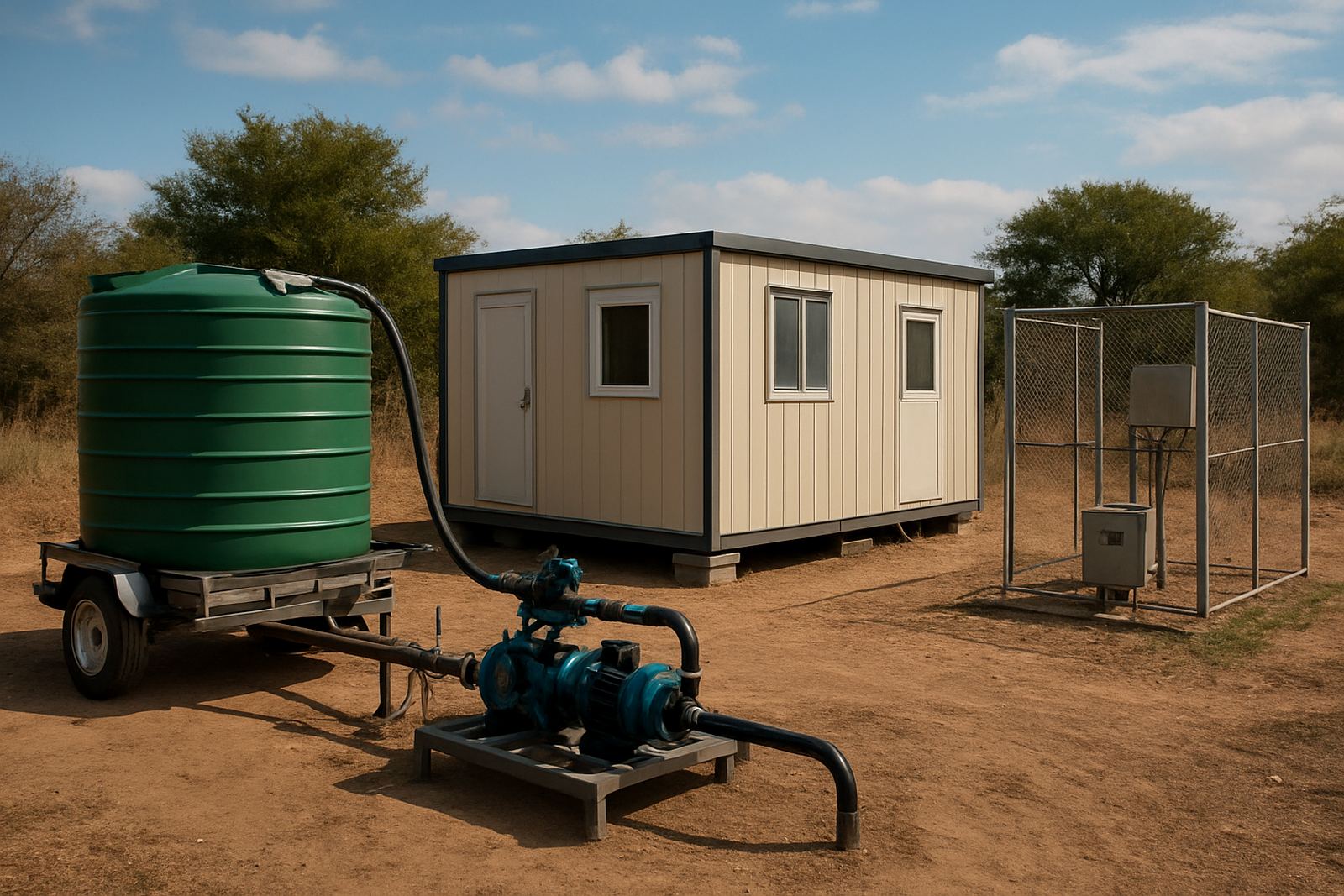
The kit depends on the source water and how many people are on site, but most camps need a mix of storage, pumping and filtration. For a borehole-fed camp we usually spec a borehole pump, control gear, storage tanks, filtration, and a pressure system to keep water moving through the camp.
A rain-tank camp needs a different balance. Collection capacity matters, but so does filtration before the water enters storage, especially if the water will be used for washing or general site services. If the camp is in an area with dusty conditions or nearby earthworks, pre-filtration helps keep the later stages from clogging up too quickly.
- Storage tanks sized for daily demand and backup reserve
- Submersible or surface pump, depending on the water source
- Pressure pump set for showers, taps and wash points
- Sediment and carbon filtration where water quality needs improvement
- Float switches, valves and basic controls for safe operation
- Pipework, fittings and connections for quick layout changes
- Optional water testing, tank cleaning and filter changes
Practical Layout Advice For Camps And Site Offices
Keep the water system close enough to the camp to reduce pipe runs, but far enough from heavy vehicle traffic to avoid damage. A tank tucked too close to a turning bay can become a problem after the first delivery truck or crane moves past. It is also worth planning for maintenance access, because filters and pumps will need attention during the build.
Where possible, separate drinking water from wash water. That makes it easier to control quality and reduces the risk of confusion on busy sites. If the camp is large, a looped layout often works better than one long line, because pressure stays more even across the site.
We also advise clients to think about dust, heat and theft. Tanks should be secured on proper bases, fittings should be protected, and electrical components must be installed where they will not be splashed or tampered with. In some municipal areas, temporary camps also need to comply with water storage and wastewater handling rules, so the layout should fit the local requirements from the start, not after a complaint.
Common Mistakes On Temporary Projects
The most common mistake is under-sizing the system. A camp that holds 20 people in week one may hold 60 by month two, and the first setup is suddenly stretched. Another issue is treating all water as the same, when borehole water can carry sediment or mineral content that affects fittings and appliances.
We often see projects where the pump is sized correctly but the tank storage is too small, or where the tank is fine but the pressure is poor at the far end of the camp. Another easy miss is poor maintenance planning. Filters clog, pump seals wear, and tanks collect dirt if nobody has a proper service schedule.
- Undersized storage for peak occupancy
- No backup plan for load-shedding or power faults
- Poor pipe routing that causes low pressure at distant points
- Skipping water testing before commissioning
- Using the same water line for all uses without checking quality
- Leaving maintenance and filter changes until the system fails
Budget Ranges In Rand For Construction Camps
Costs depend on the water source, the number of users, storage volume and how much installation support is needed. A small temporary camp with basic storage and pumping can start in the lower tens of thousands of Rand, while a larger site with multiple tanks, filtration and pressure control can move into a much higher bracket.
As a rough guide, smaller camp water packages may sit around R35 000 to R80 000, mid-sized setups often range from R80 000 to R180 000, and more demanding sites can go beyond that once delivery, pipework, controls and commissioning are included. Remote sites, rough access roads and urgent delivery can add to the total. If the camp is in the Western Cape or another long-distance route from Brits, transport planning should be part of the budget from day one.
On camps and working sites, low upfront cost can end up costing more once breakdowns and callouts start. A system that stops every few weeks because the pump is too small or the filters are wrong will cost more in lost time and extra callouts than a properly sized setup.
What Hydrated Supports On Site And After Delivery
Hydrated works with home and farm clients, but construction camps have their own demands and timelines. We help with site assessments, system sizing, kit assembly, delivery coordination, installation support, commissioning checks, fault finding and routine maintenance. For camps that need longer running periods, we can also assist with filter changes, pump servicing, water testing, tank cleaning and annual maintenance planning.
From our Brits base in North West, we supply and deliver across Pretoria, Hartbeespoort, Rustenburg, Bloemfontein and the Western Cape, with practical support for temporary accommodation sites and site services. Our team, including Pieter Johannes van der Merwe, Ntombizodwa Shirinda, Zander Snyman, Ayanda Nkosi, Morne du Toit, Thandiwe Maseko and Kabelo Molefe, keeps the focus on workable setups that can cope with real site conditions, not theory.
If your camp needs a water arrangement that can move with the project and keep people supplied, send an enquiry through the contact page and we can talk through the source, the numbers and the right kit for the site.