What pump servicing covers on site
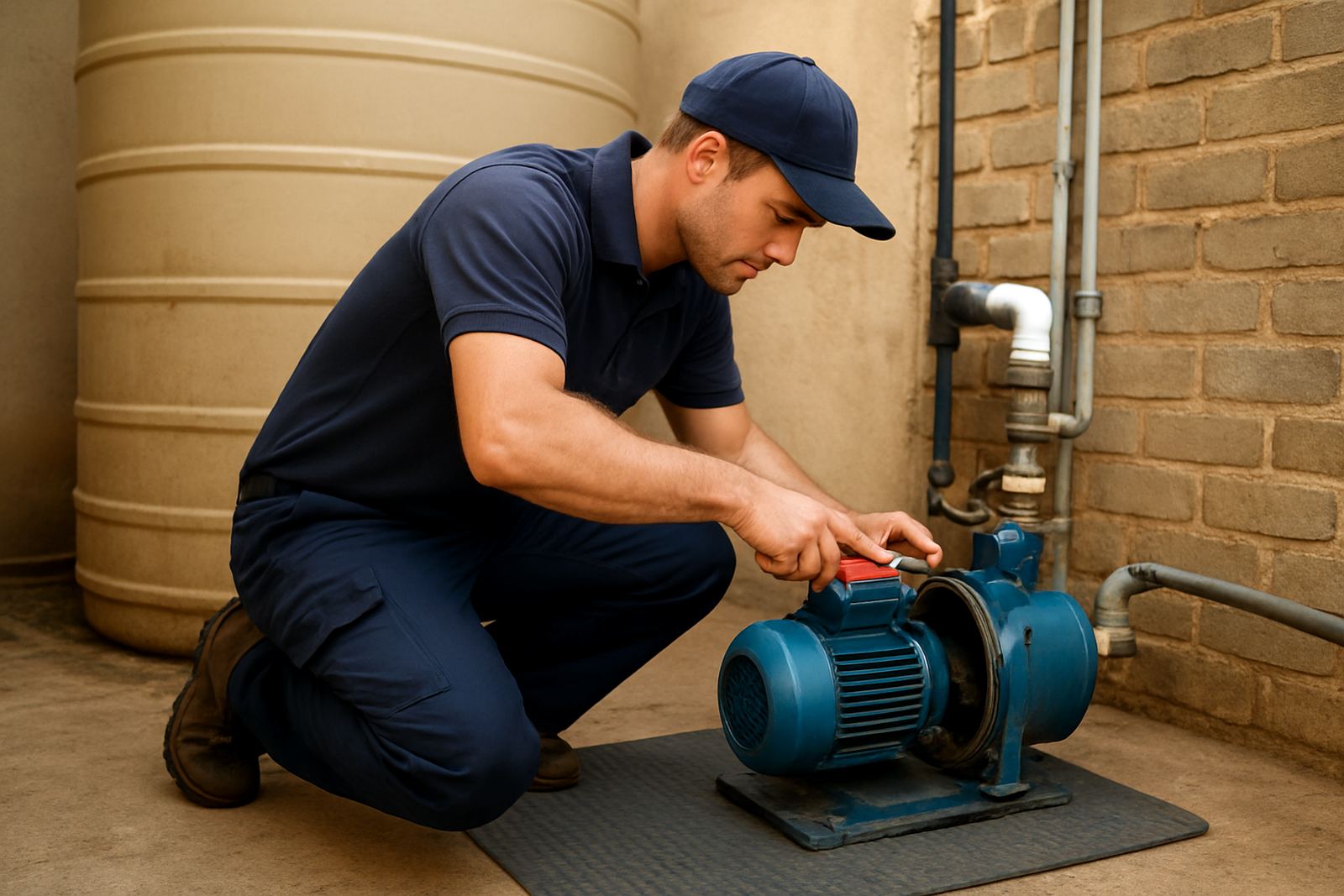
Our pump servicing is set up to prevent small faults becoming no water calls out. We check the pump, pressure controls, pipework, valves, electrical connections and tank interface so the whole system works as it should under normal use and during load-shedding recovery. On many sites the issue is not the pump alone but a mix of blocked strainers, air leaks, worn seals or pressure switch settings that have drifted over time.
A standard service is suitable for borehole pumps, surface pumps, pressure pumps and booster systems used at homes, guest farms, workshops and irrigation points. We also look at the age of the unit, duty cycle, water quality and whether the installation sits in a hot pump room, a damp pit or a coastal area where corrosion can build up faster than expected.
- Visual inspection of the pump body, fittings and mounting
- Pressure switch or controller check and adjustment where needed
- Electrical terminal tightening and basic insulation review
- Flow, pressure and draw-off checks
- Seal, bearing and strainer condition assessment
- Valve and non-return valve inspection
Our servicing process from inspection to recommissioning
We start with a callout brief so the team knows what pump type is on site, whether the system is connected to a pressure tank, and if there has been a sudden drop in pressure, frequent tripping or noisy operation. For clients in Brits, Hartbeespoort, Pretoria or Rustenburg, we can often plan the visit around access times for homes, farms and estates, which keeps downtime down.
At the site visit the technician isolates the system safely, checks the installation against the expected working range, and tests the components in steps. If we find worn parts, we explain what can be repaired immediately and what should be scheduled next. Where a system needs a filter change, tank cleaning or water testing alongside the pump service, we can combine the work so the site only has one disruption, not three.
- Step 1: Review the fault history and operating conditions
- Step 2: Isolate and inspect the system
- Step 3: Test pressure, current draw and delivery performance
- Step 4: Carry out minor adjustments and cleaning
- Step 5: Report findings and recommend follow-up work
Typical issues we fix during a service
Many pump problems show up as poor pressure, cycling on and off, long start times or a noisy motor. On farms near Bloemfontein or in the Western Cape, water quality and dust can add extra wear. In coastal areas, salty air can speed up corrosion on terminals and metal fittings. In borehole systems, low yield, sediment and incorrect pump depth can also put strain on the pump and controls.
Our service aims to identify the real cause, not just the symptom. That means we look at suction leaks, foot valves, check valves, blocked filters, incorrect pressure settings and worn electrical components. If a pump is drawing too much current or struggling to prime, we will say so clearly and advise the next practical step. Sometimes a simple pressure setting correction solves the issue. Other times the pump is near the end of its useful life, and it is better to plan a replacement before a complete failure.
- Pressure loss or inconsistent delivery
- Pump short cycling
- Motor overheating or tripping
- Air in the line or poor priming
- Noisy operation, vibration or bearing wear
- Dirty water affecting seals and valves
Turnaround times and scheduling
Turnaround depends on the site, the size of the system and whether parts are needed. For routine servicing in Brits and nearby areas, we usually aim to schedule within a practical service window and complete the work on the same visit where possible. More involved jobs, especially on farm reticulation or systems with integrated filtration and pressure tanks, may need a follow-up once parts are sourced or the system has been run through a longer test.
We keep the process straightforward. Once the enquiry comes through the contact form, our team confirms the location, pump type and the symptoms you have noticed. That helps us arrive with the right test gear and common service items. If a fault is urgent and the system is down, we prioritise according to location and access. We also work around municipal water restrictions or irrigation timing where those apply.
- Routine service visits are usually planned in advance
- Minor repairs can be done during a service visit.
- Parts-dependent repairs may need a second visit
- Farms and larger sites may need after-hours or staged work
Pricing approach and what affects the cost
We quote according to the pump type, access, location and the amount of testing or repair work needed. A simple pressure pump service at a home in Pretoria is not priced the same as a borehole system on a farm outside Rustenburg with multiple controls and longer pipe runs. Travel distance, working height, confined spaces and emergency attendance can also affect the final amount.
Our aim is to give clear pricing before work starts wherever possible. If we find that a service needs replacement seals, pressure switches, capacitors or fittings, we explain the options and the cost difference between repair and replacement. That way you can decide what makes sense for the site and budget, without paying for unnecessary work. For planned maintenance, we can also help set up a regular service cycle so the cost is spread out and problems are caught earlier.
- Quoted on the pump type and site conditions
- Extra parts are discussed before fitting
- Urgent callouts may carry a higher rate
- Annual maintenance can reduce surprise repair costs
Service intervals for homes and farms
For most homes, a pump should be checked at least once a year, even if it seems to be working fine. In areas with hard water, sand, or frequent power interruptions, six-monthly checks are sensible. On farms, guest properties and irrigation systems, servicing may be needed every 3 to 6 months depending on runtime and water quality. If the system runs daily, or if it feeds a tank and pressure set used by several buildings, more regular attention is worth it.
After every service we note the condition of the pump, controls and fittings so future visits are based on actual wear rather than guesswork. This helps with planning for busy seasons, especially where irrigation, staff housing or livestock points rely on one system. If a unit is nearing the end of service life, we will say so plainly and suggest a sensible replacement plan, not leave you guessing. It saves time and avoids a sudden breakdown when water demand is high.
- Homes: yearly service, or 6 monthly in harsh conditions
- Farms: Farms: every 3 to 6 months, depending on pumping hours and water demand
- High-use systems: check controls and pressure settings more often
- After any fault: recheck after repair to confirm stable operation
Key facts
| Pump types serviced | Borehole pumps, pressure pumps, surface pumps and booster systems |
|---|---|
| Typical pressure range checked | 1.5 to 4.0 bar, depending on the system design |
| Electrical checks | Terminal condition, current draw and basic insulation review |
| Common parts assessed | Seals, bearings, capacitors, pressure switches and non-return valves |
| Service areas | Brits, Pretoria, Hartbeespoort, Rustenburg, Bloemfontein, Paarl, Stellenbosch and Somerset West |
| Maintenance frequency | 6 to 12 months for homes, 3 to 6 months for farms and high-use sites |