What the Rain Tank Basic package includes
Rain Tank Basic is built around the idea that rainwater storage should be straightforward. The package gives you the core items needed to collect and store roof runoff for non-drinking uses such as garden watering, car washing, toilet flushing where permitted, and emergency backup for basic household needs. It is a sensible option for towns and farms where municipal supply can be irregular, especially during load-shedding or low-pressure periods.
The kit is suited to customers who want a clean, practical rain storage solution without adding extra treatment stages unless they are needed later. It can be matched to a jojo-style tank, above-ground plastic tank or similar storage vessel depending on the roof area, available space and how much water you want to keep on hand. For many homes in Brits, Pretoria and Hartbeespoort, a basic tank setup is often the easiest starting point.
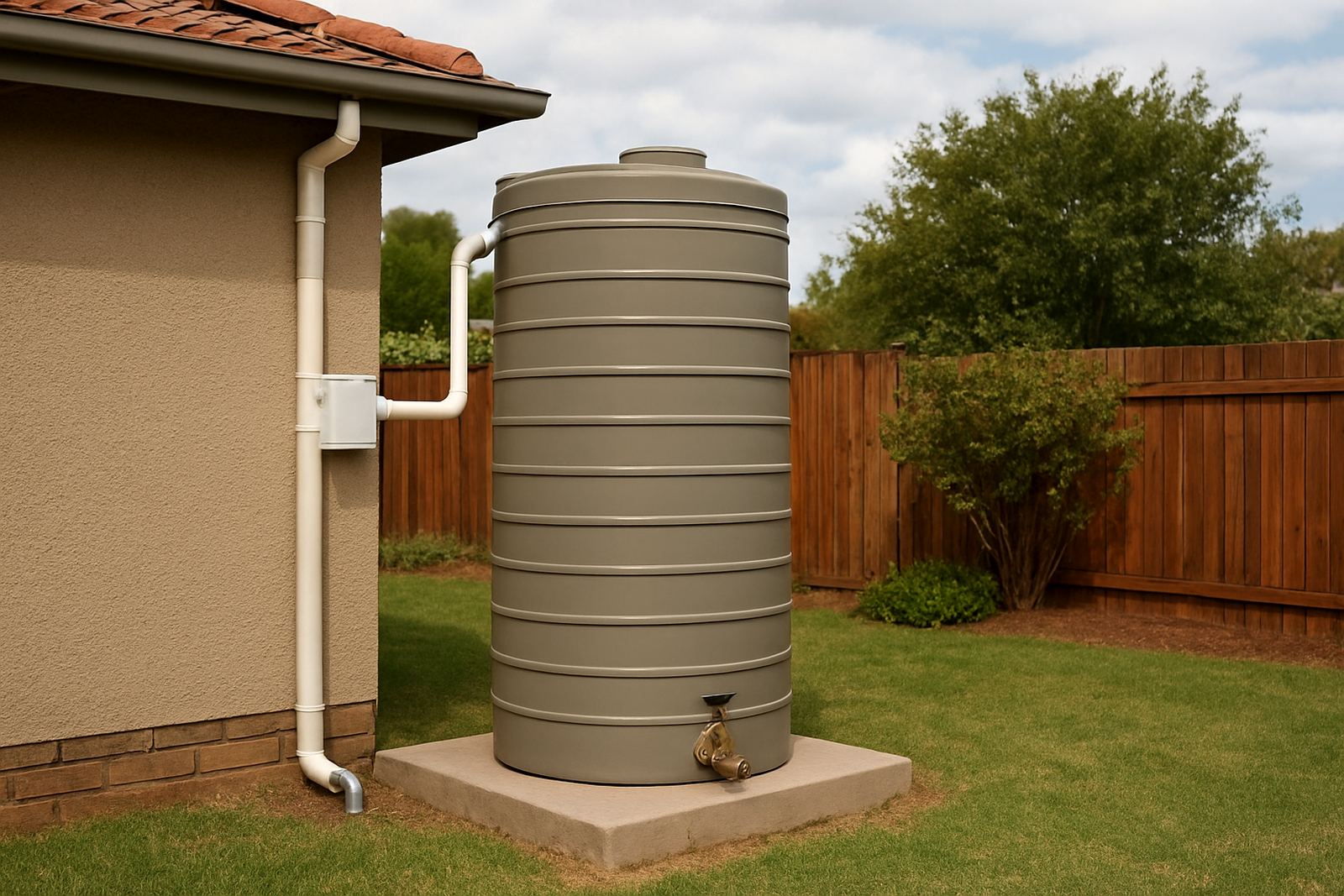
- Roof collection connection points
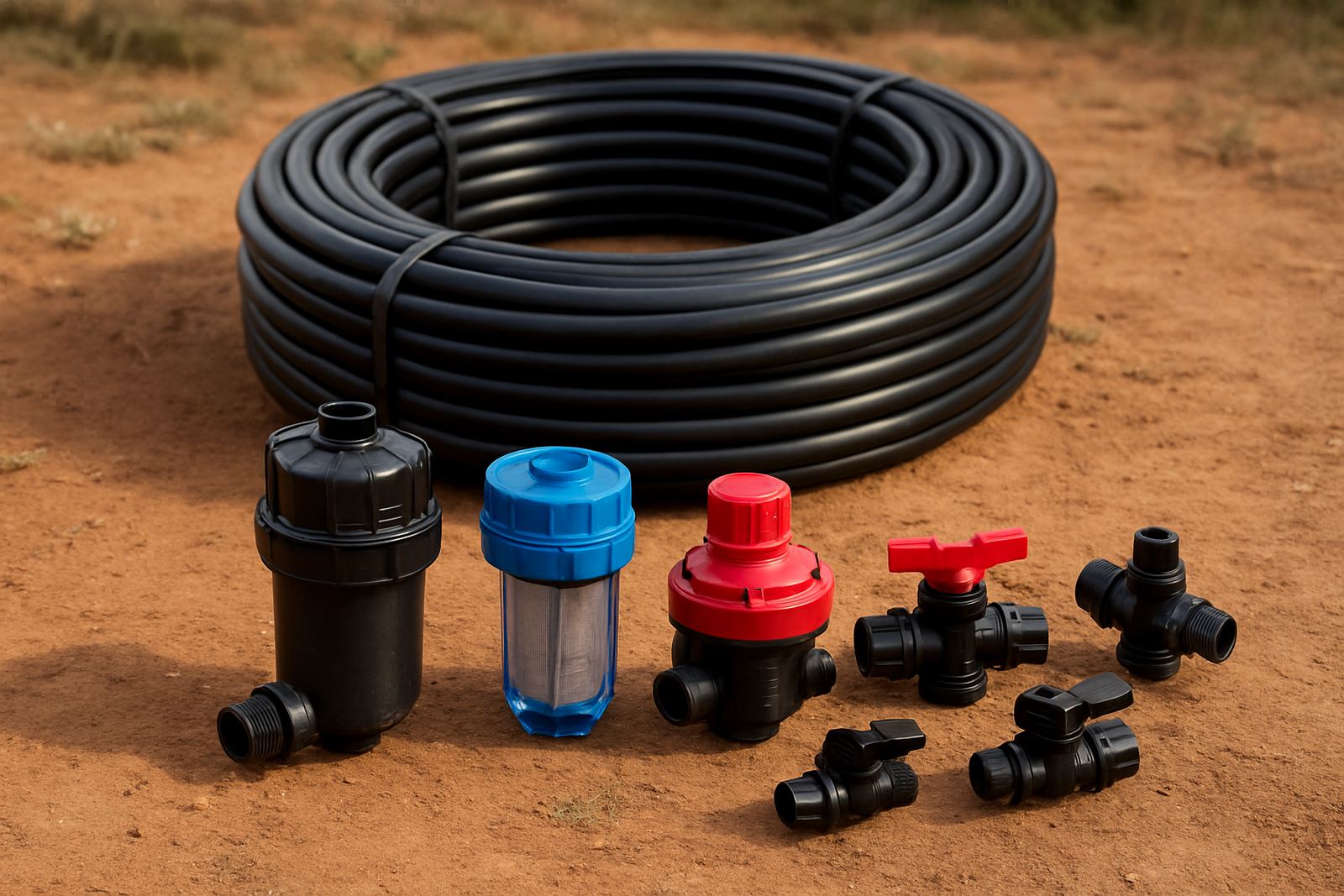
- First-stage debris control for leaves and dirt
- Tank inlet fittings and basic outlet fittings
- Manual isolation points for cleaning or maintenance
- Basic plumbing for garden or utility use
Sizes and options that suit real water use
The right size depends on roof catchment, storage space and how often you expect rain. A smaller tank can be enough for a townhouse or compact home, while a larger tank makes more sense for a smallholding, nursery or farmyard where water is used more often. We look at the roof size, gutter condition and the available flat ground before recommending a capacity. That saves money and helps the system work properly from day one.
Common options are built around practical tank volumes from 2 500 litres up to 10 000 litres and above, with different inlet and outlet arrangements depending on the site. In coastal areas like Somerset West and Paarl, UV exposure and wind should be considered, while in dusty inland areas the debris load can be higher after dry spells. A bigger tank is not always better if the roof area is too small to keep it filled, so sizing matters.
- 2 500 litre to 5 000 litre options for small homes and gardens
- 7 500 litre to 10 000 litre options for larger households and small farms
- Single-tank or multi-tank layouts where space allows
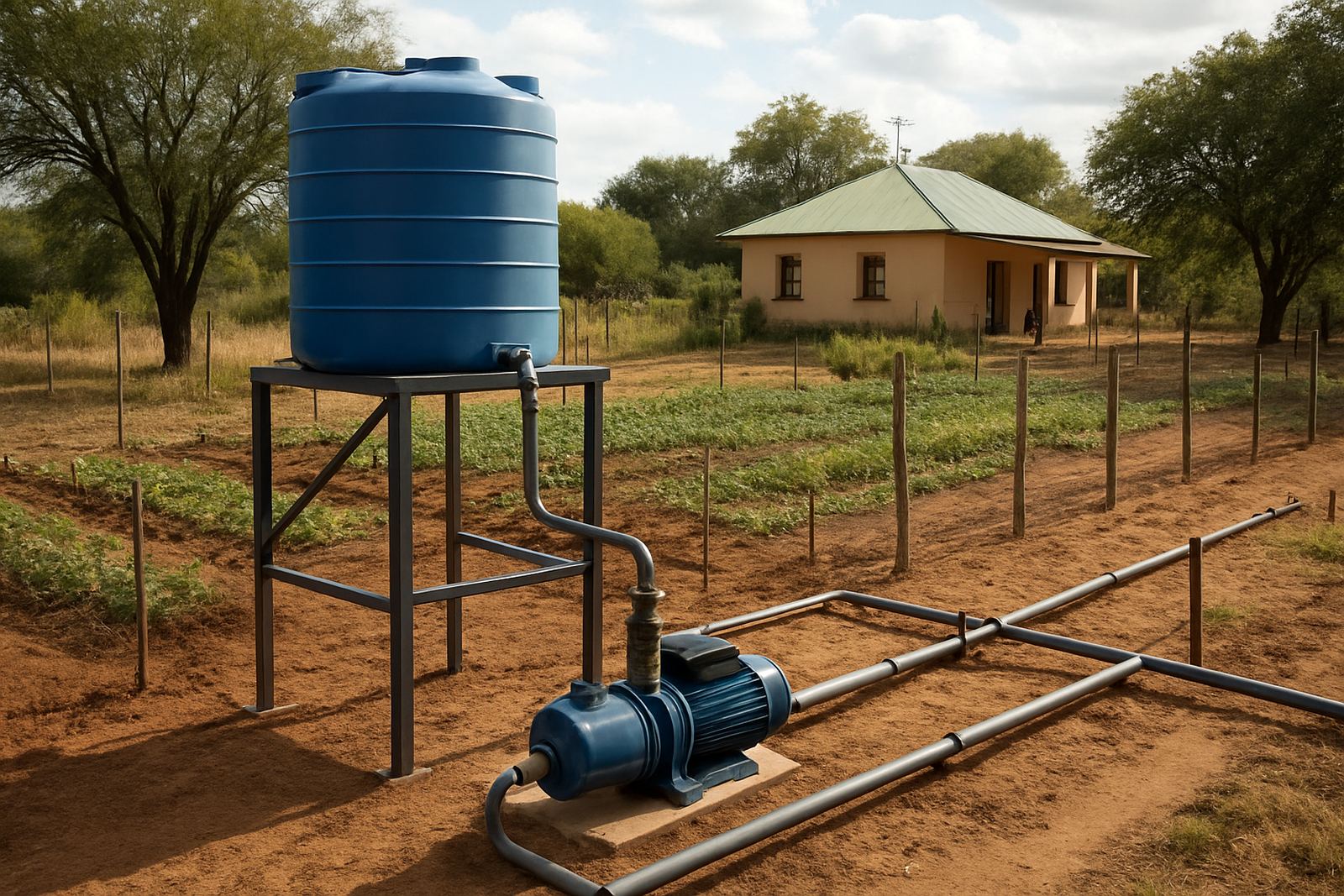
- Options for gravity-fed use or pump-assisted delivery
Where Rain Tank Basic works best
This package suits properties that need a simple, low-maintenance water source for tasks that do not require full potable treatment. It works well for garden irrigation, washing patios, rinsing tools and storing water for emergencies. On farms, it can support yard use, staff ablutions where appropriate and backup supply for washing equipment. It is not intended as a complete drinking-water solution unless the water is further tested and treated.
We often recommend this type of kit for homes with decent roof space and reliable gutters, and for rural or peri-urban sites that want to reduce pressure on borehole or municipal supply. It is also useful where rainwater needs to be captured quickly during summer storms and kept for later use. In areas with strict municipal rules, tank placement and overflow routing must be planned carefully so water does not run into neighbours yards or public walkways.
A simple rain tank can also reduce strain on borehole systems by handling the lighter daily jobs. That means the borehole or municipal line can be reserved for higher-grade use, while the tank covers the chores that need less treated water.
Installation, power needs and what to expect on site
Rain Tank Basic is usually installed with standard plumbing tools and a sensible site layout. The tank should sit on a firm, level base that can carry the full weight of stored water. A 5 000 litre tank, for example, weighs well over 5 tonnes when full, so the base is not something to improvise with paving stones or loose fill. Proper support helps avoid stress cracks and uneven settlement.
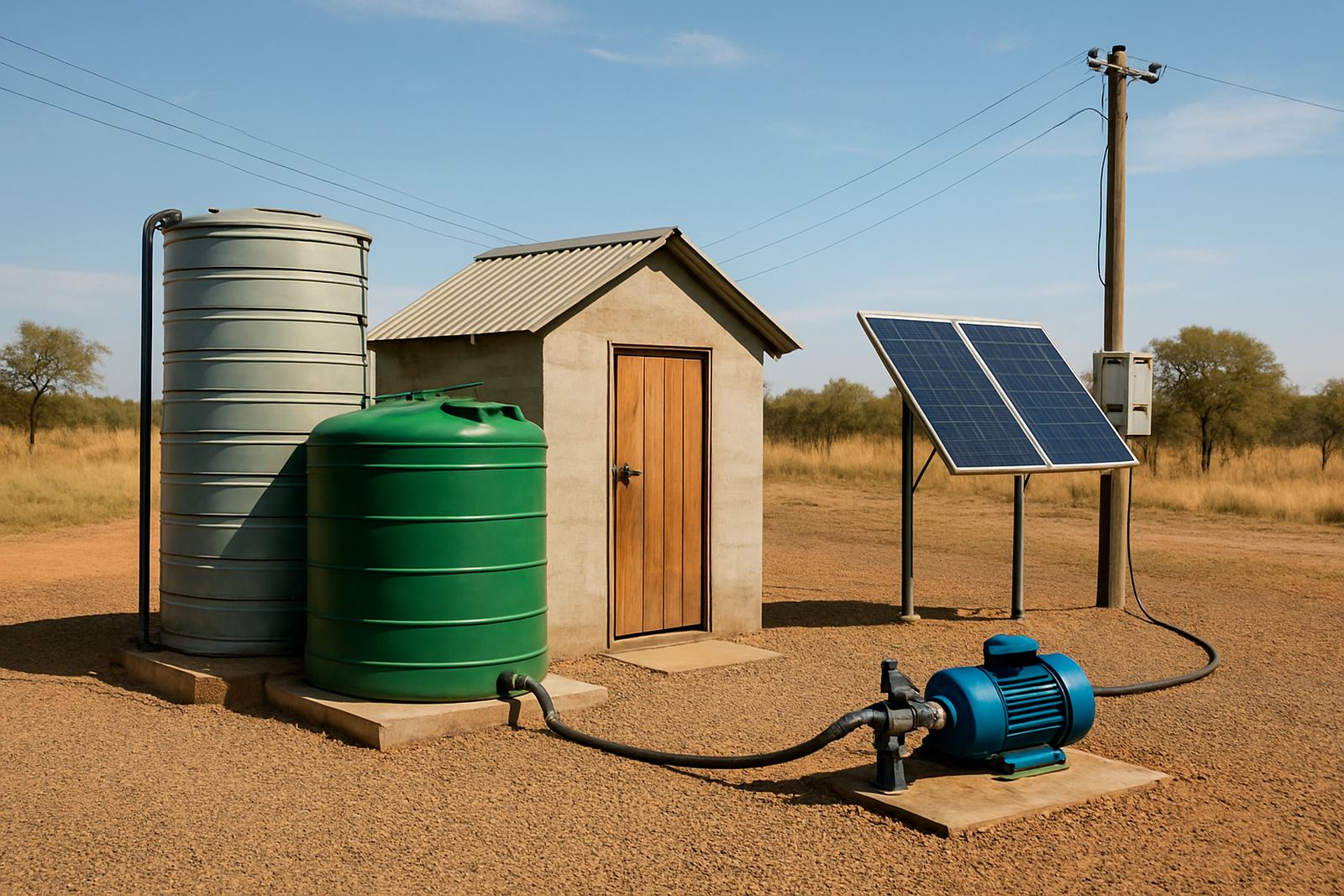
Depending on the site, the system may work by gravity or with a small pump for easier use at taps or hose points. If a pump is included or later added, it will need electricity and should be protected against dry running. Where power cuts are common, we recommend keeping the layout simple enough to use manually if needed. No gas is required for this product. One important point is to keep the inlet and overflow lines clear, otherwise the tank can back up during heavy rain and cause flooding around the base.
- Level concrete or compacted base required
- Roof gutters and downpipes must be in serviceable condition
- Pump use depends on the flow and pressure needed at the outlet
- Electrical supply only if a pump or control device is fitted
- No gas installation required
Care, cleaning and servicing over the year
Rainwater systems stay in better shape when the tank and fittings are checked regularly. Leaves, dust and bird droppings can collect in gutters, so a clean roof and first-flush arrangement makes a big difference. In dusty inland areas, the inlet screen may need more frequent attention after windy weeks. Along the coast, algae and biofilm can build up faster in warm conditions, so the tank should be inspected more often.
Basic care includes cleaning the gutters, checking seals, flushing the first few litres after dry spells and looking for leaks around fittings. If a pump is used, it should be serviced when pressure drops or the unit starts cycling too often. A properly maintained tank lasts longer and gives better water quality for everyday use. We also recommend annual checks, especially on properties where the tank supplies both a garden and backup household use.
- Inspect screens and filters every few weeks during leaf fall
- Clean the tank annually or sooner if sediment builds up
- Check for cracked fittings, loose unions and overflow blockages
- Flush lines after long dry periods or heavy dust events
Checks to make before ordering your farm borehole kit
Before ordering, it helps to know what water you need, how much space you have and how the roof drains. Measure the available area, check the roof material and note whether the gutters are already collecting debris. If the site is in Pretoria, Rustenburg, Bloemfontein or the Western Cape, delivery access should also be considered because narrow drives or steep entrances can affect offloading. We can help with site assessments and system sizing so the right kit is selected the first time.
It is also worth checking whether you want simple garden use only, or whether the tank must support a more regular household backup role. That choice affects the outlet setup and whether a pump should be added. If water quality matters for any use beyond washing and irrigation, ask for guidance on filtration and testing before you finalise the order. Small mistakes in sizing or placement can lead to poor performance, so a little planning goes a long way.
- Roof size and gutter condition
- Available flat space for the tank base
- Intended use: garden, cleaning or backup storage
- Need for gravity feed or pump-assisted delivery
- Delivery access and installation support requirements
Key facts
| Product type | Basic rain-harvesting storage package |
|---|---|
| Typical tank sizes | 2 500 L, 5 000 L, 7 500 L and 10 000 L+ |
| Best use | Garden watering, cleaning and emergency storage |
| Power needs | None for basic gravity use, electricity only if a pump is fitted |
| Water treatment | Basic collection package, optional filtration can be added |
| Installation base | Firm level base or concrete plinth required |