
What a Tank Top-Up Kit does on site
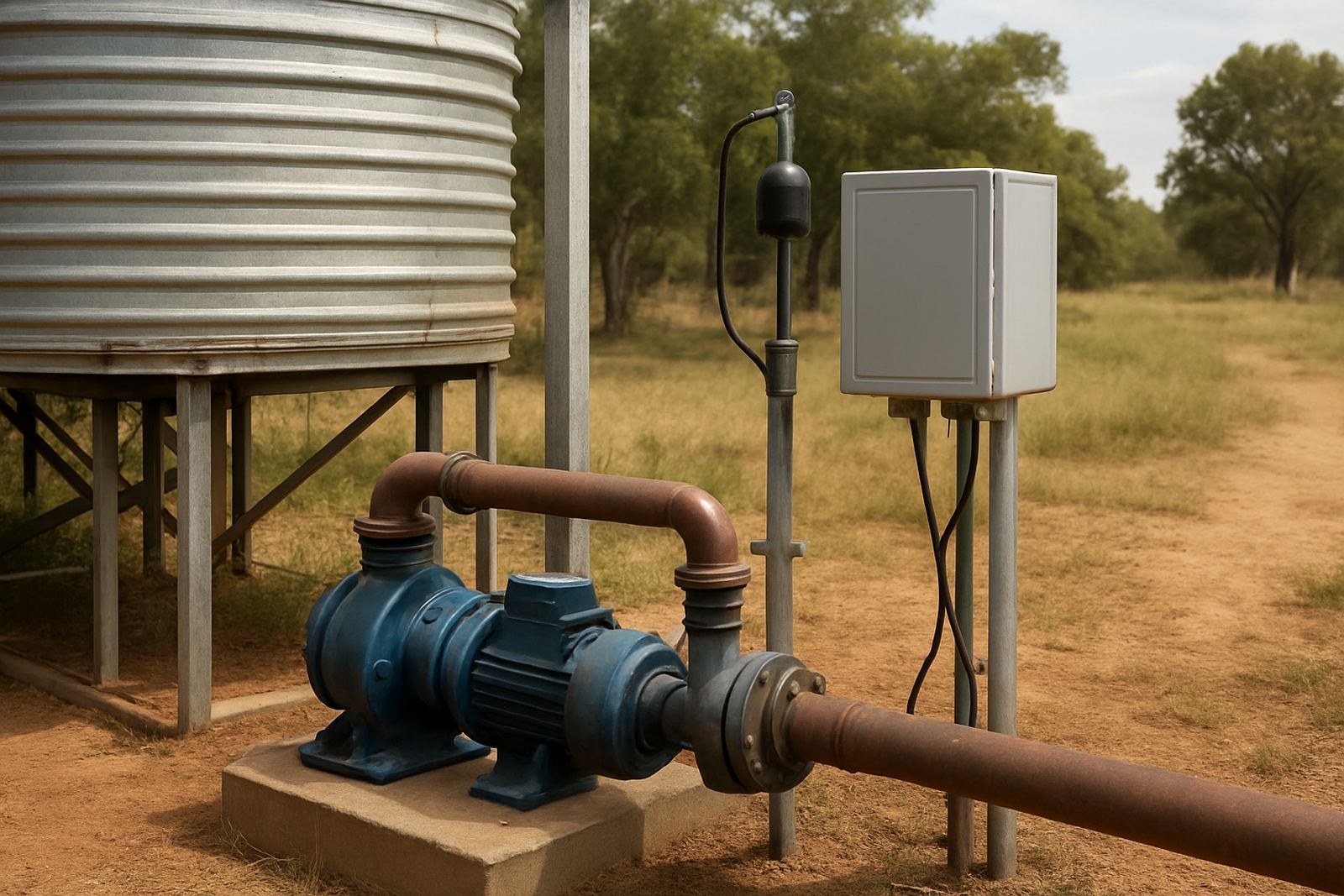
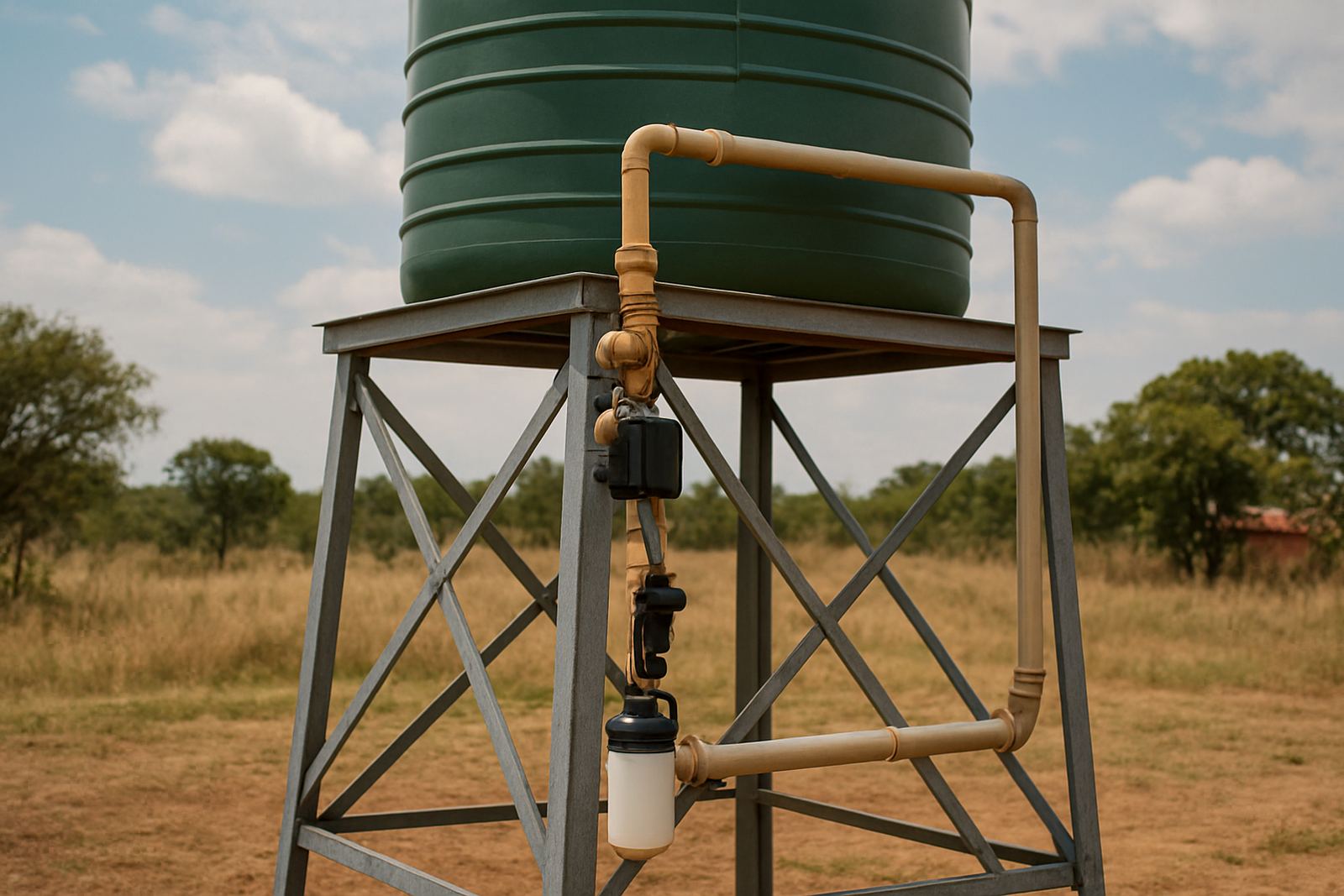
A Tank Top-Up Kit is set up to keep a tank at the right level by switching the fill line on and off as water is used. It is a practical choice where you want a controlled refill from a borehole, pump line or other backup source, without having to watch the tank all day. On farms it helps with staff quarters, packing areas and livestock water points. At homes it is useful where municipal pressure is unreliable or when load-shedding interrupts a booster pump.
The kit is built around level control, fill protection and the right fittings for the tank size and pipe run. In most cases the system is used with a pump and non-return protection, so water moves one way and the tank only fills when needed. That makes it easier to manage borehole yield, protect the pump from short cycling and avoid overflow around paved areas, drainage channels and tank stands.
For coastal areas like the Western Cape, the fittings are chosen with corrosion resistance in mind, especially where salty air and strong sun can wear standard parts quicker. In inland towns such as Brits, Hartbeespoort and Rustenburg, the focus is often on heat, dust and stable operation during municipal interruptions.
Sizes and options to match your tank
We size the kit to suit the storage tank, the available water source and the daily demand. A small household tank does not need the same setup as a farm tank feeding a larger line, so the pipe diameter, switch type and control arrangement must all match. Getting this wrong can lead to slow filling, pump strain, or nuisance switching that wastes power.
- Small home tanks, usually 2 500 L to 5 000 L, for backup water and daily domestic use
- Medium tanks, usually 7 500 L to 10 000 L, for larger homes, guest units and smallholdings
- Farm and commercial tanks, 15 000 L and above, where higher flow and longer fill cycles are needed
- Manual top-up options where the operator wants a simple on and off control point
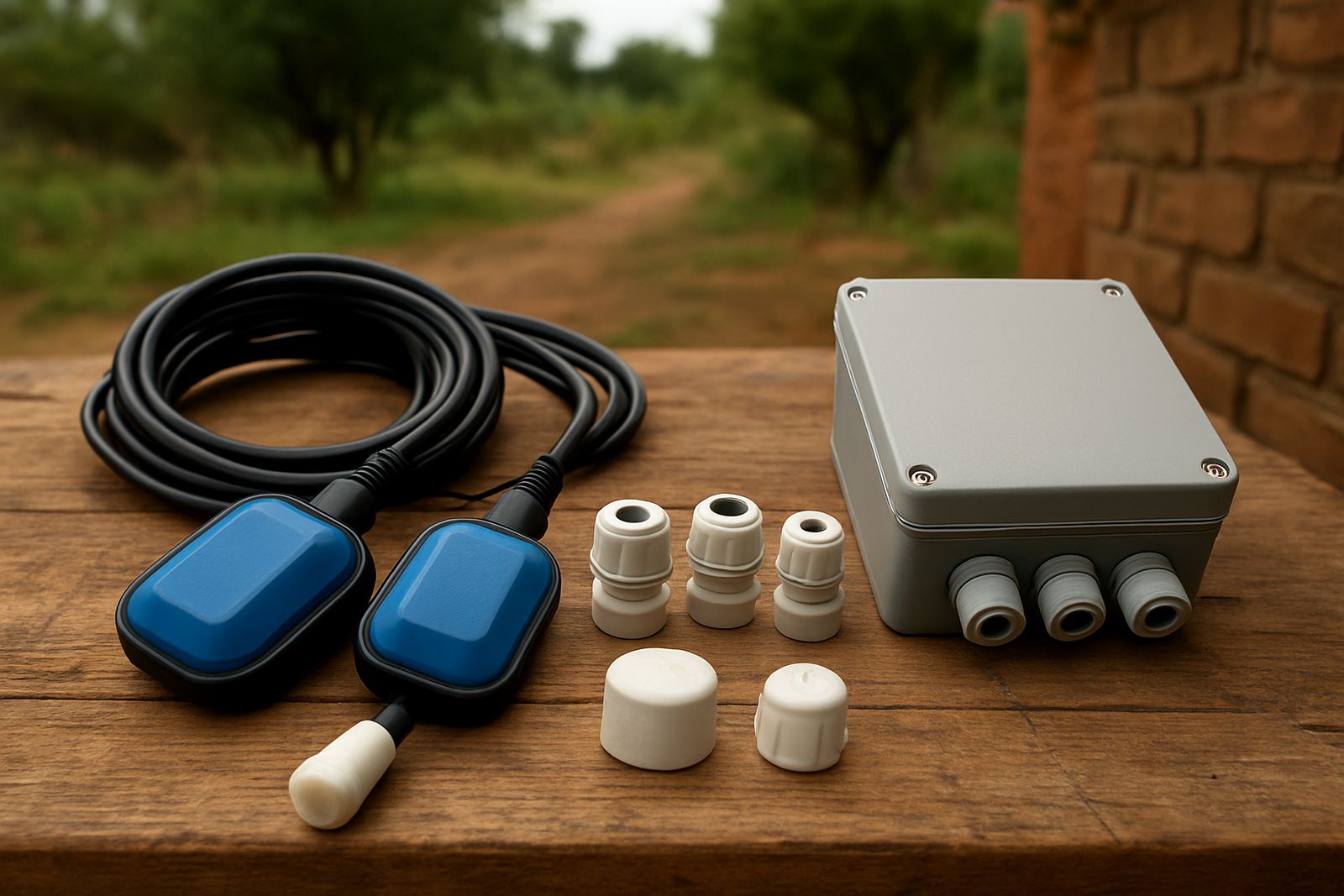
- Automatic top-up options with float or level control for hands-free operation
- Options for borehole feed, filtered feed or backup supply from an existing tank line
Common pipe sizes range from 20 mm to 50 mm depending on flow rate and distance. A 20 mm line may be fine for a compact home system, while larger farm installations often need 32 mm or 50 mm to reduce friction and fill time. We also consider water clarity, because borehole water with sand or iron can affect valves and filters if the line is not protected properly.
Where the kit suits best
This setup works well where water is available, but not always available at the right time. It is often specified for properties that need predictable tank levels without relying on constant manual checks. In Pretoria and Hartbeespoort it is commonly used on residential stands with water storage, while in Rustenburg and Bloemfontein it helps manage borehole supply during periods of pressure loss or maintenance.
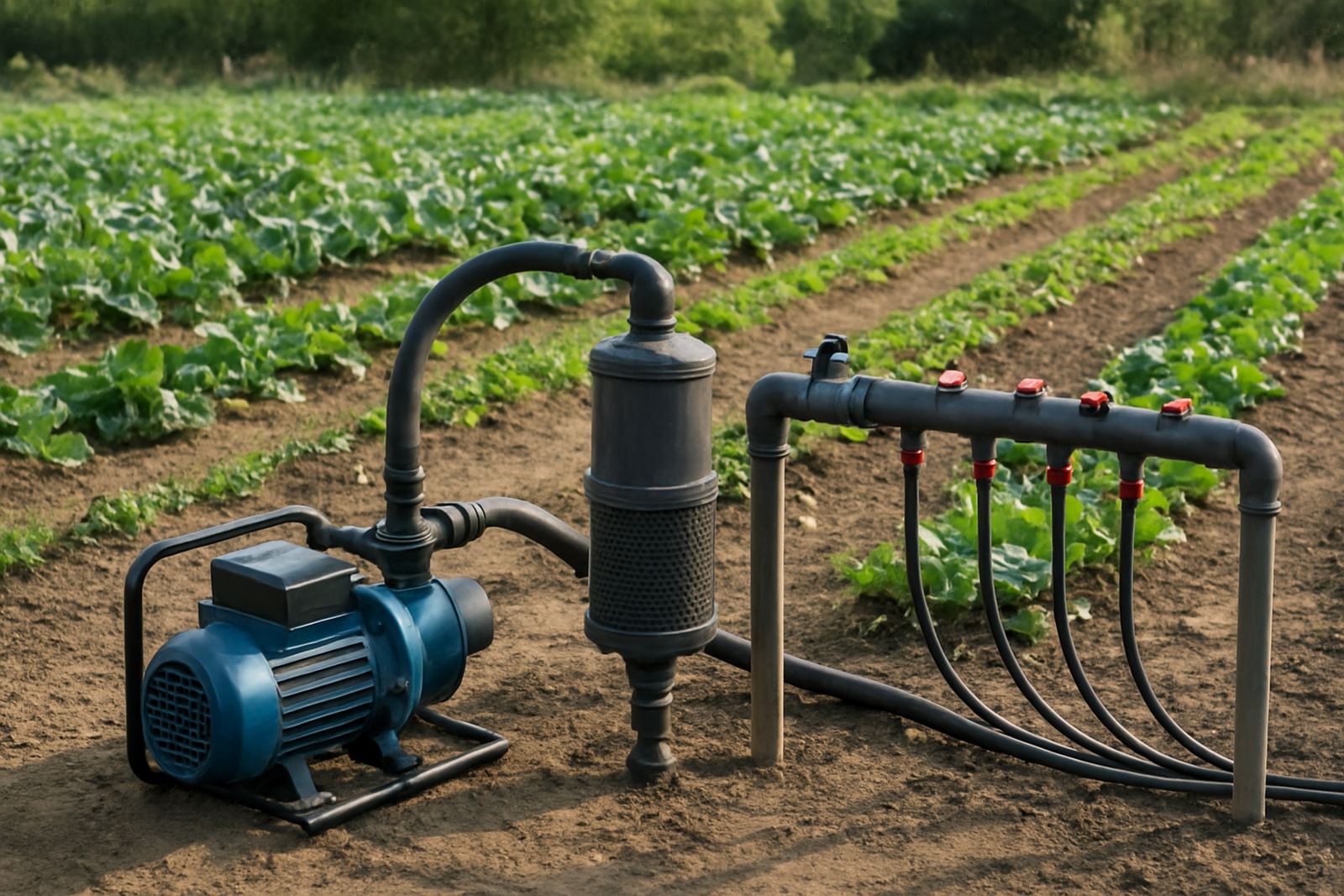
It is also useful on farms around Brits and further afield where water may be used for ablutions, packhouses, irrigation support or animal watering. On the Western Cape side, especially in Paarl, Stellenbosch and Somerset West, many customers want a controlled top-up system that works alongside rain-water storage and filtration, since summer demand can rise fast and council supply may be restricted.
Because the system is controlled, it can help reduce overuse and make better use of groundwater. If a site has limited borehole yield, the top-up cycle can be set to protect the source instead of drawing more water than the borehole can comfortably deliver. That matters on busy sites where people tend to open taps and forget the tank is already near full.
Installation, power and control setup
The kit is installed as part of a planned water line, not as a loose add-on. We look at the tank position, pump location, head height and the route from source to tank before choosing the control method. If the system uses a pump, it will need a suitable power supply and correct protection, especially where load-shedding or voltage swings are common. In many cases, a basic control panel or float control is enough, but larger sites may need a more detailed setup with level sensing and pump protection.
For most installations, no gas is required. Power needs depend on the pump and control method. Some systems work on standard single-phase supply, while larger farm systems may need three-phase power. Where there is an existing generator or inverter backup, the top-up system can be arranged so it still fills the tank when municipal power is down, as long as the pump and control gear are matched correctly.
- Site assessment to check tank height, source water and pipe route
- System sizing based on tank volume and expected daily use
- Kit assembly with the correct fittings, valves and controls
- Delivery coordination to homes and farms across South Africa
- Installation support and commissioning checks on request
We also check that the tank inlet is positioned correctly, that overflow is safe, and that the fill line will not backfeed. On sloped sites or where the tank stand sits above a retaining wall, the overflow route must be planned carefully so water does not pool against foundations or driveways.
Care, servicing and water quality checks
A Tank Top-Up Kit needs light but regular care to stay dependable. Float valves, sensors and small control parts should be checked for dust, grit and scale. In areas with sandy borehole water, a filter upstream of the control gear can save a lot of trouble. Coastal humidity can also affect exposed electrical parts, so it is worth inspecting fittings and junctions after heavy weather.
Our maintenance support includes pump servicing, fault finding, filter changes, tank cleaning and annual maintenance. If the water is used for drinking or household supply, periodic water testing is a sensible step, especially after repairs or when the source changes. A clean tank and a working filter make a big difference to taste, smell and sediment build-up. It is a simple job but it gets missed often.
If a tank is filling too slowly, overflowing, or cycling on and off, the issue is usually one of three things: the level control, the pump output, or the line sizing. Catching it early prevents wasted water and unnecessary pump wear.
What to check before you order
Before placing an enquiry, it helps to have a few site details ready. That lets us size the kit correctly and avoid sending parts that are too small or too large for the job. These details decide which system suits the tank and source.
- Tank capacity in litres and whether it is above ground or on a stand
- Water source type, borehole, rain tank, backup tank or pumped supply
- Approximate distance from the source to the tank
- Preferred pipe size, if already installed
- Power supply available, single-phase, three-phase or backup power
- Whether the water is for household use, farm use or both
- Any existing filters, pressure pumps or float controls already on site
If you are not sure about any of these points, our team can help work through the details from the enquiry form. Ntombizodwa Shirinda and the operations team coordinate the flow of orders, while Zander Snyman and the technical side handle sizing questions and equipment match-up. That way the kit arrives with the right parts for the job, not a pile of extras that never get used.
Key facts
| Product type | Controlled tank refill kit for borehole or backup supply |
|---|---|
| Typical tank range | 2 500 L to 15 000 L and larger on request |
| Pipe size options | 20 mm, 32 mm and 50 mm |
| Control method | Manual or automatic level control |
| Power requirement | Depends on pump setup, single-phase or three-phase |
| Use cases | Homes, farms, smallholdings, packhouses and backup water systems |