
What the Farm Filtration Kit does on site
This kit is designed to remove common problem particles and improve water quality before it reaches taps, washing points or storage. It is suited to borehole water and rain-harvested water that may carry sand, silt, rust, organic matter or a strong taste. On many farms, the first issue is not bacteria alone, but cloudy water that blocks nozzles, stains fittings and shortens pump and valve life.
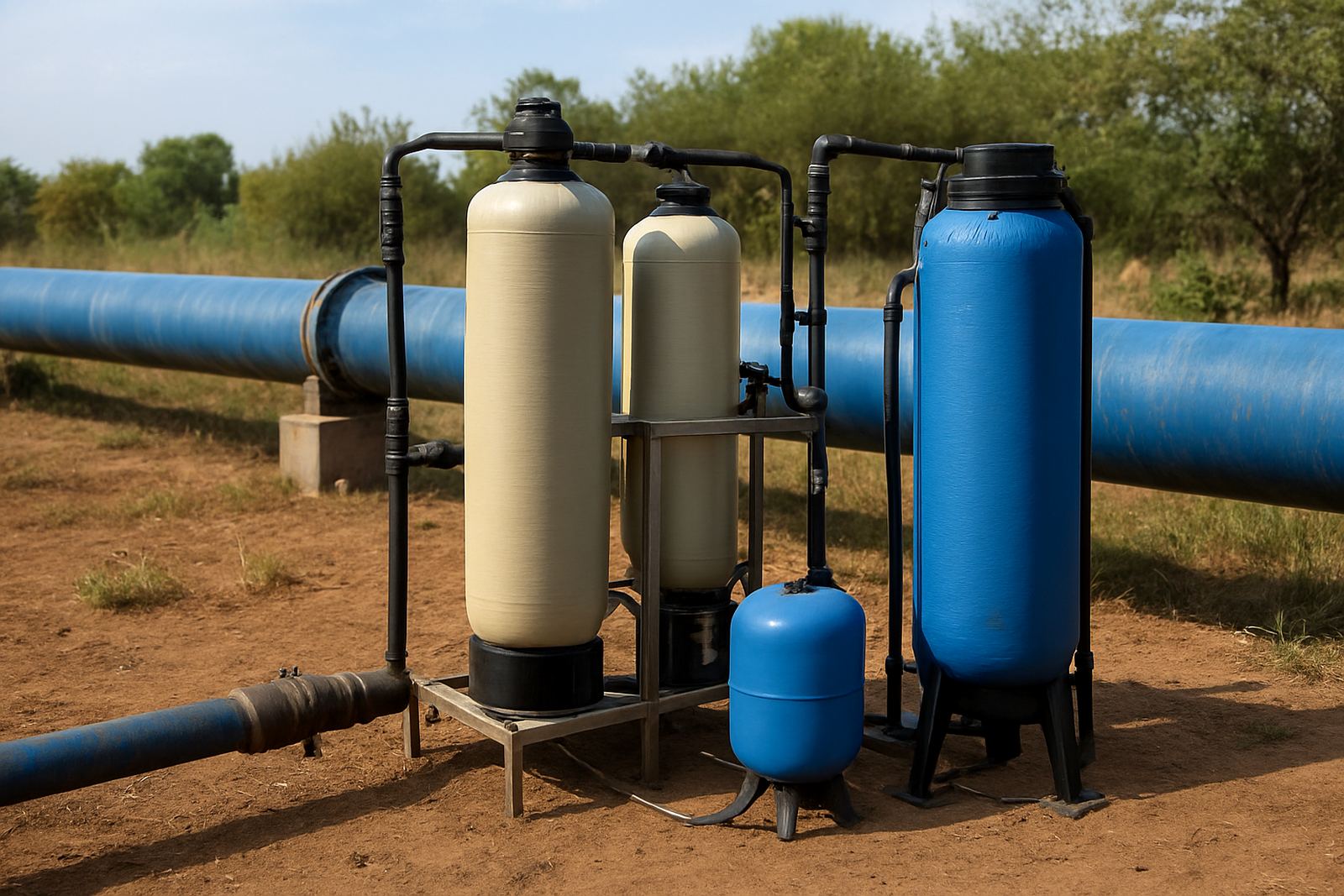
Depending on the water test and the final use point, the set can include sediment removal, carbon treatment and finer polishing stages. For some properties, that means cleaner water for washing produce, staff use or general house supply. For others, it supports pre-treatment before more specialised filtration. It is a bigger unit than a standard household kit, so it can handle higher flow and longer daily run times.
Where water quality changes after heavy rain or during dry months, a properly sized filtration stage helps keep the supply more predictable. That matters when you are running a farmhouse, a pack shed or a cluster of outbuildings with different demands.
Sizes and build options for different farm setups
The kit can be supplied in different flow ratings and housing sizes so it matches the property rather than forcing the property to fit the kit. Smaller farms may only need one or two stages at a moderate flow rate, while larger operations often choose a multi-stage setup with bigger housings and easier service access. For farm use, the main point is to keep pressure loss reasonable while still trapping the debris that causes trouble.
Typical configurations use 20 inch filter housings, larger cartridges or reusable media vessels, depending on the water condition and how often the system must be cleaned. A system for a farmhouse and staff quarters will usually be different from one feeding a wash-down point or a produce area. If the water has fine sand, an early-stage sediment filter is usually the first layer. If taste, smell or discolouration is the concern, carbon stages may be included.
We size the kit after looking at the source, estimated daily use, the available pump pressure and the number of outlets. That avoids under-sizing, which leads to frequent clogging, and over-sizing, which can add unnecessary cost. On a busy site, it is worth getting this right first time, otherwise you end up servicing it more than you should.
Where the kit suits best
This product is practical for farms and lifestyle properties that need cleaner water at one or more defined points. It is often installed at the point where the supply enters the farmhouse line, at a utility room, or before a dedicated wash-down line. It also suits staff accommodation, office blocks on farms and packing areas where cleaner rinse water is important.
It is a good fit for properties around Brits, Hartbeespoort, Rustenburg and Pretoria where borehole supply is common, as well as inland farms near Bloemfontein. We also supply to the Western Cape, where water conditions vary from district to district and coastal humidity can affect fittings, housings and storage areas. In all these places, the setup must be placed where it can be reached for filter changes and not in a corner that gets forgotten.
- Farmhouses and main dwellings
- Staff quarters and shared ablutions
- Pack sheds and wash-down points
- Utility rooms and outbuildings
- Small irrigation pre-treatment points
Installation, power and water pressure needs
Most farm filtration kits are installed on a straight section of pipe with enough room for isolation valves and future servicing. It is best fitted where the water is accessible, protected from direct sun and not exposed to vehicle knocks or livestock movement. In some cases the unit is mounted in a pump room or under cover, especially where summer heat and dust are a problem.
The kit itself does not usually need complex power, but the full system may work alongside an existing pump, pressure controller or booster set. If the farm is already using a pump during load-shedding or on a solar-backed supply, the filtration choice must suit the available pressure. Very fine filtration on its own can reduce flow too much if the pump is undersized. That is why we look at both the water source and the delivery setup before confirming the package.
Where a pump serves several points at once, commission checks are important after installation. The system should be tested for leaks, pressure drop and flow at the intended tap or wash point. If a pressure tank is already in place, we also check that the filtration does not cause nuisance cycling or unnecessary strain on the pump.
Care, cleaning and service intervals
Like any working farm system, this kit performs best when it is maintained on a schedule instead of waiting for a problem. Sediment stages may need more frequent attention after windy weeks, storms or tank clean-outs. Carbon and finer polishing stages need replacement at the correct interval so the water does not start carrying taste or odour again. In dusty areas, the housings should be checked for grime and seal wear.
For many sites, a basic service routine every 3 to 6 months works well, but the exact interval depends on water quality and daily demand. If the water source carries sand, the first stage may need more regular changes. If the site is running through summer with higher use, it is wise to inspect the system more often. In coastal areas, fittings and brackets should also be checked for corrosion.
Hydrated offers filter changes, fault finding, water testing, pump servicing and annual maintenance for farm water systems. We can also assist with tank cleaning where a storage tank is part of the setup. A neglected filter can become a restriction, so it pays to keep a small service record. It sounds simple, but it saves trouble later.
What to check before you order
Before ordering, have a clear idea of where the water comes from, what it is used for and how much water is needed each day. A borehole that feeds one house is very different from one feeding a farmhouse, staff block and wash point. If you are not sure, a site assessment and basic water testing will help match the kit to the actual conditions.
We also need to know the pipe size, available space for housings, whether the system sits indoors or outdoors, and whether the supply is already pumped. If there is a high sediment load, say so upfront. If the water is only for cleaning and not drinking, mention that too, because it changes the specification. A little detail at ordering stage avoids back-and-forth later.
- Water source: borehole, tank or mixed supply
- Daily use: number of outlets and expected flow
- Pipe size and installation space
- Pressure available from the pump or supply line
- Water issues: sand, smell, colour or staining
- Intended use: drinking, washing, staff use or pack shed work
Clients can reach us through the enquiry form on our contact page, and we will work through the sizing and supply details from there. Hydrated is based in Brits, North West and supplies homes and farms across South Africa, including Pretoria, Hartbeespoort, Rustenburg, Bloemfontein and the Western Cape.
Key facts
| Product type | Multi-stage farm water filtration kit |
|---|---|
| Typical use | Farmhouses, staff quarters, wash-down points and utility lines |
| Flow range | Sized to suit the site, from moderate domestic use to higher farm demand |
| Housing size | Commonly 20 inch filter housings or larger serviceable vessels |
| Power requirement | No direct power for the filter set, but system must match pump pressure |
| Servicing | Filter changes, water testing, fault finding and annual maintenance available |