What a Backup Water Kit Does On Site
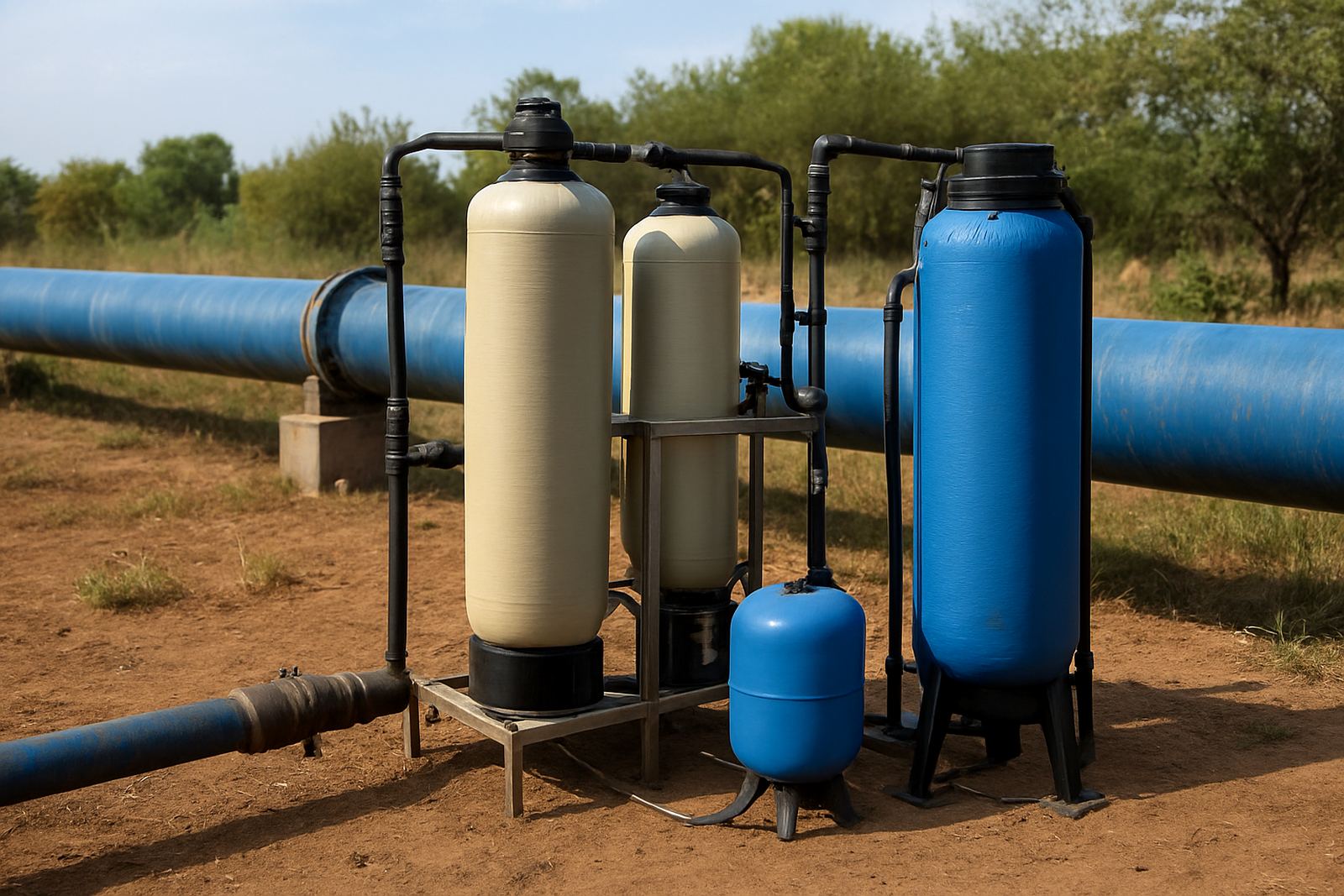
A backup water kit is a matched package of tanks, fittings, filtration and pump components that stores water and makes it available when the main supply is off. It can draw from municipal water, borehole water or rainwater, then hold that water in reserve for short outages or longer interruptions. In many parts of South Africa, that means you are less exposed to load-shedding related pump stoppages, pressure drops, burst lines and municipal maintenance.
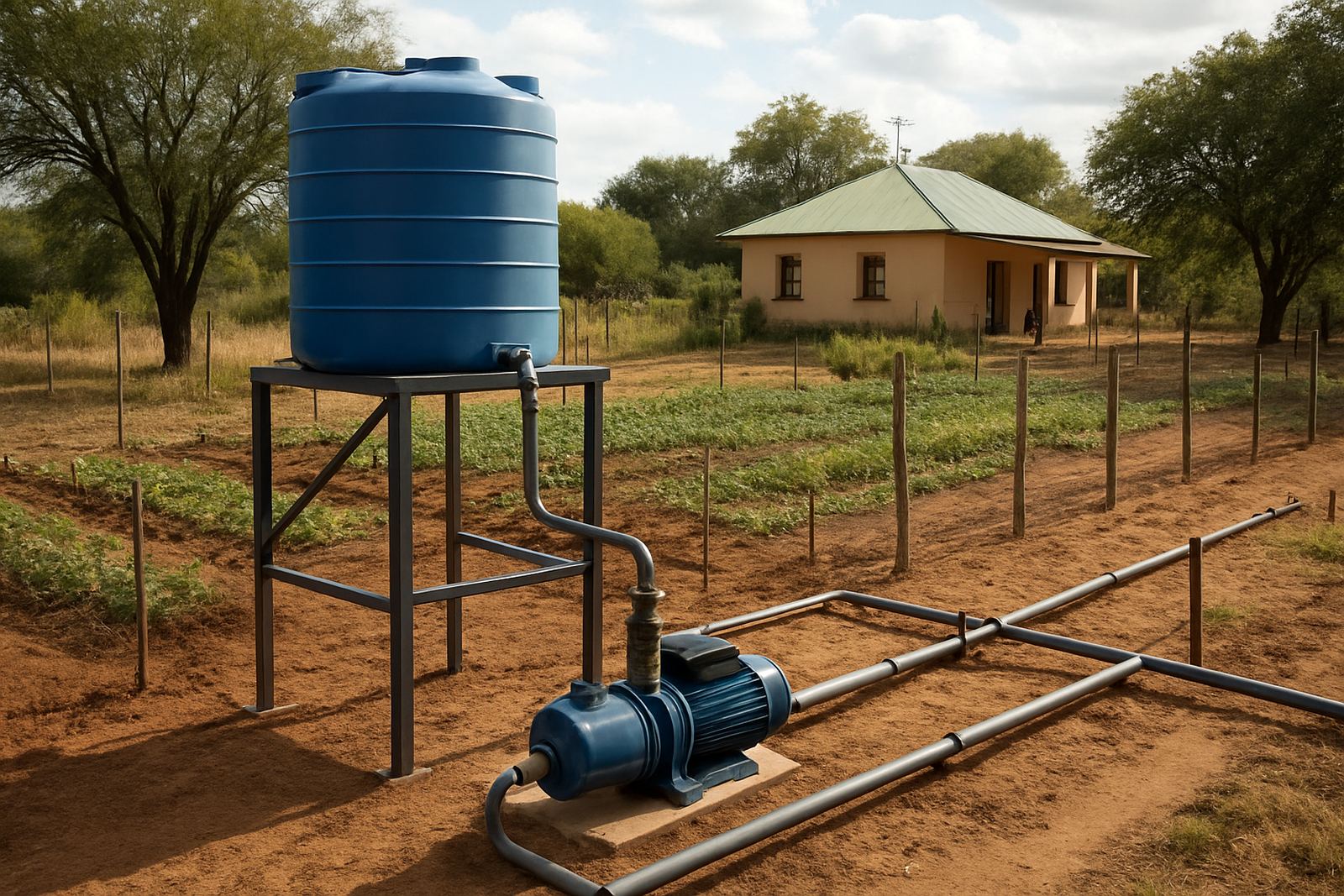
The kit is built for practical use. On a house in Pretoria it may keep toilets, showers and kitchen water available for a day or two. On a smallholding near Brits or Hartbeespoort it can support irrigation top-up, animal drinking points and washdown points. On farms in the Western Cape or Free State, it can form part of a larger water plan where storage and filtration are managed in stages. It is not a luxury add-on, it is a working reserve for when supply is uncertain.
- Useful for domestic, light commercial and agricultural water needs
- Can be linked to borehole, rain-tank or municipal feed water
- Suitable for intermittent outages and planned water interruptions
Size Options And Typical Kit Combinations
Backup water kits are usually selected by daily usage and how long the reserve must last. Smaller homes often start with a single tank and transfer pump, while larger homes, farms and guest properties may need two tanks or a staged system with filtration ahead of storage. The right size depends on how many people use the water, whether it is for full household use or only selected points, and how reliable the incoming supply is.
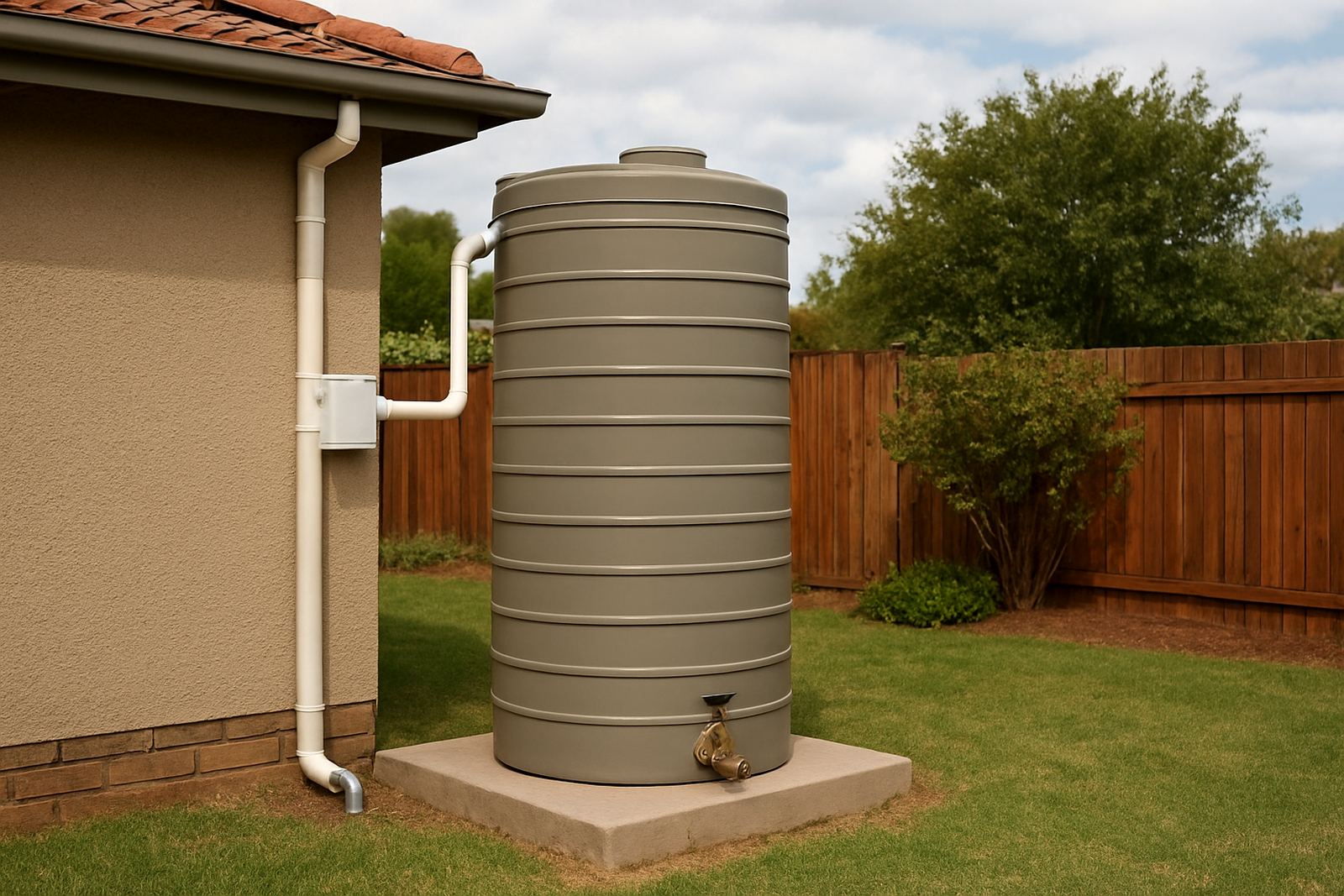
Common options include 500 litre, 1 000 litre, 2 500 litre and 5 000 litre storage volumes, with larger systems available where space and demand allow. Kits can be assembled for wall-mounted filter sets, above-ground tanks, pressure boosting, or gravity feed from raised storage. In coastal areas like Somerset West and Paarl, UV and sediment filtration are often added where water quality changes with season. In inland areas, a simple sediment stage can be enough for some applications, though water test results should guide the final choice.
- 500 litre to 1 000 litre kits for smaller homes and basic backup use
- 2 500 litre to 5 000 litre kits for families, guest units and smallholdings
- Custom combinations for borehole, rainwater or mixed-source supply
Where The Kit Suits Best
This type of kit suits properties where water interruptions create real inconvenience or production losses. In town, it helps keep bathrooms and kitchen use going when pressure fails. On farms it can support animal watering, cleaning and crop operations, especially where the borehole pump is tied to electricity and a generator is not always available. It also works well for homes that want to reduce strain on the main supply by keeping a reserve ready.
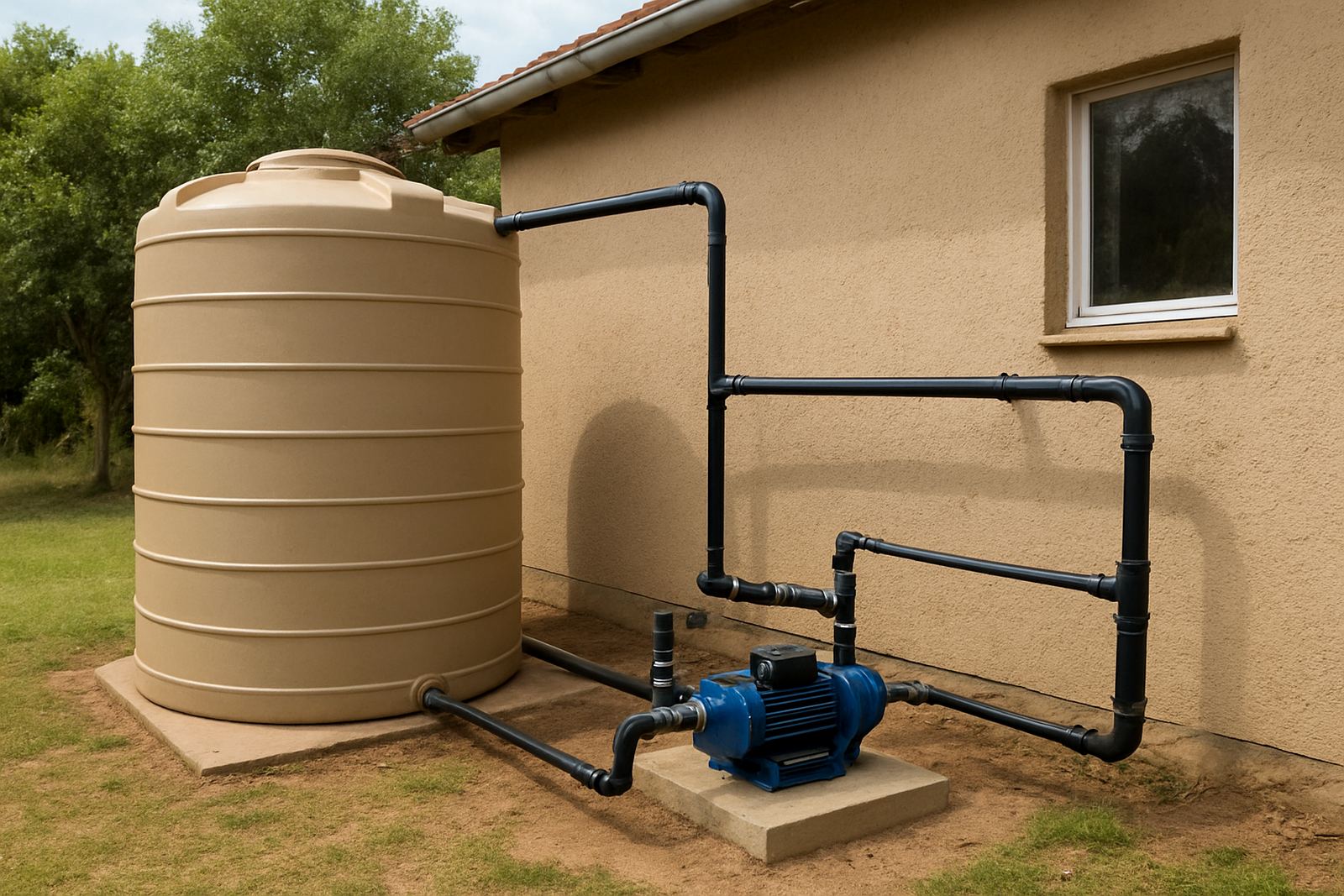
For households in Rustenburg, Brits and Pretoria, the common need is continuity during municipal disruptions and loadshedding. For properties near Hartbeespoort and on the routes towards the Western Cape, we often see mixed use: rainwater capture for storage, borehole top-up for supply, and filtration where the water is used inside the house. A backup kit can be designed to fit limited yard space, a pump house, or a simple concrete pad next to the tank.
- Homes needing reserve water for toilets, washing and cooking
- Farms needing backup for livestock, cleaning and light irrigation
- Guest houses, small business properties and remote sites with unreliable supply
Installation, Power And Water Source Requirements
Installation depends on the source water, the chosen tank size and the pressure required at the points of use. Most systems need a level base, correct pipe sizing, a suitable valve set and a safe overflow path. If the kit includes a pump, it must be matched to the head height, the tank position and the expected flow rate. A poor match can cause low pressure, cycling, or unnecessary wear on the pump.
Some systems can work as gravity feed only, but many homes and farms need a pressure pump for proper use at taps and showers. If the system is linked to borehole water, power backup may be needed for the pump during outages. If it is linked to rainwater harvesting, first-flush handling and pre-filtration matter because roof debris, dust and bird droppings can enter the line. For municipal feed water, a non-return valve and pressure control are usually part of the setup. In areas with strict municipal rules, it is wise to confirm backflow prevention and tank placement before installation.
- May need a stable base, pipework, valves and overflow routing
- Some setups require a pressure pump or pressure controller
- Power backup or generator support may be needed for borehole pumping
Care, Filter Changes And Servicing Intervals
A backup water kit works best when it is checked regularly, not only when something goes wrong. Tanks should be inspected for algae, sediment build-up, loose lids and cracked fittings. Filters need replacement on schedule, especially where water is dusty, iron rich or stored for long periods. Pump seals, pressure switches and float valves also need attention if the system runs often. If the kit sits unused for weeks, it still needs a monthly check so that the first outage does not reveal a hidden fault.
For most homes, a simple maintenance routine is enough: check water clarity, test the pump cycle, inspect the fittings and clean the tank area. Farms and larger sites usually need more frequent service because of higher draw-off and tougher conditions. Coastal humidity can affect metal parts, while inland dust can clog strainers quicker than expected. We also recommend water testing where the source may vary seasonally, because it helps decide whether a sediment filter, carbon stage or UV unit is needed.
- Regular filter changes keep flow and water quality consistent
- Tank cleaning helps reduce slime, smell and sediment carry-over
- Pump servicing prevents pressure loss and premature failure
What To Check Before You Order
Before ordering, it helps to know exactly what the kit must do. Measure the space where the tank or tanks will sit, check access for delivery, and confirm whether the system must feed one tap, a whole house or a farm section. You should also know your source water, your daily usage, and whether you need the kit to work during load-shedding with no grid power at all. Those details affect the tank size, pump choice and filtration layout.
It is also useful to decide if the kit must be installed now or delivered for later installation. Some clients only need delivery coordination and commissioning checks, while others want full installation support and fault finding if the current lines are already in place. If you are in Pretoria, Bloemfontein, Rustenburg, Paarl or Stellenbosch, local access conditions matter as much as the product choice. A narrow side passage, a long driveway, or a sloped yard can change the handling plan. Give us the site details and we can help match the kit properly, so you do not end up with undersized storage or a pump that works too hard.
- Source water: borehole, rainwater or municipal
- Required use: household, livestock, irrigation or mixed use
- Space, access and power availability for the installation
Key facts
| Product type | Backup water reserve kit for domestic and farm use |
|---|---|
| Storage sizes | 500 litre, 1 000 litre, 2 500 litre and 5 000 litre options |
| Water sources | Borehole, rainwater and municipal supply |
| Core components | Tank, fittings, valves, filtration, pump options and pipe connections |
| Typical use | Outage backup, pressure support, reserve storage and point-of-use supply |
| Service support | Site assessments, system sizing, delivery coordination, installation support and maintenance |