A rural lifestyle property with a real water problem
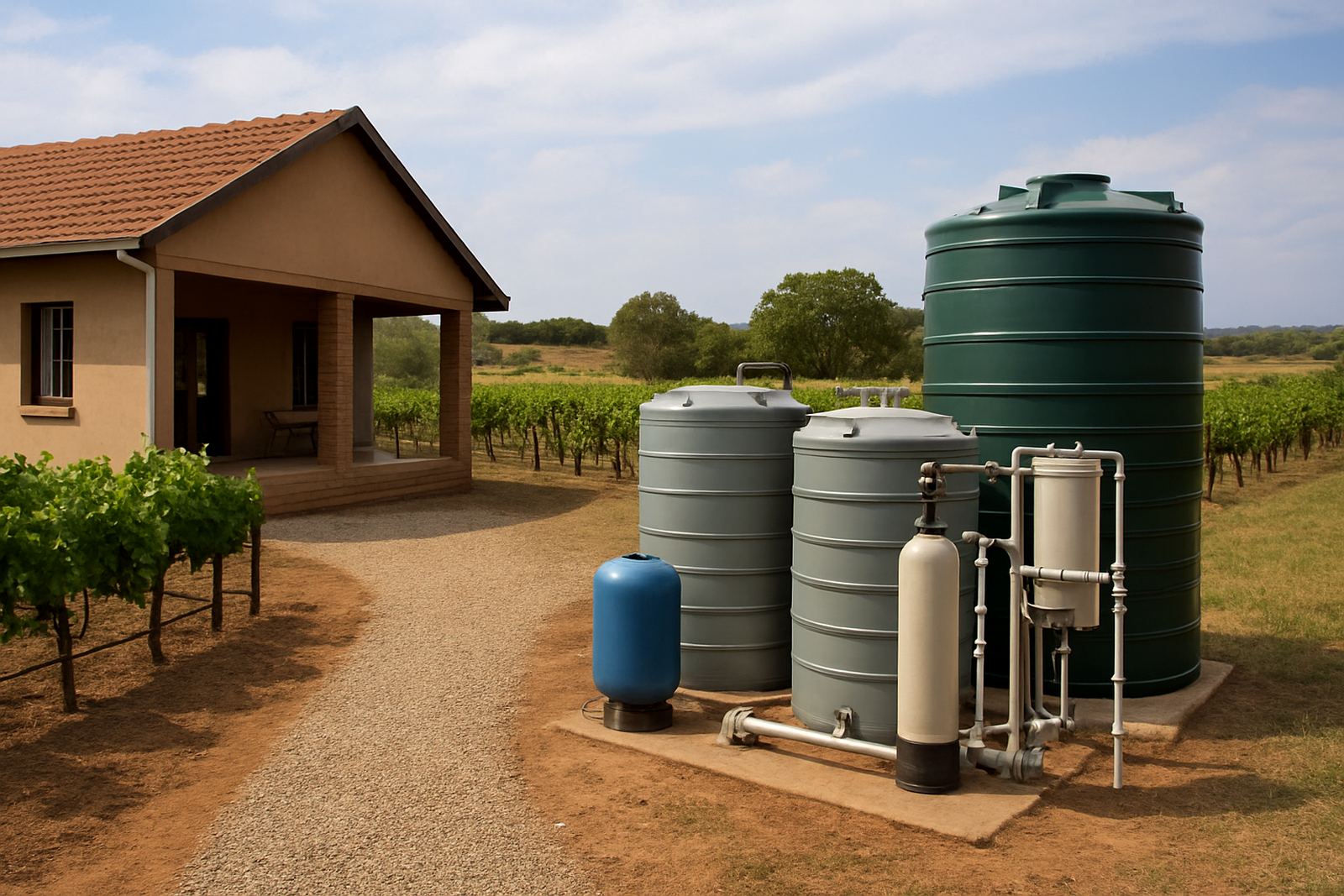
The client was a family living on a vineyard-edge property outside Paarl, with a main house, garden irrigation and a small utility block that all depended on steady water. They wanted to capture roof runoff, store enough water for dry weeks and make that water suitable for household use after treatment. With summer heat, windblown debris and long dry stretches in the Boland, the brief was less about fancy equipment and more about water that works day after day.
The property had a mix of pitched roof areas and open yard space, so first flush control and proper tank placement mattered. Access was also tight for delivery vehicles, and the yard surface could not be damaged by heavy traffic after rain. The client asked us to keep the system straightforward for local maintenance, because a setup that is hard to service usually gets neglected after the first season.
What we needed to solve on site
The main constraint was collection quality. Roof water from a rural property can carry dust, leaf litter and bird droppings, and in windy areas around Paarl that build-up happens quickly. The second constraint was demand balance. The family did not want an oversized tank sitting half-used, but they did need enough reserve for household top-up, washing and selected garden use during municipal restrictions or periods of low rainfall.
We also had to work around local practicalities, including careful placement near the driveway and keeping the system neat enough for a residential setting. The owner wanted easy filter access, clear isolation valves and a pump arrangement that would not struggle during load-shedding. In the Western Cape, a system must keep going when the power goes off and come back cleanly when it returns, no drama and no repeated priming.
- Roof runoff needed pre-filtration before it entered storage
- Stored water had to be suitable for filtration before household use
- The layout had to suit a rural property with limited service access
- Power interruptions had to be factored into the pump and control setup
The rainwater kit we supplied
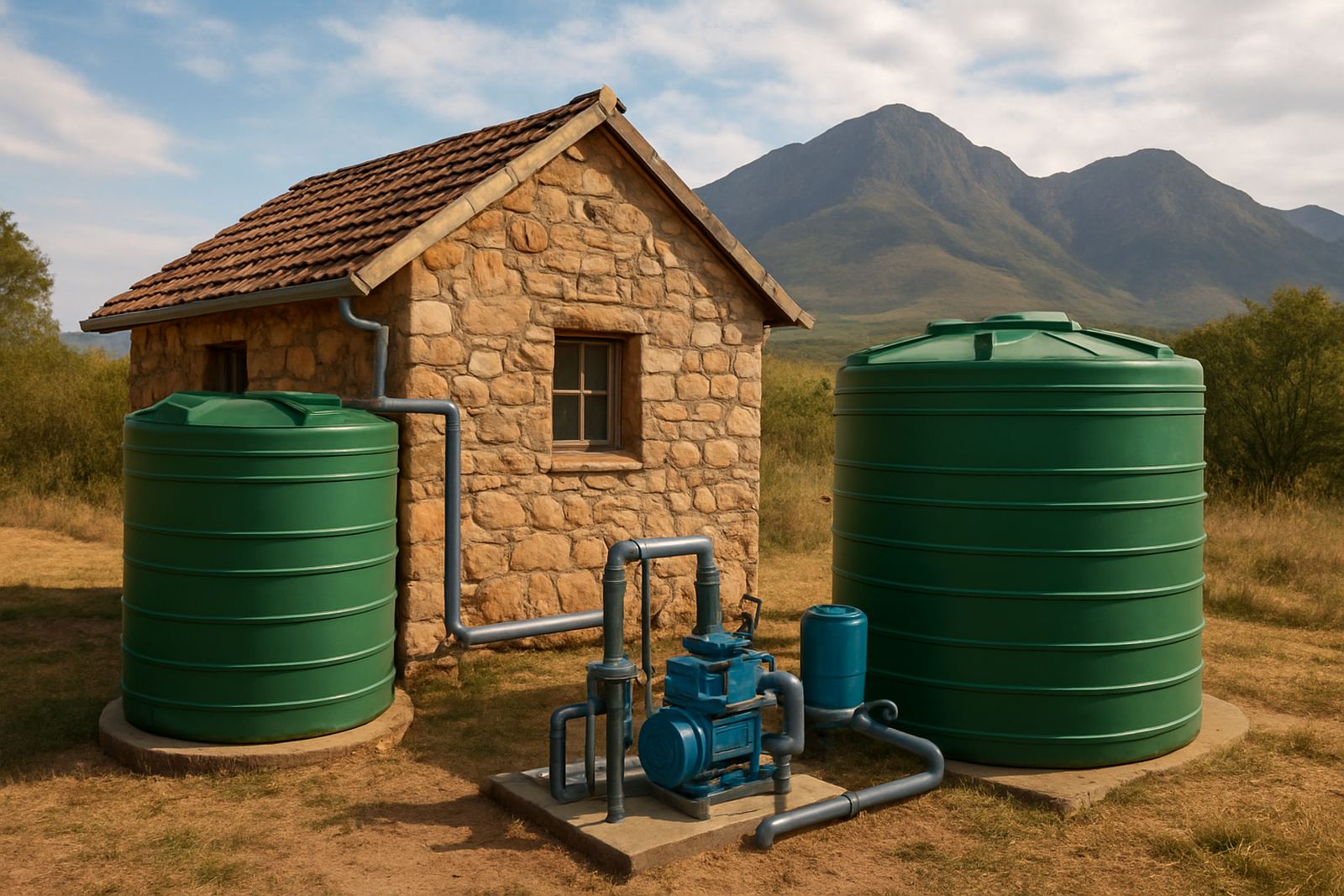
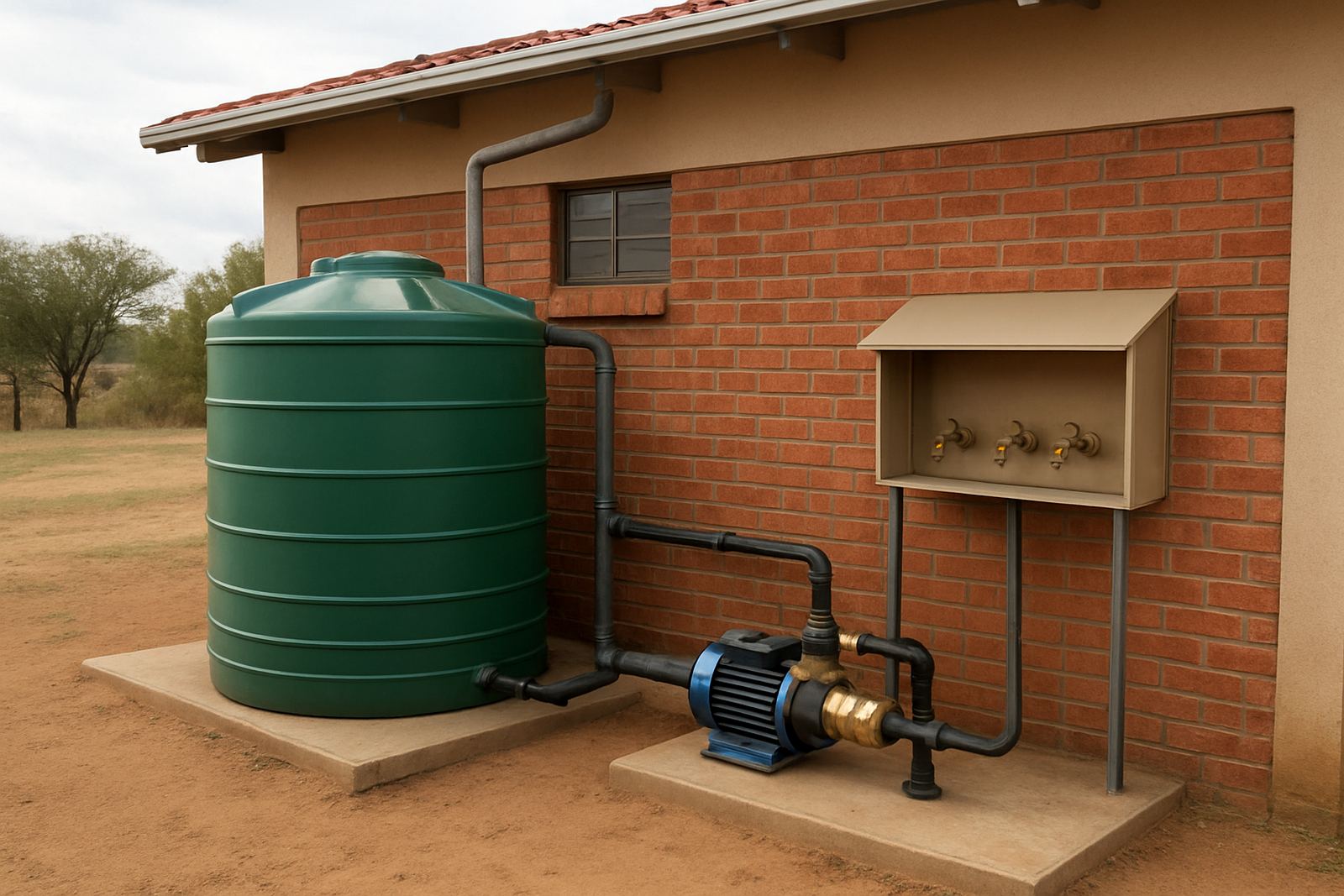
We supplied a rainwater harvesting kit built around storage, pre-filtration and a treatment train that could be serviced without special tools. The package included tank fittings, inlet filtration, leaf screening, a pump set, pressure control and a filtration assembly matched to the water quality on site. The final arrangement was sized for practical daily use rather than maximum possible storage, which kept costs sensible and reduced wasted space.
The key components were a high-capacity storage tank, a sediment stage, activated carbon filtration and final polishing for household use. We also included the pipework, valves, connectors and commissioning parts needed to tie the whole system together. Because the property was exposed to dust and fine organic matter, we set the service intervals with that in mind so the owners would not be caught out by rapid clogging.
- Storage tank: 10 000 litres
- Pre-filtration: leaf screen and first flush diverter
- Primary treatment: sediment removal stage
- Secondary treatment: carbon filtration for taste and odour improvement
- Pressure support: pump with controller and dry-run protection
Delivery, fitment support and commissioning
From approval to handover, the job ran over three weeks. Week one covered site assessment and system sizing, with measurements taken for roof catchment, tank position and pipe routes. Week two was dedicated to kit assembly and delivery coordination. Week three covered installation support, system flushing and commissioning checks. That sequence kept the process tidy and meant the client knew what was arriving before any heavy work started.
Our logistics planner arranged delivery to the property at a time that suited access and reduced handling on the site. The installation supervisor worked with the client’s local contractor on placement and connections, then checked the pump direction, pressure settings and filter sequence. Once the system was live, we carried out water testing and confirmed that the household taps were supplying clear water with steady pressure. There were a few minor tweaks on the first run, mostly around valve position and priming, but nothing that slowed the handover.
How the system performs in daily use
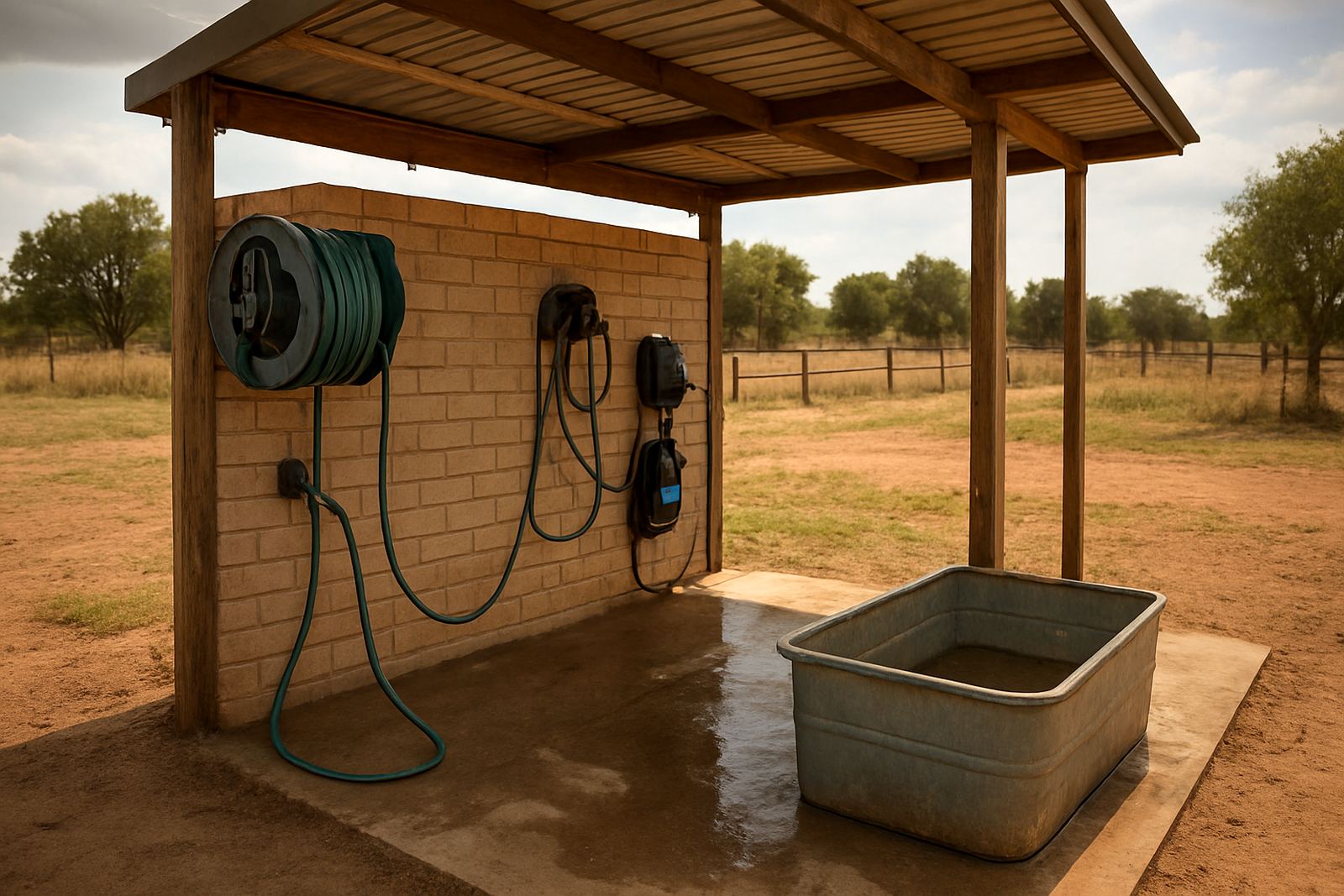
The result was a setup that fits the way the family actually lives on the property. Rainwater is now collected, screened and stored before being treated for domestic use, while the garden can be supplied in a more controlled way when needed. The owners have a clear method for switching between stored water and backup supply, which is useful when municipal pressure drops or when the pumps are off for maintenance.
They also gained a cleaner, simpler servicing routine. Filter changes are now predictable, the tank inlet stays cleaner and the pump is protected from running dry. In a coastal-humidity or high-dust environment, that kind of prevention makes a big difference over time, and it saves call-outs later on. The client said the real value was not just the water, but the peace of mind that the system could keep up through a dry spell without constant attention.
- Cleaner water at the tap after staged filtration
- More reliable supply during dry weeks and power cuts
- Lower strain on the borehole and municipal backup, where applicable
- Clear service points for annual maintenance and filter changes
What we would do again on a similar Paarl property
For a similar vineyard home or lifestyle plot in Paarl, we would keep the same basic approach: size the tank to actual demand, protect the intake early and make the filters easy to reach. Too many rural systems are built with oversized claims and awkward access, which causes trouble later. A practical layout wins every time, especially where rain is seasonal and water quality changes after windy weather.
For a Paarl vineyard home like this, we would still keep the maintenance plan straightforward. Annual tank cleaning, a scheduled filter change and a quick pump check are usually enough to keep the system reliable if the water source is managed properly. If the site has long pipe runs or a high household demand, we would revisit pressure settings and storage balance before final commissioning. That saves money and avoids the sort of small faults that turn into big ones if left alone.
For properties across Paarl, Stellenbosch and Somerset West, this kind of setup is a strong fit when the owner wants to harvest rainwater without turning the homestead into a technical project. It is straightforward, serviceable and built for South African conditions, not for a brochure. That is the sort of job we are comfortable repeating.
Key facts
| Project location | Paarl, Western Cape |
|---|---|
| Property type | Rural lifestyle home with vineyard setting |
| Water source | Roof runoff captured into rainwater storage |
| Storage size | 10 000 litres |
| Timeline | 3 weeks from assessment to commissioning |
| Scope | Site assessment, kit assembly, delivery coordination, installation support, commissioning checks and water testing |