
The brief from a small Magaliesberg cottage
The client was a private homeowner in the Magaliesberg area, outside the main municipal grid and relying on stored water for day-to-day living. On this Magaliesberg cottage job, the brief looked straightforward but needed careful decisions on sizing and layout.: catch rain off the roof, store enough water for a small household, and filter it to a standard suitable for washing, cooking and general domestic use. There was also a strong focus on keeping the system easy to run during load-shedding and simple enough for the owner to monitor without calling for help every week.
The cottage sits on a rocky slope, so we had to work with uneven ground, limited vehicle access and careful placement for the tanks. The client did not want a large or noisy setup, and there was no space for a big plant room. That meant the whole arrangement had to be compact, tidy and practical, with the main fittings protected from sun and weather but still easy to reach for maintenance.
What we sized and supplied
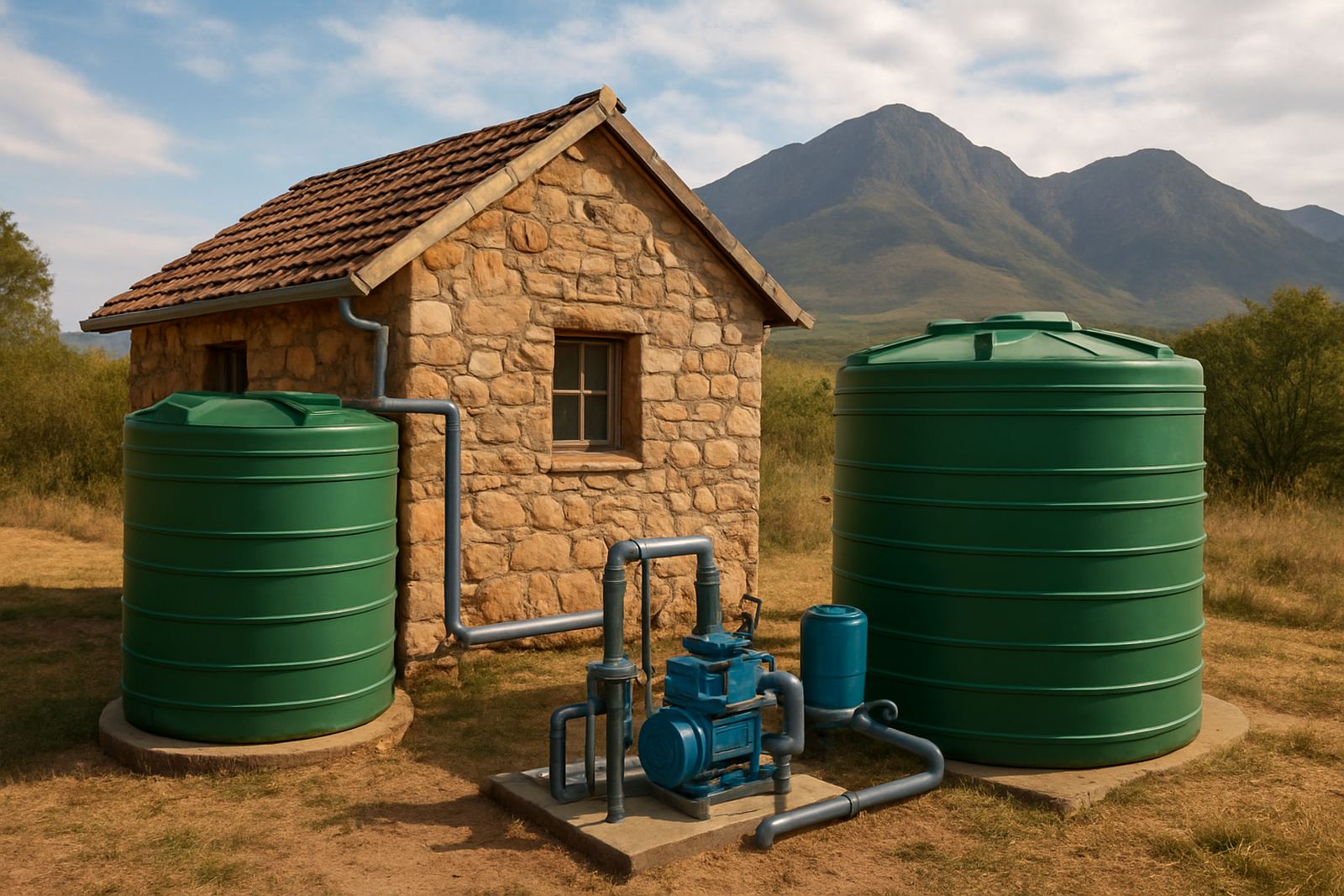
After the site assessment, we recommended a two-tank rainwater storage arrangement with first-flush diversion, leaf screening and a pressure-fed filtration line. The roof catchment was enough to justify a proper harvesting setup, but the client needed storage that would bridge dry winter periods too. We sized the system around everyday use and the local rainfall pattern, not on the best-case scenario.
The supply package included:
- 2 x polyethylene storage tanks, 5 000 litres each
- Gutter leaf guards and first-flush diversion fittings
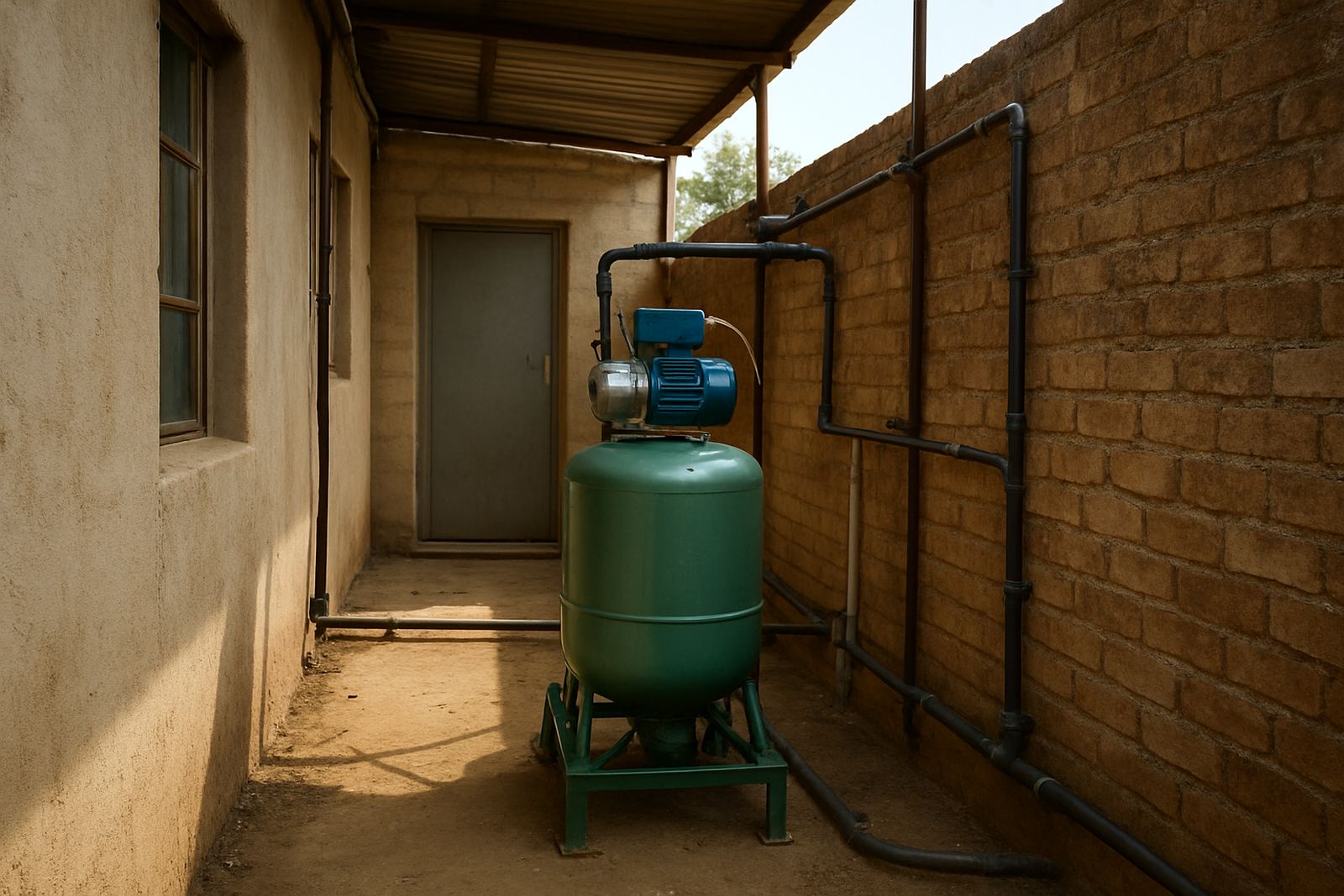
- Transfer pump with pressure control
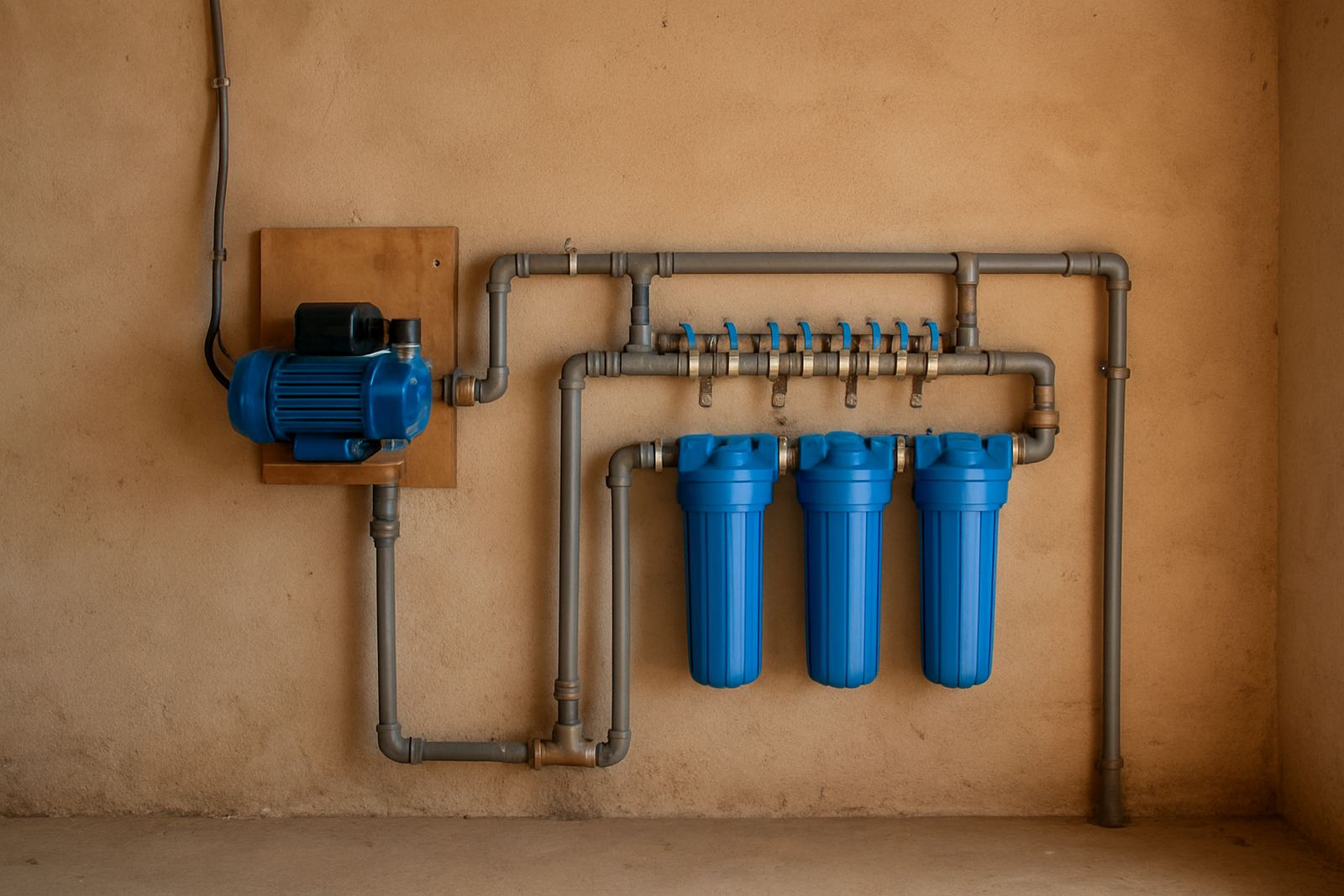
- Sediment filtration stage followed by carbon filtration
- UV sterilisation unit for final treatment
- Tank interconnection fittings, valves and isolation points
- Level indicators and basic operating labels
We also included spare filter cartridges and a simple maintenance schedule so the owner could keep track of filter changes and cleaning intervals without guesswork.
Installation challenges on a rocky site
The main challenge was the site itself. The cottage stands in a part of the Magaliesberg where access is limited and the ground is uneven, so the tanks had to be set on a prepared base that would stay level through seasonal movement. We also had to plan for a long-term solution in a climate that swings between hot, dry months and heavy summer storms. That means fittings must cope with pressure changes, dust and sudden inflow after rain.
Because the client wanted a quiet system, we selected equipment with a modest draw and installed the pump where vibration would not travel into the living area. The pipe routing was kept short and direct, with as few bends as possible to reduce pressure loss. We also positioned the filtration unit under cover to protect it from UV exposure and dust, which matters a lot in the North West and on exposed ridge sites.
- Concrete plinths were set and allowed to cure before tank placement
- Rainwater lines were tested for leaks before final backfilling
- Overflow was directed away from footpaths and foundations
- The pump and treatment line were commissioned in stages
How the job ran over four weeks
The full project ran over four weeks from assessment to handover. Week one covered the site visit, roof measurements and tank sizing. In week two we assembled the kit in Brits and prepared the pipework, valves and treatment components. Week three was the delivery and installation phase on site, including tank positioning, plumbing connections and electrical checks for the pump and UV unit. Week four was commissioning, water testing and final client training.
We kept the process tight because the client wanted the cottage usable as soon as possible. The installation team coordinated delivery carefully, since access roads in the area can become difficult after rain. There was also a need to avoid delays from municipal water interruptions and keep the household supplied during the changeover. By the end of the fourth week, the system was running steadily and the owner had a clear routine for filter checks and tank cleaning.
Water quality and day-to-day results
Once commissioned, the system gave the cottage a dependable water supply without needing to rely on erratic deliveries or a weak municipal line. The rainwater collected from the roof now passes through sediment and carbon stages before UV treatment, which brought the water quality in line with the client’s domestic needs. We also did basic water testing at handover so the owner could see the condition of the supply and understand when to schedule maintenance.
The most noticeable result was consistency. During dry stretches the storage capacity gave the household enough buffer to keep things running, and when summer rain arrived the tanks recovered quickly. The owner also reported that the system was easy to manage during power cuts because the storage and gravity-fed arrangement reduced dependence on constant electricity. In practical terms, that meant less stress, fewer call-outs and a cleaner water supply for daily use.
- Cleaner water for washing and kitchen use
- Reduced dependence on external deliveries
- Improved resilience during load-shedding
- Simple maintenance with clear service intervals
What we would repeat on a similar cottage project
For another cottage project in the Magaliesberg, we would start the same way: assess the site properly, size storage to real roof yield and demand, and keep the treatment line compact.: start with a proper site assessment, size the tanks around actual roof yield and household demand, and keep the treatment line compact. That combination works well for cottages in the Magaliesberg and similar semi-rural sites where space is limited and access can be awkward. It also helps to build in enough storage from the start, because adding capacity later is usually more costly and disruptive.
We would also keep the maintenance access as open as possible. A system may look neat when new, but if the filters are hard to reach or the valve points are hidden behind other equipment, the owner soon loses time every month. On this project, the layout was planned so the water path is easy to follow and the service points are obvious. That has proved useful, especially for a property that is used regularly but not permanently occupied.
For a small off-grid cottage, the aim is not to overcomplicate things. It is to give the owner enough water, enough clarity and enough control to manage the property without hassle.
Key facts
| Project type | Off-grid cottage rainwater harvesting and purification |
|---|---|
| Location | Magaliesberg, North West |
| Timeline | 4 weeks from assessment to handover |
| Storage | 2 x 5 000 litre polyethylene tanks |
| Treatment | Sediment, carbon and UV sterilisation |
| Use case | Domestic water for washing, cooking and general cottage use |