The brief from the yard in Krugersdorp
The client needed a practical setup that could keep horses watered, yards clean and day-to-day chores moving without constant manual top-ups. The site had a mix of stable blocks, exercise areas and wash bays, so the system had to serve more than one point of use and still stay simple for staff to operate. They also wanted a setup that would cope with dry periods and not depend entirely on the municipal line, which is a common concern in the West Rand.
We were asked to design a stable supply system for wash-down water and reliable trough filling, with enough storage to smooth out pressure drops and short outages. The brief was straightforward on paper, but the layout on site meant careful planning around pipe runs, access for maintenance and keeping the water clean enough for animal use.
Constraints we planned around on site
The yard had limited space near the stable rows, so tank placement had to avoid blocking movement for feed deliveries and horse handling. The ground levels also varied across the property, which meant the pumping arrangement needed proper lift calculations and a clean route for the delivery lines. In addition, the client wanted the system tucked away enough to stay out of the dust, but still accessible for inspections and pump servicing.
Water quality was another issue. Borehole water in the area can carry sediment and fine grit, and that is not ideal for valves, float mechanisms or drinkers. We also had to factor in load-shedding, so the solution had to recover cleanly after power interruptions and not leave staff guessing whether the pump had restarted properly.
- Restricted service space near the stable blocks
- Uneven ground levels across the yard
- Sediment control for troughs and valves
- Power interruptions during feeding and washing times
What we supplied and installed
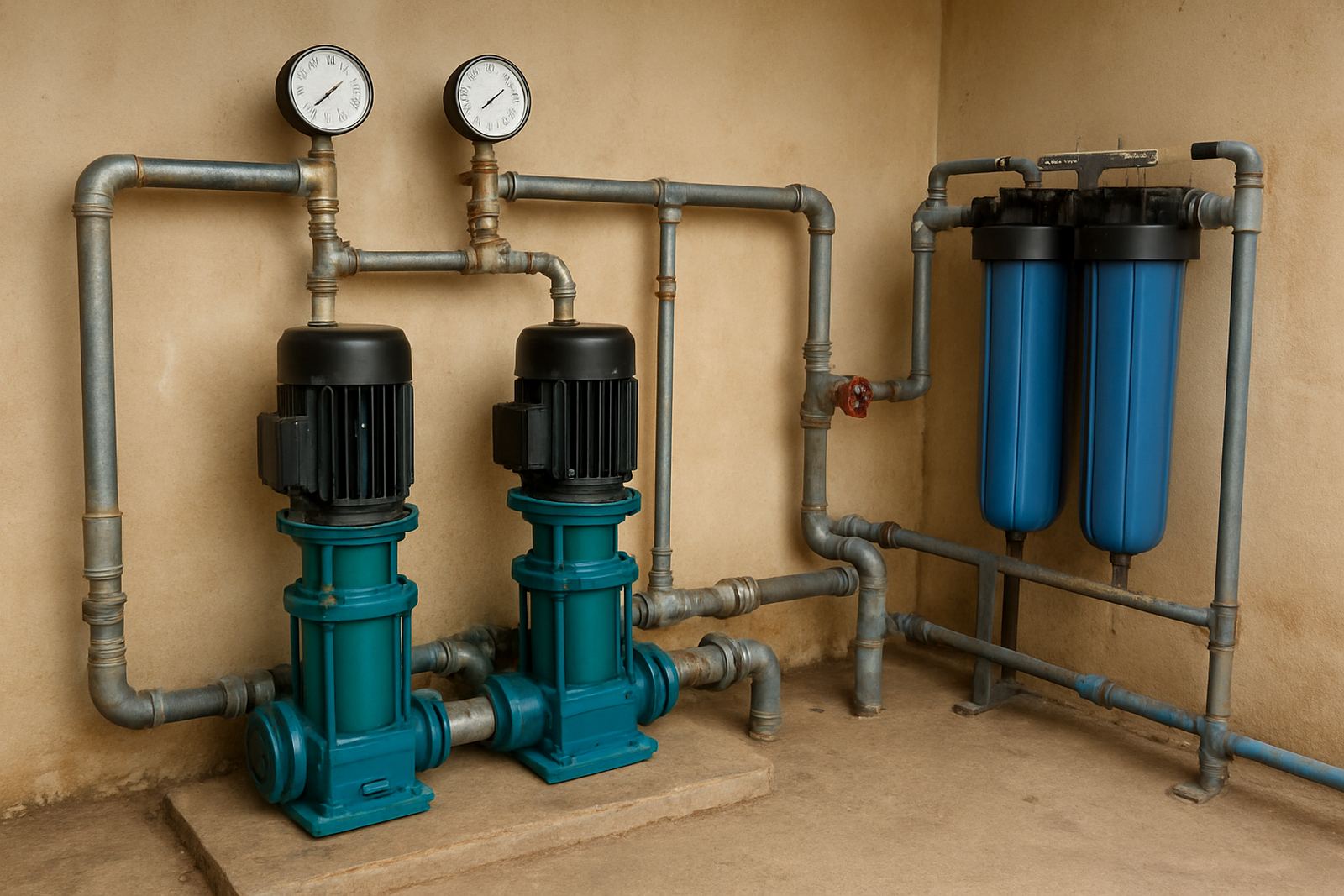
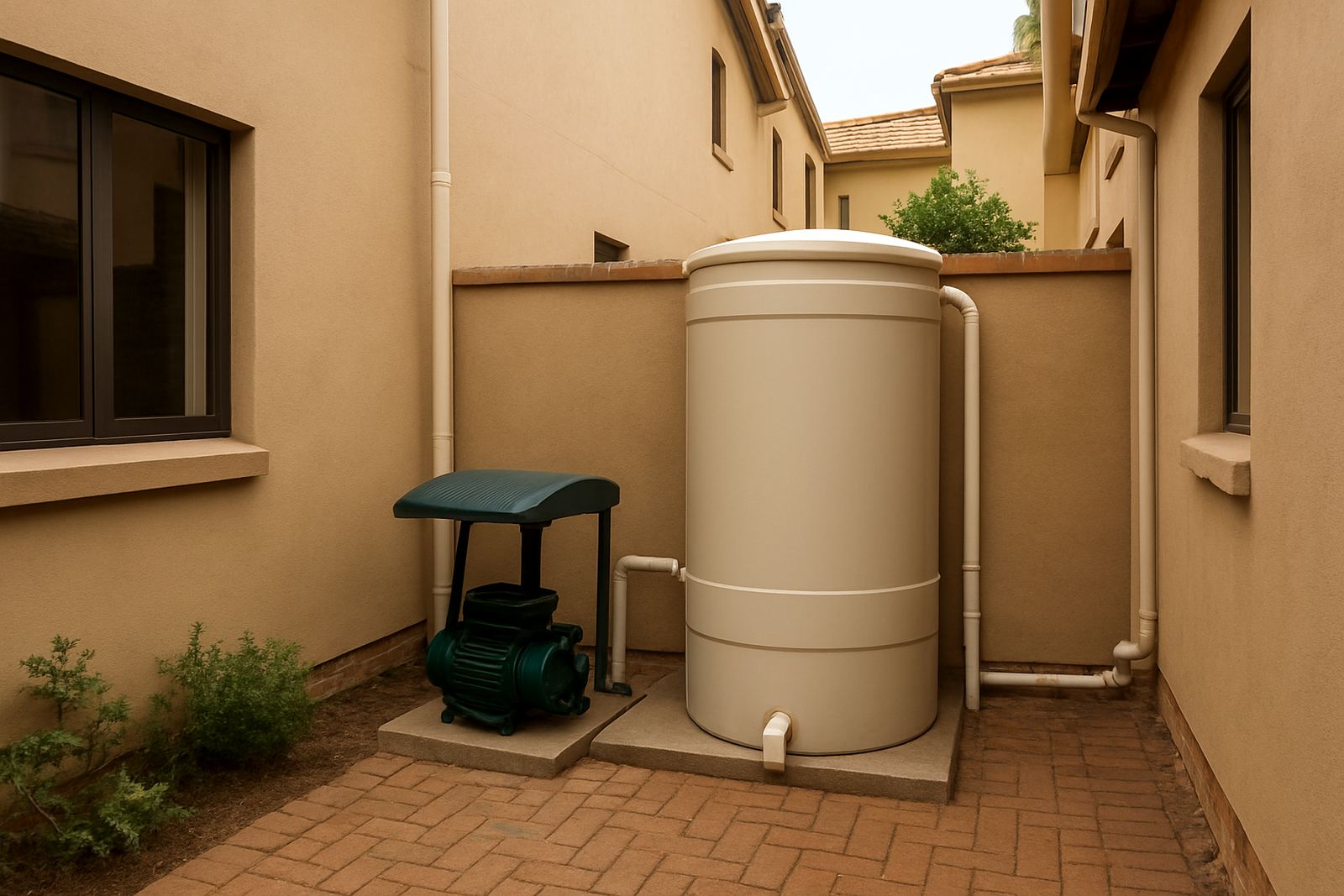
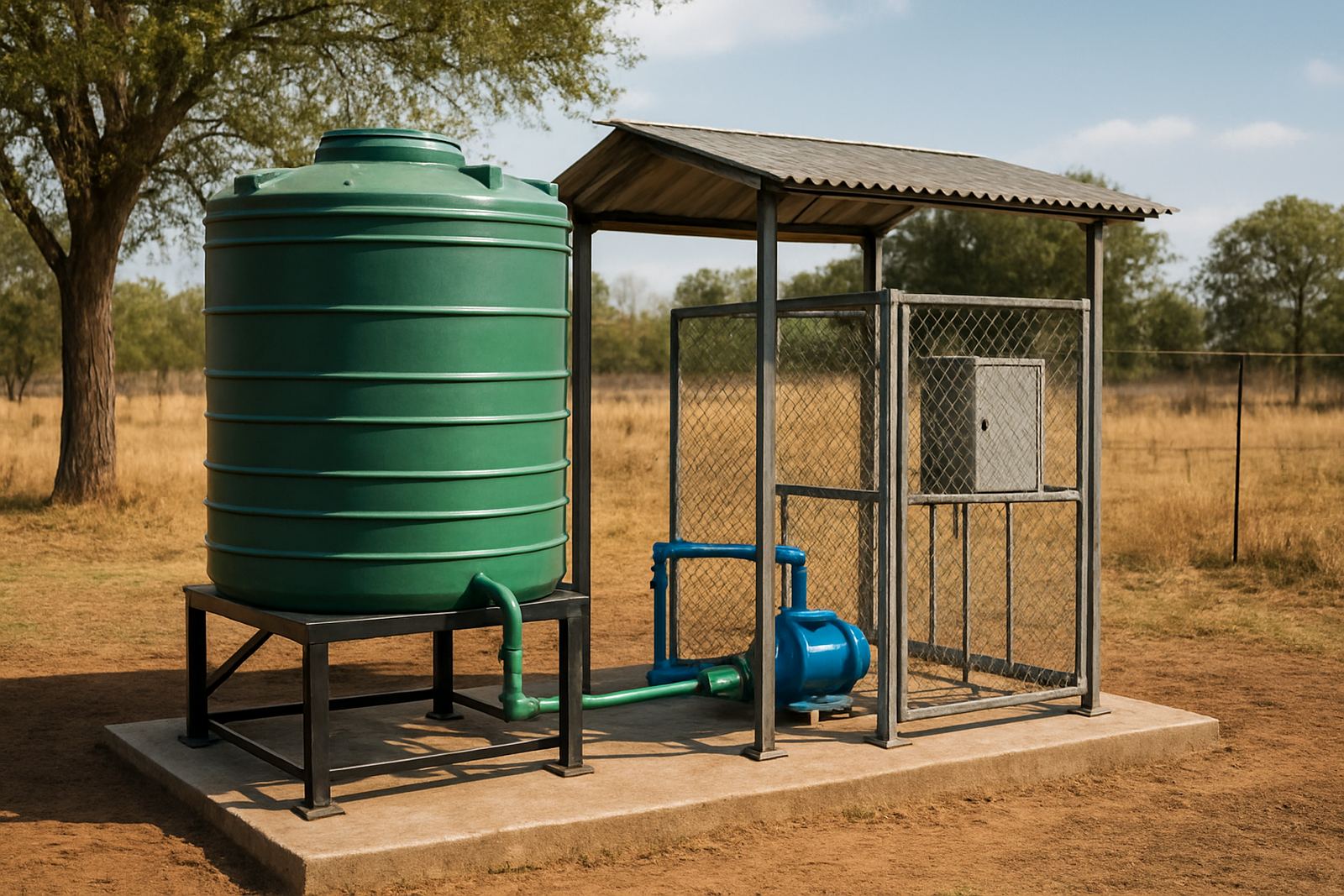
Hydrated supplied a fitted kit built around storage, pumping and filtration components sized for the yard’s actual daily use. The setup included a storage tank bank with inlet control, a pressure pump set, pre-filtration for sediment removal, and distribution lines to the wash-down point and trough filling points. We also included isolation valves and service fittings so the team could shut off sections without taking the whole system offline.
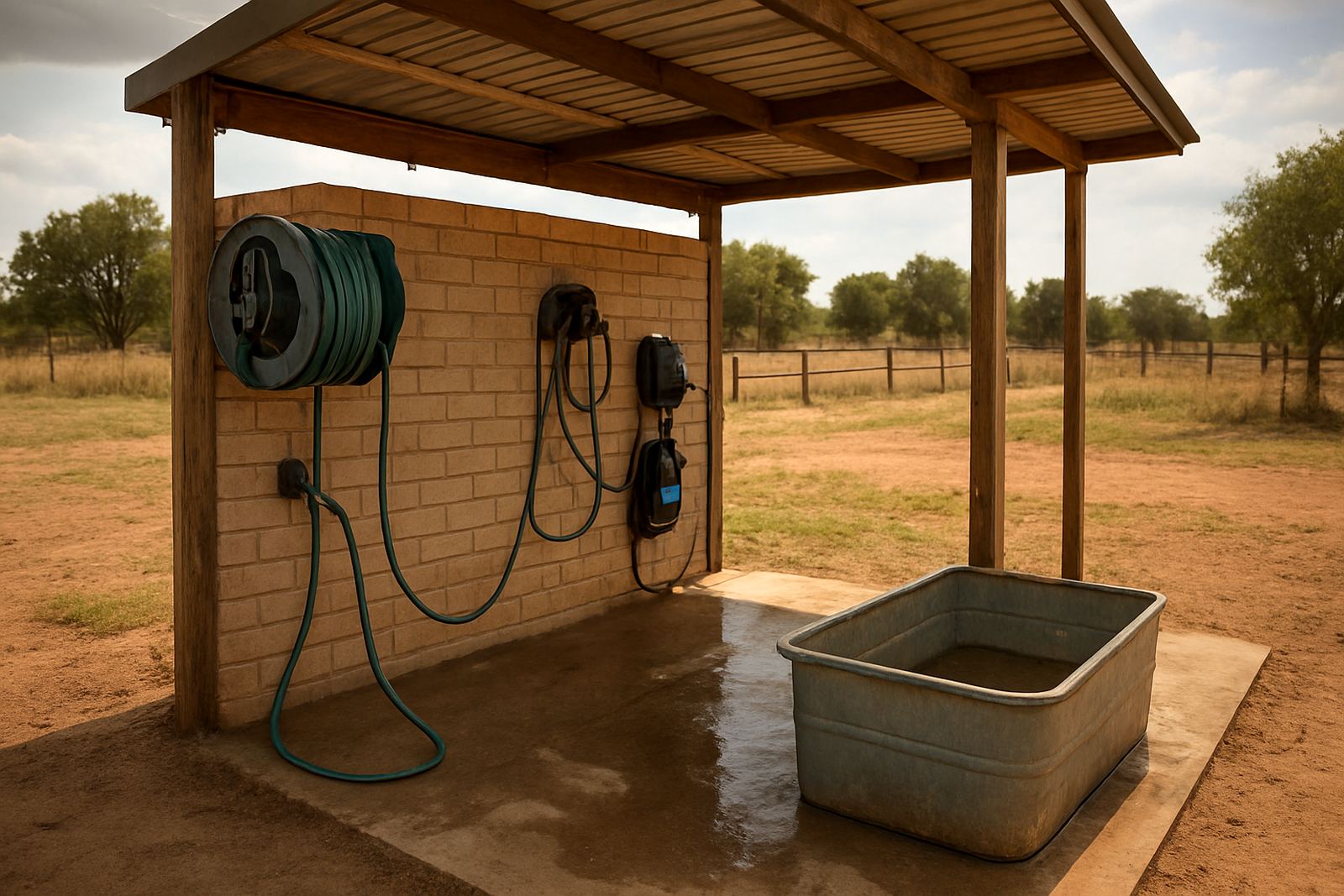
For the trough side, we used float-controlled filling to reduce overflow and water waste. On the wash-down side, the lines were arranged to give a steady delivery rate for rinsing yards and equipment. The filtration stage was chosen to help protect the pump and keep the water cleaner for the horses. Nothing fancy, just a hard-working system that does the job day after day.
- Storage tanks sized for daily animal use and cleaning
- Pressure pump with dry-run protection
- Sediment pre-filtration and serviceable housings
- Float-controlled trough filling
- Isolation valves for maintenance and fault finding
Timeline and installation sequence
The full project ran over three weeks from first site assessment to commissioning checks. Week one was spent measuring the yard, checking water demand and confirming where the tanks, pump and pipe routes could sit without causing obstruction. Week two covered kit assembly, delivery coordination and the physical installation of the storage and distribution components. Week three was used for pressure testing, commissioning and a final handover with the yard team.
That schedule worked because the client needed to keep the yard operating while the upgrade happened. We staggered the work so the stable routine could continue, and we kept disruption to a minimum. The final check included pump cut-in and cut-out settings, float response, leak testing and a walk-through of the shut-off points. A small typo in planning notes aside, the installation moved smoothly and stayed on time.
Results on the ground after handover
After commissioning, the yard had a steadier water supply for trough filling and cleaning, with less time spent on manual checks. Staff could move between wash-down and watering tasks without waiting for pressure to recover, and the storage buffer gave them a useful cushion during outages or pressure drops. The filtration stage also reduced the grit issue that had been wearing on valves and fittings.
For a horse yard, water access has to be predictable. If troughs run low or wash-down points are weak, the whole routine gets thrown off. In this case the system settled in well and gave the client what they asked for, which was a dependable supply that could support the yard in normal weather and during dry spells too.
- More reliable trough filling throughout the day
- Better wash-down pressure at the point of use
- Less manual top-up work for staff
- Reduced grit reaching valves and fittings
What we would repeat on a similar yard
If we were doing another horse yard in Krugersdorp or nearby, we would follow the same approach: start with an on-site assessment, size the storage to real daily demand, and keep the system simple enough for stable staff to manage without fuss. We would also allow for clean access around the tanks and pump from the start, because maintenance is always easier when the equipment is not packed in too tight.
We would keep using staged commissioning and clear handover notes, especially where troughs, wash bays and staff routines all depend on the same water source. In practical terms, that means a system that is easy to isolate, easy to clean and ready for local conditions. The biggest lesson from this job was simple: plan for pressure drops and dust, then build the system to keep going anyway.
Key facts
| Project type | Horse yard water supply upgrade |
|---|---|
| Location | Krugersdorp, West Rand |
| Scope | Wash-down water, trough filling and filtration support |
| Timeline | 3 weeks from assessment to commissioning |
| Core equipment | Storage tanks, pressure pump, sediment filtration, float controls |
| Outcome | Stable daily supply with less manual water handling |