
A Mixed-Use Smallholding With Three Water Demands
The client was a family on a smallholding near Hartbeespoort who needed a practical water supply for day to day use, irrigation and livestock drinking points. The brief was simple in words but tricky in practice: keep the house running, reduce pressure on the municipal backup supply, and make sure the garden and animal point could still get water during dry weeks.
The property had a main house, established beds, a growing veg patch and a livestock area with a separate trough line. Water use changed through the week, so the system had to cope with a bit of everything. We also had to factor in North West heat, a long driveway for delivery access, and the fact that the client wanted a setup that would not need constant attention. The smallholding did not have much spare plant room, so the equipment footprint had to stay tight.
We started with a site assessment and checked the available borehole point, roof catchment and existing pipe runs. The aim was to avoid oversizing anything and still leave enough headroom for future expansion. It helped that the family had a clear idea of how much water the house uses vs the garden and stock water, which made the sizing quicker.
What We Sized And Supplied For The Property
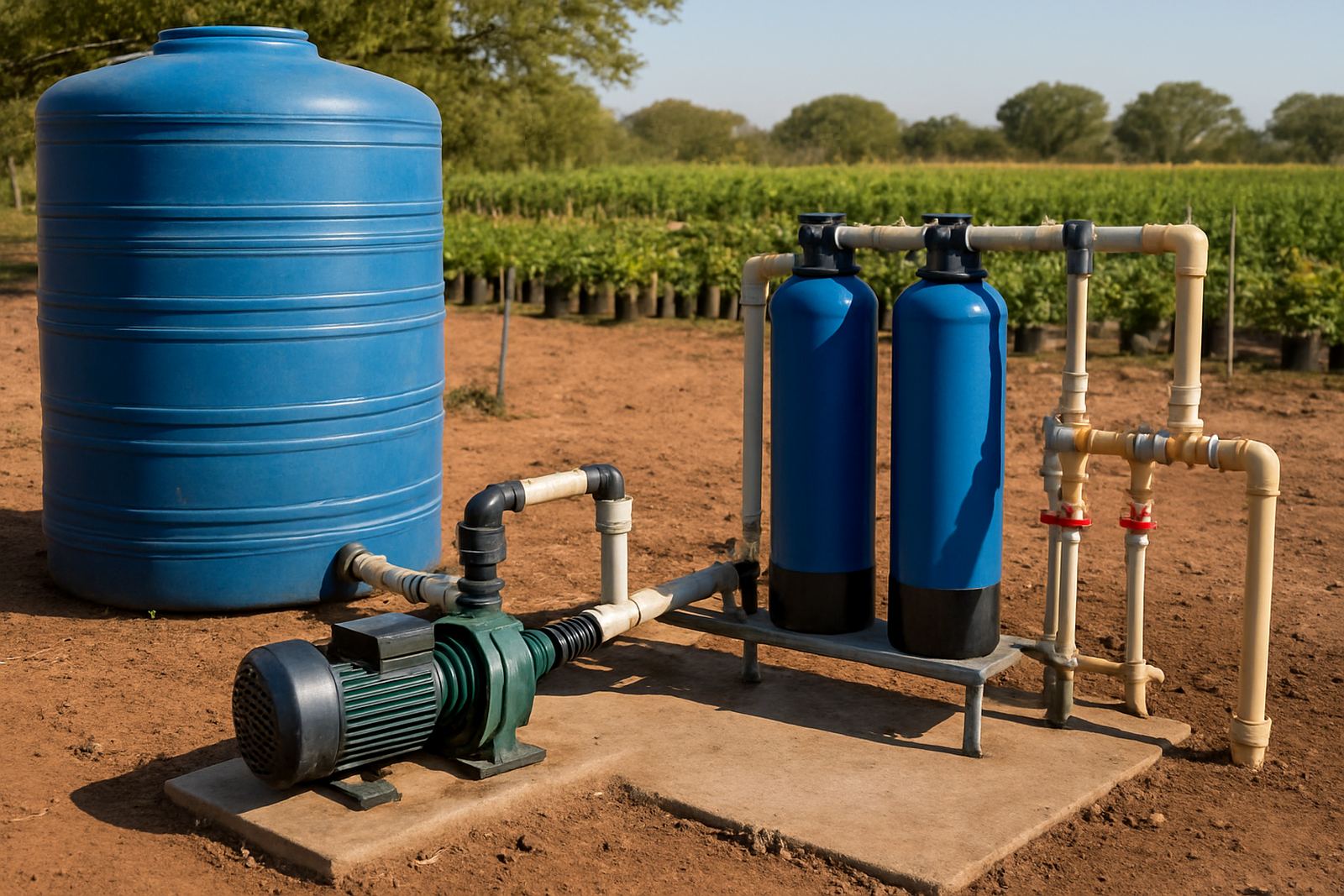
After assessing the site, we put together a combined borehole and rain-tank solution with filtration for household use and separate support for the garden and livestock point. The kit was assembled in sections so the client could stage the work over two visits instead of trying to do everything at once.
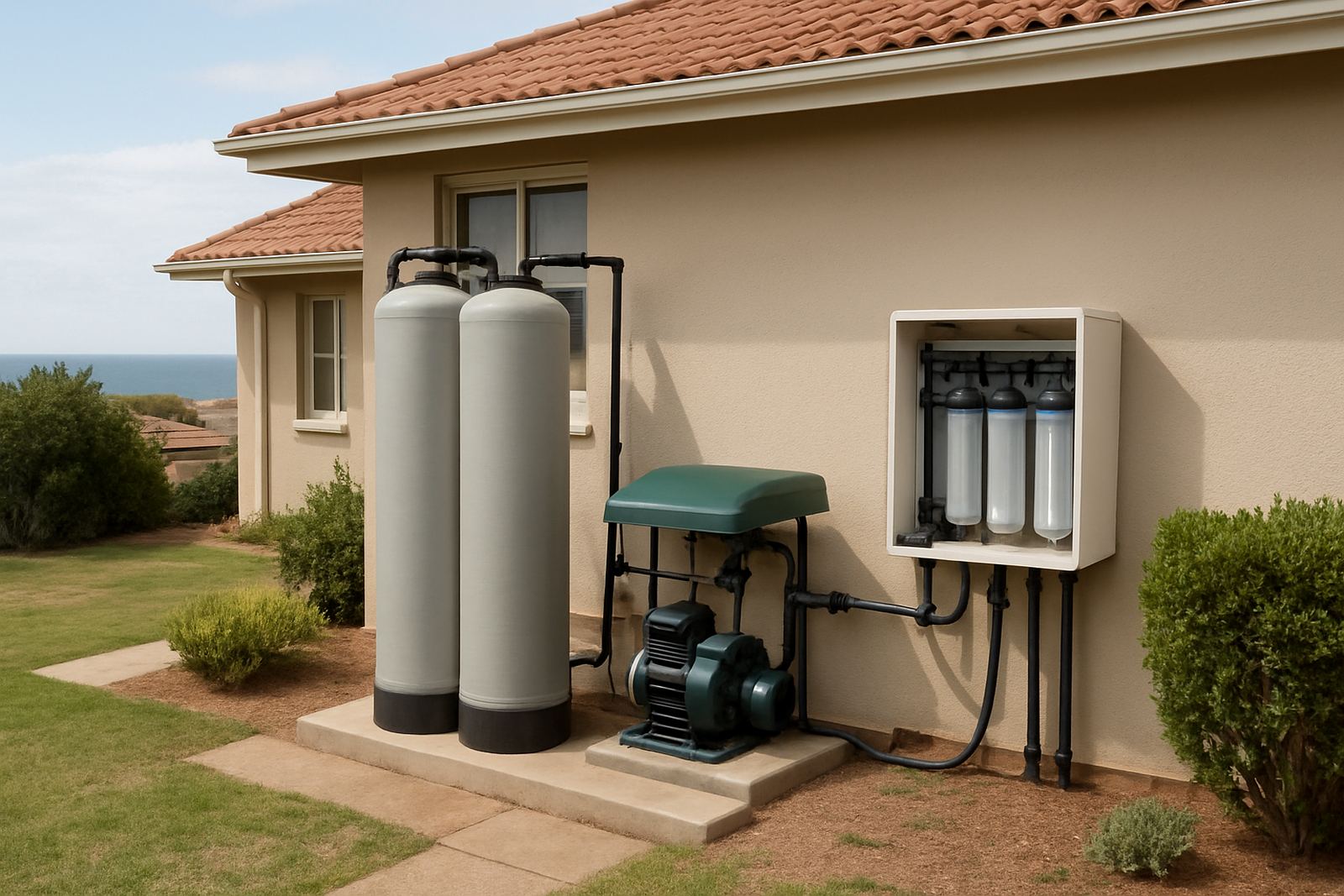
Key supply items included a storage tank bank, pressure pumping equipment, pre-filtration and fine filtration stages, pipe fittings, valves and the control gear needed for switching between sources. We also supplied the parts required for commissioning and made sure the pumping side could manage normal household demand without constant cycling.
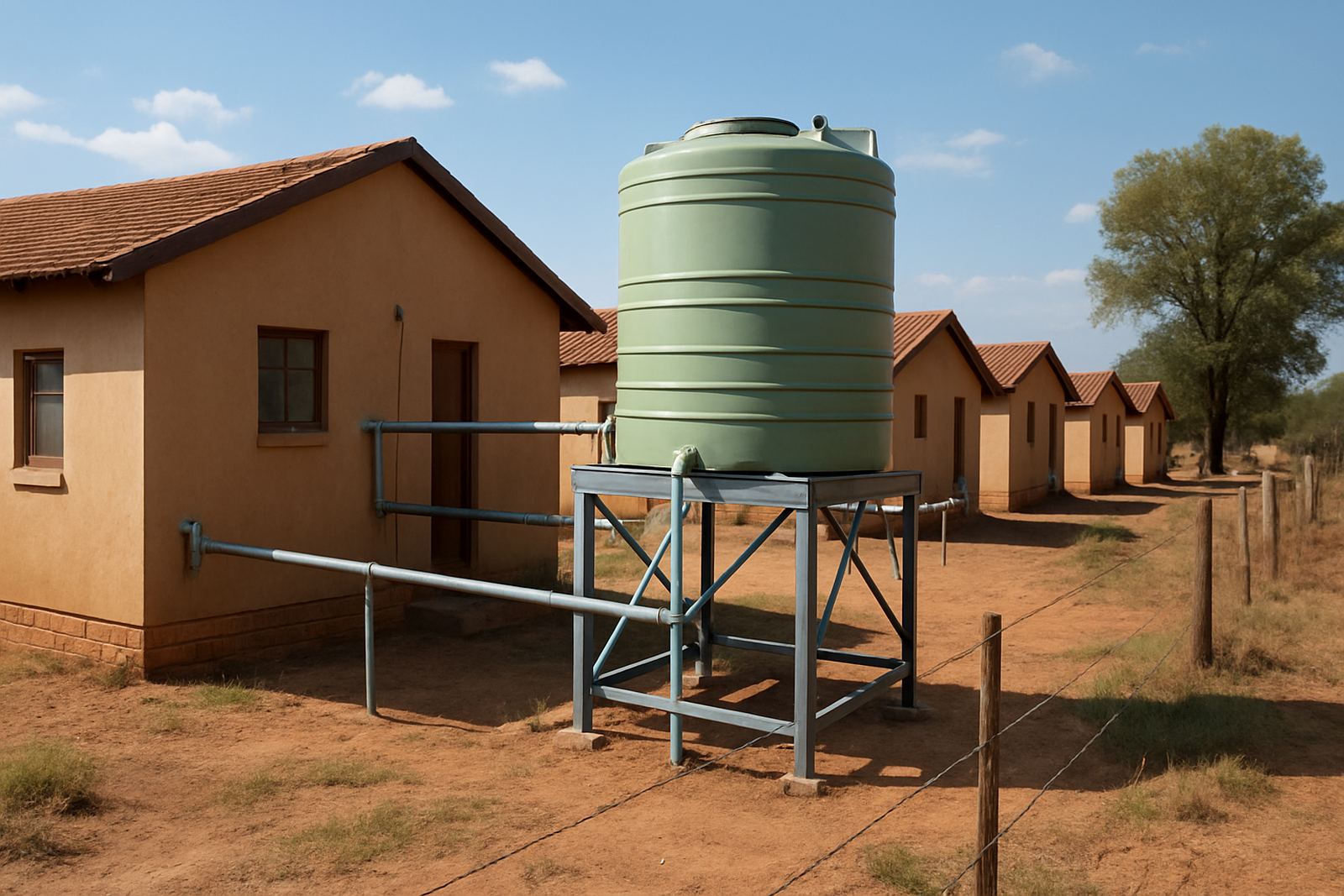
- Rain storage: 2 x 5 000 litre polyethylene tanks, linked for combined storage
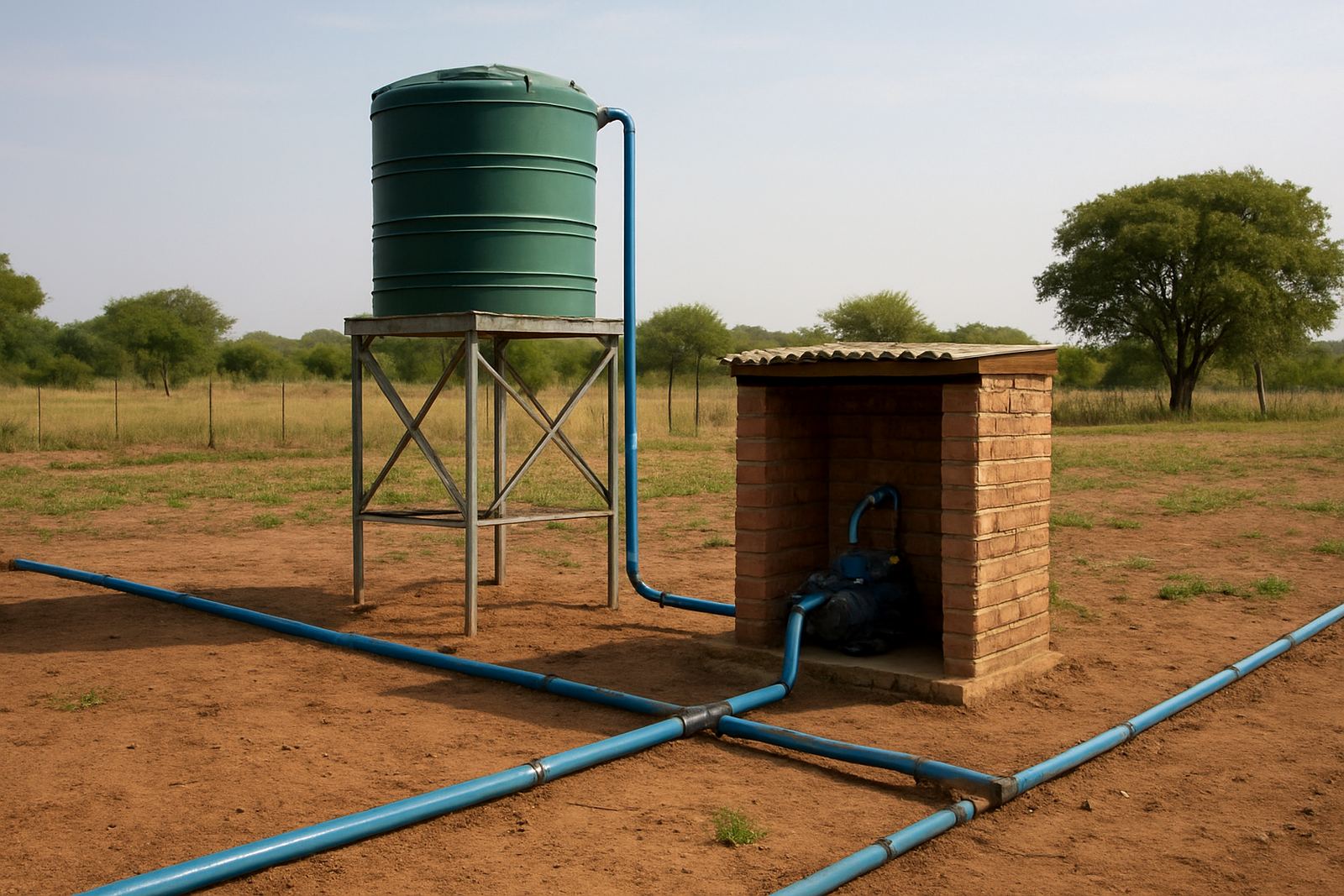
- Borehole side: submersible pump setup rated for steady domestic and garden demand
- Filtration: sediment stage, carbon stage and final polishing filter for household line
- Pressure control: pressure vessel and controller to reduce short cycling
- Distribution: separate line for house, garden tap-off and livestock point
- Protection: dry-run protection, non-return valves and isolating valves for maintenance
The roof runoff was routed into storage for use when the borehole was rested or during high demand periods. That gave the family more flexibility and took pressure off the pump, especially during load-shedding windows when they wanted to avoid unnecessary starts. The pipework layout was kept neat and serviceable so filters and valves can be reached without pulling the whole line apart.
Site Limits At This Hartbeespoort Smallholding And Our Borehole Workarounds
The biggest constraints were space, mixed water quality and uneven demand. Borehole water on the property had enough yield for domestic use, but the family did not want to rely on it alone because of seasonal pressure and maintenance breaks. Roof water was useful, but it needed proper first-stage filtration and clean storage so it would not become a problem later.
Another issue was the distance between the water point and the garden beds. Rather than run one long line and hope for the best, we split the system into practical sections and placed valves where the client could isolate each zone. That makes fault finding much easier if a section ever gives trouble. We also checked the tank pad levels carefully because a slight slope on the yard would have caused headaches down the line.
- Short installation window because the family needed water back quickly
- Limited space near the pump area, so equipment had to be compact
- Mixed water quality, which meant filtration could not be skipped
- Livestock access had to stay separate from the household line
- Maintenance access had to remain clear for future filter changes and pump servicing
There was also the practical matter of keeping the site usable while the work was underway. The client had cattle feed deliveries and garden access happening at the same time, so the installation had to be planned around the yard movement. A little extra coordination saved us from a lot of hassle later on.
Installation Support And Commissioning Over Three Weeks
The project ran over three weeks from initial assessment to final commissioning checks. Week one covered the inspection, measurements and system sizing. Week two was the kit assembly, delivery coordination and set out of tanks and pipe runs. Week three was installation support, water testing and commissioning. The timeline worked well because the client could prepare the area while we assembled the parts off site.
During commissioning we checked pressure performance, valve function, filter flow and switching between supply sources. We also tested the water at the point of use and adjusted the system to suit the client’s actual demand rather than just the paper calculation. That matters on a smallholding because the real usage pattern often changes once the family starts using the system properly.
The final handover included a quick maintenance run-through so the family knew when to change filters, how to isolate the livestock line and what to watch for if the pump starts short cycling. It is a fairly simple system once it is set up, but only if the first checks are done properly.
Results For House, Garden And Livestock
The result was a reliable mixed-use water setup that gave the property better day to day control. The house now has steadier pressure, the garden can be watered without pulling directly from the domestic line, and the livestock point has a clear, separate feed. That split reduced waste and made the whole place easier to manage.
Because the rain tanks are tied into the same water strategy, the family can carry more storage through dry spells and reduce dependence on any one source. That is useful in Hartbeespoort where weather, power cuts and seasonal use all affect how hard a water system has to work. The filters also improved the quality at the tap, which was important for drinking water and general household use.
From a maintenance point of view the setup is practical too. The filters are accessible, the valves are labelled and the major components can be serviced without tearing into the whole line. That makes future filter changes and annual maintenance simpler, and cheaper too.
What We Would Do Again On A Similar Smallholding
If we were doing the same kind of property again, we would keep the same approach: assess the real usage first, separate the loads properly and build in enough storage for dry stretches. A smallholding is not just a house with a bigger yard. The water pattern changes with planting, animals and family routines, so the system has to be planned with that in mind.
We would also keep the service points easy to reach. On this project, that choice paid off because the client can now carry out basic upkeep without calling someone out for every small thing. Good layout saves time later and in our experience it cuts down on avoidable faults.
For a property like this, we would again recommend a combined approach with borehole support, rain storage and a proper filter train. It gives the owner more control during dry weeks and makes the whole setup less vulnerable to one failure point. That is the kind of water arrangement that suits a working smallholding, not just a showpiece.
Key facts
| Location | Hartbeespoort, North West |
|---|---|
| Property type | Mixed-use smallholding |
| Timeline | 3 weeks from assessment to commissioning |
| Storage | 2 x 5 000 litre rain tanks |
| Water uses | House, garden and livestock point |
| Key services | Site assessment, system sizing, kit assembly, installation support, commissioning checks |