Staff Housing Water Needs In Potchefstroom
The client was a farming operation outside Potchefstroom with several staff housing blocks used year-round by permanent and seasonal workers. The brief was straightforward in principle but tight in practice: keep the accommodation supplied with clean water for showers, toilets, laundry and kitchen use, while reducing dependence on an unreliable single source.
In this part of the North West, pressure can vary through the day and load-shedding makes small systems fail when they are not planned properly. The site also had a mix of older pipework and newer units, so the solution had to be practical, easy to maintain, and suitable for staff who could not be expected to manage a complicated system every day.
- Client type: farm accommodation blocks
- Town: Potchefstroom, North West
- Use case: multi-unit domestic supply for staff housing
- Main goals: steady pressure, safe water, lower downtime
The Brief And Site Constraints
The brief was to design a system that could serve multiple units without pressure loss at peak times, especially early mornings and after evening shifts when showers and laundry points are used at once. Water quality was also part of the brief because any borehole water going into staff housing has to be treated properly before it reaches taps and geysers.
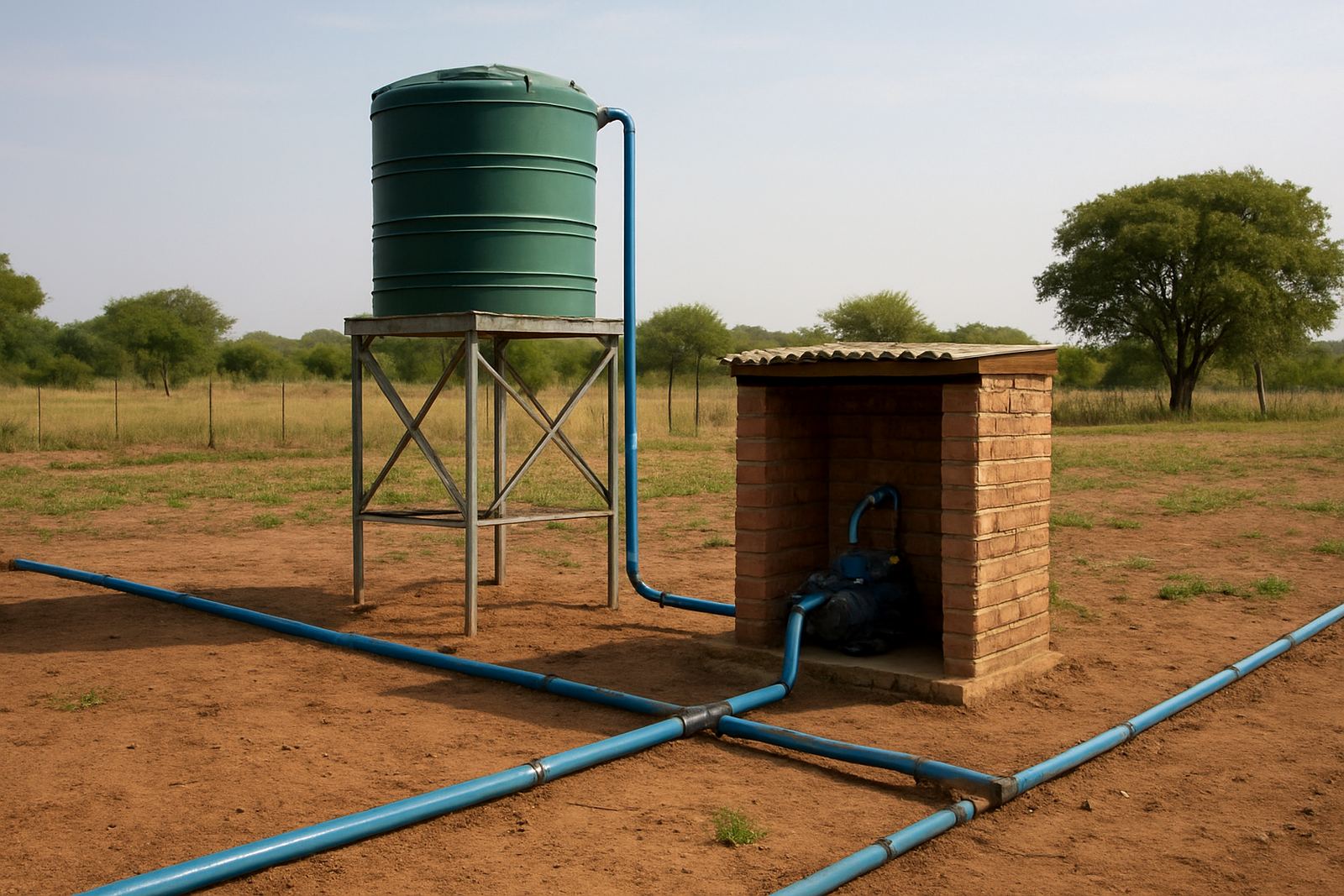
There were a few site constraints. The borehole position was not close to the accommodation blocks, so delivery distance and friction loss had to be allowed for. The pump room space was limited, and access for maintenance needed to stay clear for future servicing. Rainwater harvesting was also requested, but the storage area had to suit farm traffic and not block vehicle movement.
- Distance from source to tanks and points of use had to be calculated carefully
- Equipment needed to be serviceable without disturbing the housing blocks
- System had to keep working during power interruptions
- Filtration had to suit domestic use and protect fittings
What We Supplied And Set Up
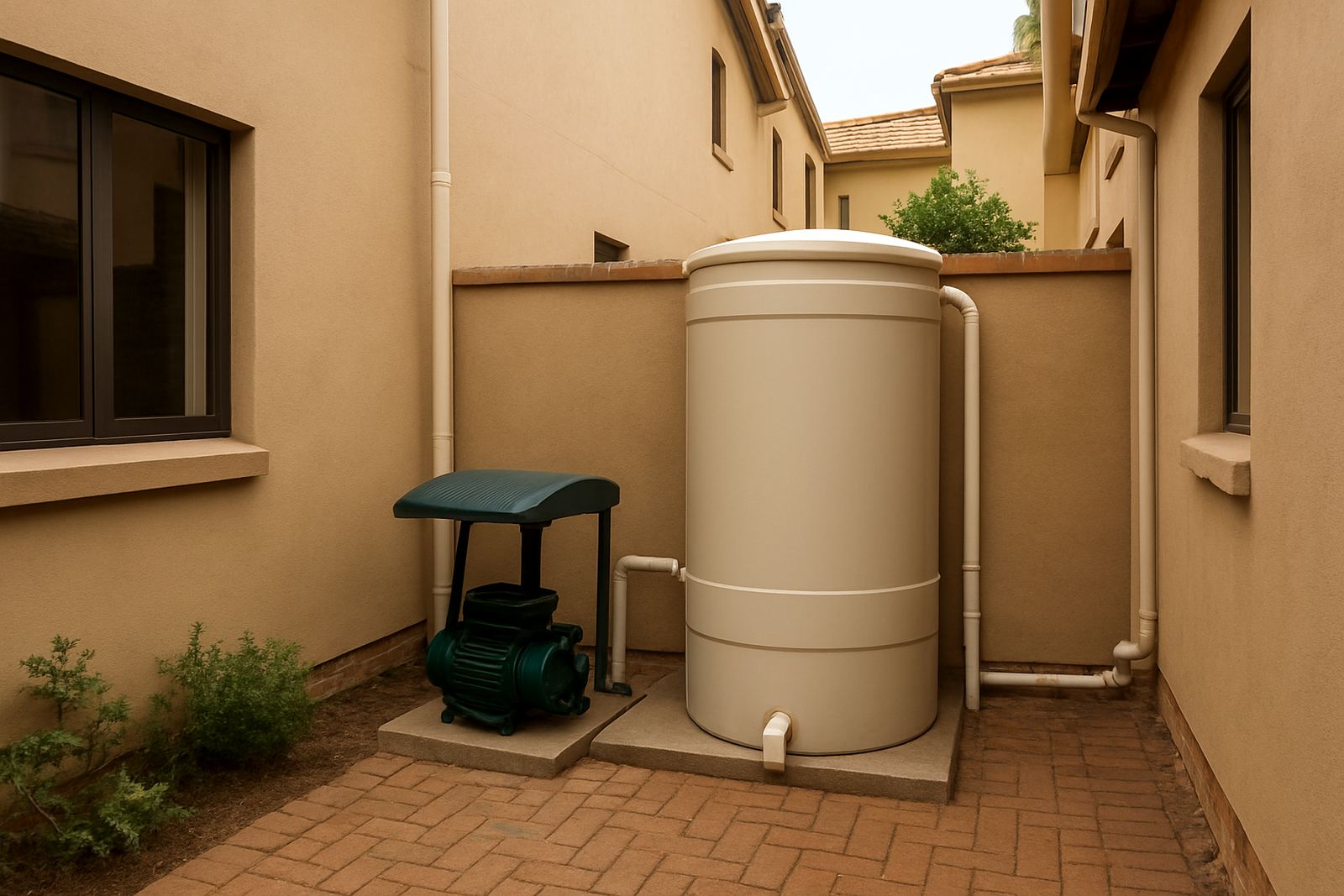
We supplied a complete water kit built around borehole supply, rainwater support and filtration for domestic use. The arrangement included a pump set matched to the borehole yield, storage tanks for buffer capacity, pressure control equipment, and a filtration train to improve water quality before distribution. We also supplied the fittings and valves needed to make the system manageable for the farm team.
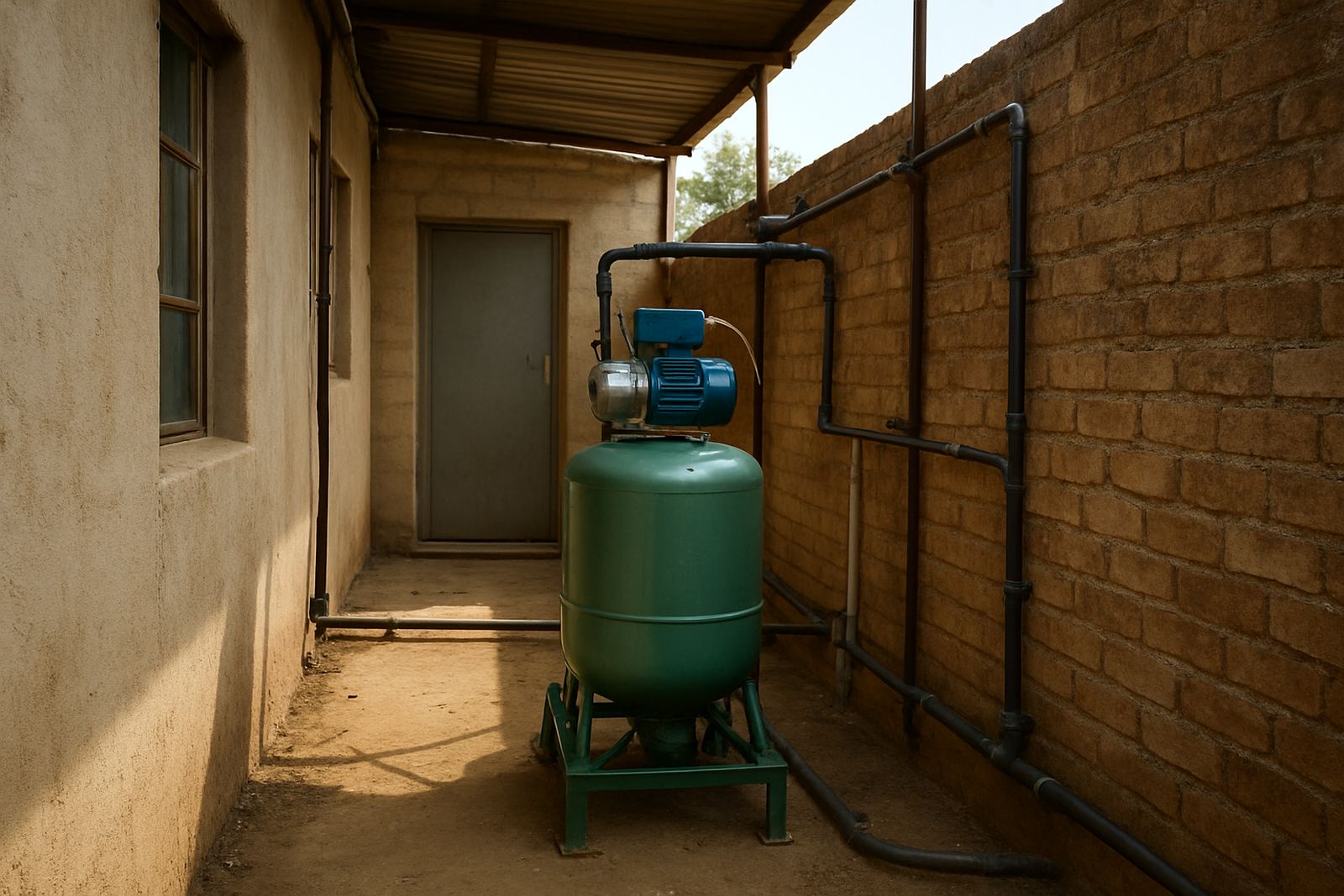
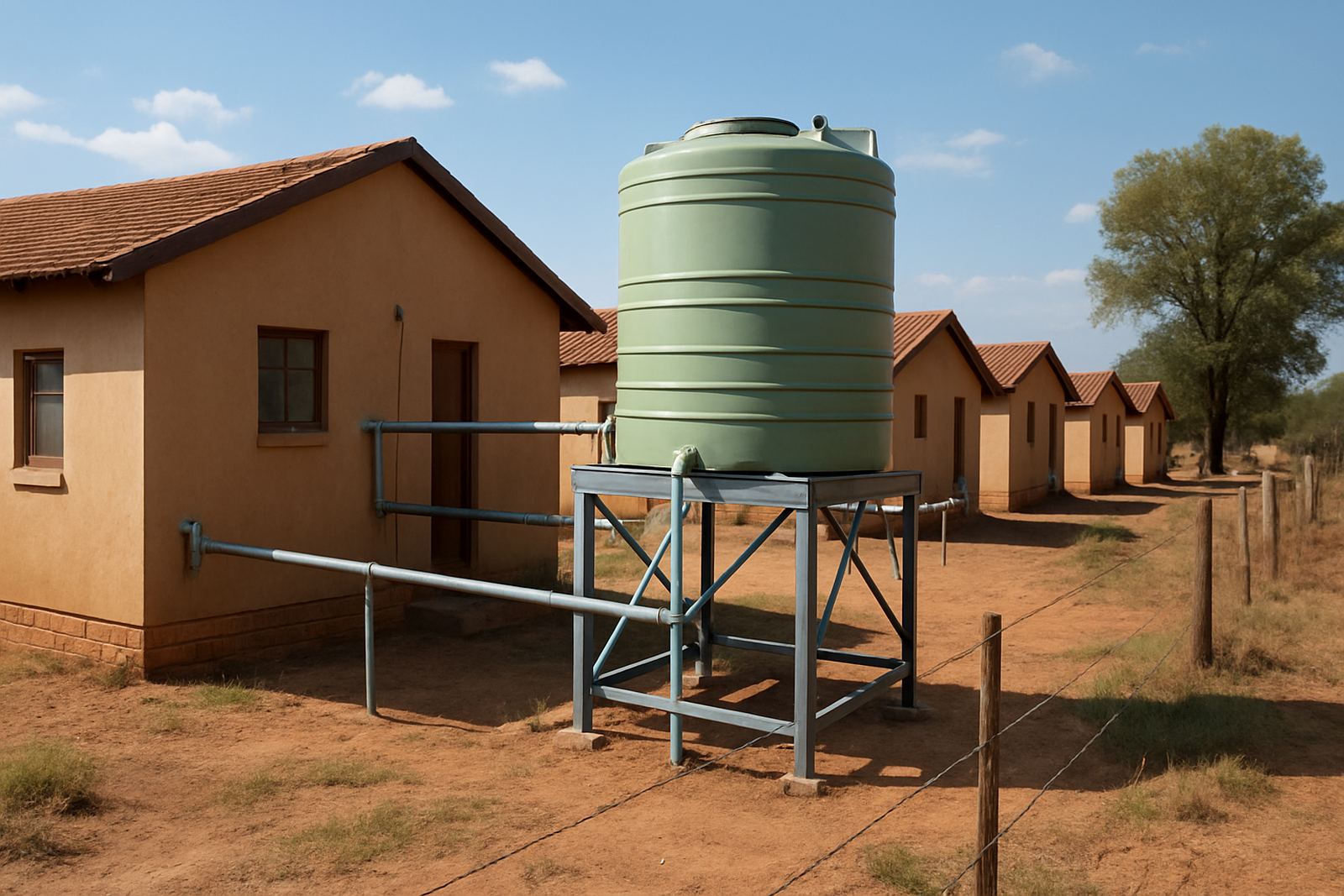
The final set-up included a pressure vessel, controller, non return valves, tank connections, isolation points and filter housings for sediment and finer particles. The storage side was arranged to give the accommodation block a reserve during outages, and to smooth out demand when several units drew water at the same time. Where needed, we also guided the client on tank placement and maintenance access, so the system would be simple to live with long term.
- Borehole pump matched to site demand
- Storage tanks for daily buffer capacity
- Sediment and final-stage filtration
- Pressure control and protection fittings
- Rainwater tie-in for supplementary supply
Timeline From Assessment To Commissioning
The project moved from site assessment to commissioning over four weeks. Week one was the assessment and sizing stage, where we checked demand, distances, expected usage patterns and the available power situation. Week two covered kit assembly and delivery coordination, including the tank and pump components needed for the installation window.
In week three the installation support was completed on site, with pipework connections, controls and filtration installed and tested. Week four was for commissioning checks, water testing and adjustments to make sure pressure was stable across the accommodation blocks. We also showed the site team how to isolate sections for maintenance, which matters when you are dealing with a live farm environment and people still need water every day.
- Week 1: site assessment and system sizing
- Week 2: kit assembly and logistics
- Week 3: installation support on site
- Week 4: commissioning checks and handover
Results For The Accommodation Blocks
The result was a much steadier water supply for the staff housing, with better pressure at the taps and fewer interruptions during peak use. The storage capacity gave the farm a useful buffer during outages and during times when the borehole was not running, which helped keep the accommodation blocks running without constant manual intervention.
Water quality improved after filtration and the client had a clearer maintenance plan for filter changes and routine pump servicing. That matters on farms because a system only works properly if it can be kept running by the people on site. The setup also reduced the risk of damage to fittings and appliances from poor pressure and unfiltered sediment.
- More even pressure across multiple units
- Better continuity during load-shedding
- Cleaner water for daily domestic use
- Clear maintenance schedule for the farm team
What We Would Repeat On A Similar Farm Project
If we were doing a similar staff housing project again, we would keep the same approach: size the system from actual usage, allow for distance and pressure loss, and build in enough storage to carry the accommodation block through outages. On farms around Potchefstroom and similar towns, that practical margin is often what keeps a system dependable.
We would also repeat the same maintenance approach. That means easy access to filters and valves, clear labelling, and a plan for routine checks. For staff housing, the goal is not only to supply water but to make sure the system stays easy to live with, easy to service and ready for the realities of rural property use, from dusty conditions to power cuts and seasonal demand.
- Allow extra buffer storage where usage spikes at once
- Keep filtration accessible for quick changes
- Plan for power interruptions from the start
- Use simple, serviceable fittings that the site team can manage
Key facts
| Project type | Multi-unit water supply for farm staff housing |
|---|---|
| Town | Potchefstroom, North West |
| Timeline | 4 weeks from assessment to commissioning |
| Supply scope | Borehole pump, rainwater support, storage tanks, filtration, pressure control |
| Use | Domestic supply for showers, toilets, laundry and kitchen points |
| Support provided | Site assessment, system sizing, kit assembly, delivery coordination, installation support, commissioning checks |