How to choose the right kit for your water source
If you are drawing from a borehole, collecting rainwater, or both, start with the source and the end use. A home in Pretoria with municipal top-up needs a different setup to a smallholding near Hartbeespoort that must keep irrigation going during dry weeks. We look at roof catchment, borehole yield, storage capacity and how many points the water must serve, then match the kit to that need.
The simplest way to narrow it down is to ask what must run when the taps are open. A kitchen and bathroom have one demand pattern, while troughs, drip lines and pressure systems need another. If you are unsure, our team can help with a site assessment and system sizing before any kit is assembled.
- Borehole kits suit properties with a tested groundwater supply and a need for steady pressure
- Rain-tank kits suit homes and farms that want to capture roof water for washing, garden use or backup supply
- Filtration kits suit water that needs settling, particle removal, or better taste and clarity
What happens during a site assessment
A proper assessment saves money later. We check where the tank or pump will sit, how far water must travel, whether the site has enough head height, and what power is available. In rural areas around Brits and Rustenburg, this also helps plan for load-shedding, cable runs and safe placement of equipment. On coastal properties in the Western Cape, we also consider corrosion risk and how much wind exposure the tank and pipework will face.
We usually confirm the following before recommending a kit:
- Water source, borehole depth or roof size
- Expected daily usage in litres
- Available space for tanks, pumps and filters
- Power supply and backup needs
- Water quality concerns such as silt, tannins, or smell
How Hydrated sizes a kit for homes and farms
System sizing is not guesswork. A family home in Somerset West may need a compact storage and filtration setup, while a farm outside Bloemfontein may need higher flow, larger tanks and stronger pressure control. We balance pump capacity, tank volume, pipe size and filter stages so the kit works as one system, not as separate parts bolted together.
If the kit is undersized, the pump can cycle too often and wear out sooner. If it is oversized, you may pay for capacity you do not use. We also check whether the water will be used for drinking, irrigation, livestock or general cleaning because each use has its own filtration and pressure needs, and that changes the layout quite a bit.
Delivery, assembly and installation support explained
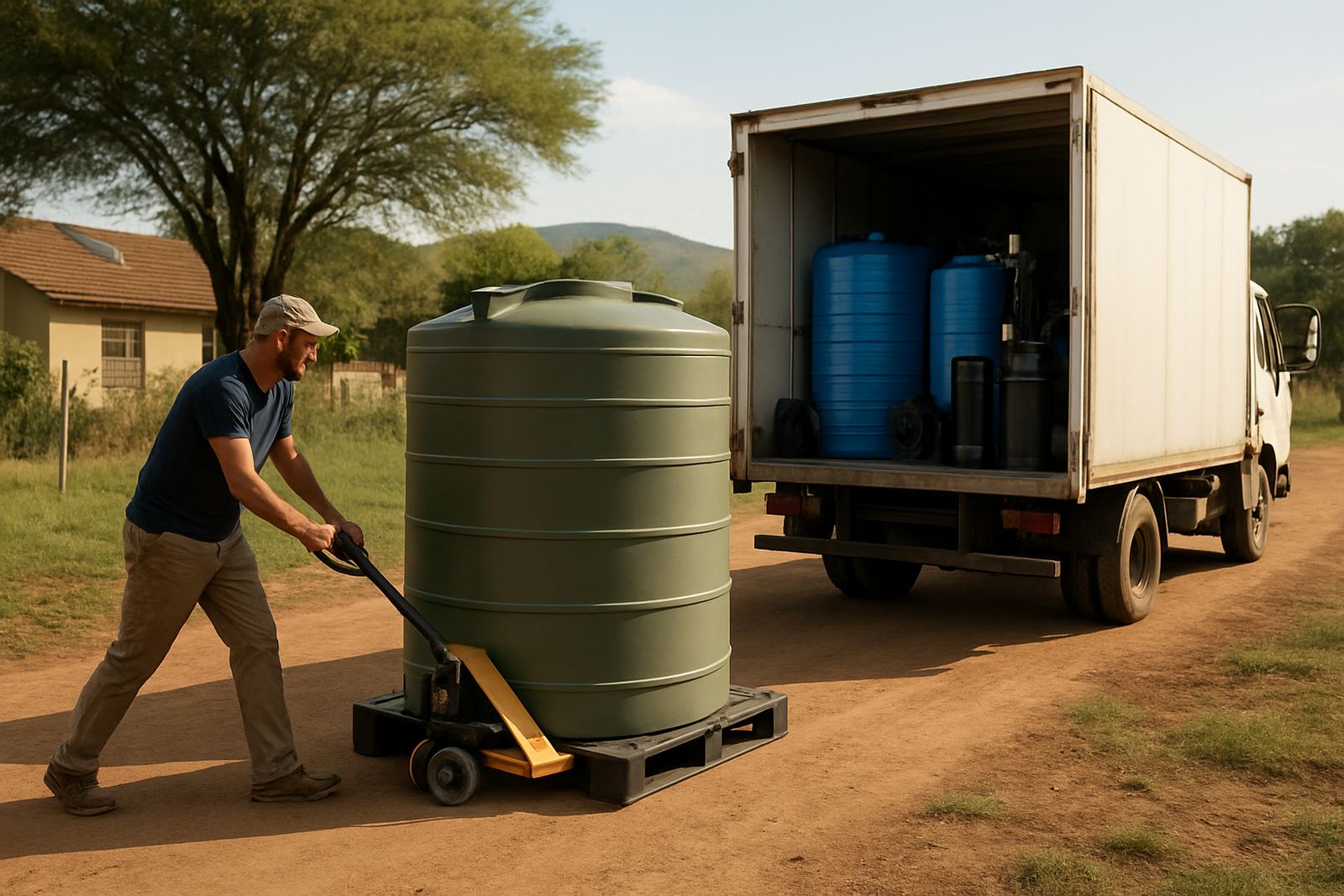
Hydrated supplies and delivers across South Africa, with regular work in Brits, Pretoria, Hartbeespoort, Rustenburg, Bloemfontein, Paarl, Stellenbosch and Somerset West. After the order is confirmed, our logistics planning team coordinates packing and delivery so the right parts arrive together. That matters when you are on a farm site and the nearest hardware shop is far away.
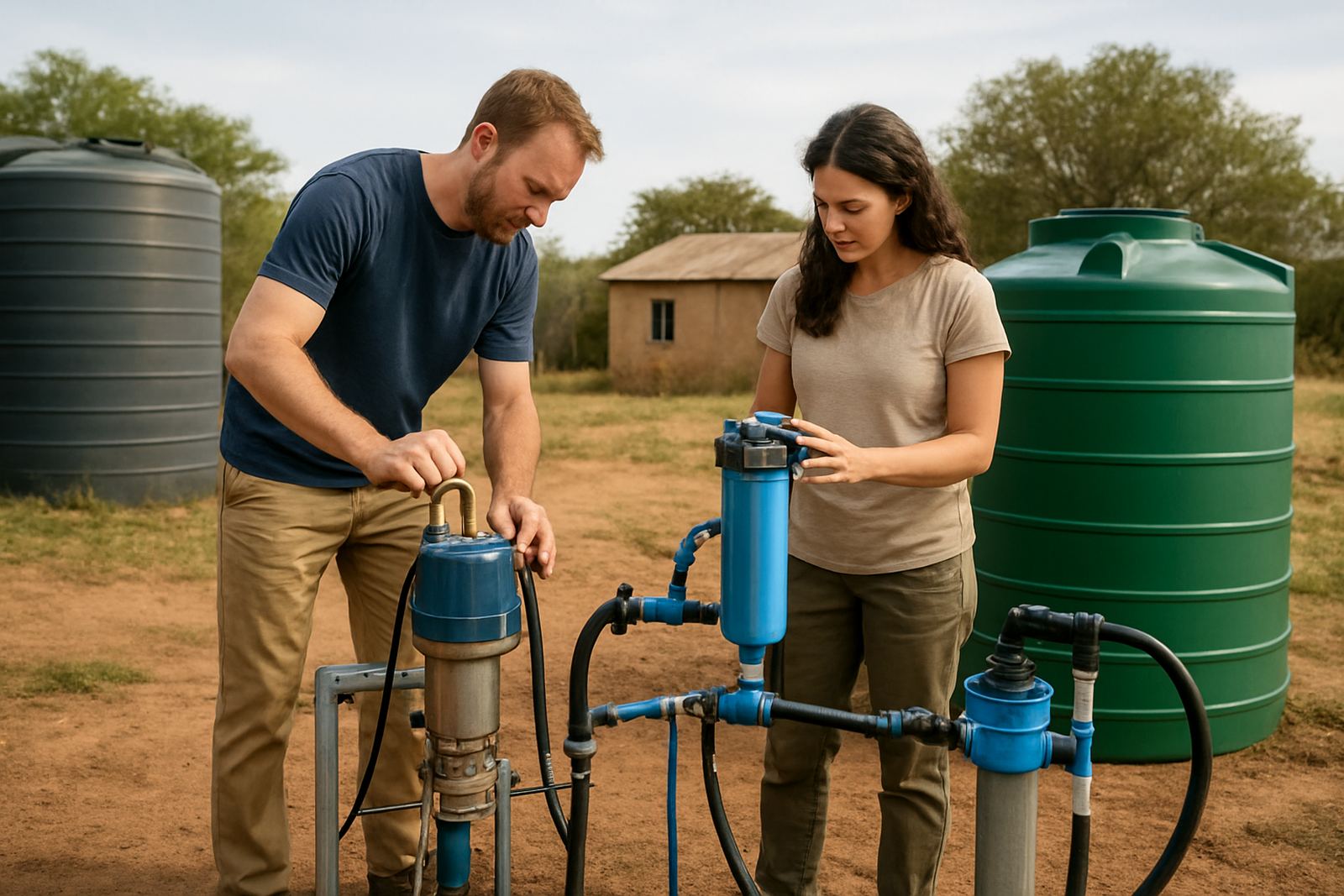
Our kit assembly service means the main components are prepared in a practical order, which makes the handover cleaner for the installer or site owner. We also provide installation support and commissioning checks so the system is set up correctly, pressure is checked, and the first run is monitored. A good start prevents a lot of call-backs.
Water testing, filter changes and servicing schedules
Water quality changes through the year. After heavy rain, a tank may carry more sediment. During dry periods, borehole water can shift in taste or clarity. That is why we recommend water testing before choosing filters and again after any major change in source or usage. In some areas, especially where tanks sit under trees or in dusty yards, more frequent checks are useful.
For general upkeep, these are sensible intervals:
- Filter changes when flow drops or the cartridge is visibly dirty
- Pump servicing if pressure becomes uneven or the unit starts to trip
- Tank cleaning at least once a year, or more often where silt builds up
- Annual maintenance for farms and high-use homes to catch faults early
Common faults and when to ask for help
Most problems start small. A pump that pulses, a filter that clogs fast, or a tank that keeps running dry often points to an issue with sizing, intake position, or a blocked line. In coastal humidity, electrical parts can also corrode faster if they are not protected properly. In colder inland areas, cracked fittings can show up after a hard frost or a pressure spike.
Ask for fault finding if you notice air in the line, lower than usual pressure, dirty water after a long dry spell, or a pump that struggles to start. It is better to deal with the cause early than to replace parts one by one and hope for the best. That approach gets expensive quickly and sometimes misses the real problem.
Who to contact and what to prepare
If you are ready to ask a question, use the enquiry form on our contact page and include as much detail as you can. Mention your town, the water source, the number of people or animals using the water, tank size if known, and any symptoms you are seeing. Water source, tank size and the symptoms point us to the right kit or service.
Our team includes Pieter Johannes van der Merwe, Ntombizodwa Shirinda, Zander Snyman, Ayanda Nkosi, Morne du Toit, Thandiwe Maseko and Kabelo Molefe, all working from the Brits base to support homes and farms across South Africa. Whether you need a fresh setup or a check on an existing system, we will help you move step by step, and keep the advice practical.