Farm brief and water use on site
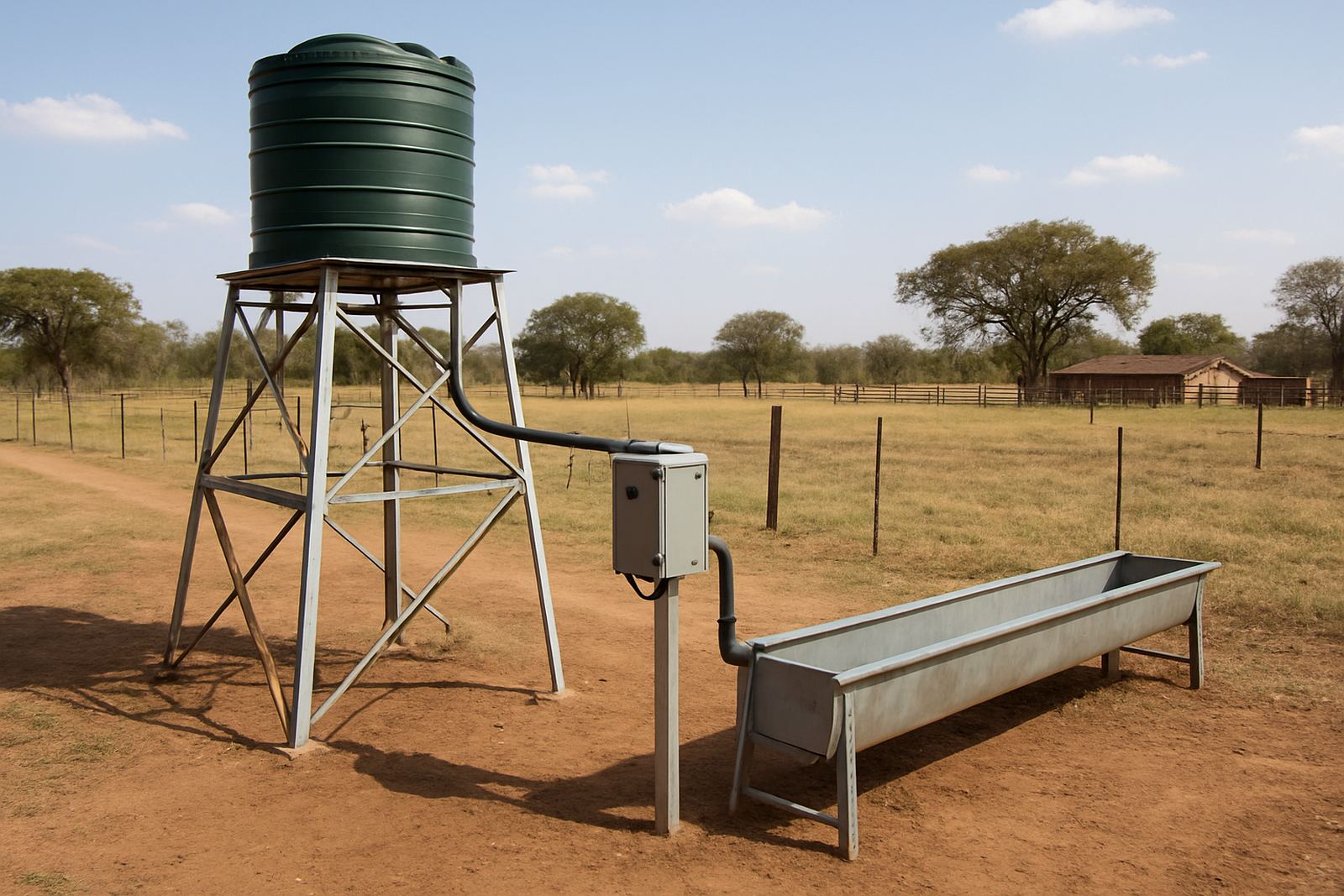
The client was a cattle farm outside Rustenburg looking for a water supply that could keep troughs topped up and still leave enough for the house and yard. The farm had one clear priority: a system that would handle daily demand without constant attention, especially during hot weeks and when municipal pressure was not an option. They needed a setup that could work with borehole water, store enough volume for short interruptions, and stay manageable for the people running the property day to day.
We started with a site assessment and a water-use discussion around herd size, trough refilling, and household demand. The brief was practical rather than fancy. Keep the water moving, protect the pump, and make sure the storage side could carry the farm through periods when pumping needed to be reduced. On a cattle property, if the water plan is weak, everything feels it fast.
What made the Rustenburg site tricky
Rustenburg farms often deal with hard water, dusty conditions, and long distances between the borehole, tanks and points of use. This site also needed to consider load-shedding, because any pump system without a sensible control plan can leave you short at the wrong time. Windblown dust and summer heat mean filters and tank fittings have to be selected with care, not just for performance but for serviceability too.
There were also practical layout issues. The trough line had to be positioned so cattle could reach it easily, while the homestead supply needed pressure that was comfortable for taps and routine use. We worked around those demands by separating the key flows and setting up the storage side in a way that made future maintenance simpler.
- Borehole water with variable mineral content
- Demand from troughs and homestead supply
- Need for buffer storage during power interruptions
- Access for servicing and future filter changes
What Hydrated supplied and set up
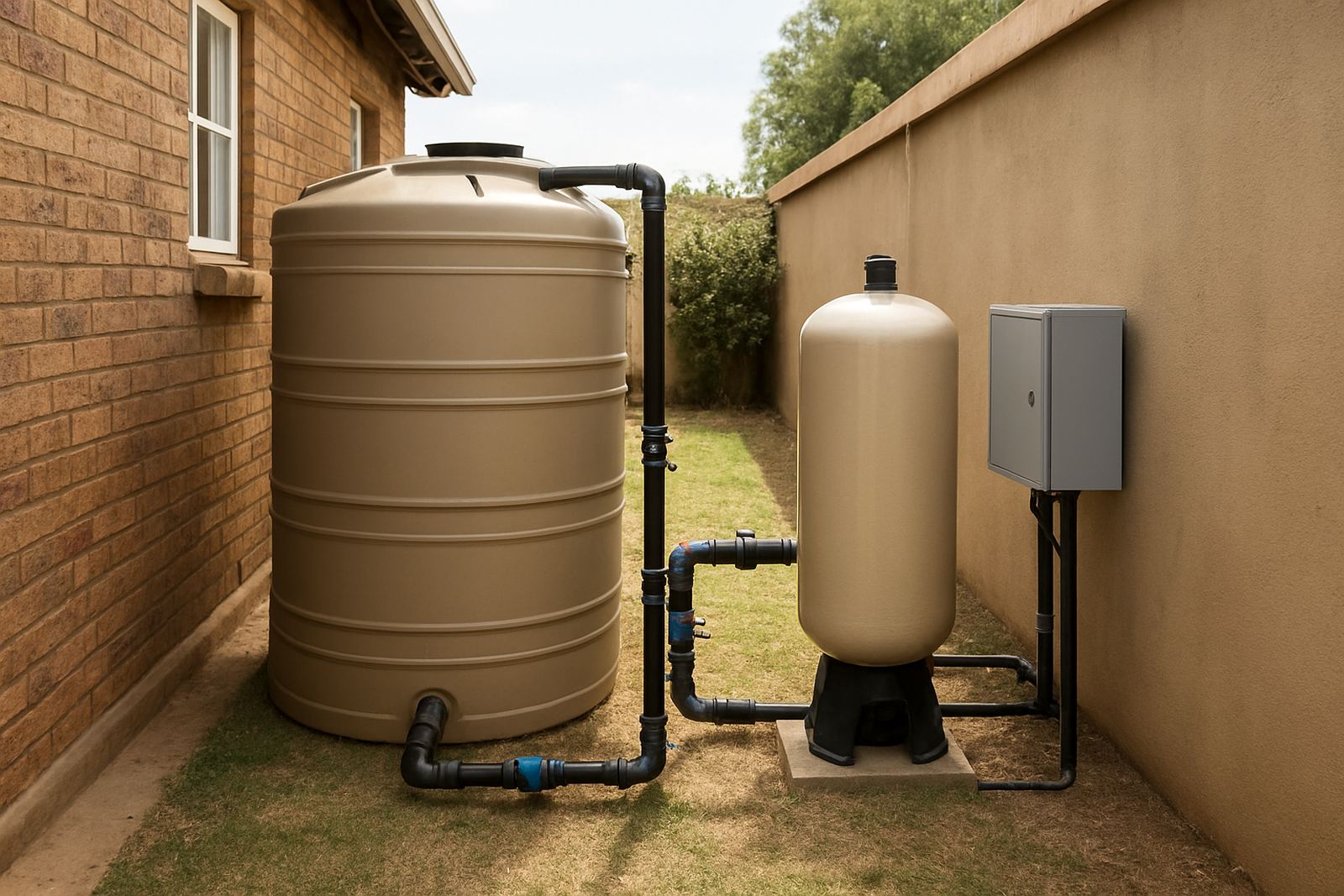
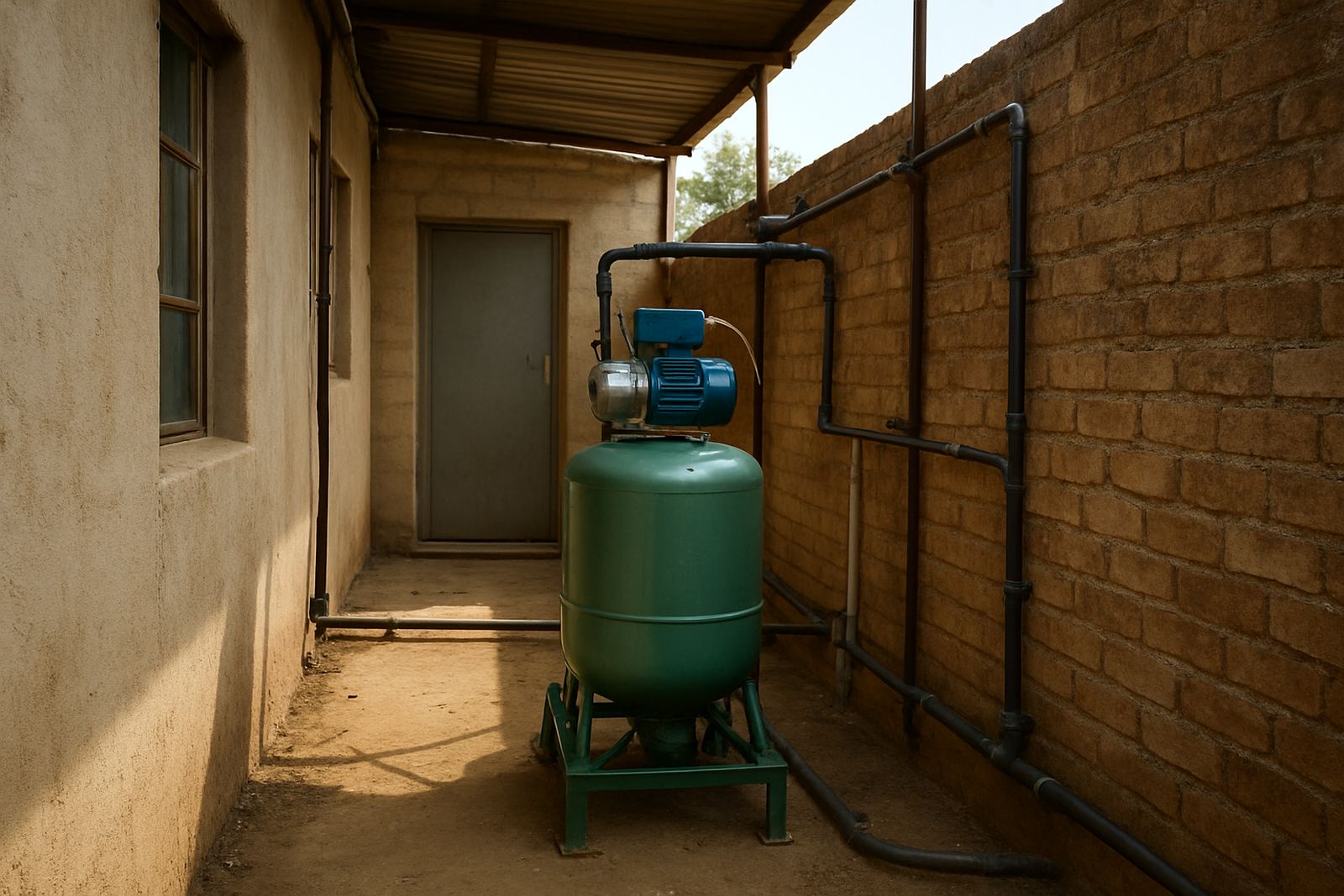
For this project we supplied a borehole and storage package built around the farm’s actual daily use. The system included a pump matched to the borehole yield, storage tanks, filtration components, pipework, valves and the fittings needed to tie everything together properly. We also handled kit assembly, delivery coordination and commissioning checks so the client received a working system and not just a pile of parts.
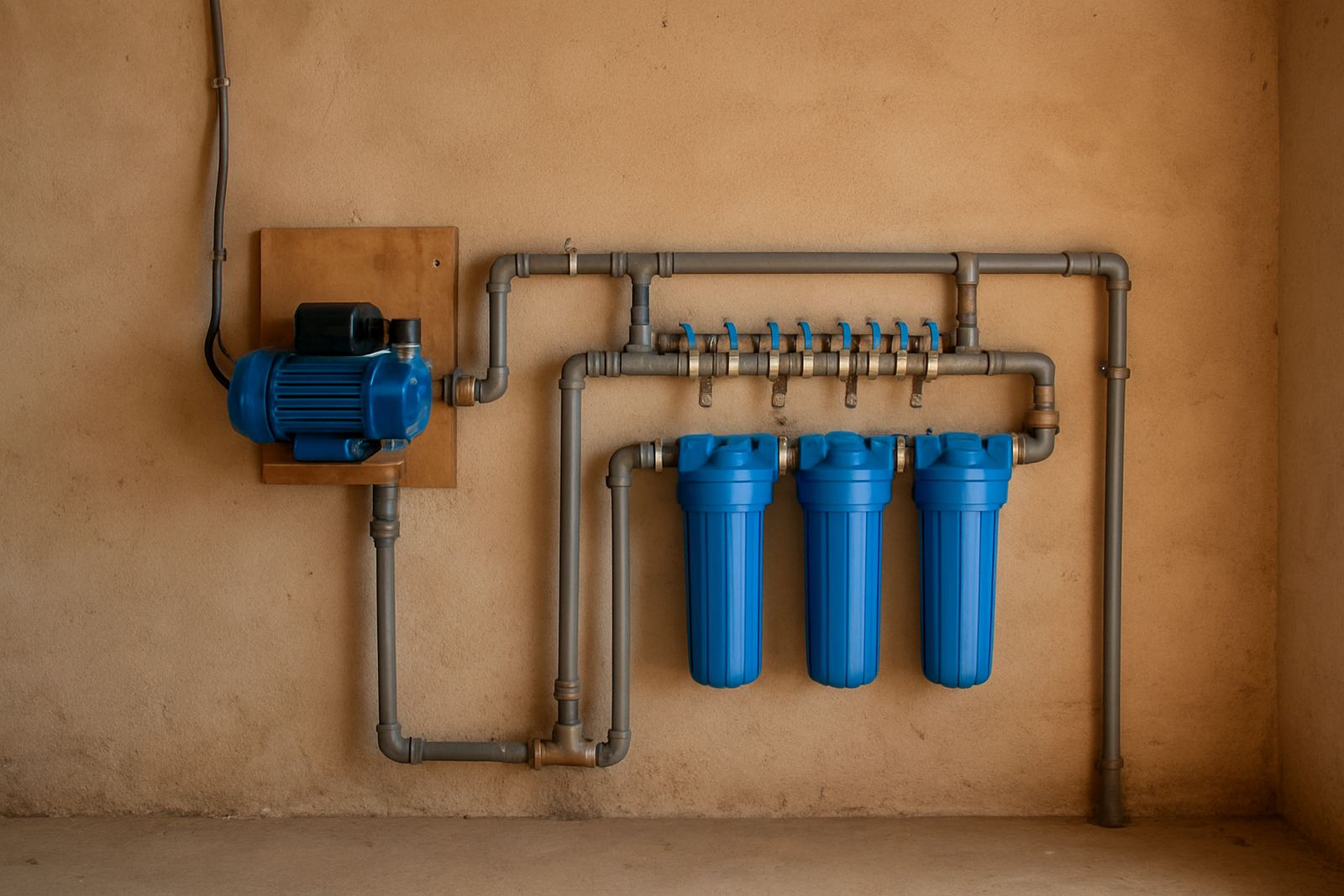
The main storage bank was sized to give the farm a useful reserve for trough top-ups and homestead supply. We included filtration to keep grit and sediment out of the lines, which matters a lot on borehole water where even fine particles can wear valves and block small openings. In a cattle setting, a blocked trough line or a leaking fitting becomes a problem very quickly, so we kept the layout straightforward and practical.
- Borehole pump matched to site yield and demand
- Storage tanks with combined reserve capacity of 10 000 litres
- Pre-filtration for sediment control
- Valves, pipework and isolation points for easier servicing
- Commissioning checks and flow testing on delivery
Installation support and timeline
The project ran over three weeks from assessment to final checks. Week one covered the site assessment, water-use sizing and equipment selection. In week two we assembled the kit, scheduled delivery and prepared the installation plan with the client. Week three covered setup, pump checks, line flushing and commissioning. That timing worked well because it gave the farm time to prepare the mounting area and plan access around livestock and daily chores.
We did not overcomplicate the job. The farm needed a system that could be explained clearly to the people using it, and that is usually the best sign of good planning. Once the tanks were in place and the lines were flushed, the setup was tested under normal flow conditions and checked for pressure stability. A small adjustment to one fitting was done during commissioning, which saved a call-out later.
Results for troughs and homestead supply
The finished system gave the farm a steadier water supply for cattle troughs and a more dependable line for the homestead. The storage reserve reduced pressure on the pump during high-use periods, and the filtration setup made routine maintenance simpler. The client now has a setup that can be monitored without fuss, which is what most working farms need.
Another important result was consistency. On farms, water interruptions create extra work, and in dry weather they can also affect livestock comfort. This system gave the client a buffer that helps manage load-shedding and short pumping windows. The water is not just available, it is easier to control and that matters when several points of use share the same source.
- More reliable trough supply during hot weather
- Useful reserve storage for short interruptions
- Cleaner water flow through the main lines
- Less day-to-day pressure on the pump
What we would repeat on the next cattle farm
We would handle the next cattle farm in much the same way. Start with the actual demand, size the storage for the way the farm runs, and keep the system simple enough for ordinary maintenance. That is especially important in places like Rustenburg where water quality and weather can change through the year. The right plan is not the biggest one, its the one that keeps working after the first season.
For farms across North West and further afield, this kind of project works best when there is clear coordination between assessment, assembly, delivery and final checks. It saves time and avoids the common problem of fitting equipment that is either too small or too hard to maintain. If a farm needs help with borehole, rain-tank or filtration work, the process starts with an enquiry and a proper look at the site.
- Measure demand before selecting equipment
- Build in storage for dry periods and load-shedding
- Keep filters and valves easy to reach
- Use commissioning checks to catch small faults early
Key facts
| Project type | Cattle farm borehole and storage supply |
|---|---|
| Town | Rustenburg, North West |
| Timeline | 3 weeks from assessment to commissioning |
| Storage capacity | 10 000 litres combined reserve |
| Use case | Livestock troughs and homestead supply |
| Services used | Site assessment, kit assembly, delivery coordination, installation support, commissioning checks |