What the Kimberley smallholding needed
The client was a private smallholding owner outside Kimberley, using the property for a home, veg garden and a few practical outbuildings. The brief was straightforward: keep water available when municipal supply was unreliable, reduce pressure on the household, and avoid a system that would be too large, too costly, or awkward to maintain.
Kimberley’s climate means long dry stretches and hot wind can push demand up fast. The owner wanted a setup that could fill a reserve tank during pumping windows, then feed the house and garden on gravity and controlled pressure. We also had to keep the footprint tidy and leave enough room for future expansion if the garden or livestock water points grow later on.
- Use borehole water as the main supply for storage
- Keep the system simple enough for regular upkeep
- Allow for garden irrigation and household top-up use
- Reduce downtime during load-shedding and pump interruptions
Site conditions and the main constraints
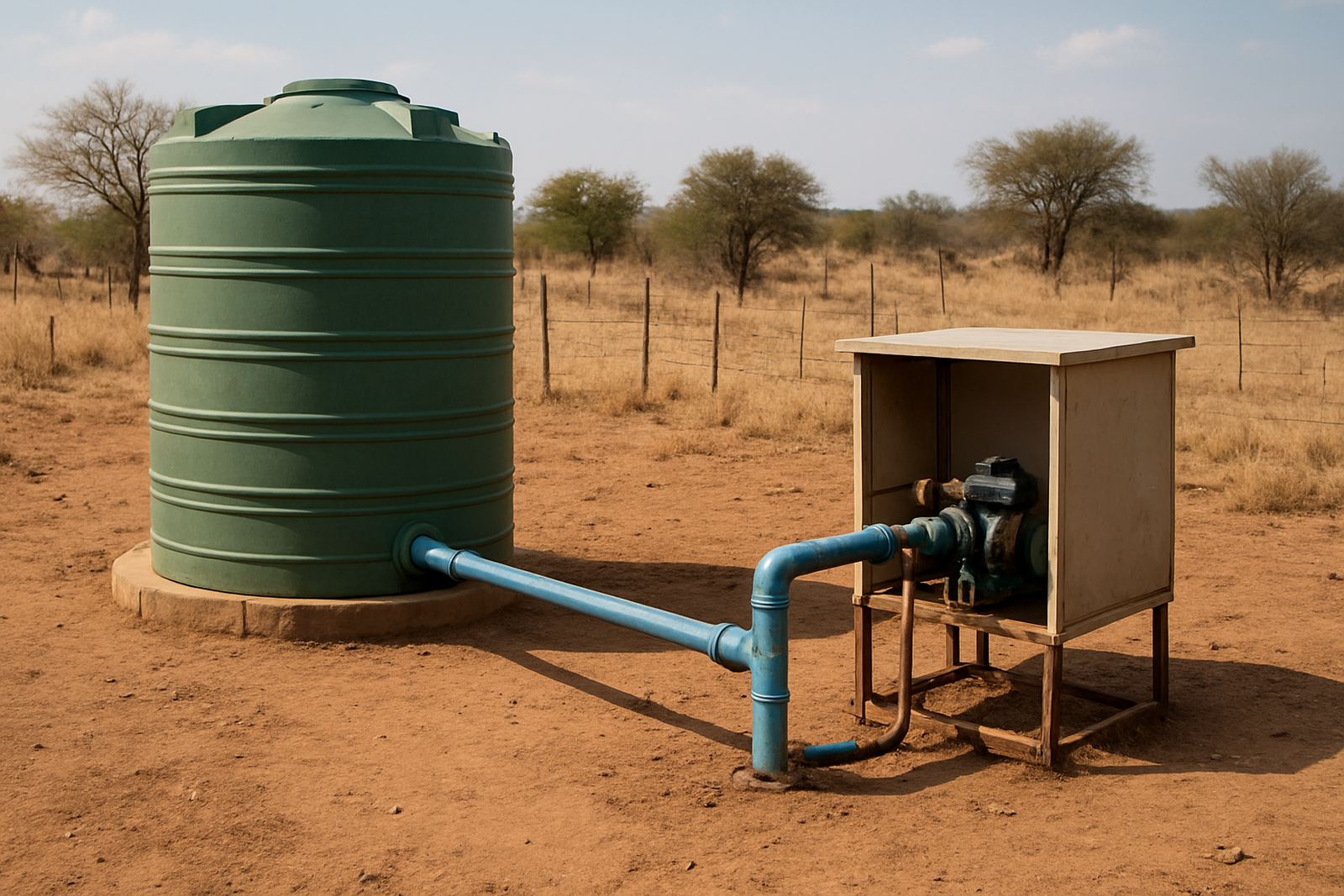
The site had open ground, a fair amount of dust, and hot afternoons that can be hard on pumps, fittings and exposed pipework. There was also limited shade around the proposed tank area, so we had to plan for sun exposure and make sure the installation would not need constant repairs from heat stress or brittle fittings.
We also had to work within the practical limits of a smallholding layout. The borehole position, tank stand, and pump room area all had to be close enough to keep pipe runs short, but far enough apart for servicing. The owner needed space for vehicles and basic yard access, so the final layout had to be neat and workable rather than just squeezed in. The ground had a slight fall too, which helped drainage but meant we had to set levels carefully.
- Dry climate with high evaporation and dust exposure
- Short, efficient pipe routing for pressure control
- Access needed for cleaning, filter changes and pump checks
- Clear layout for future maintenance and possible expansion
The kit we supplied and how it was set up
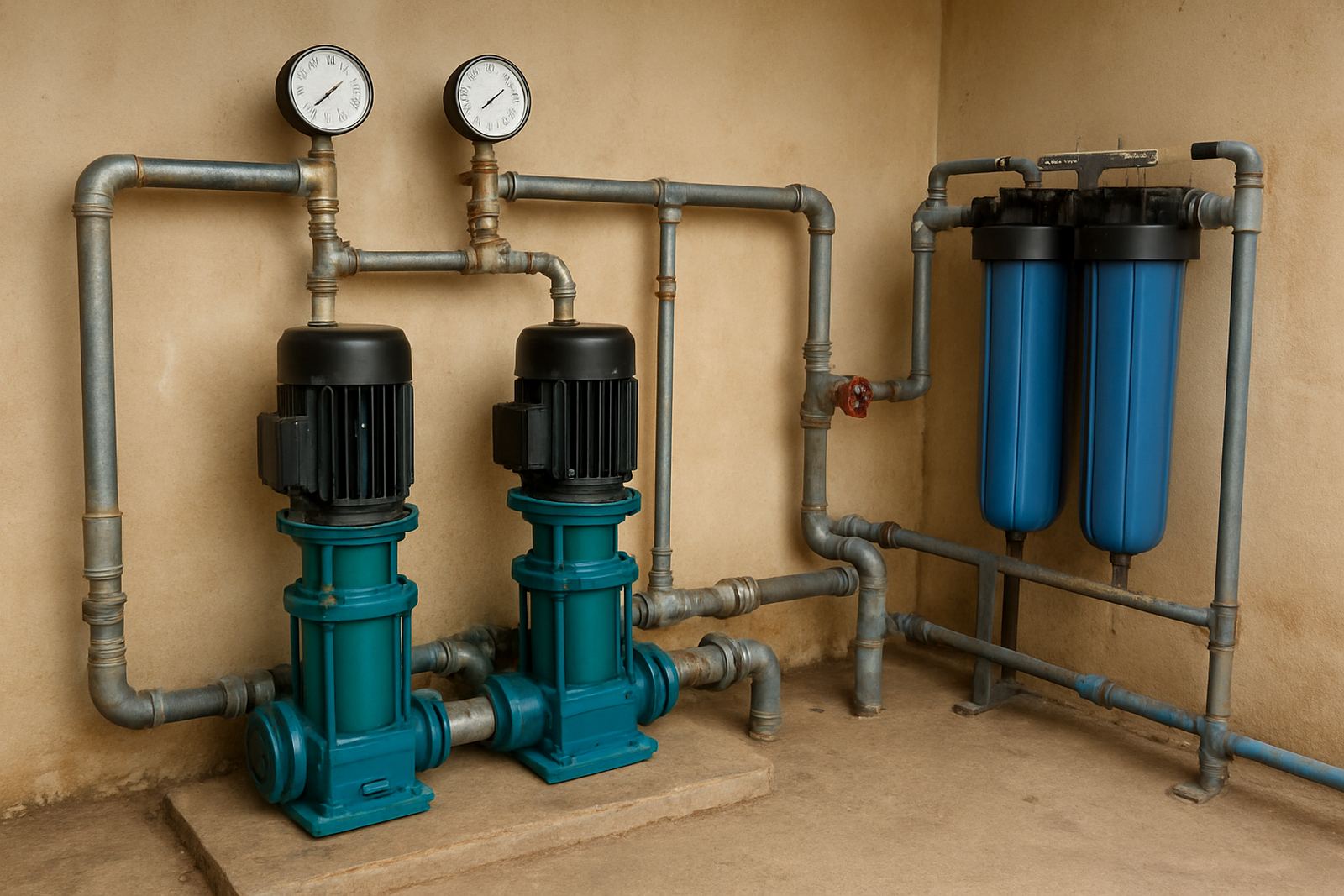
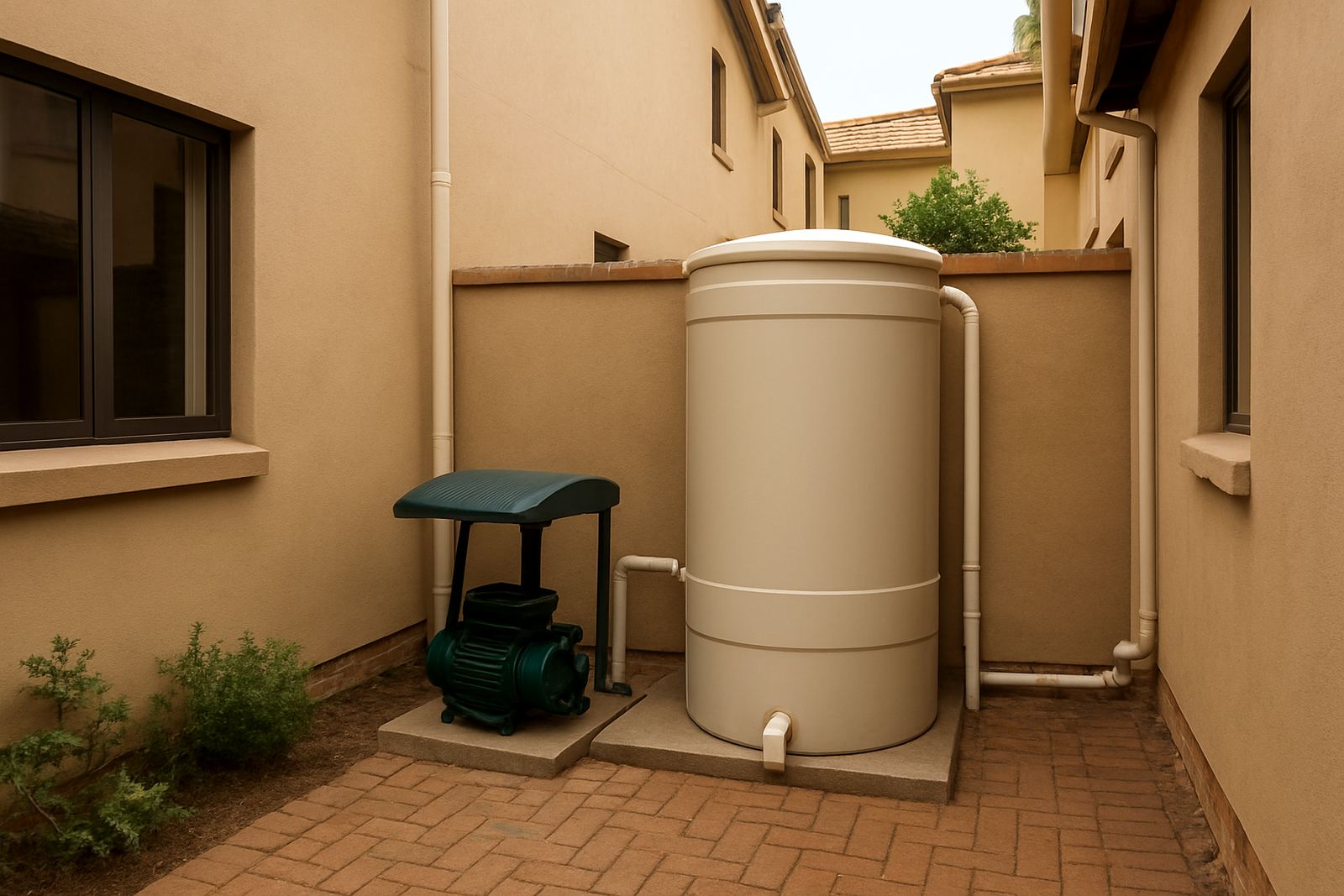
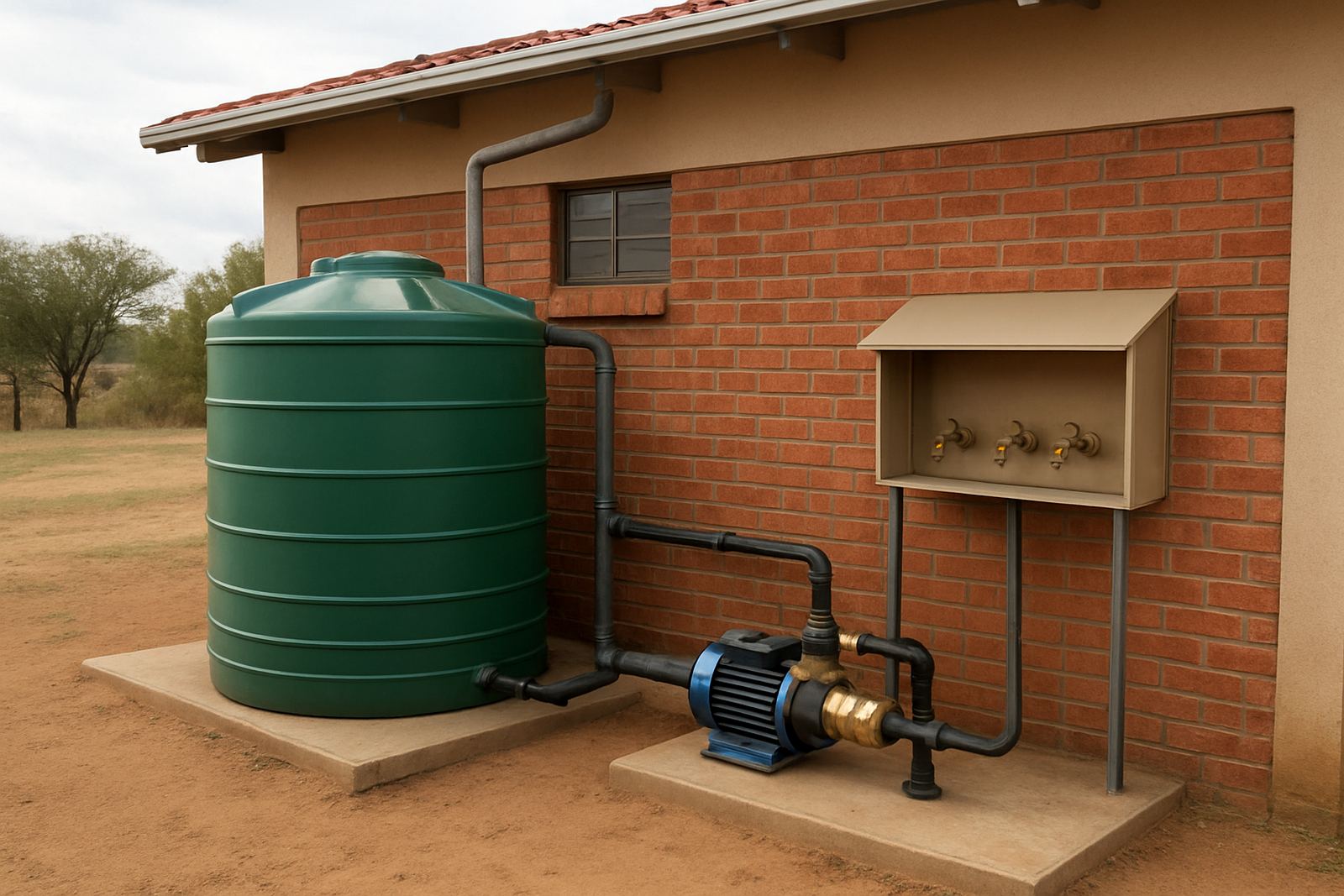
We supplied a complete borehole and tank package for the property, including the main pumping equipment, storage tank, filtration stages and the fittings needed to bring the system together properly. The arrangement was built around a 2 500 litre storage tank, a submersible pump matched to the borehole yield, and a control panel with dry-run protection. We also included pre-filtration to catch sediment before it could reach the tank and household line.
The discharge side was set up to feed the tank first, then distribute water through a pressure pump for the home and garden line. Because the area can see power interruptions and irregular usage, we made sure the pump protection and electrical controls were practical and easy to check. The installation team also used UV-resistant pipework and fittings suited to warm outdoor conditions. Nothing fancy, just equipment that holds up well when the weather is rough and the water needs are constant.
- 2 500 litre storage tank with secure lid and inlet control
- Submersible borehole pump sized to site yield
- Pressure pump for domestic and garden distribution
- Sediment pre-filtration before storage
- Dry-run protection and basic electrical control gear
- UV-resistant pipe and fittings for outdoor use
Timeline from assessment to commissioning
The project ran over three weeks from first assessment to final checks. Week one covered the site visit, water need discussion and system sizing. We confirmed the expected daily draw, the storage target and the pipe routes before putting the kit together. Week two was assembly and delivery coordination from our North West base, with the equipment packed so the team on site could move quickly once work started.
Week three covered installation support, commissioning checks and water testing. The borehole pump was connected, the tank was set, and the pressure line was checked for leaks and flow consistency. We tested the basic water quality, checked that the filters were catching fine material, and made sure the system could run without unnecessary cycling. There was a small delay on one fitting due to a supplier mix-up, but it was sorted the same day and did not hold the project up.
- Week 1: site assessment and system sizing
- Week 2: kit assembly and delivery planning
- Week 3: installation support and commissioning
- Final step: water test and pressure check
Results for the home and garden
Once commissioned, the smallholding had a reliable reserve for everyday use, which took a lot of pressure off the owner during dry weather. The tank gave enough buffer for household washing, basic cleaning and garden watering, while the borehole could be managed in sensible pumping windows instead of running all day. It also meant the property had a more stable water plan during power cuts and municipal interruptions.
The owner wanted the system to be practical rather than oversized, and that worked well. Water was available when needed, maintenance stayed simple, and the layout allowed for easy access to filters and valves. The garden line could be watered without pulling too much from the main household supply, which was one of the main goals from the start. The setup has been working well and the client reported less stress around dry spells and no need to improvise every week.
- Better reserve capacity during dry periods
- Cleaner water before it reached the house line
- Lower pressure on the main supply during peak use
- Simple access for routine upkeep and checks
What we would repeat on a similar Kimberley site
If we did a similar smallholding again in Kimberley, we would keep the same approach: size it properly first, avoid overcomplicating the controls, and leave enough room around the tank and pump gear for maintenance. On sites in dry inland areas, the best results usually come from practical storage, solid filtration, and a layout that makes sense to the person using it every day.
We would also keep the same focus on protection against heat and dust, because those two factors can shorten equipment life if they are ignored. A clean installation with the right pipe sizing and a sensible reserve tank often outperforms a more expensive setup that is poorly matched to the site. That is especially true where load-shedding and water restrictions can change how the system is used from one month to the next.
- Match the pump to the borehole yield, not guesswork
- Keep filtration accessible for quick changes
- Plan tank placement for shade, access and drainage
- Leave space for future maintenance and expansion
Key facts
| Project location | Kimberley smallholding, Northern Cape |
|---|---|
| Client type | Private home and garden smallholding |
| System type | Borehole supply with storage and filtration |
| Storage capacity | 2 500 litre tank |
| Timeline | 3 weeks from assessment to commissioning |
| Main uses | Household supply, garden watering and reserve storage |